
After submerging ourselves into the cultural extremes of San Felipe in festival mode, we were looking for a quiet and inexpensive destination to digest some of the reality we now found ourselves in. Baja is renowned for its easily accessed wide open beaches. That sounded like the sort of place we were looking for to take this all in. Without any cell coverage we were happily relieved that the iOverlander app maintains its information while off grid. Links to Google maps and specific websites don’t work but the maps on the app are easily followed and we also have a big (page by page) road atlas with plenty of information. iOverlander is good at letting people know what size vehicle can access the roads and whether 2 wheel or 4 wheel are adequate or recommended. It helps find water, sanitation dump stations, organized or wild camping, attractions, gas and grocery stores, and dangerous stuff to be aware of. There is plenty more if you filter other things in or out. Knowing this app has so many experiences of people on the road and the dates when the info landed on the app, it gave us knowledge of weather-related damages or new and alternate routes. Here is one such example from its vast database…


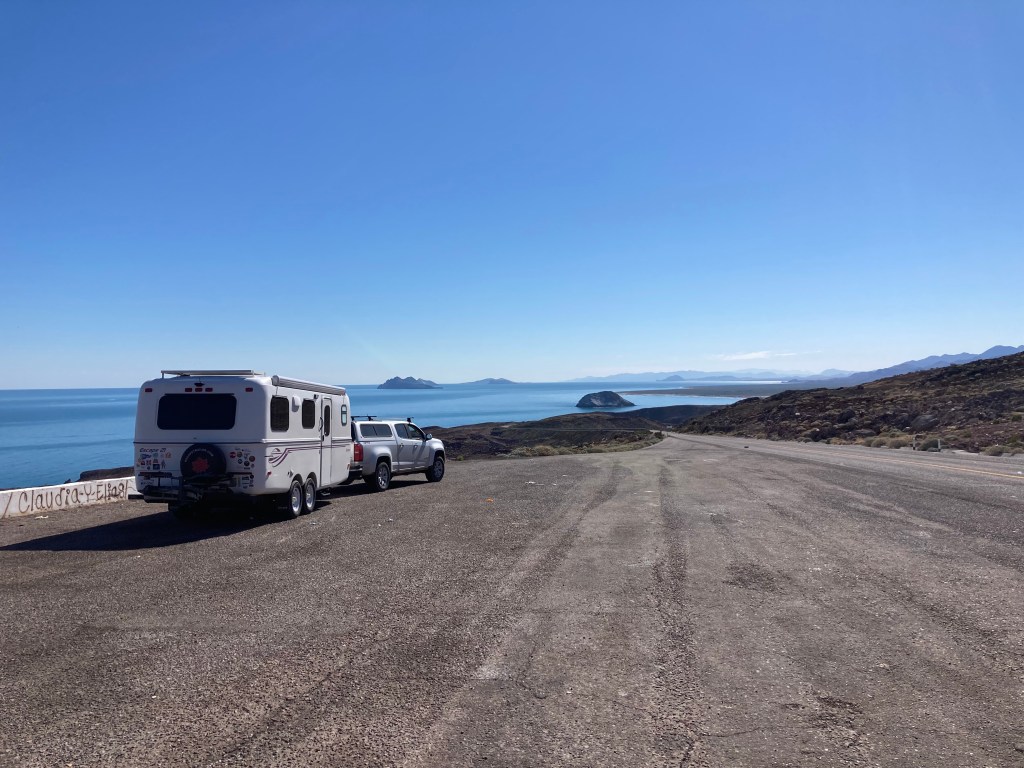
As we rounded Punta Estrella just south of San Felipe and crossed through a couple of small mountain passes, we were rewarded with some elevation that gave us a view of the islands and the coastline on the Sea of Cortez. We stopped at two miradors (look outs) along the route, snapping photos of what was ahead.
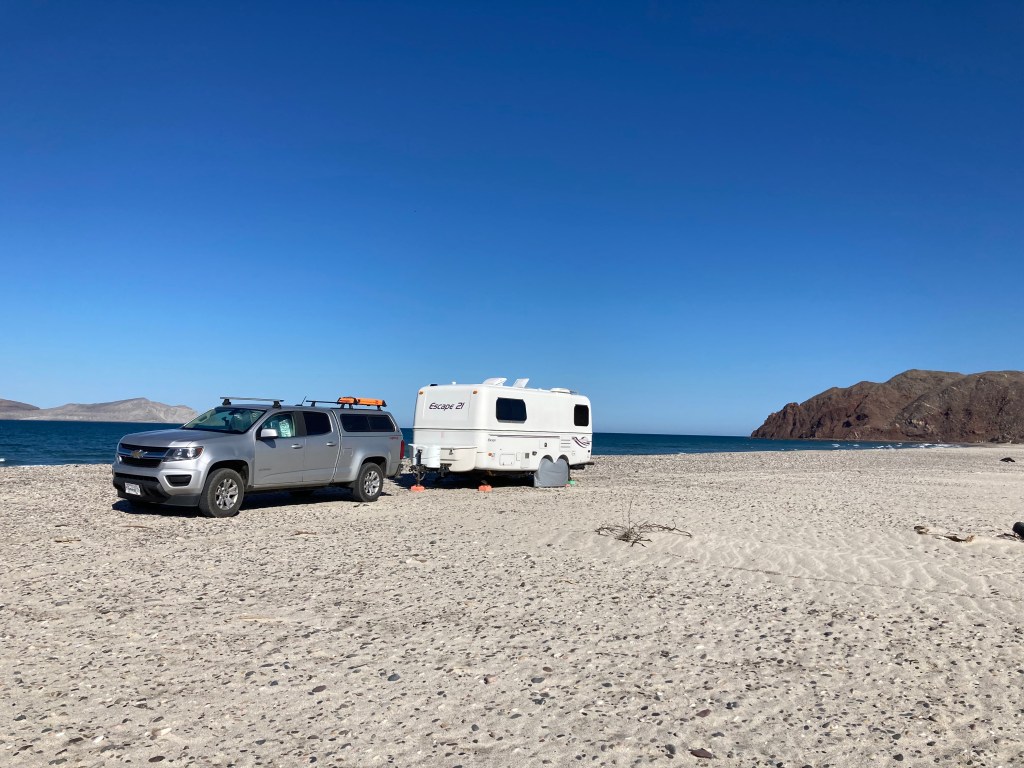
The beach at Punta Bufeo was accessed by a road that leads to a campground called La Poma. There is an airstrip from one end of the beach to the rocky outcrop south of La Poma. The beach is sand and drops down from a rock and sand berm that is very stable for driving on. The sand at the tide line is soft. (We watched a fish boat on a trailer get stuck then two vehicles wagon trained it out before the wheels went under the sand.) We pulled up and with a 360 view of beach, mountains, islands, sunset and sunrise with just a few buildings a kilometer away from us in both directions we were set to enjoy the quiet beauty and contemplate the preceding introduction to Mexico from a San Felipe perspective. Without shade palapas we positioned the door so we could easily come and go on the shade side of our trailer. It was hot. 36C on average and cooling to 22C over night. Even if we had AC in the trailer, being off grid means it would be unusable due to the excessive energy required to run it.


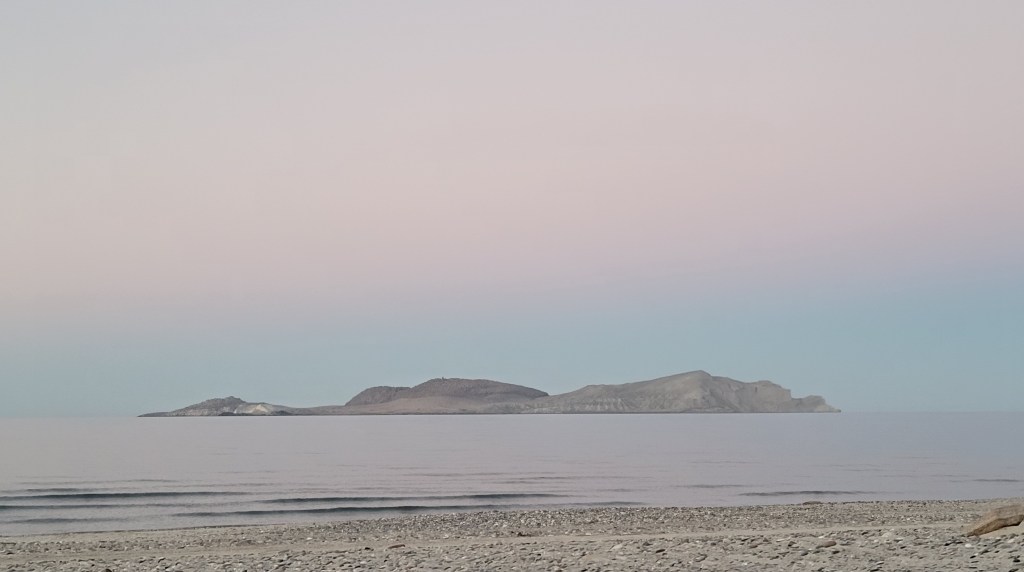
The breeze from the sea and being able to swim was perfect. Sting rays abound so shuffling in and out of the water is key to startling them away. We biked and walked the beach. I finished my book and started another. We hiked over to the rocky outcrop of Punta Bufeo and Albert snorkeled while I drew the scene.
Tap this link for a video we put together of our beach ride. https://www.youtube.com/watch?v=3RdX_XrnWXE&t=89s
The downside. Unseen but there are the sand fleas that bite when walking the beach in bare feet. Unnoticed until the welts develop by the next day. There is a price…. When the wind died the No-see-ums also arrived. No-see-ums are tiny little biting flies that you don’t hear, feel or see until it is far too late. They are small enough to get through a normal screen hence our trailer filled up with them. Unnoticed. Hot night, less covers, more bites. These bug bites became angry the next day and with enough bite poison we both had goose bumps and were shivering! Antihistamines and 1% cortisone ointment are about all that would give the slightest reprieve. The Costco bug spray that we had made them laugh. Silently. We pulled out the OFF 25% DEET and covered up. I even put on socks, long sleeve shirt, leggings and slept on top of the bed!!! Ugh!
Black eye and bug bites….I was really feeling like I needed a Fairmont Hotel in Banff!!


Apart from the bugs it was a taste of what we had hoped for in Baja. Free beach camping. Three nights there and we headed to Bahia de Las Angeles or BOLA as the more experienced say.

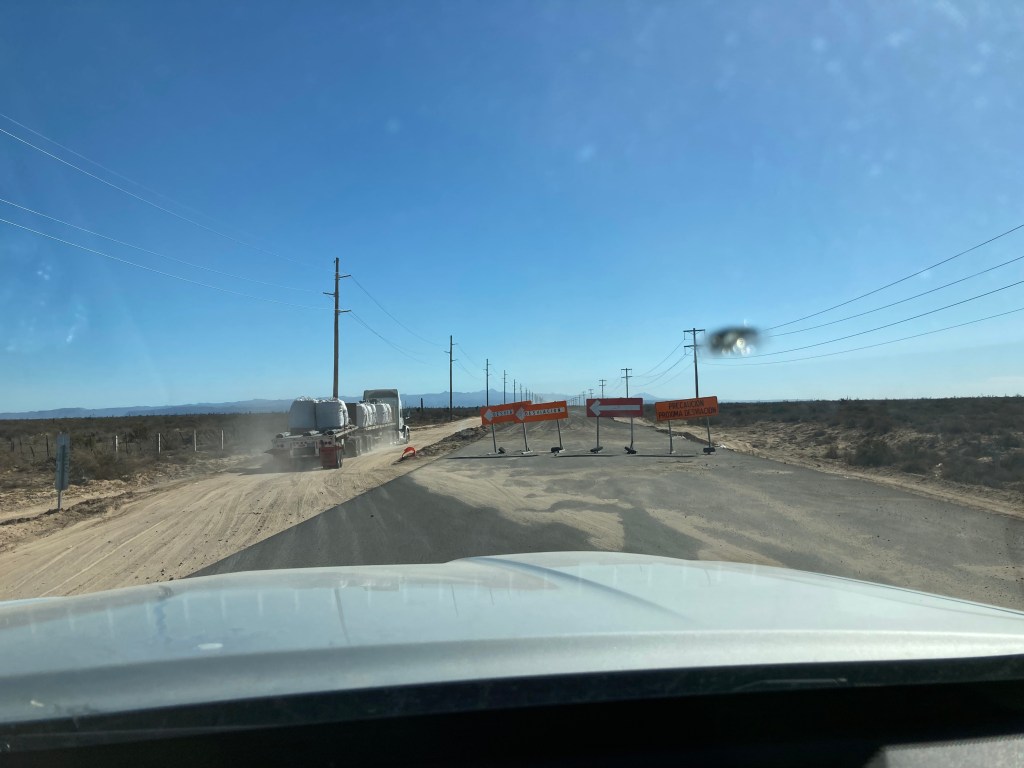
The drive to BOLA from Punta Bufeo is about 2.5 hours according to Google. Highway 5 intersects with Highway 1 after about an hour and 45 minutes south there is another minor highway (12) that intersects and heads east to the Sea of Cortez. The major highways are a bit bumpy, have some potholes, are narrow and have no shoulders. Sometimes I can’t watch when a big truck passes as they just fit in their lane. There are crews who are constantly maintaining the roads removing wind-blown sand, filling potholes and replacing hurricane damaged patches. The km markers are frequent and reliable. On the road to BOLA the road follows two washes up and over a pass then down into the town. A wash or Arroyo is where the water runs after a rain. Like a dry sand river, the majority of the time. But when it rains it becomes a torrent wiping out everything in its way. One of the last big hurricanes took out the road to BOLA. But these weather events are yearly, and the dirt and sand can be groomed to create a makeshift road while the main road is remade, repaved and back to normal. Often everything is moving within a couple of days. These hardworking road crews are often pushing dirt in open cab bulldozers, not the comfy air-conditioned ones with ergonomic seats like at home. So, it took about 4 hours to get to BOLA. Here are images of some diverted road under repair.

We camped at Campo Archelon, an organized eco-campground where the previous owner had educated people on the sea turtles. The house in the compound had a picket fence of whale bones. The office was also a restaurant with Italian coffee maker and a menu that included avocado toast! The palapas were built of stone with palm thatched roofs and the beach was sand. There were hot showers and flushing toilets!! But the part we used the most was the very good WIFI!! Images below from Campo Archelon.
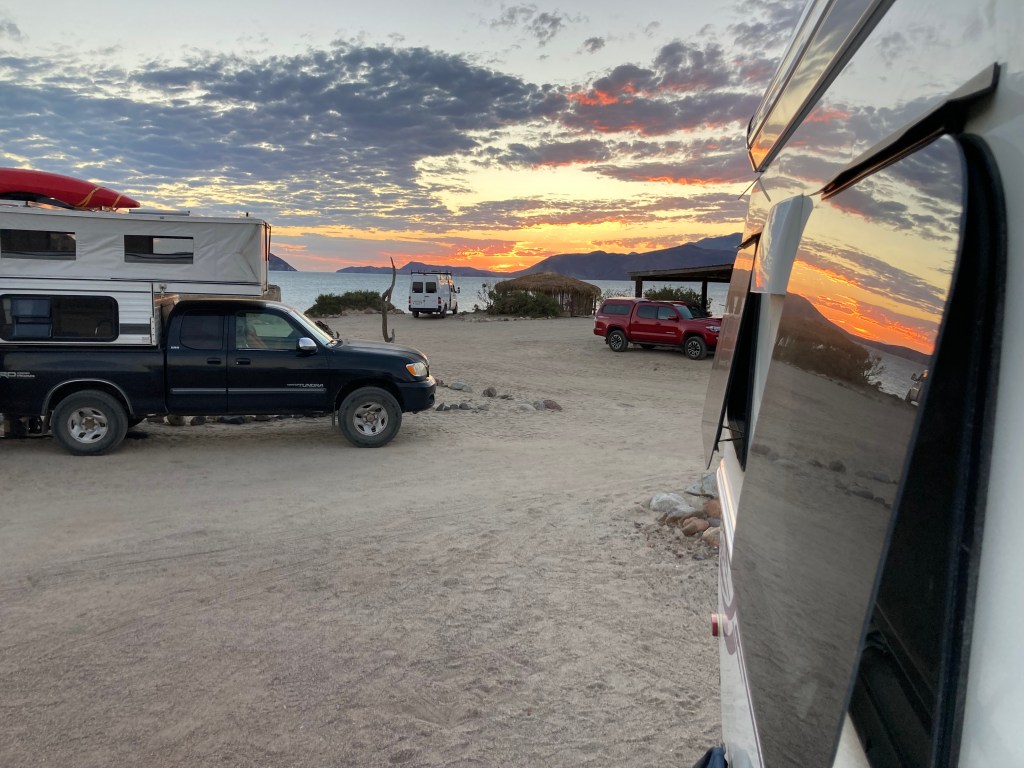

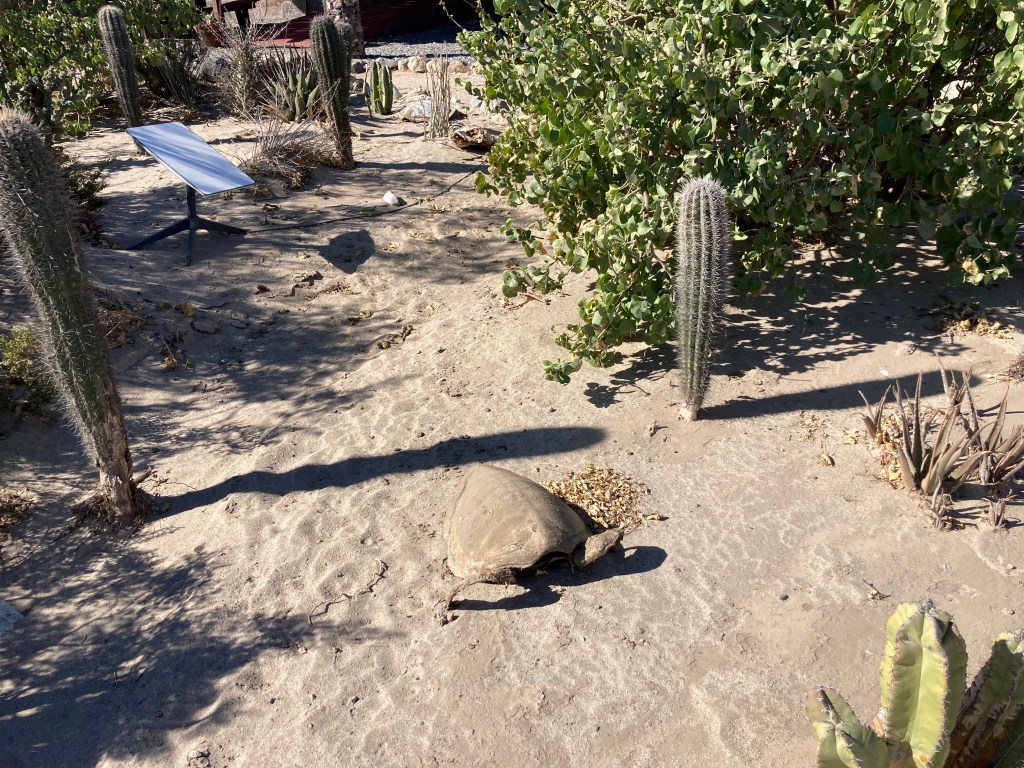


We stayed two nights, then moved to a gorgeous spit with open beach, called La Gringa, at the end of the bay. The location is at the end of a wash that comes down from the surrounding mountains. We really liked this place. In the morning a person in a La Gringa t-shirt came by to collect refuse and 100 pesos per night. It is clean and quiet.

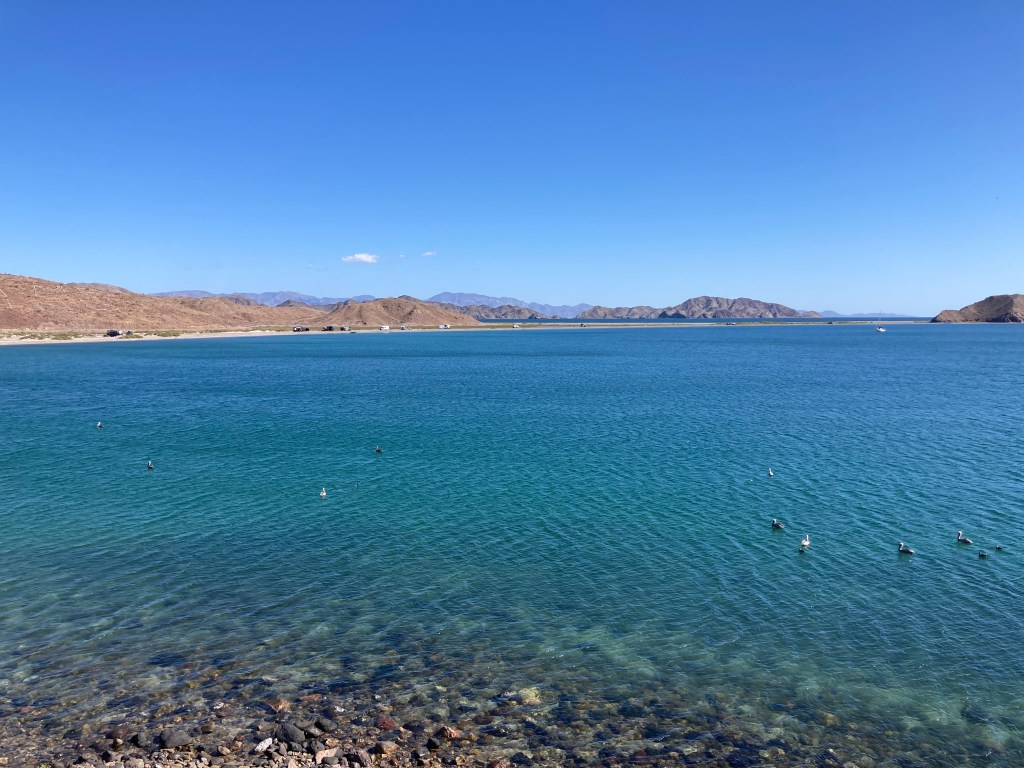
During our 3 nights there we walked to the end of the spit finding baby urchin shells, mini conchs and pieces of sun-bleached turtle carapace. At low tide there are people digging clams and the seagulls are dropping and cracking them for their own consumption. On the last evening while I made dinner, Albert hiked up to an overlook at the end of the spit.

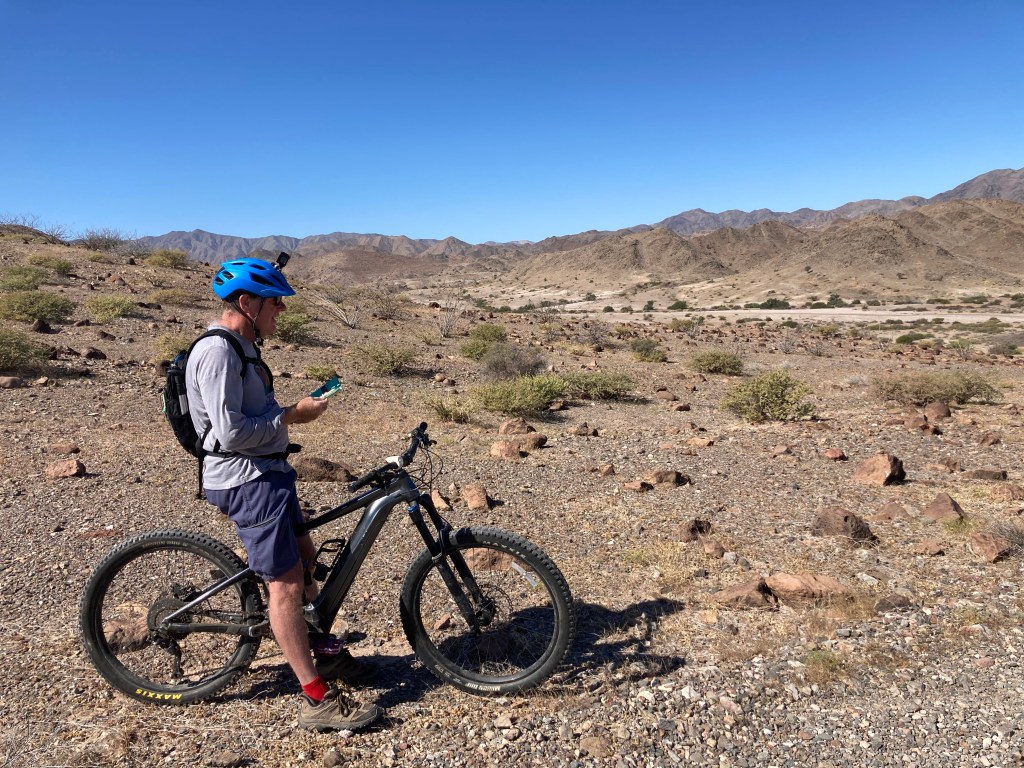
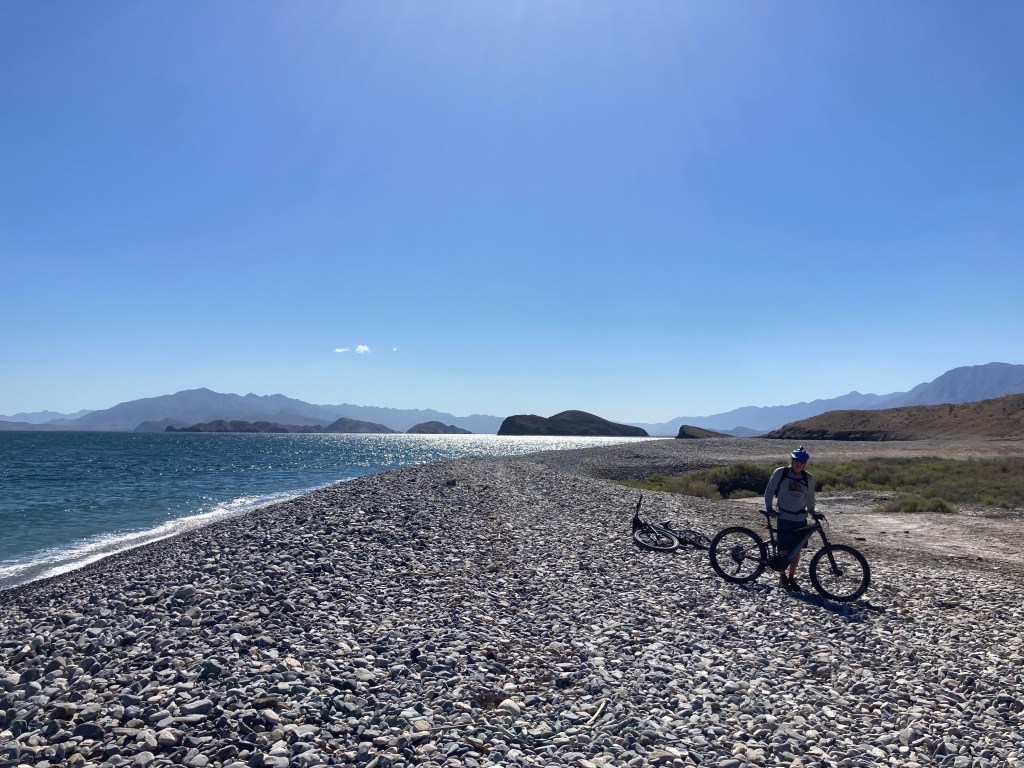
The wash has tracks of other campers, ATV enthusiasts and motor cyclists that divert to the beaches up the coast or into the mountains that rim the area. We biked up a few with the tell-tale swishing that goes with biking in soft sand patches, thankful for our electric assist. And all that dusty exertion finishes off in warm water to swim in.

After La Gringa, we were headed to a town on the Pacific coast called Guerrero Negro. We passed dozens of people walking the washed-out road. These folks were finishing up their “Coast to Coast” 100k supported walk.

As we drove along MEX 1, we noticed cacti resembling the best Dr Seuss drawings. Known as a Boojum tree or Cirio, they are unique Baja plant that are plentiful through central Baja deserts. These cacti are the shape of hand dipped candles and can stay dormant for 10 years during drought. We saw them with greenery and tufts of flowers on the top resembling the flame on the candle. Growing about 2 inches per year, they can live to about 300 years and reach about 60 feet. Unfortunately our photos were not worth publishing here. If interested, google cirio cactus images and you will find some funny ones.
Arriving in Guerrero Negro the impression is of a dusty little highway town that ramps up for a few months at the end of December when the gray whales come to calve. The bay, Ojo de Liebre, is within an enormous salt marsh. Famously, “the largest in the world”, where salt is mined through evaporating the water off in big flat pools. Guerrero Negro’s other main industry and attraction. We saw this in many smaller salt ponds in Portugal and Spain last year.
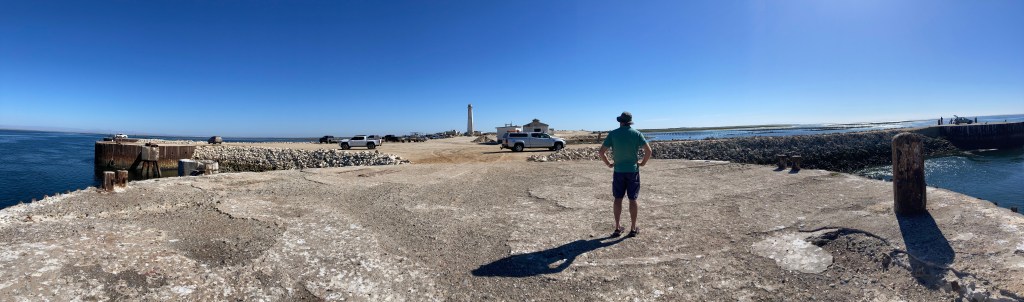


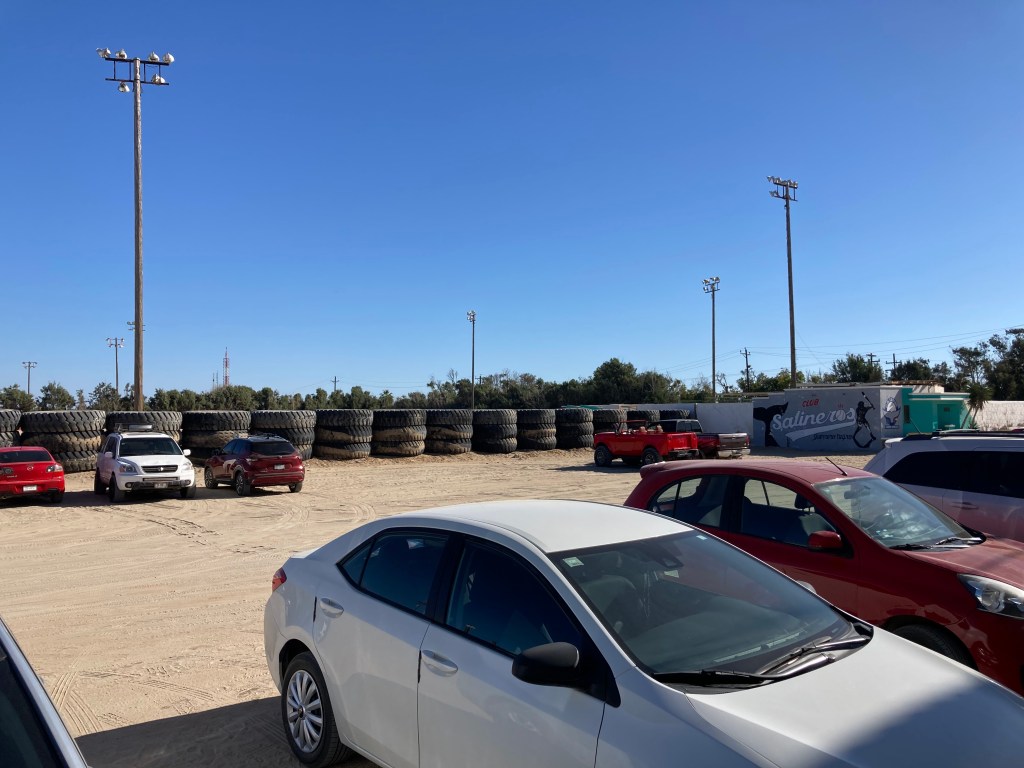
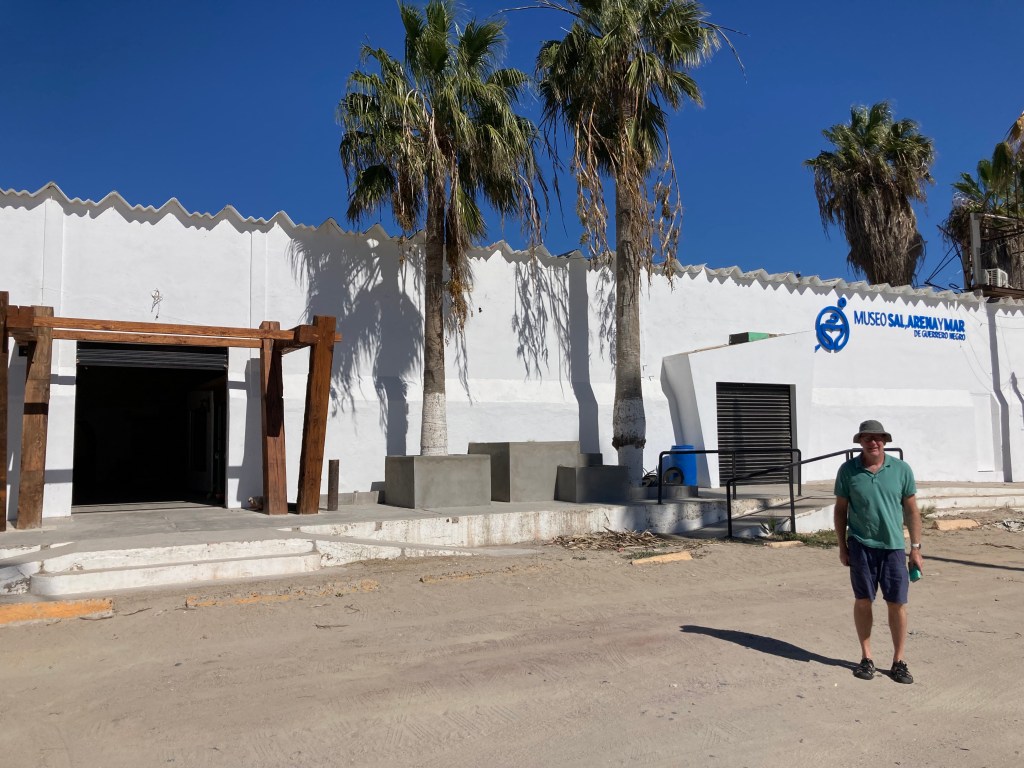
Because of this natural occurring salt flat, the whale calving bay has a higher salinity. This makes it easier for the calves to nurse and breathe as the buoyancy helps them stay near the surface. No whales yet but on our way back north in the spring we will camp here and get in on this amazing event. We went to the salt and whale museum and got a pretty good education on their cycles as well as their destruction and renewed populations during the Age of Discovery and up until whaling was banned in Europe and the Americas.
We stayed at a walled campground hotel within the town. it had a restaurant serving a well made seafood 3 course meal for about $20CAD ea. A corvina pate with crackers and carrot soup with croutons. Albert had a seafood stew rich in scallops, prawns, fish and octopus and I had a grilled fish with achiote glaze.

As Guerrero Negro is along the MEX 1 highway, it is also a rest stop for all the rigs towing their Baja 1000 race vehicles to the start line in La Paz. They take a couple of weeks to get to the start line and preview the route by driving it a few times for a few hundred kilometers then head to the next stop often replacing axels or tweaking suspension as they continue. Teams of racers from 10 to over one hundred support their race vehicle and drivers. For the first time in its 56-year history, the race is headed north this year from La Paz to Ensenada. 1000 miles of sand and no stopping allowed. The racers have a maximum of 50 hours to complete, and the top teams are estimated cross the finish line in under 24 hours. Our next stop will be about 2 hours away at San Ignacio. At Pit Stop #4 so it will be loud and exciting!! See you there!!


 The Grape Escape