
Time flies when you are having fun. This cliché rears its formidable head so often and we get sidetracked in our writing. Apologies this posting coming a few weeks after arriving back in Canada. Garden is planted, routines are in place, no crowds, lots of nature surrounds us and now its time to go back and remember what feels like a million years ago. May the fourth (2025) be with me as I begin to write. In our last post we were heading to Hanoi, Japan and back home in a month for our future.
Our hotel in Tam Coc arranged a “limousine”, a van with scheduled bus transit route, to shuttle us the hour and a half to Hanoi. From a transfer point, the van driver stopped and pointed in the direction of a car that would take us to our hotel. Arrival at our destination was noisy and chaotic with cars, scooters and people everywhere. Our driver stopped the car at the intersection of a one way street, going the wrong way, and pointed towards where we should go. Then drove off.
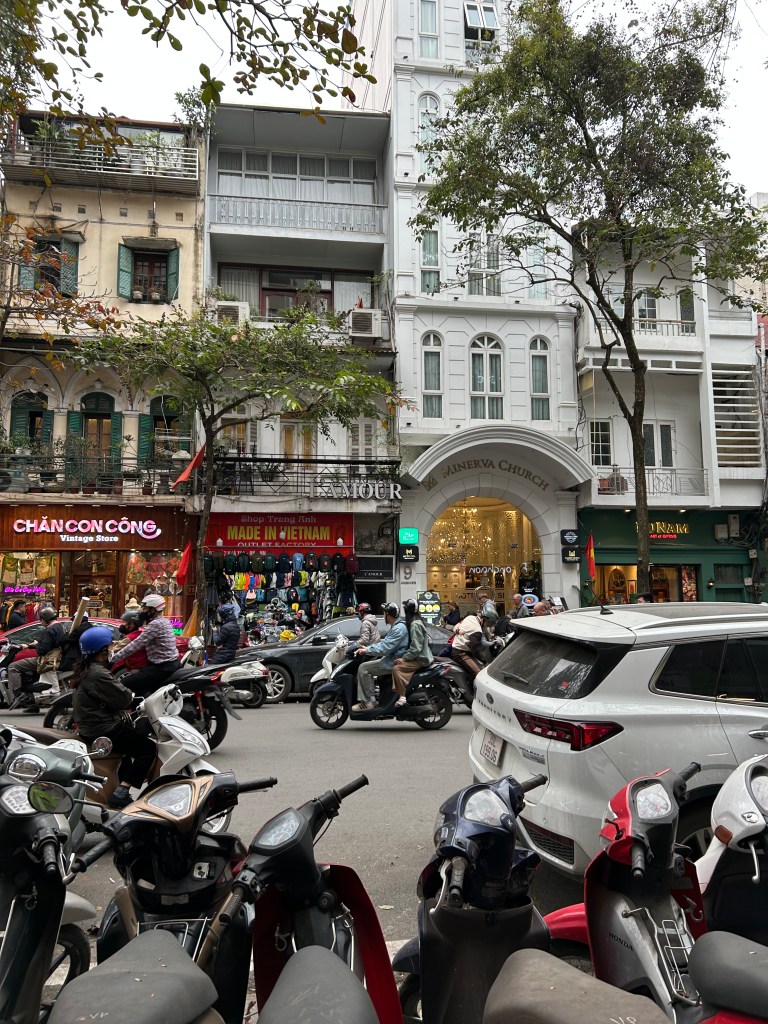
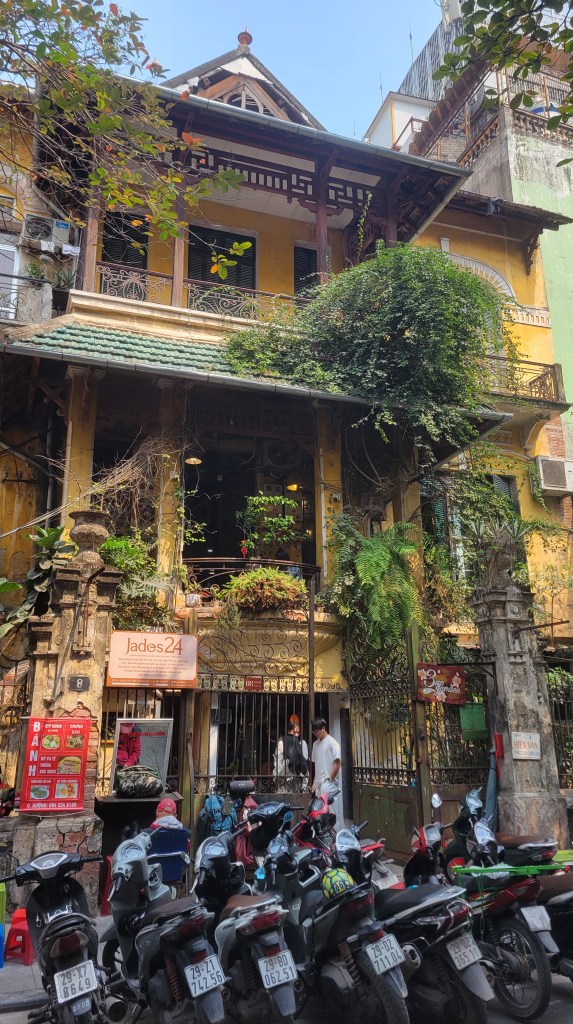
There were scooters driving in both directions on our street so we found what was left of a sidewalk and navigated around the parked scooters until we found our hotel. But it wasn’t our hotel. It was the sister hotel a few doors down and they guided us to our lobby. Once inside we were given a cup of green tea, asked to sit while a hotel staff member (maybe some sort of concierge) reeled off many sightseeing options in and around Hanoi. We had cancelled an overnight cruise in Halong Bay due to stomach issues and decided we would immerse in Hanoi. We had prearranged a few activities so our poor host was unable to sell us anything before checking us in.
We had booked this hotel quite a bit in advance as we had to have an address for our Japan Rail Pass vouchers to be delivered to and as with all things Japanese, they were right on schedule or perhaps ahead of schedule as they arrived at the same time as us!
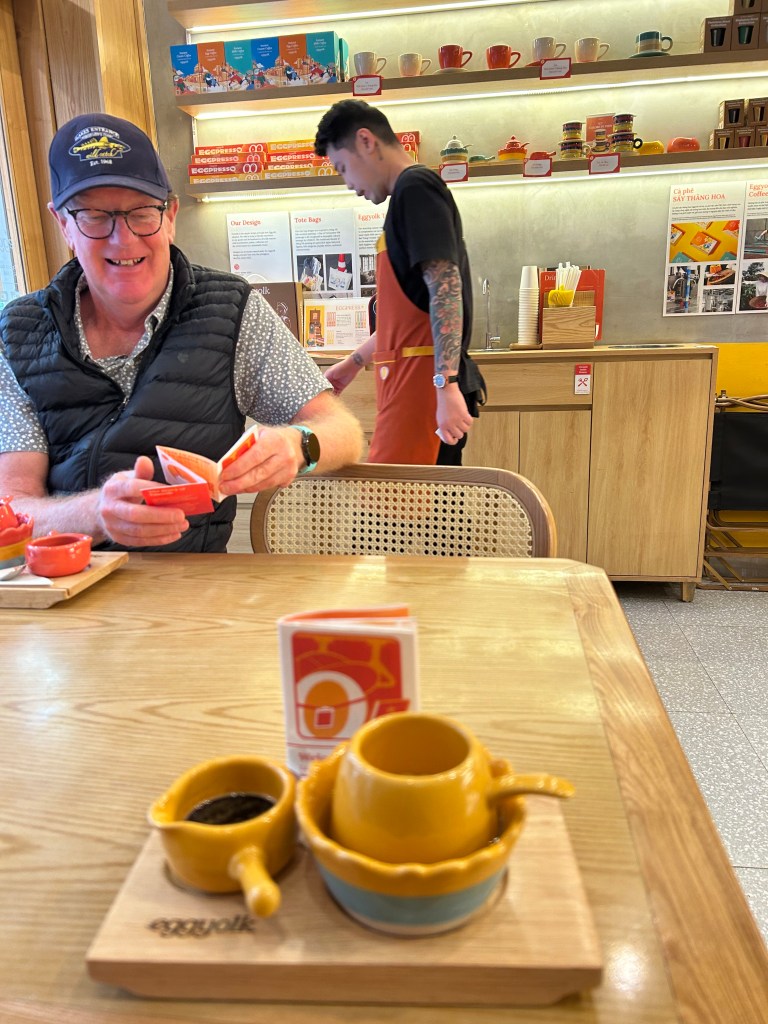
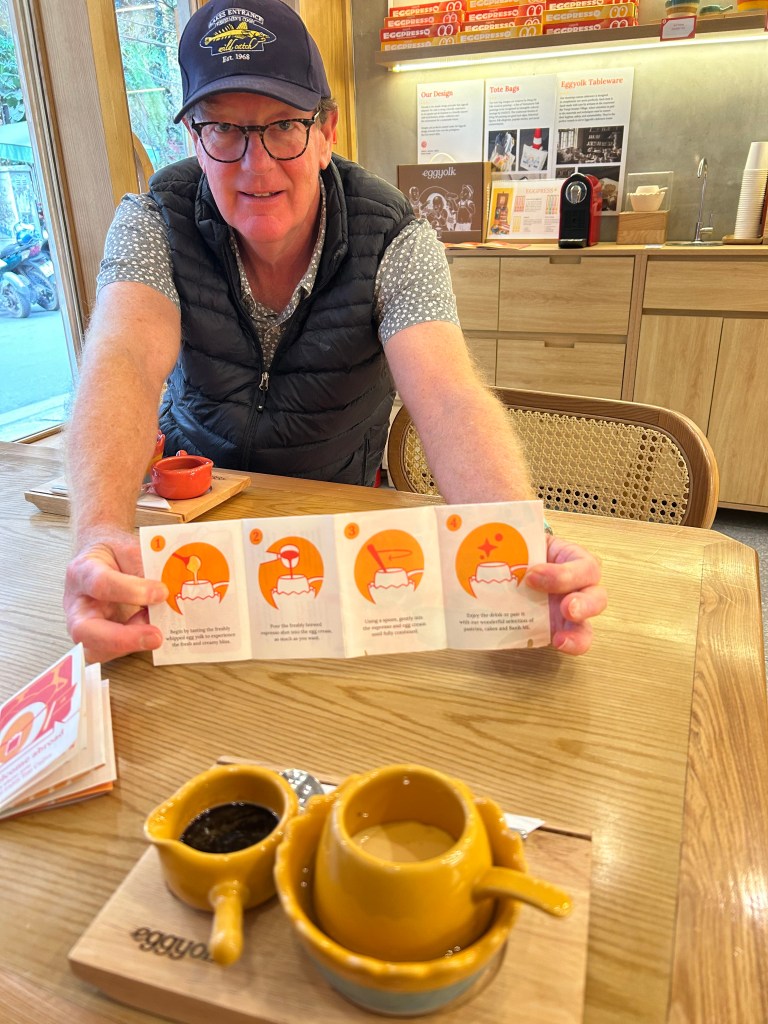
Arriving early in the day we were hungry and I convinced Albert to have a Bahn Mi at a 4 table restaurant next to the hotel. He was a bit guarded as the Bahn Mi experience we had in Hoi An had begun all our gastro-troubles. But it was good. We talked with the proprietor who asked if we were going to go to a number of places. The Hanoi Hilton? The Womens Museum? Train Street? And the list went on. Yes! As we continued along we saw an egg coffee shop and decided to partake. Egg yolks are whisked with sugar until creamy like sabayon, then hot espresso is poured in and it is combined and consumed. Very rich. Very delicious.
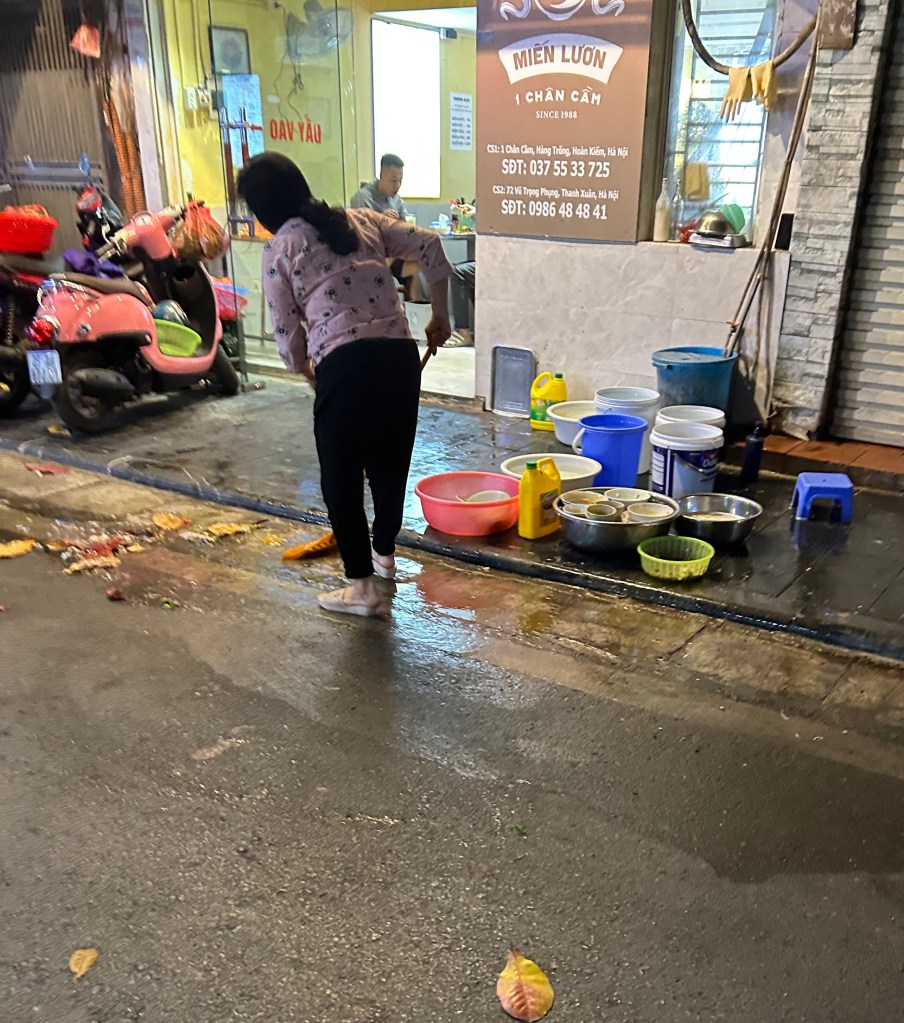
The Michelin Pho restaurant (below) had large lineups but the google reviews were less than compelling so we decided the soup may have been good but not worth the line. Plus this was the dish washing station on the sidewalk around the side. A pretty normal scene but we preferred not knowing how some things were done.


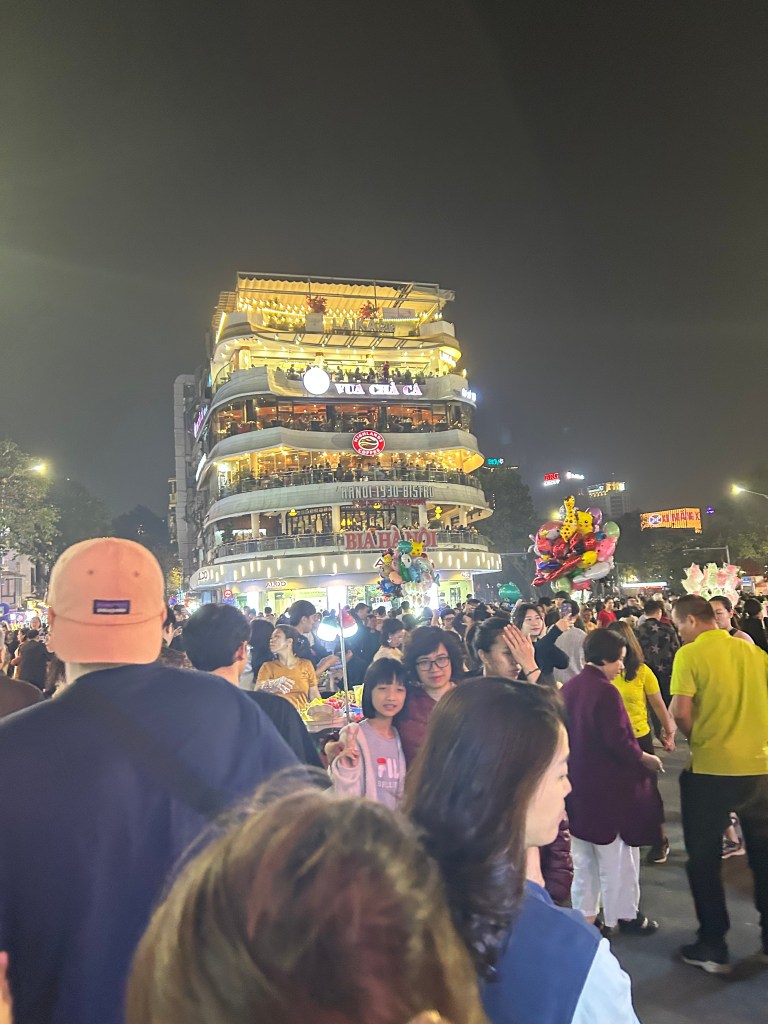
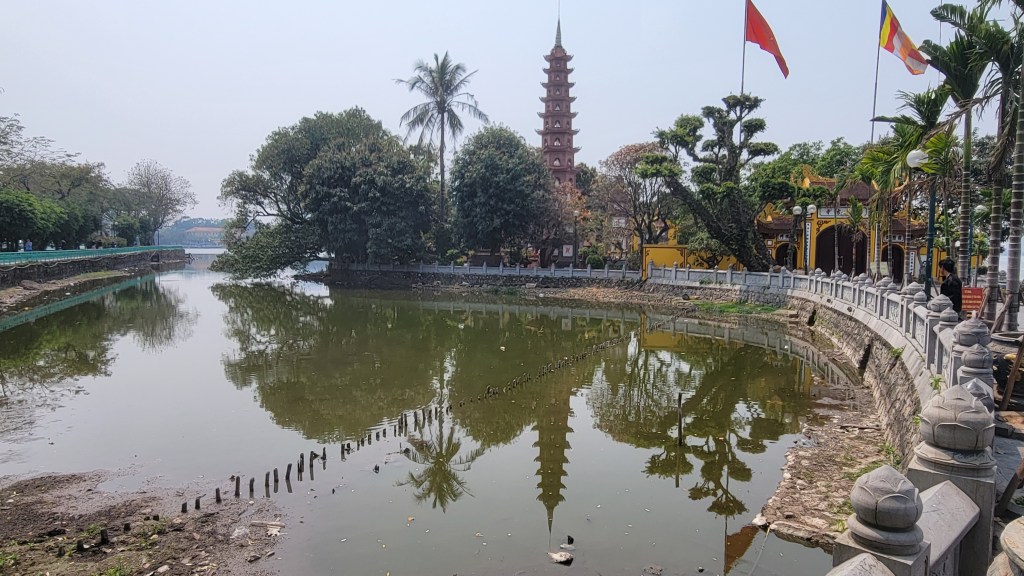
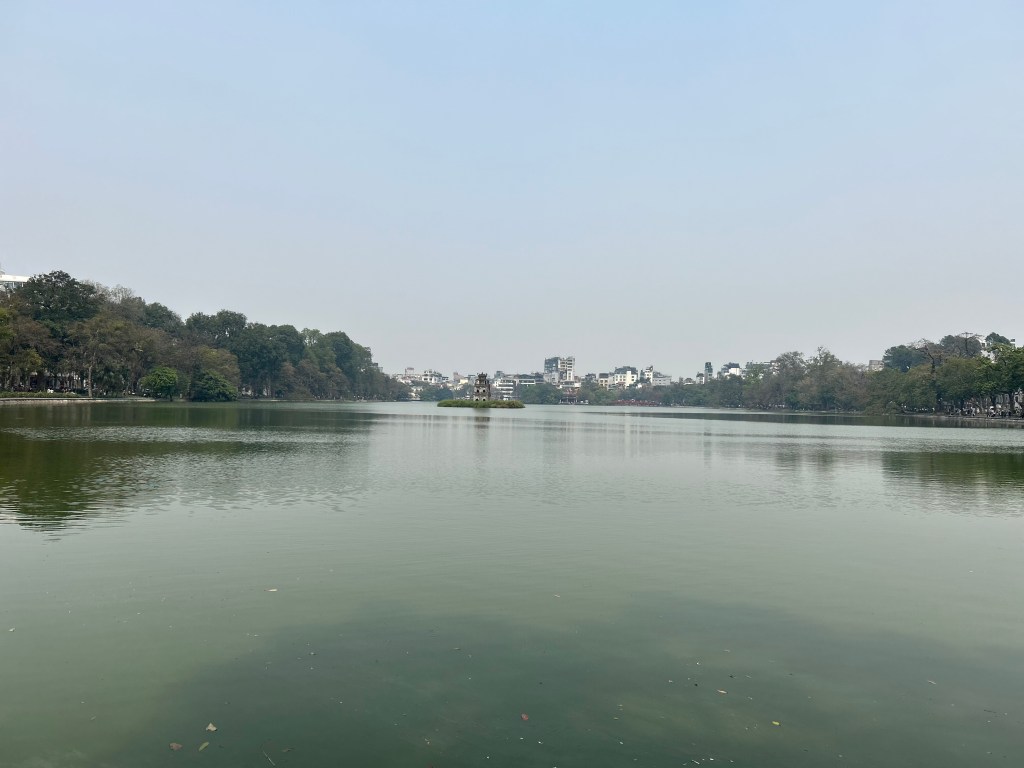
We walked to Hoan Keim lake about 3 blocks from our relatively quiet street and pushed through the hoards of tourists taking selfies in front of this multi story shopping mall. We learned it was going to be destroyed for a bigger and better one so hence the photos. So we took one too. This one was a better shot on another evening.
Along the way we passed St Joseph’s church built by and for the French colonials and still standing as it survived the carpet bombing in the American War.

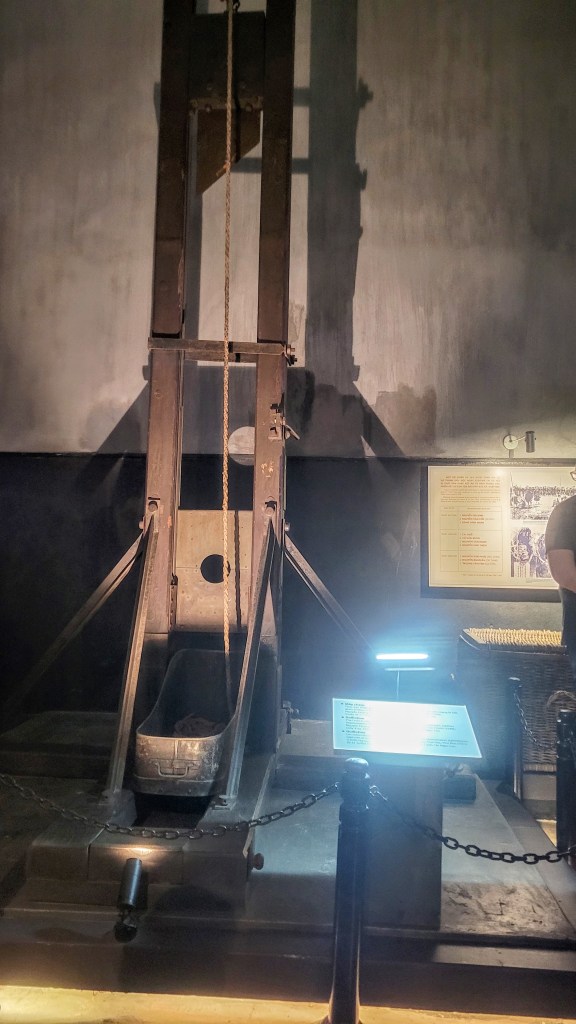
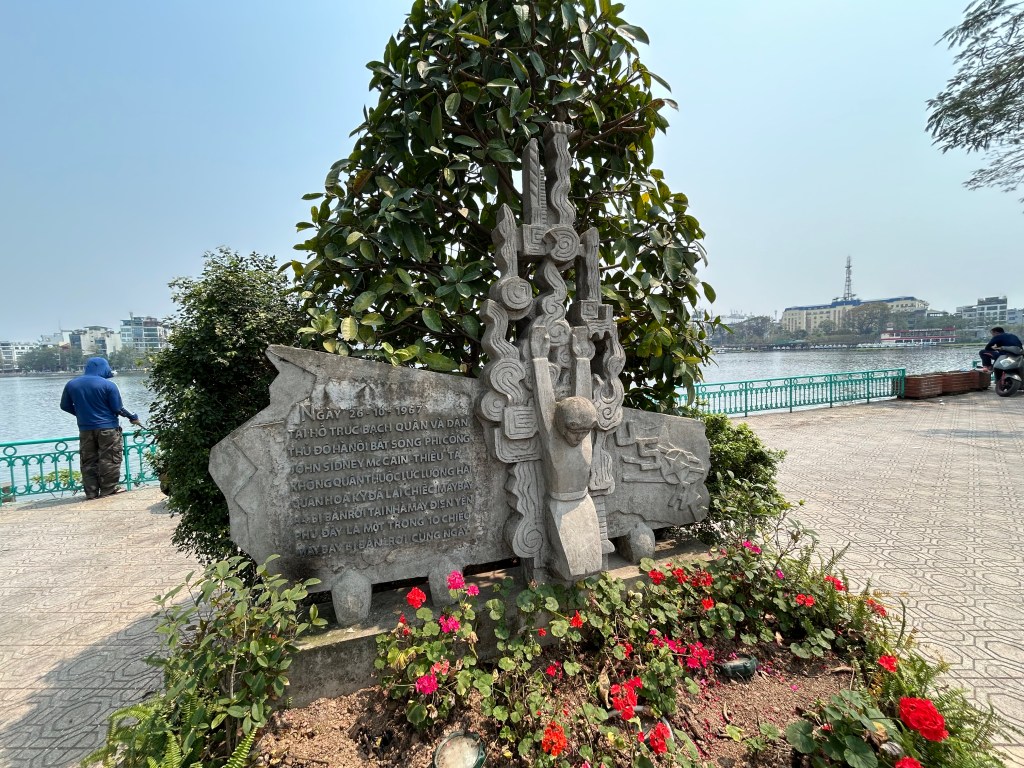
Figuring out daily things to do and see always reverted to the resilience of the Vietnamese people. Our first museum was Maison Centrale. The French built this tortuous prison and named it to sound like a warm home. During the American War it was renamed the Hanoi Hilton by its prisoners. The guillotine is still in place and the stories of the horrors of its inhabitants are remembered and displayed. A “must visit” that was very sobering. The narrative within the museum whitewashes over the torture inflicted on prisoners during the American War and portrays the Vietnamese as kinder than the French colonialist occupiers that preceded that conflict. Statements by US P.O.W.’s such as Sen. John McCain and others are framed in a tone of reconciliation and forgiveness but the menacing atmosphere of past brutality and human atrocities by all previous prison personnel (French occupiers in the early 1890’s and Vietnamese afterwards) hangs in the air like an evil, cold, damp shroud impossible to whitewash away.

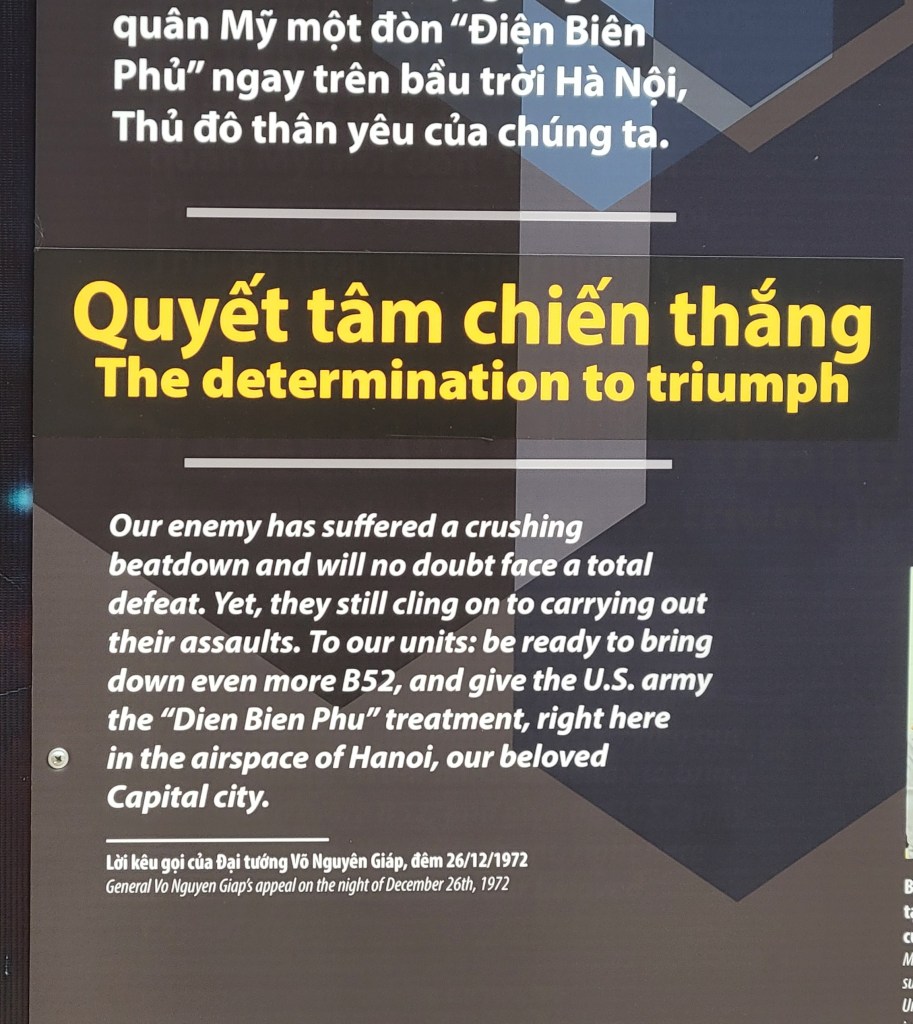

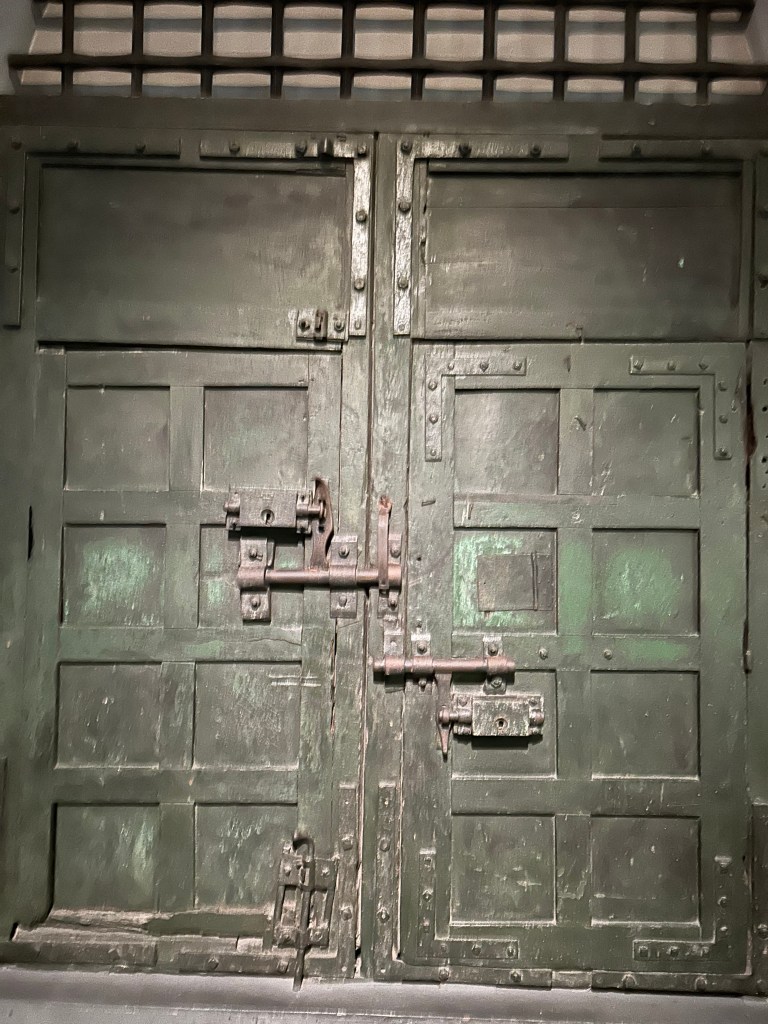
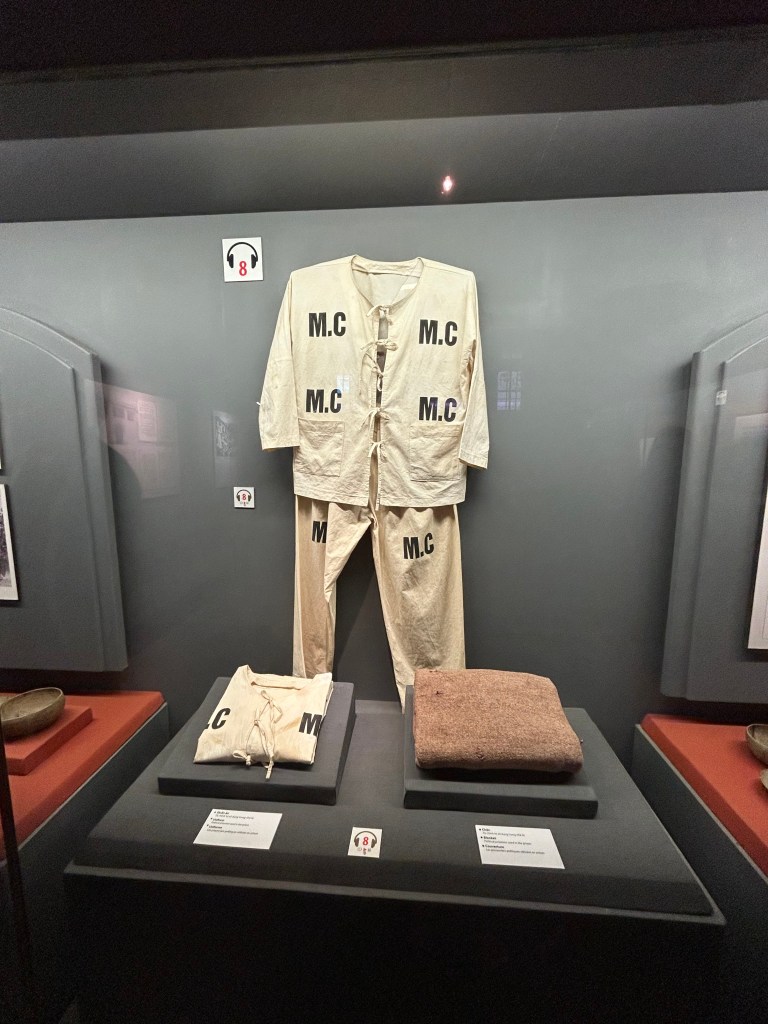
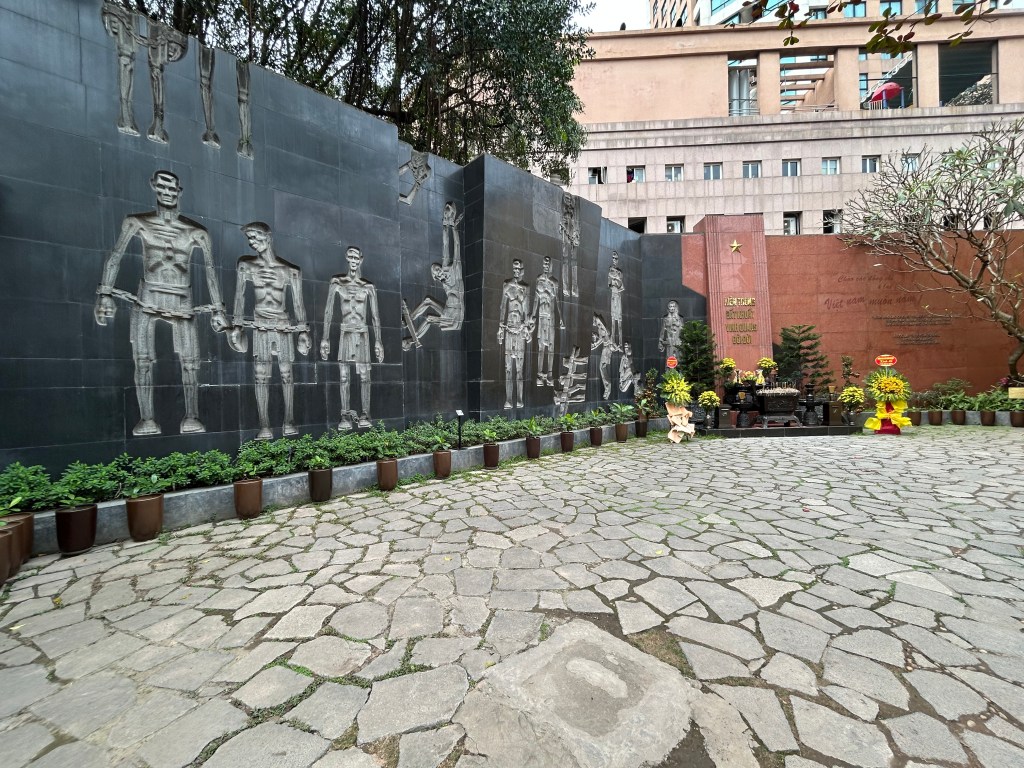
A brief generalized explanation as we understand it, is as follows. The American war is a large part of the modern history of Vietnam and is attributed to Ho Chi Minh’s quest for sovereignty. When the Americans would not give him an audience he found allegiance with Russia which lead to American involvement in the war against communism. In North America we always knew it as the Vietnam War but in Vietnam it is the American War. The anti-communist USA, based in Southern Vietnam, lost and the communist north amalgamated with their people in the south. The whole country has healed and has been rebuilt but has not found all the landmines that continue to maim or kill citizens 50 years later. But money is king and tourism and manufacturing are vital to funding Vietnams developing economy.
A historical attraction that has survived centuries of change is the Thang Long Water Puppet show. This sold out and highly entertaining theatre show also had headsets that translated the stories of historic Vietnamese culture. It told of the farmers, fishers, dragons, Phoenixes and turtles. The puppets perform in the water, the musicians play and sing traditional music that tells thir story and at the end the puppeteers wade out for an applause. Very fun and not expensive. But book ahead if you go!!
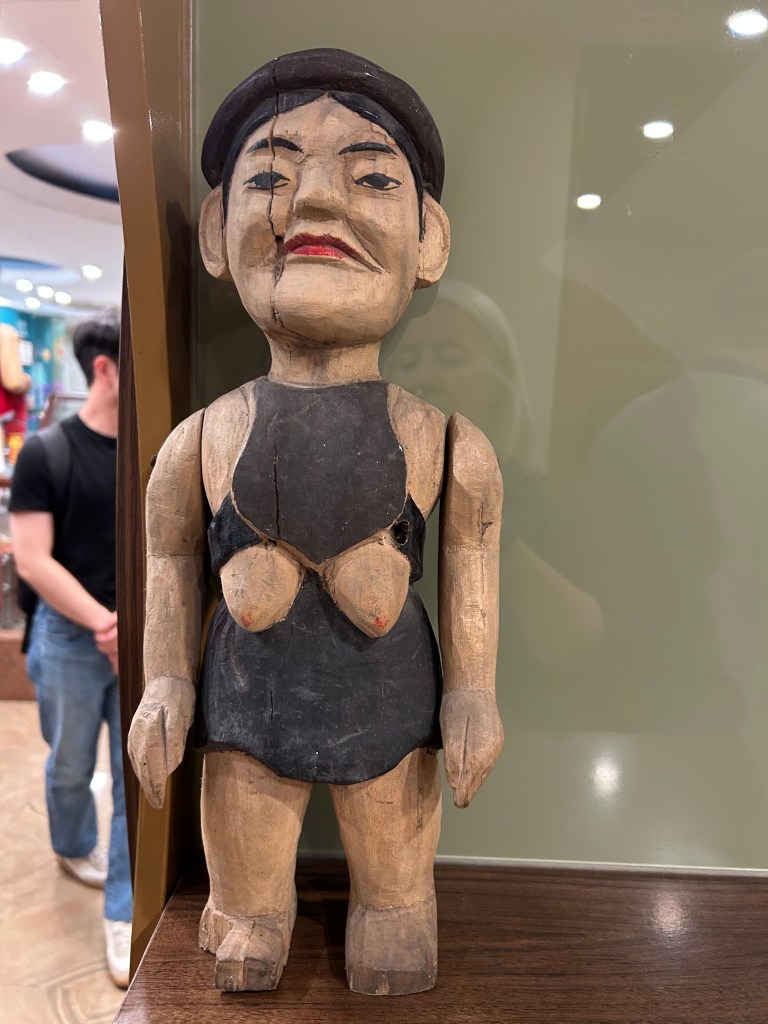
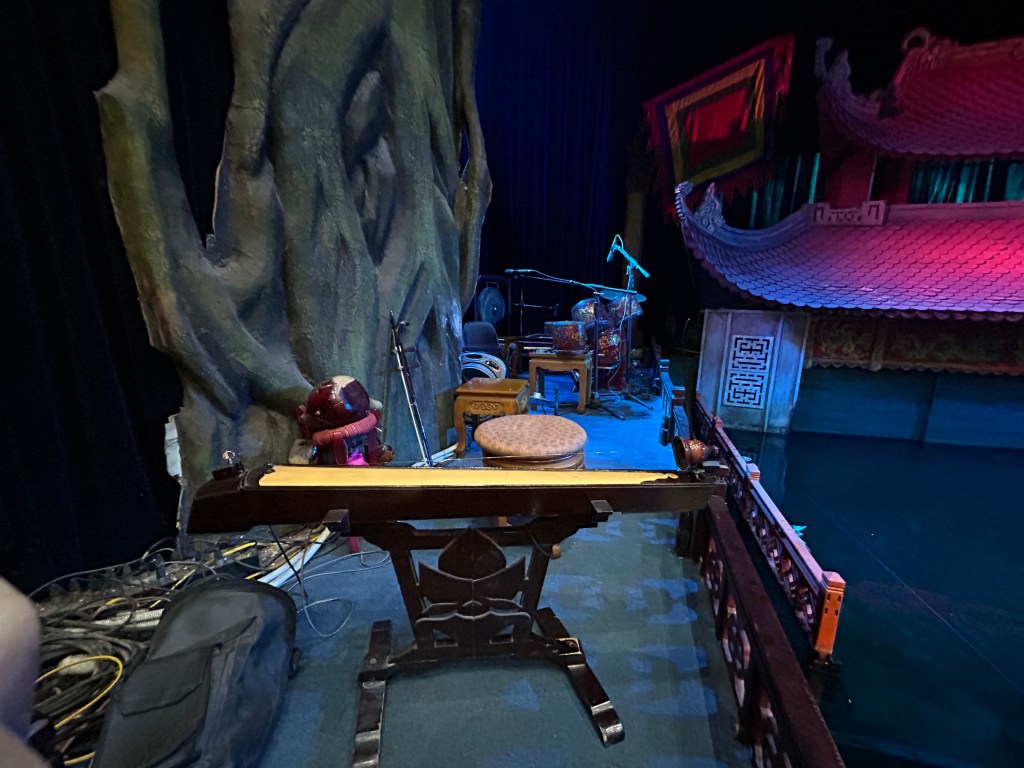
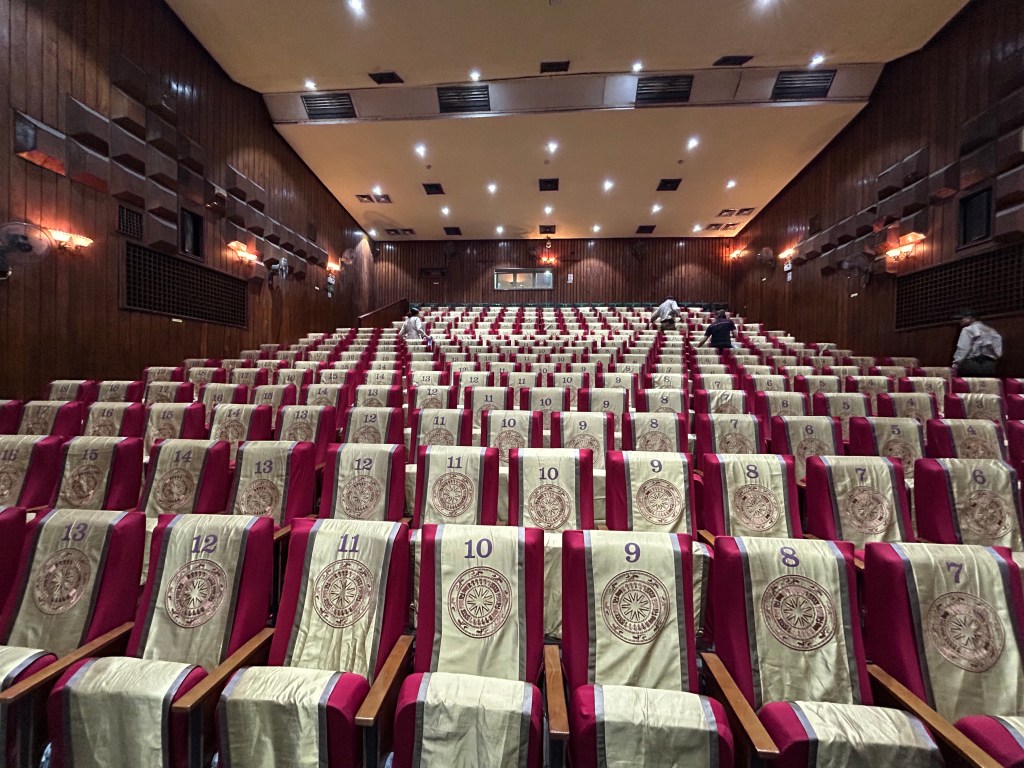
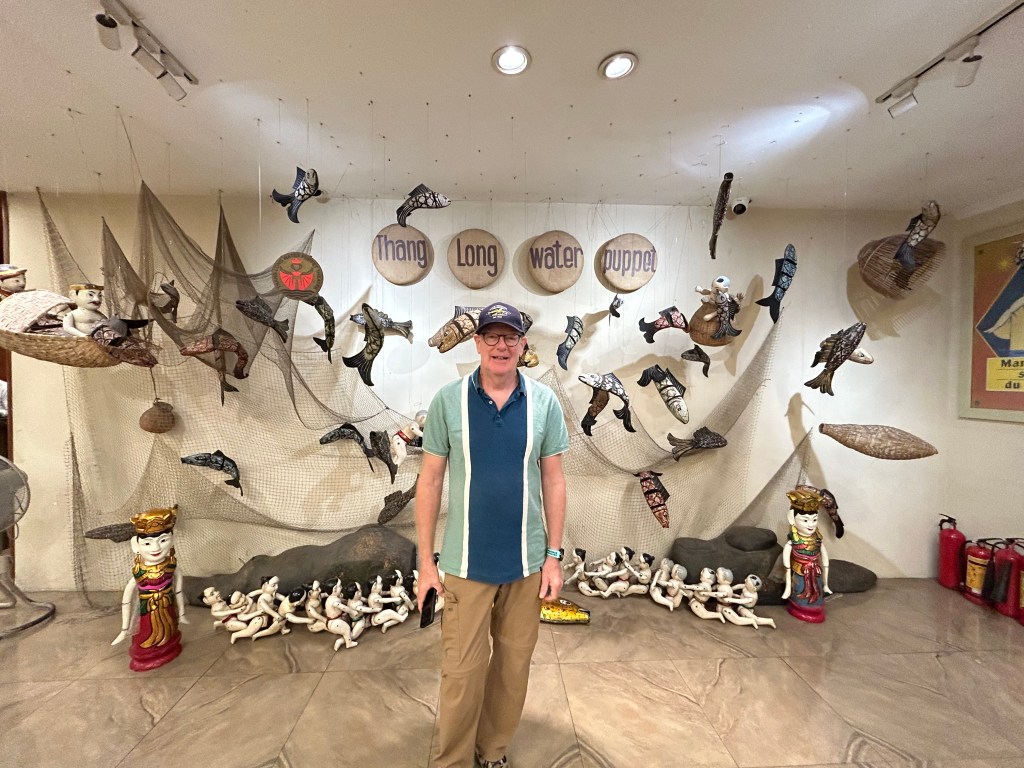


After the show we wandered the busy area and wound up on Beer Street. Loud, bright, and very crowded we were bombarded with restaurant staffers pushing menus in our faces to entice us to stop. It only made us get out of there faster. We were not very good at the circus that comes with huge tourist destinations. While, at first, we found it amusing and entertaining, we quickly felt overwhelmed. We found a quieter restaurant, Gánh Hanoi, with a small line up and satisfied customers saying it was their favorite. Whew.




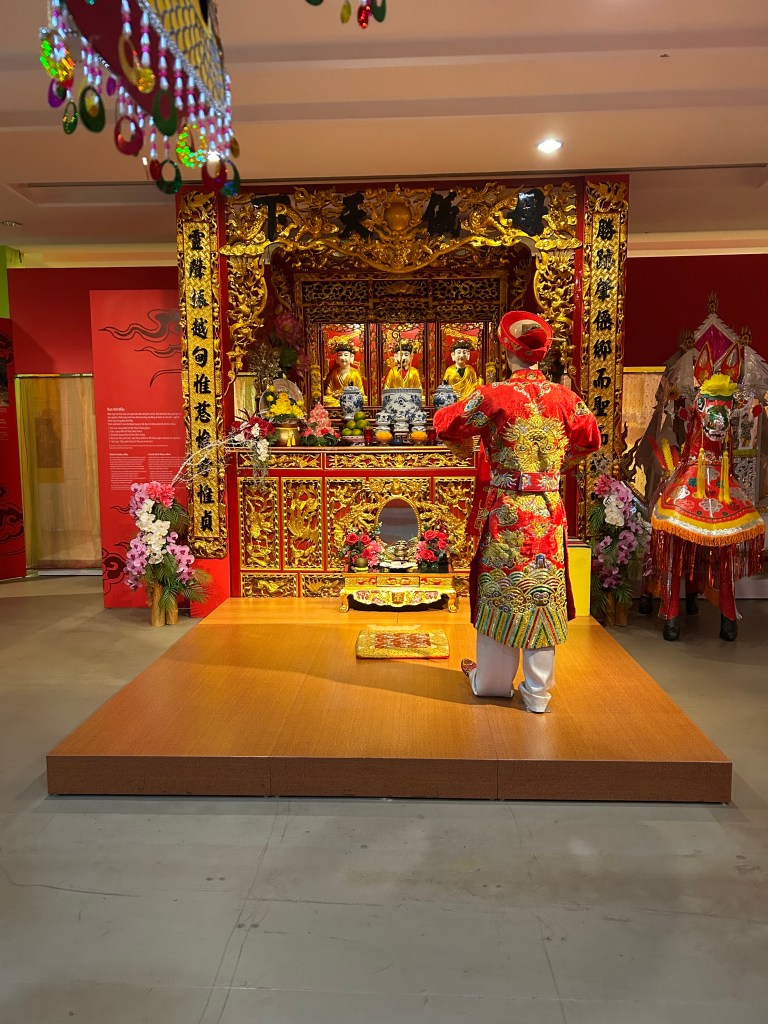
Another museum was dedicated to the women of Vietnam and their very important contributions to helping emancipate Vietnam and oust the Americans. The tricks used and overlooked to get information and supplies to the troops was acknowledged in this museum. But women were not only revered because of wartime but within the worship of Mother Goddess where women are the center of the universe looking after heaven, earth, water and mountains and forests.


One day we decided to go for a 10 kilometer, 38 Celcius, smoggy walk to Tay Ho lake. A friend of ours, Don, used to have a big restaurant along the waterfront and we wanted to see it. He had partnered with a local and the relationship soured once his restaurant was very successful. Escaping back to Canada with his family and not much else (his book will be published soon), we were curious to see it. Under piles of scaffolding it is currently undergoing a transformation into very expensive condominiums. We had an excellent burger and a beer at the next door restaurant and taxied back to our neighbourhood.



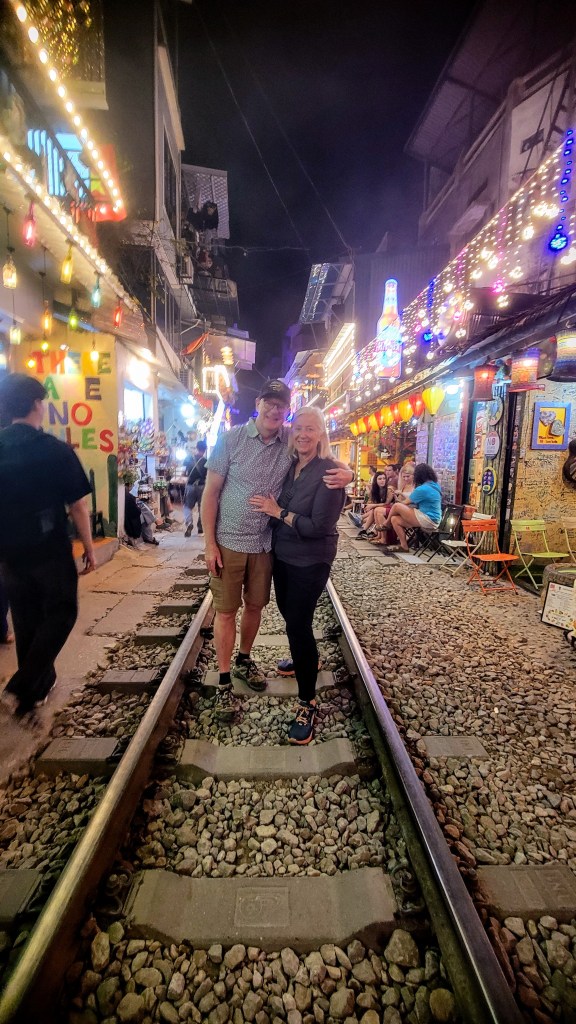
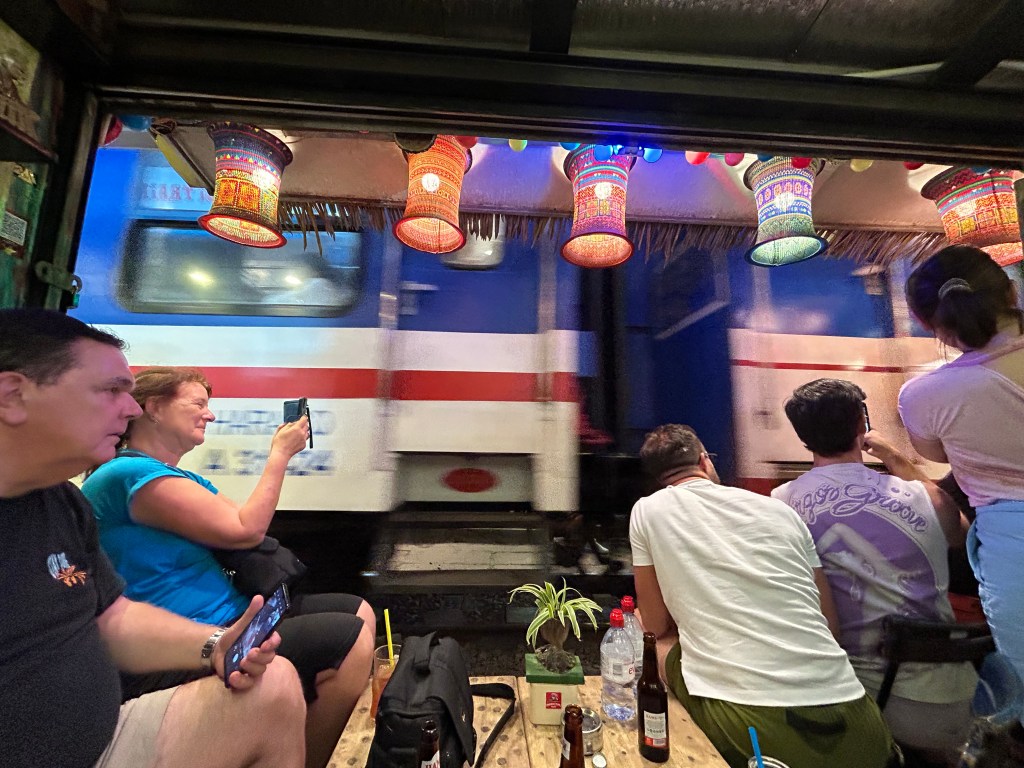
We did sign up for a restaurant tour and visit to Train Street. There is one train line, the North-South train line also known as the Reunification Line, that goes from Ho Chi Min City (formerly Saigon) to Hanoi. Just a kilometer or so from the Hanoi train station the line passes between houses and restaurants with inches to spare. When tourism opened up, Train Street became an attraction. And it did not disappoint. Like Beer Street it is very busy. We found it fun sipping a very cold beer, on a tiny plastic stool, at the restaurant that sprawled across the tracks.


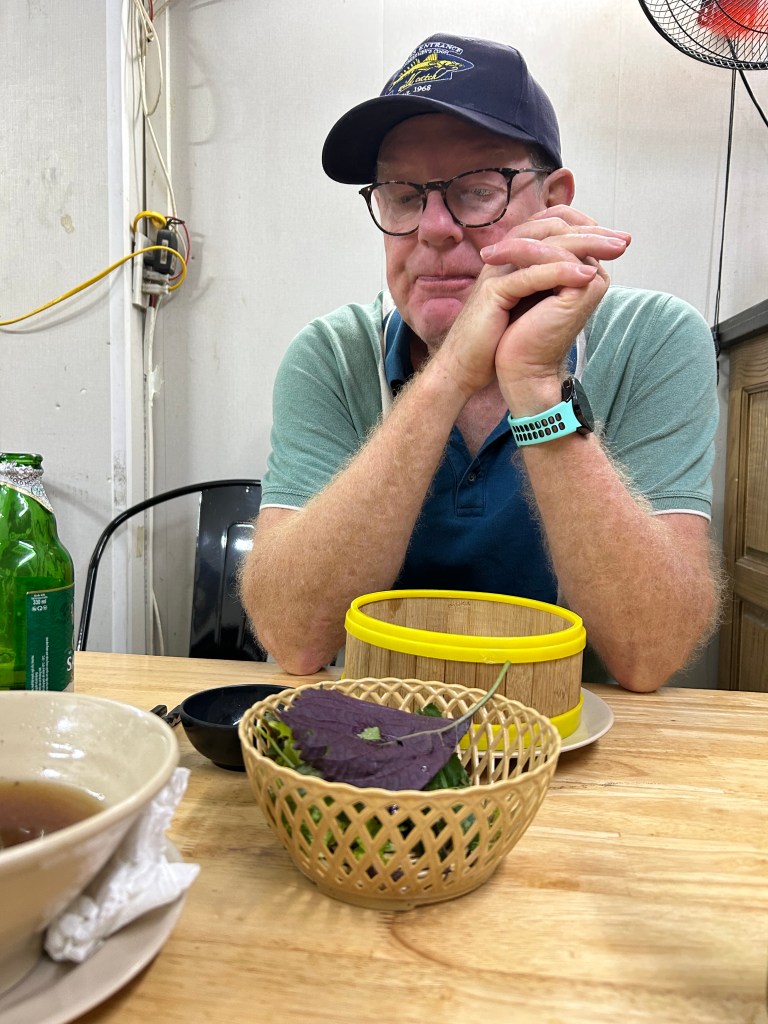
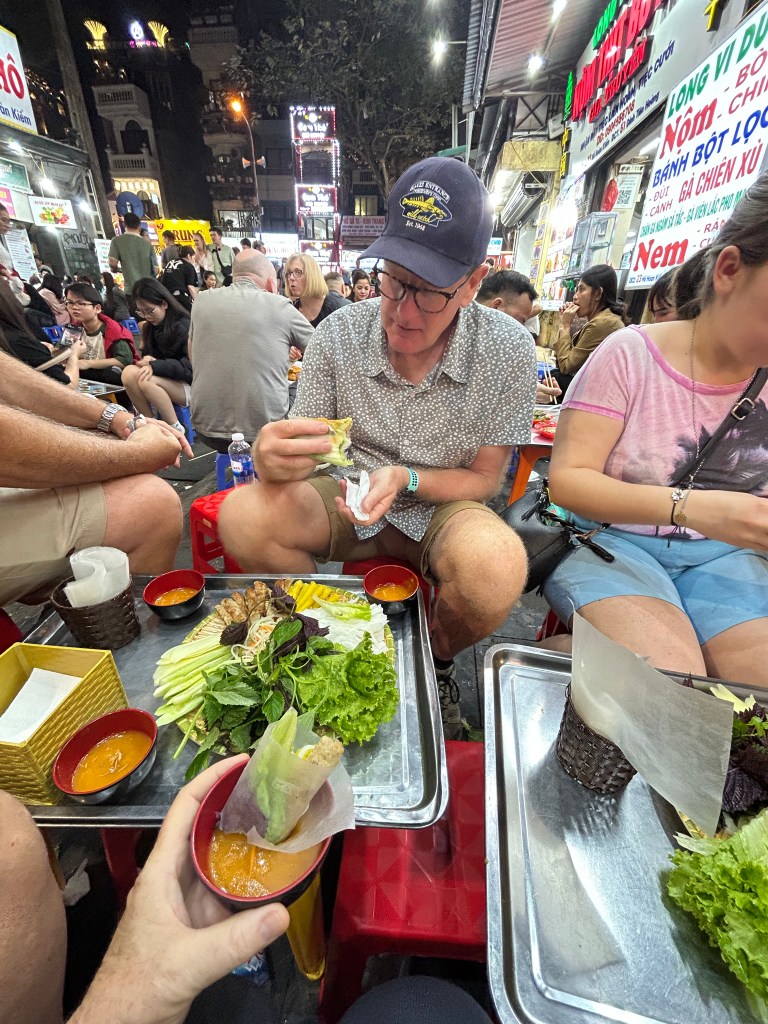
While the restaurants that the tour company owner told his guide to use along the tour had ok food, the tour guide took us to one of his favourite Bun Cha restaurants at the end of the evening. Bun Cha is essentially a platter of greens (lettuce, cilantro, shiso, basil, mint, cilantro) , sausage, fried tofu, grilled meat and fresh cooked and cooled rice noodles. It is served with tender, not brittle, rice paper wrappers that patrons can roll the ingredients in and dip in a spicy fish sauce. It was excellent and we ate there more than once.

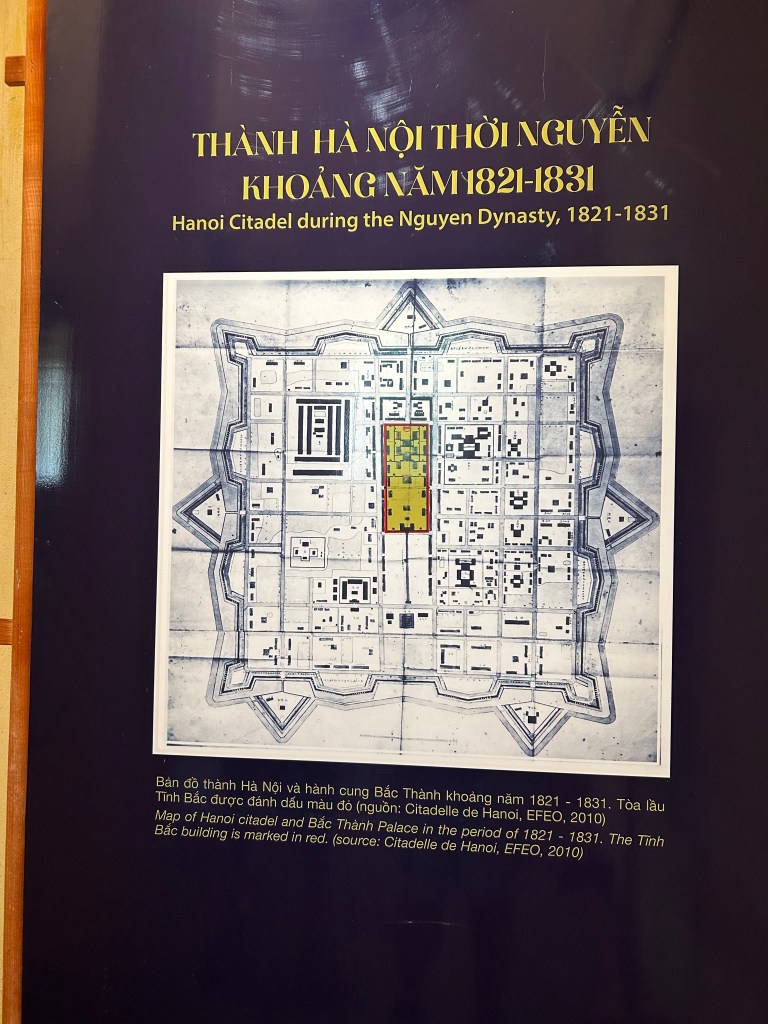
A visit to the Imperial Citadel was more than we expected. Over 1000 years old it had all the remnants of stories of Vietnamese-Chinese dynasties, French colonial occupation and American resistance.

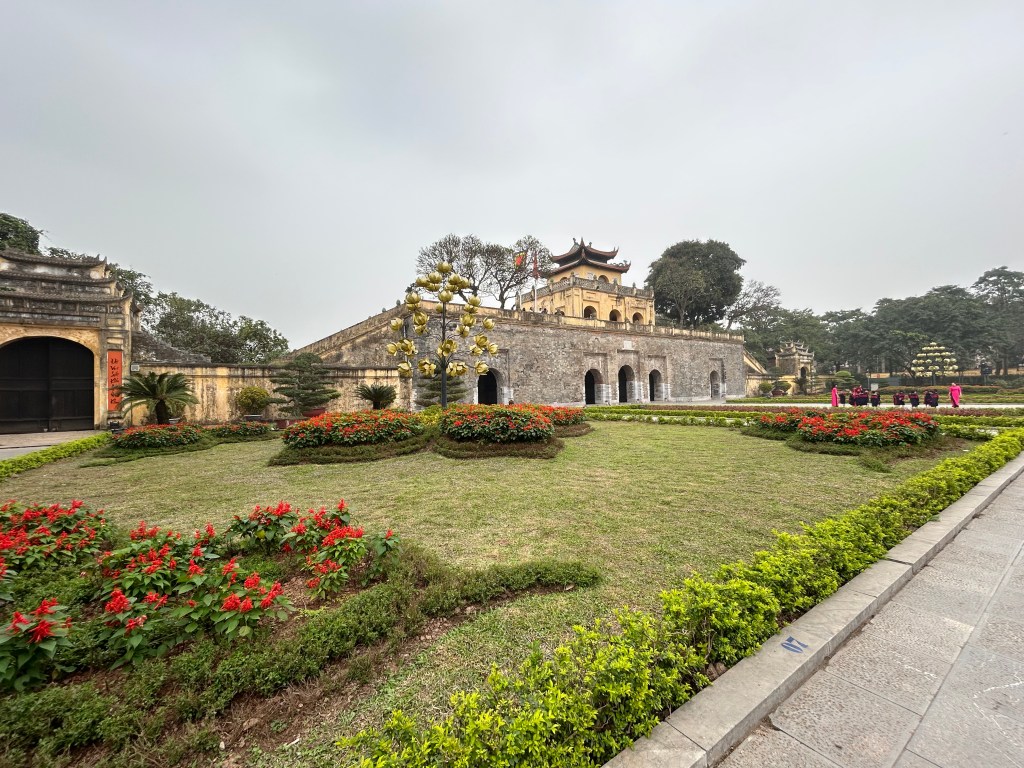
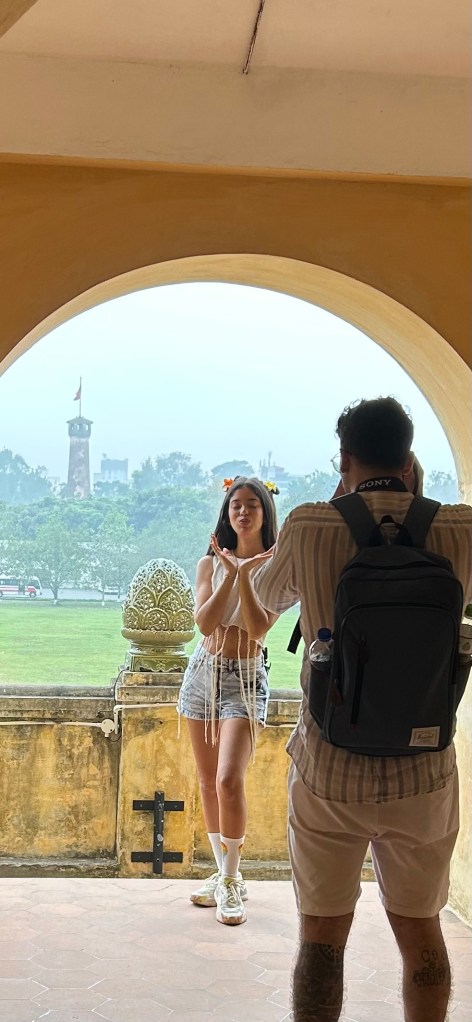
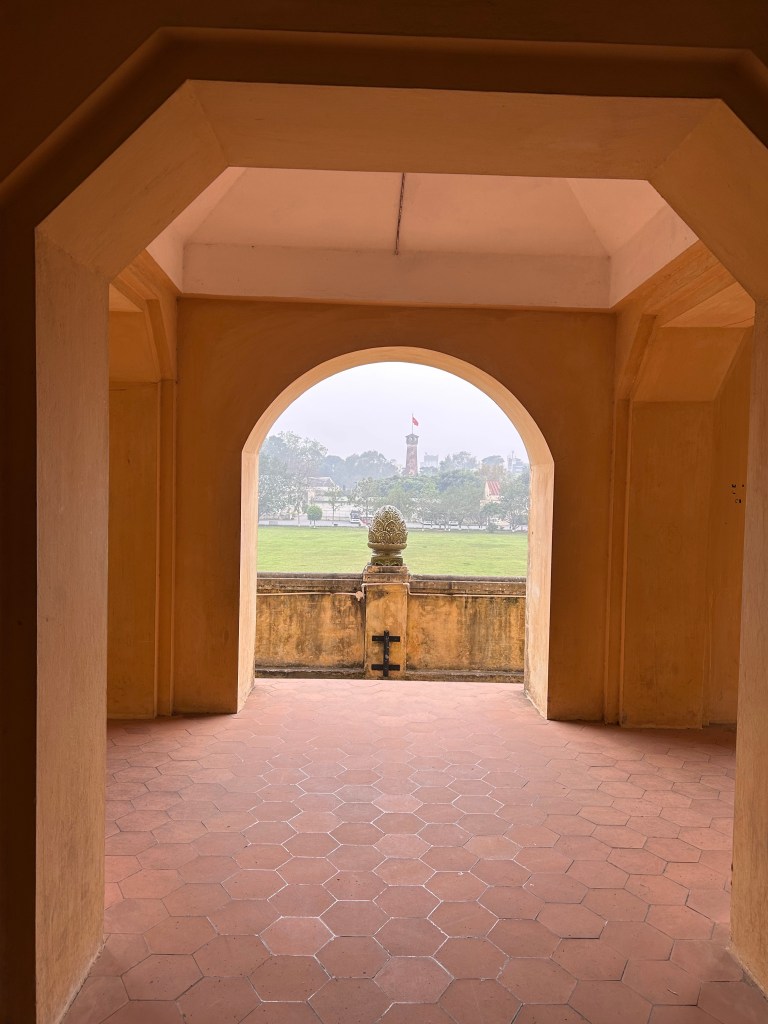
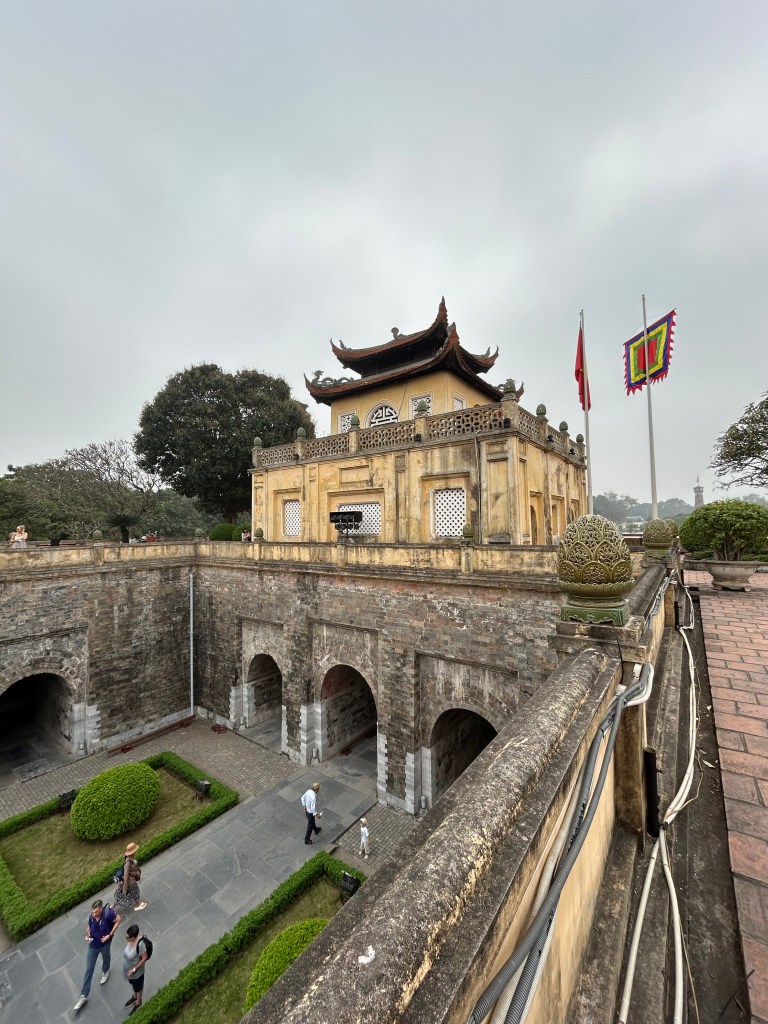

The Vietnamese war-room is preserved underground in a bunker on the grounds. Above ground were leftover Russian military vehicles.
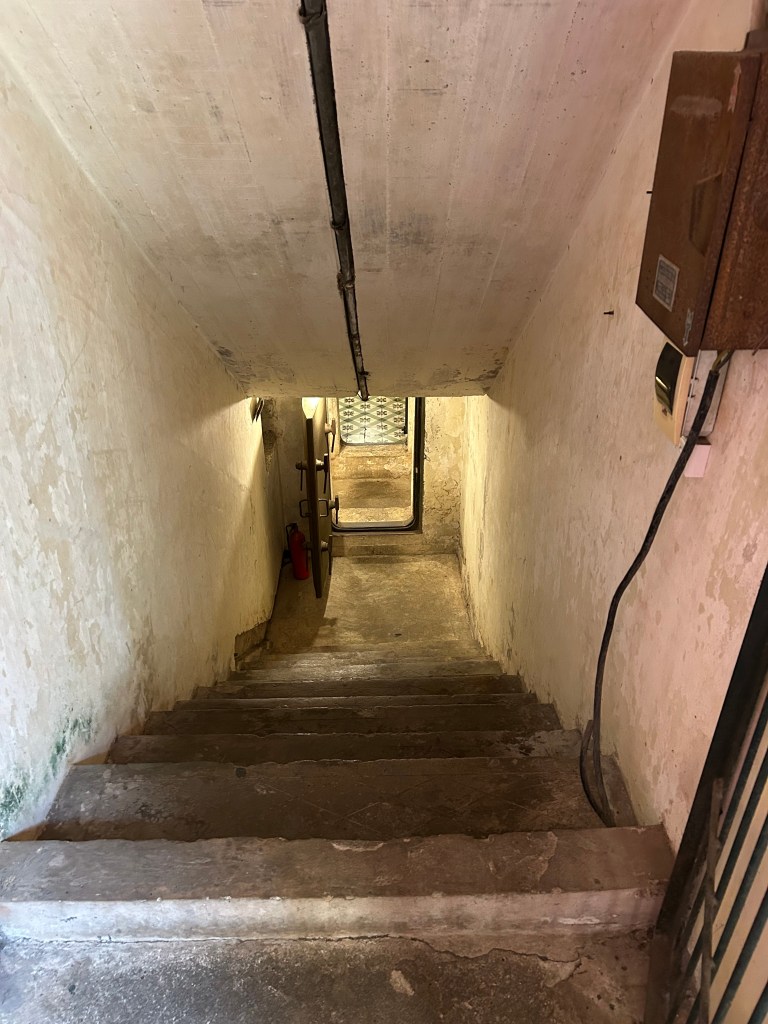

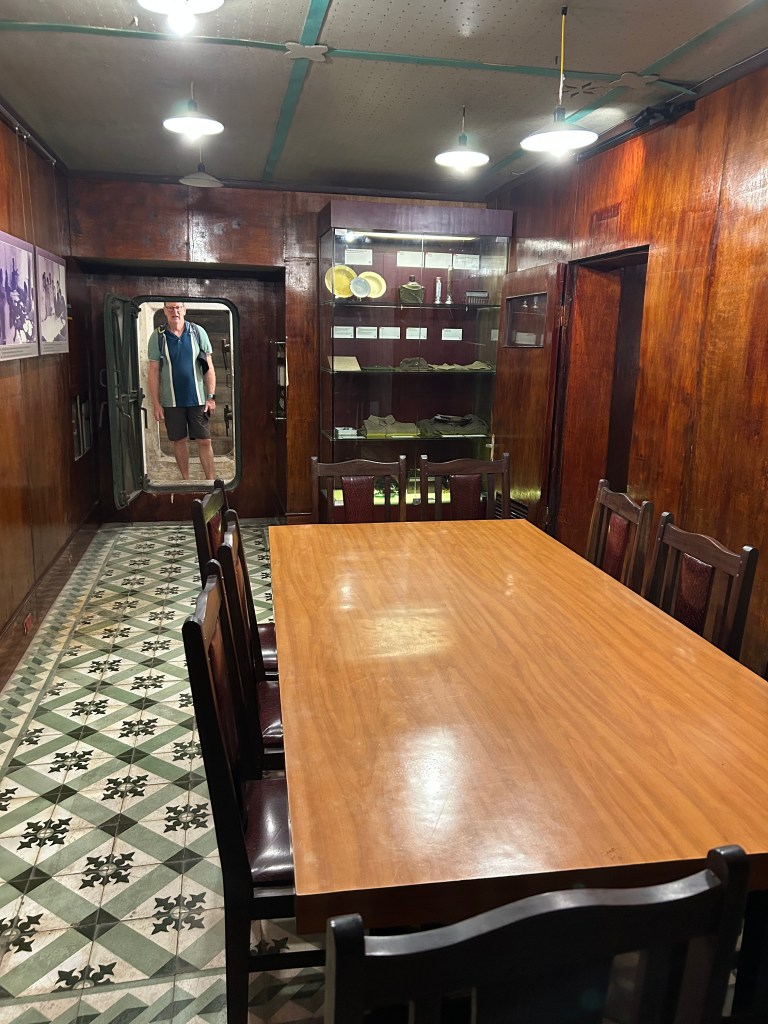
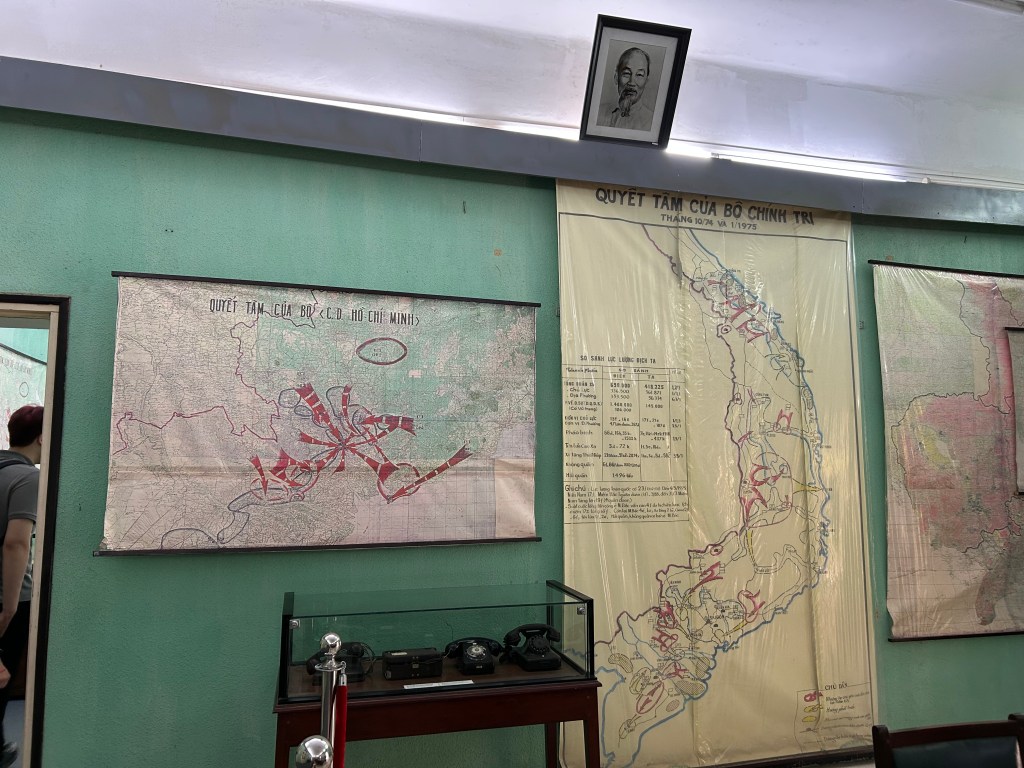


Along with the fairly modern Vietnamese history portrayed in the Citadel, was the ancient dig of the temples and parts of the adjoining town.

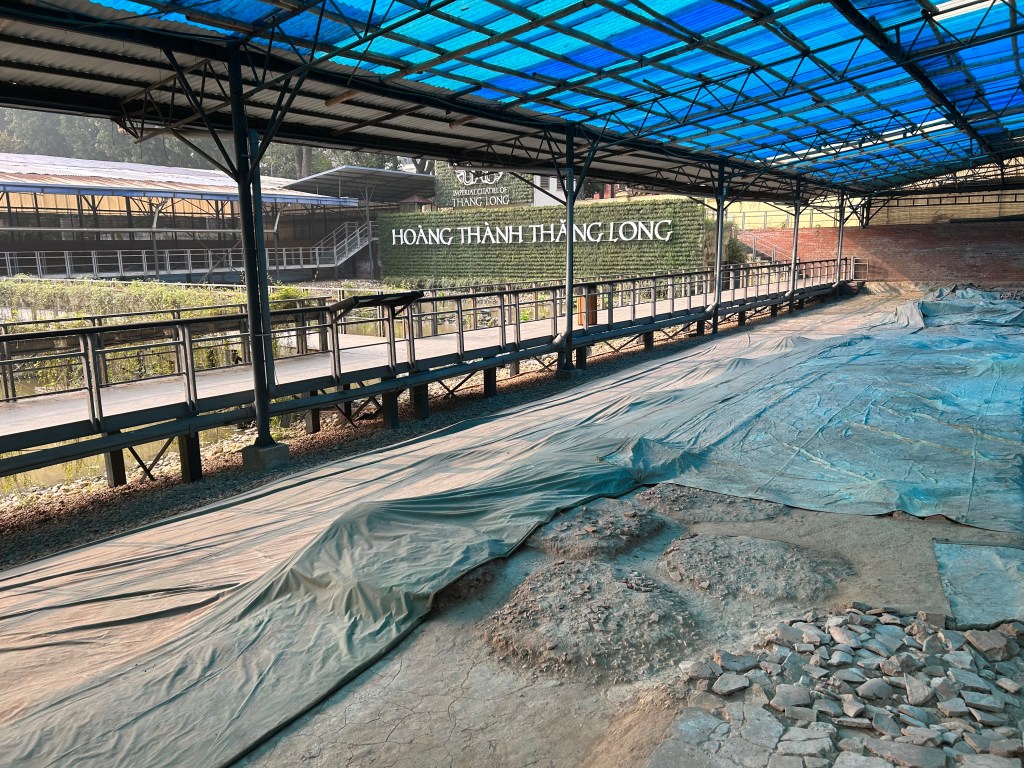
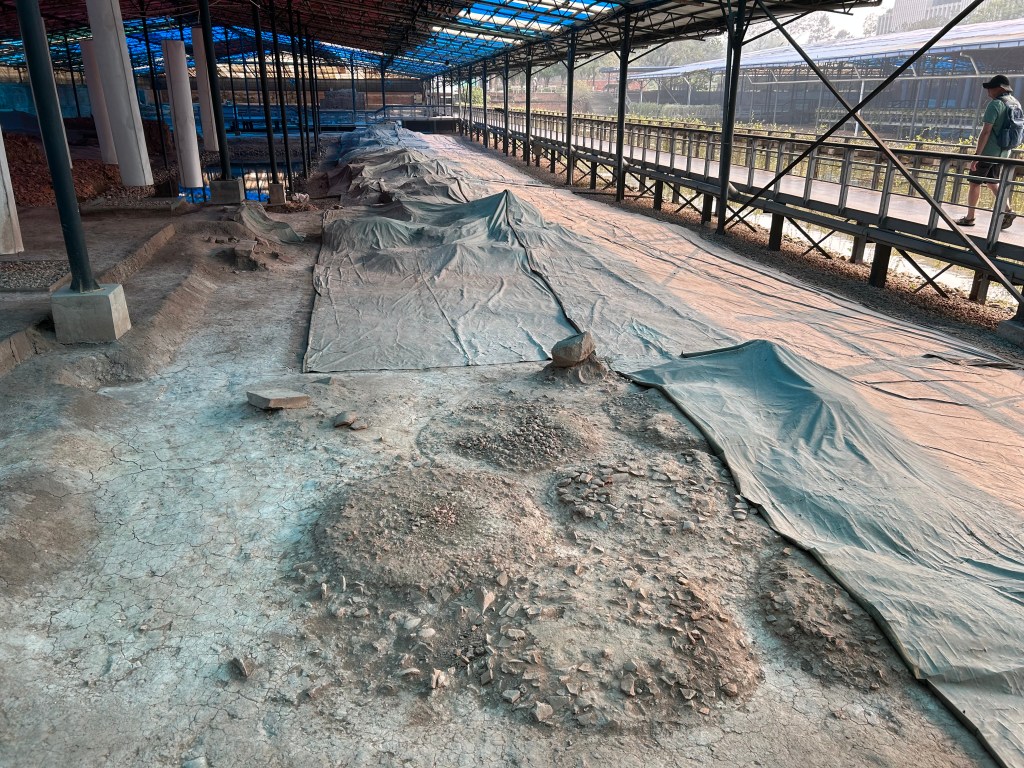


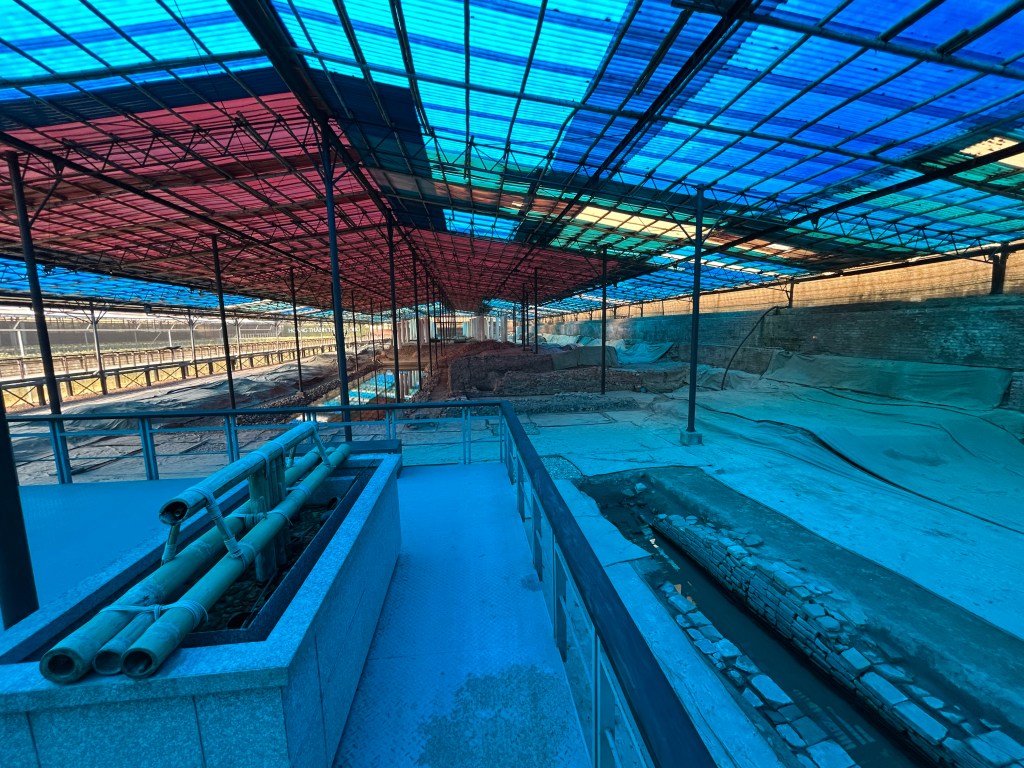
On the plot of the old fortress citadel is the seat of government and nearby is the Ho Chi Minh mausoleum.


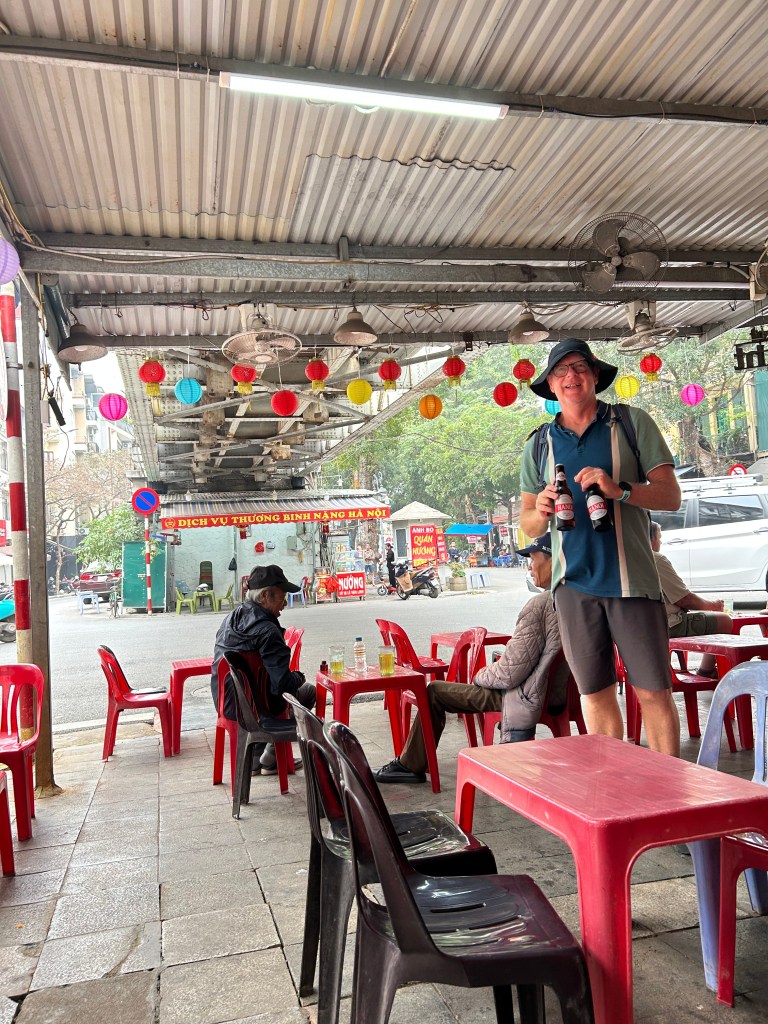
We attempted to see the mausoleum, but I wore the wrong clothes and forgot a sarong to cover my calves. We were museumed out by this time and headed back enjoying an exceptionally cold $1 beer in a non touristy spot under the train tracks near Train Street.
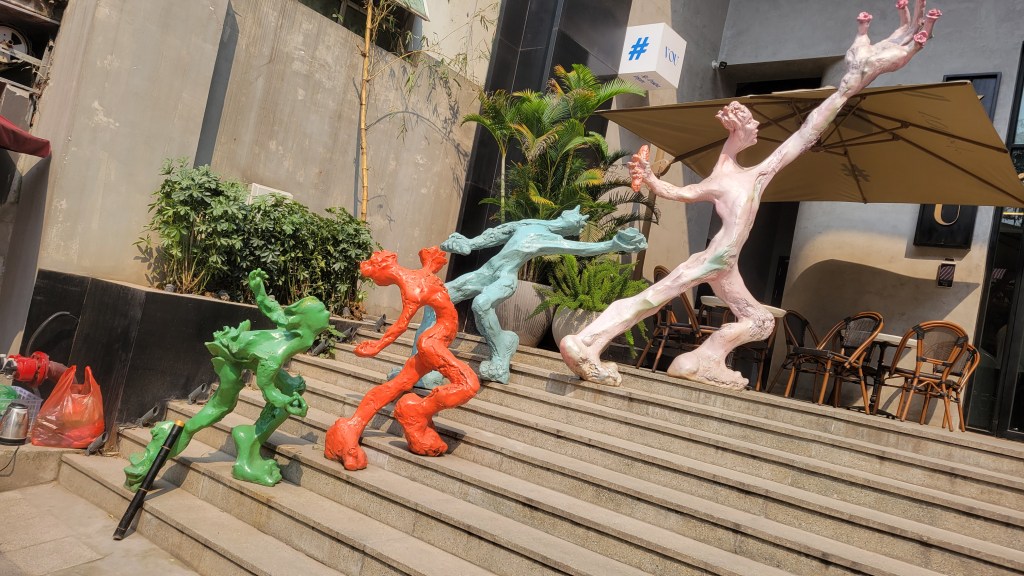
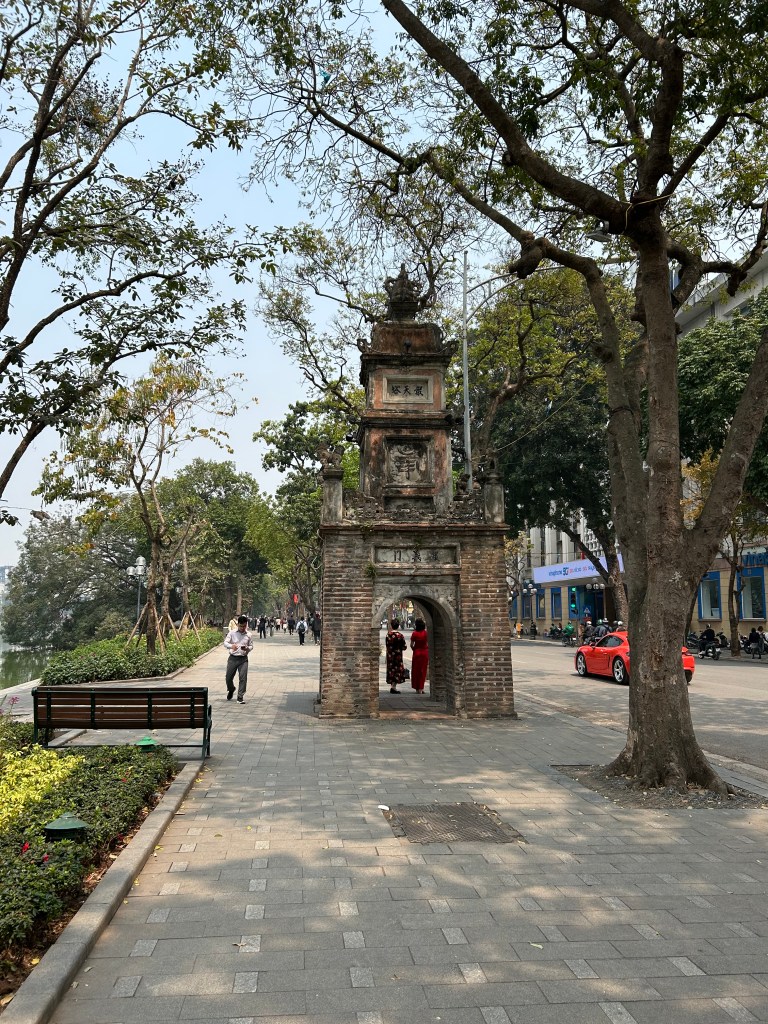
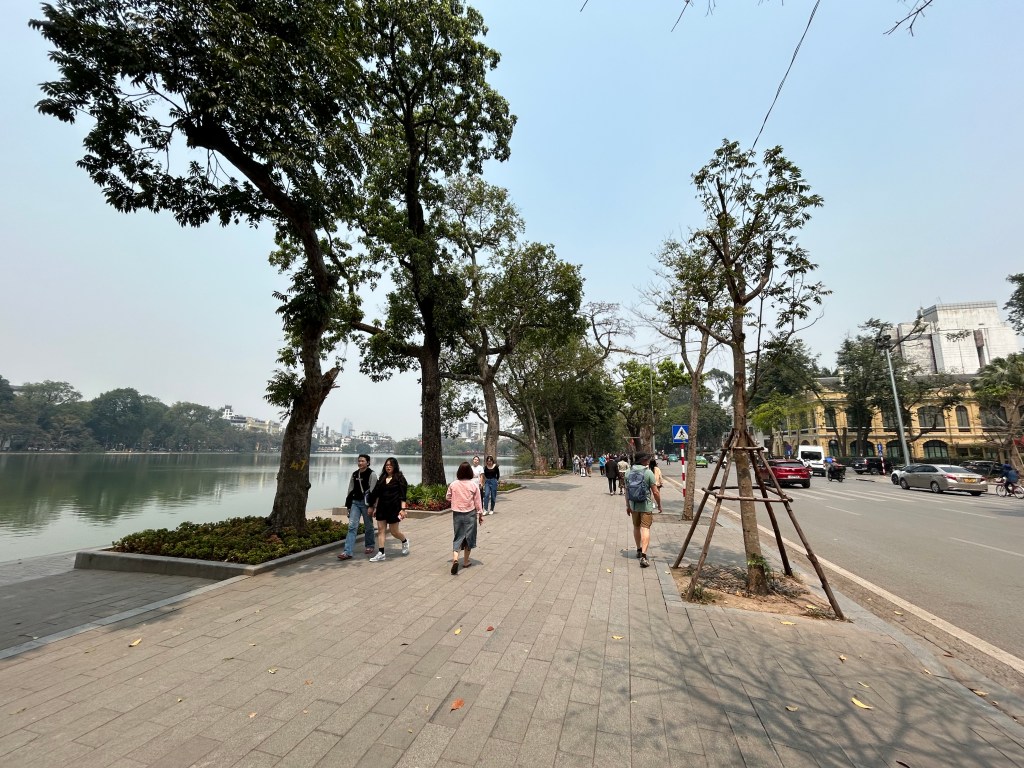
When we are travelling we mostly happen on great things because we talk to others who say an attraction mustn’t be missed. We also see stuff of note, like sculptures, ruins, plaques, art works and lots of other examples and use google to identify them and the comments to explain them. We have found sites of battles, learned of famous artists, and learned other historical stories of strife or celebration. A day when we circled Hoan Kiem Lake, we came across this small gate with nothing identifying it. Google came to the rescue identifying it as a last remaining gate structure of another important temple, destroyed by the French, south of the lake. We did not verify the validity of it but the description was interesting pointing out the hieght of the doorways being small as the people of the day were also petite!
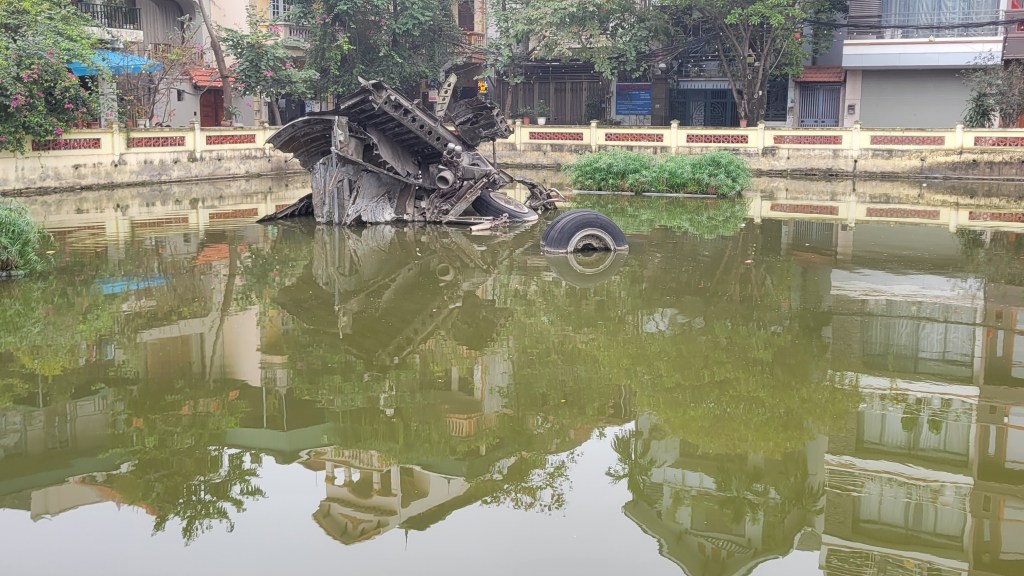
I also have an app called GPS My City that has walking tour routes of local attractions as well as being able to create your own tour. Attractions have one to three paragraphs explaining the significance of the site. Another source of great finds is an app called Atlas Obscura. In Hanoi, we used it fairly often. One of our favourite obscure finds was an American B-52 fighter warplane that was shot down in 1972. Rather than clean it up it is still as it was as a reminder of its contribution to creating the important change and anti US resistance leading to victory.



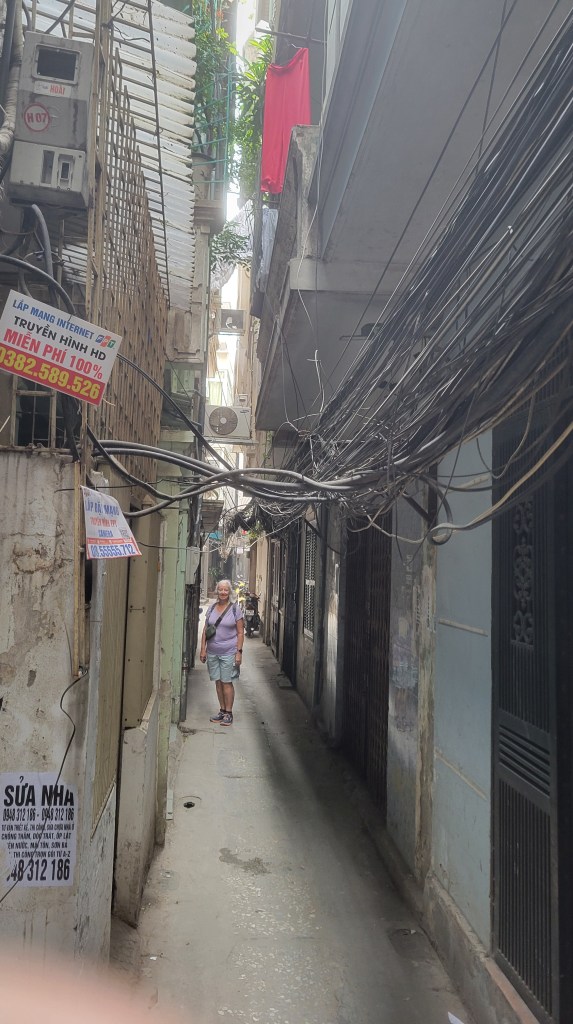
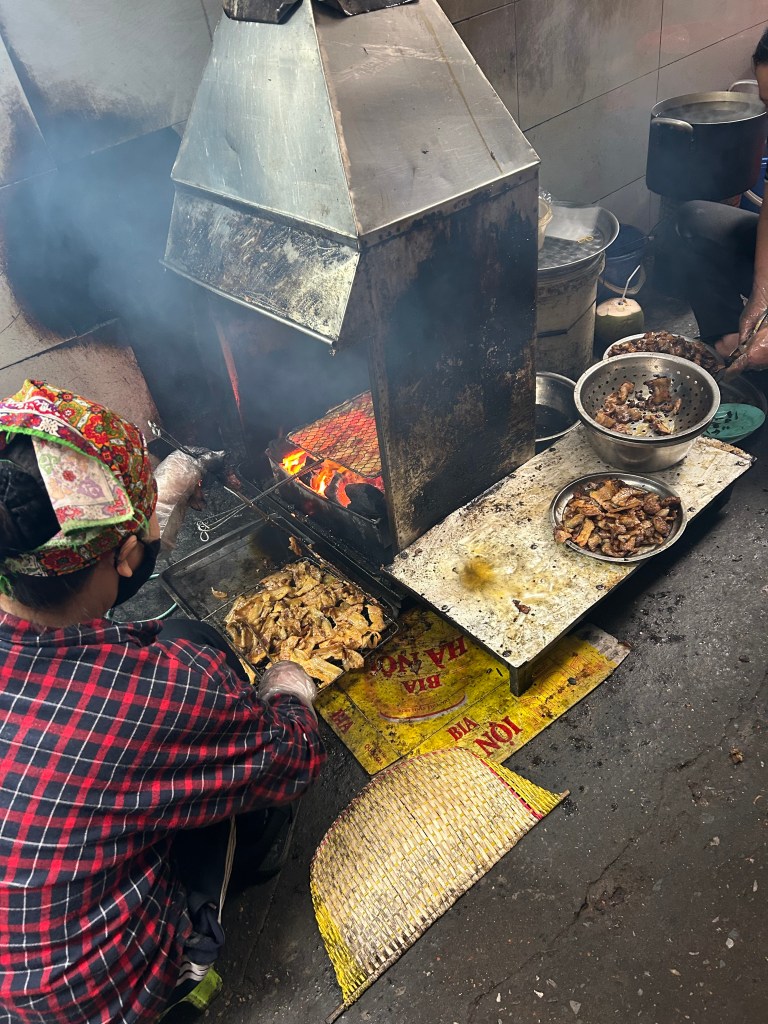
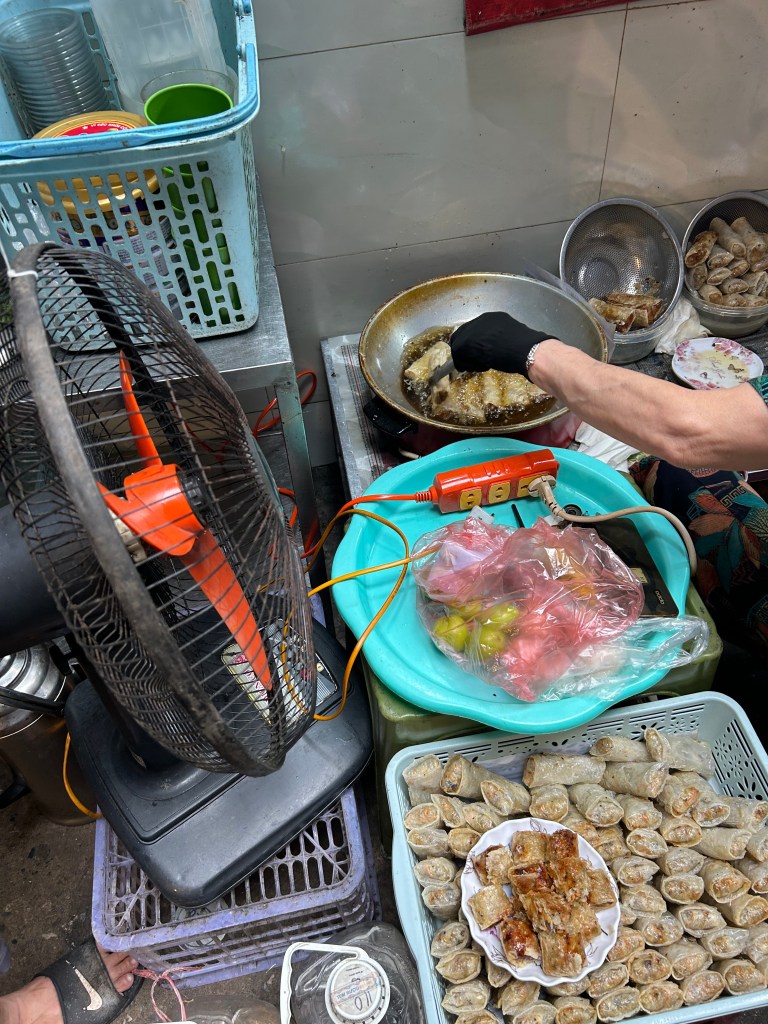
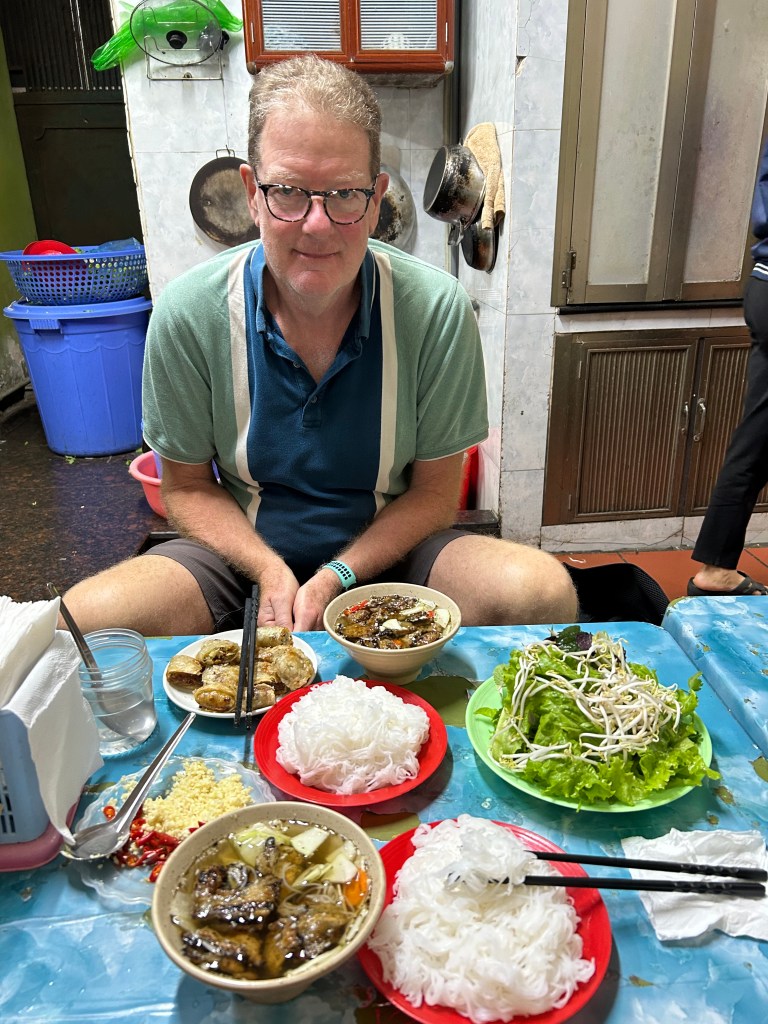
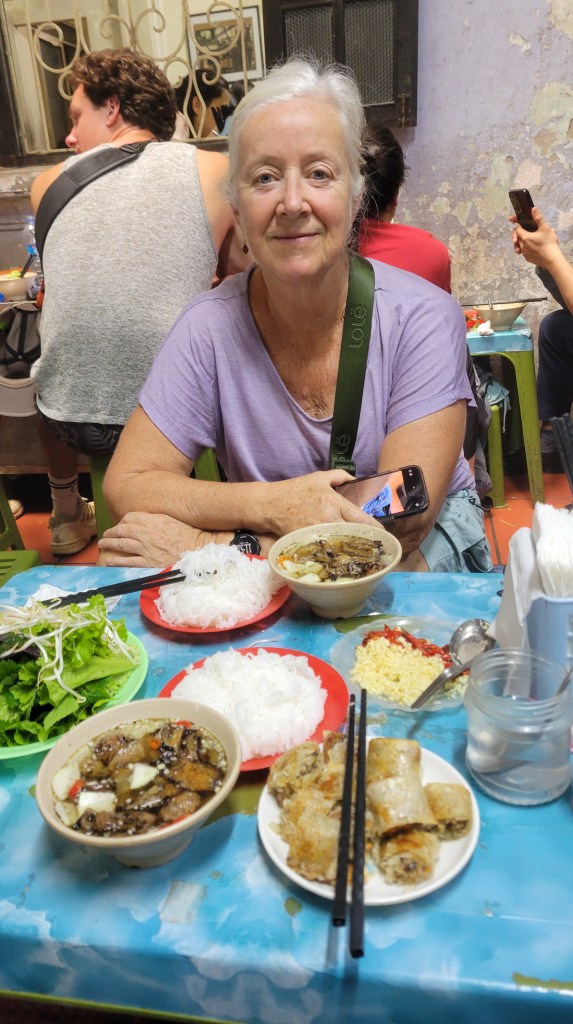
Atlas Obscura also led us to this Bun Cha restaurant down an alleyway, to a tiny space between many homes where excellent Bun Cha was being served. The woodfired grill was in the hallway that we walked through from the street.


We never had time to go to the pho shop where Obama and Bourdain had a bowl of soup. Atlas Obscura describes it as having a plexiglass room framed around the table where they sat. I think there would have been a line up. It was interesting as an idea to visit, but we never got there.
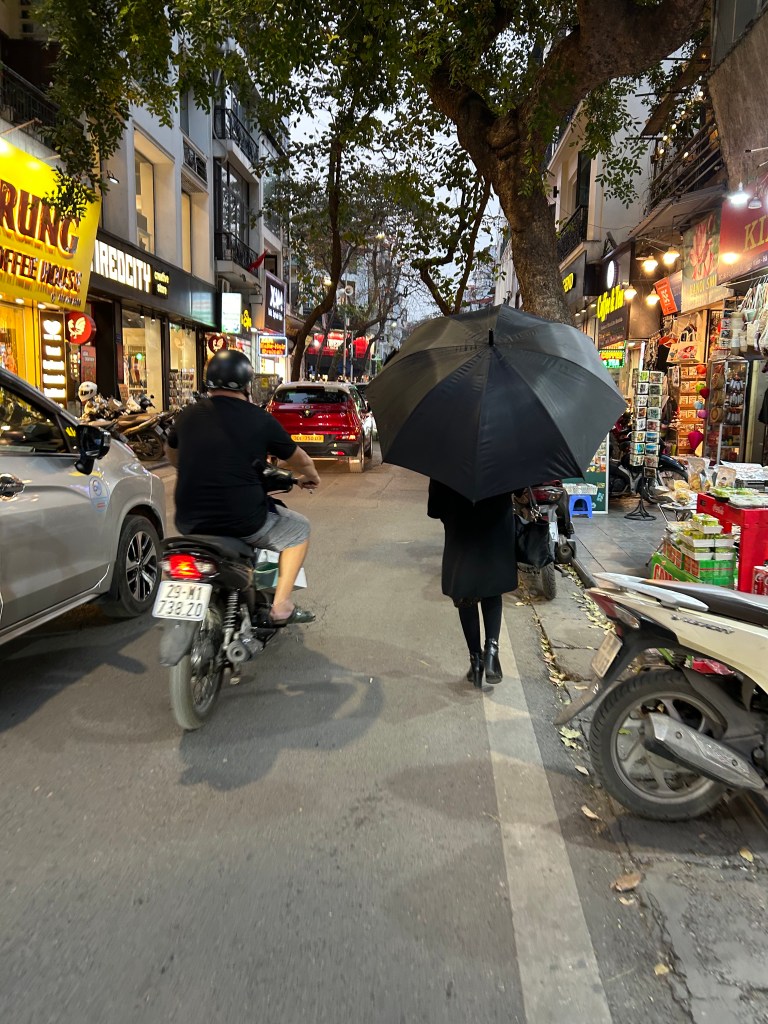
By the time we left Vietnam we were very skilled at crossing the roads. Often there might be a traffic light but more often there was not. With 8 million Hanoians and almost 7 million motorscooters, 1 million cars, plus busses, rikshaws, tuk tuks, cyclists and pedestrians it is a feat to navigate. One of our tourguides said we should “always look at the oncoming traffic, put your hand up and walk without pausing. Never walk in front of a bus as they are on a schedule and will kill you.” But I couldn’t look, we would find an opening and go. If we didn’t look we lived. It was like, if you look at someone walking towards you, you walk into them. By looking away you avoid them. At least that worked for us.


On one of our walks we passed the North Gate. We had missed it the day we went to the Citadel. While fully preserved over time, note the holes where French cannons had tried to take it down. Both are on the left side top and bottom.

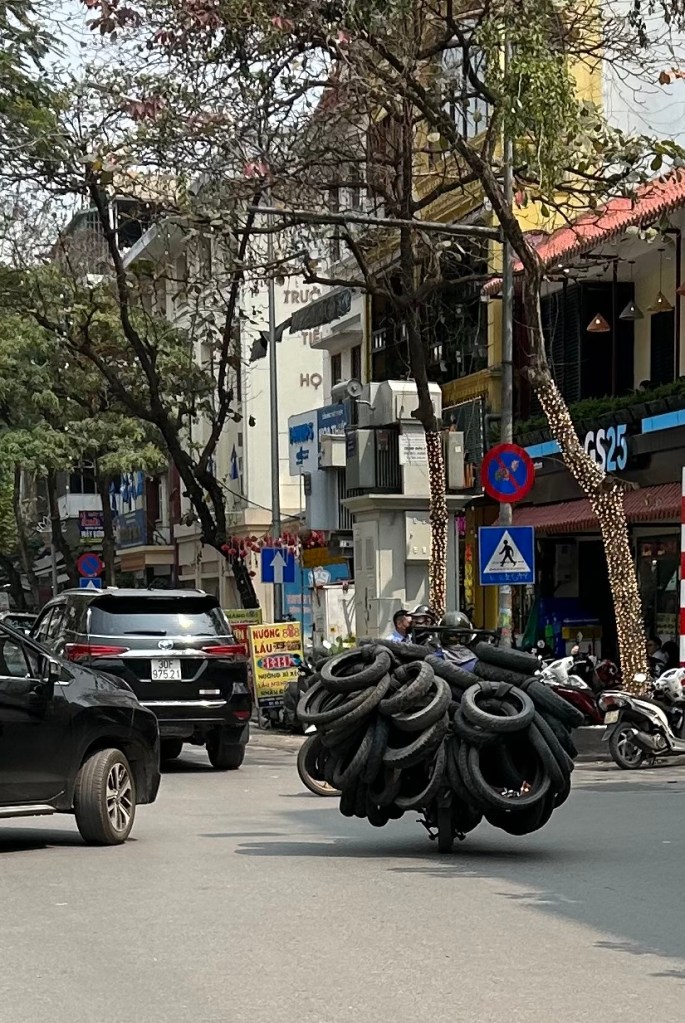
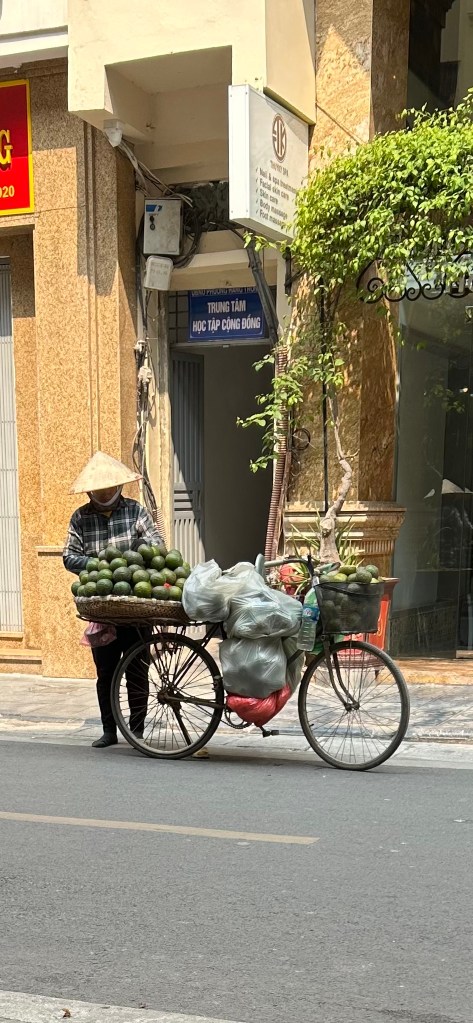
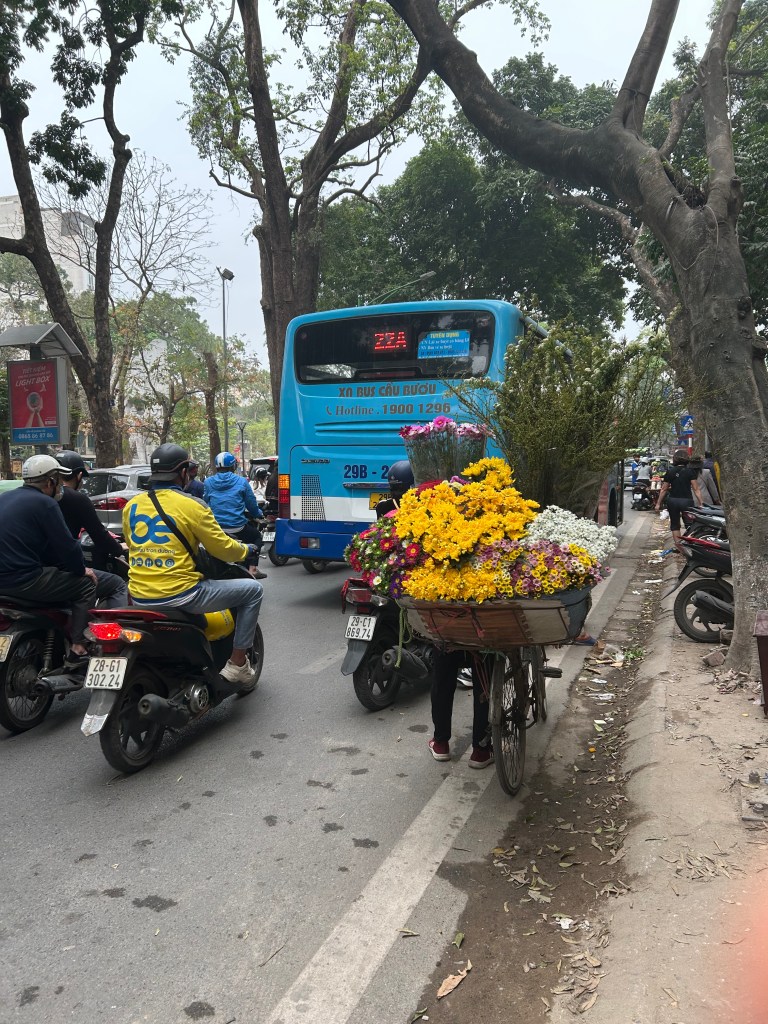
These bicycles are small businesses. Flowers, food, tires, taxis and more.


Vietnam was amazing. We feel like we did quite a bit but there is so much more to explore. It is gritty, resilient, kind, and busy. After so many temples and pagodas in other parts of the country, we really didn’t spend time looking for more in Hanoi although many exist. Our next post will be about our time in Japan. Stay tuned!

 The Grape Escape