
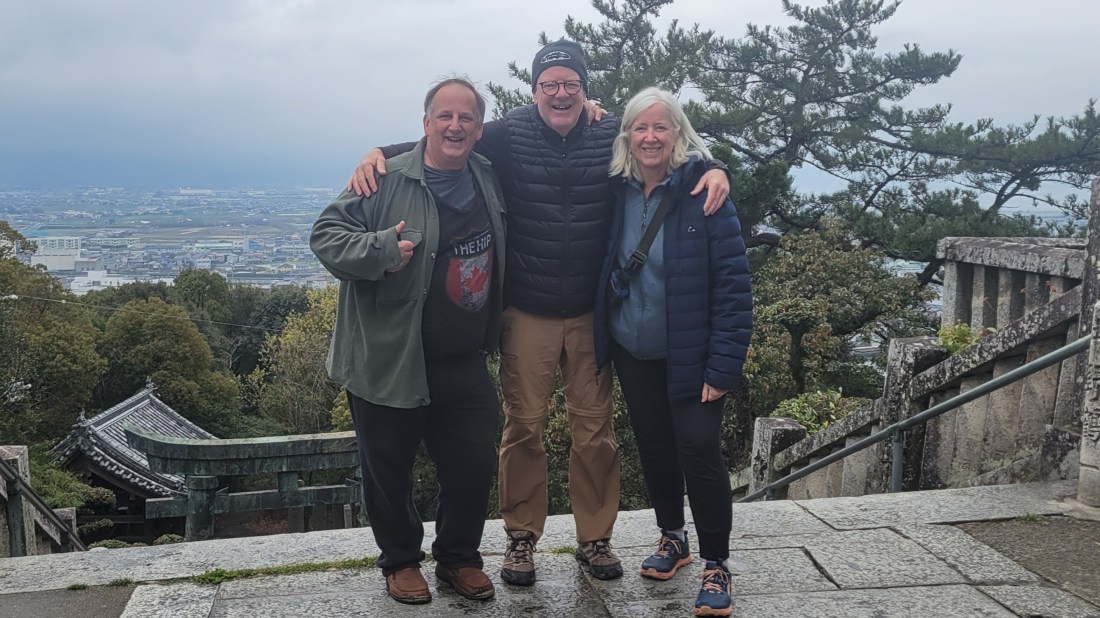
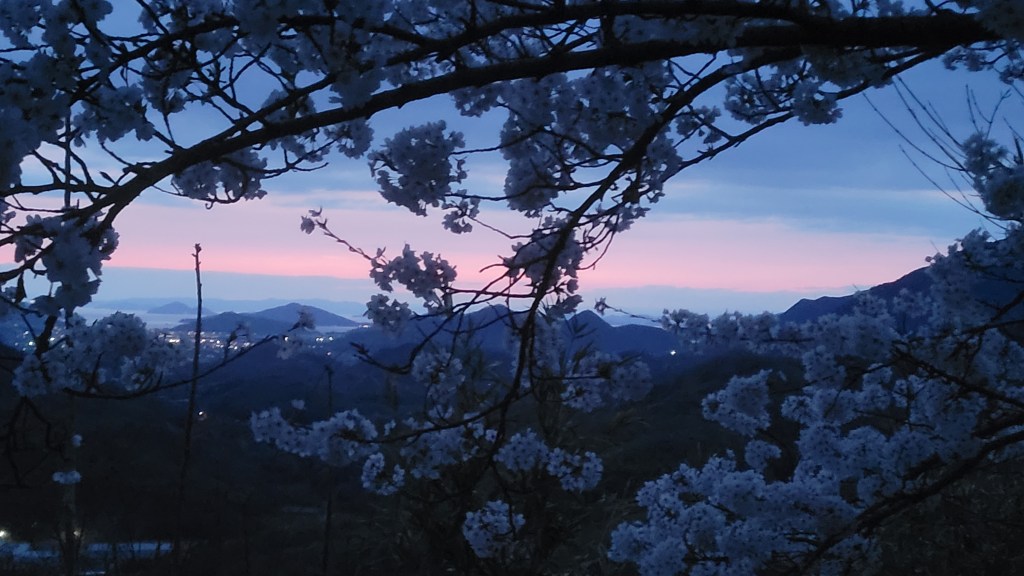
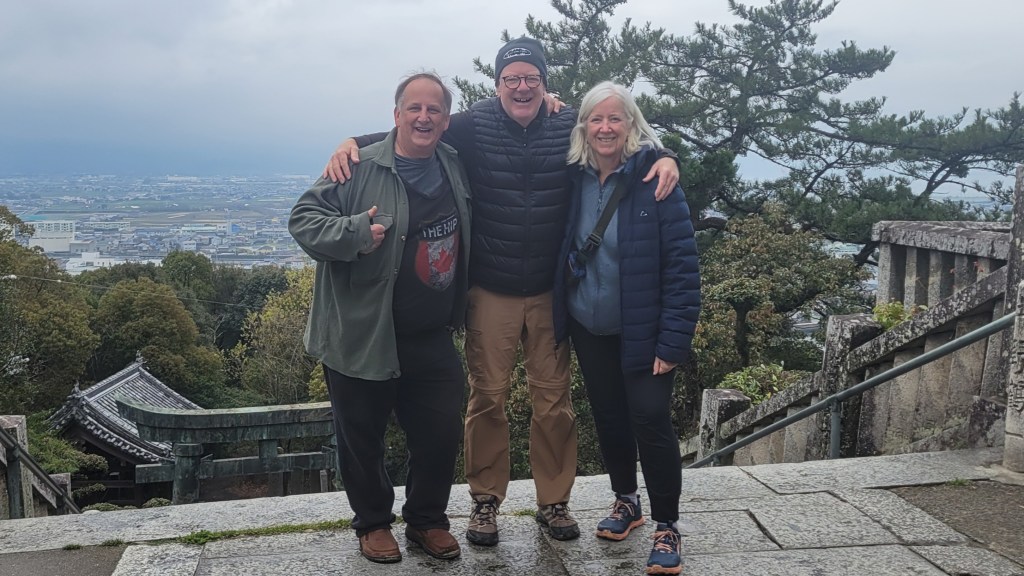
A chef friend of ours has a brother, John, who runs an English language school in Marugame, in Kagawa prefecture, on Shikoku Island. Shikoku is south of Osaka and Hiroshima and is Japan’s 4th largest island. He picked us up at the train station and whisked us into the nearby mountains where his friends, Yacchan (Yasuhiro Fuchita), his wife Yuki, Tyler (John’s god-son) and friends were camping. They all thought that a Japanese barbeque at their campsite would be a great place to begin our introduction to Shikoku. We heartily agreed! The spur of the moment decision to do something spontaneous like drive up into the mountains and join a camping group for a campsite dinner while the sun set seemed perfect. Just the thing to shake off the routine train and hotel travel that had become so second nature. It was nice to meet some of John’s friends and connect (a little translation help from him made it easier) with some locals. They quickly made us feel welcome and thankfully they were happy to practice their English on us as our Japanese was unfortunately next to nil. The comfortable, casual setting of a countryside campsite felt so natural and relaxing we seemed to somehow fit in with it all. Our hosts were very kind in making us feel at ease. The mountaintop temple had a lookout with beautiful vistas over dormant volcanic cones. The Sakura had begun blooming, and sunset was upon us as we looked out through the blossoming trees over the picturesque valleys below.


Marugame is a coastal rural town of about 110K people. Rice fields border the neighborhoods and water irrigation for farming of rice (the most important crop) and other agriculture is managed by the locals in each area. There are a few tree covered volcano remnants and a mini mount Fuji that provides the backdrop.

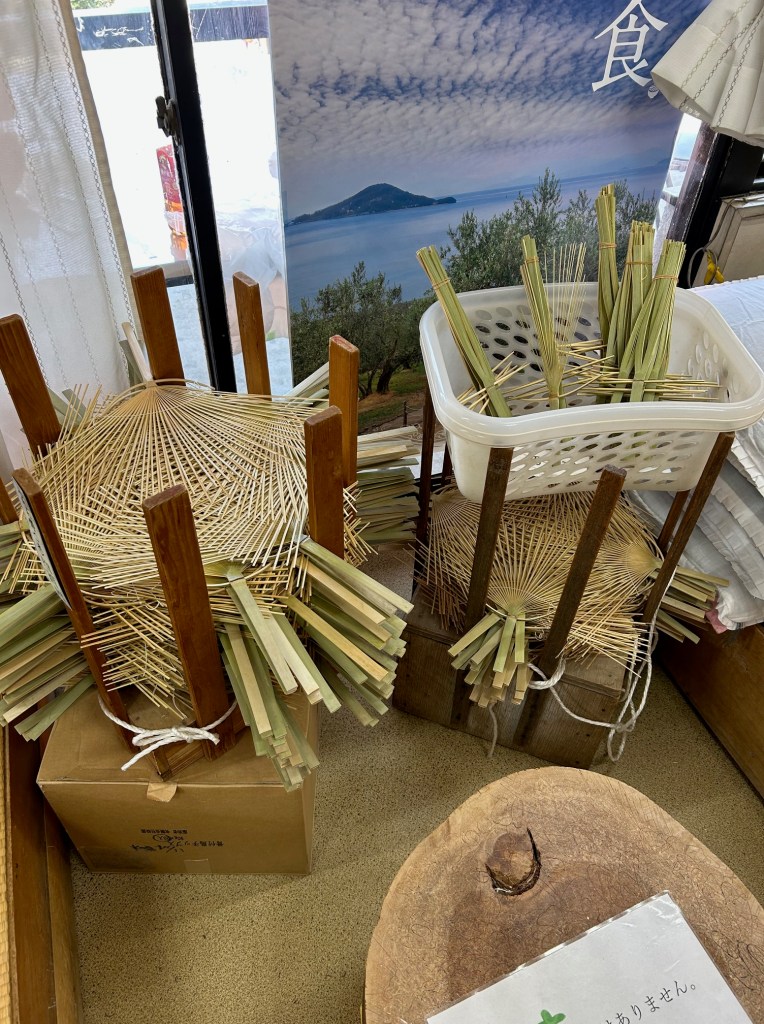
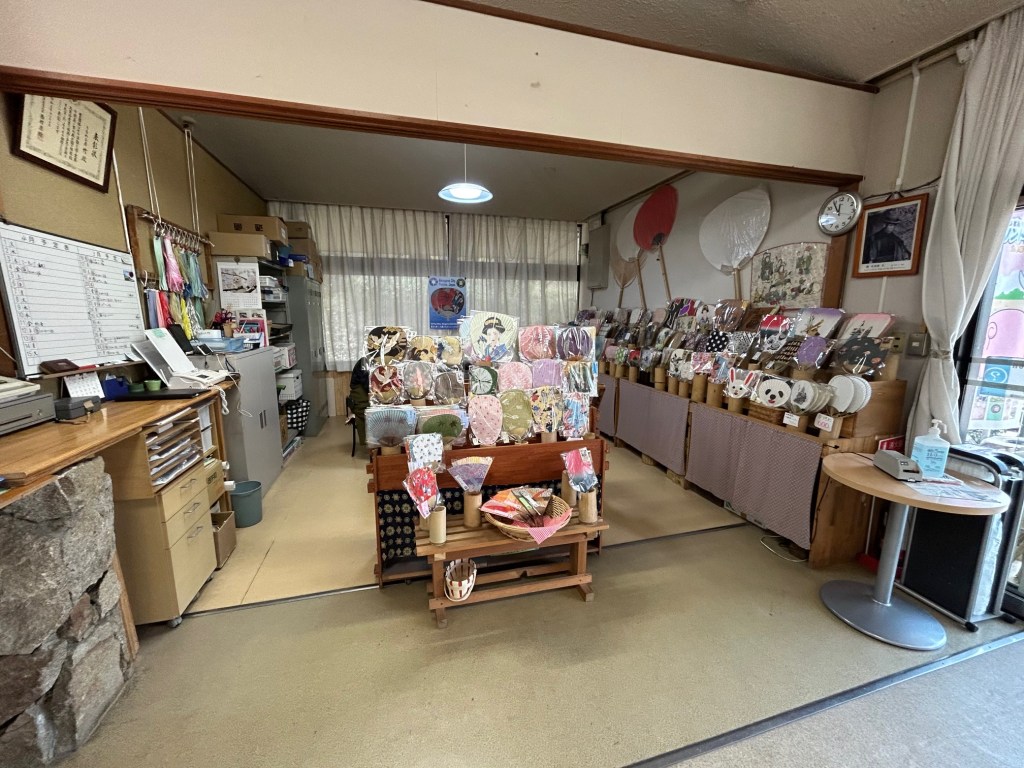
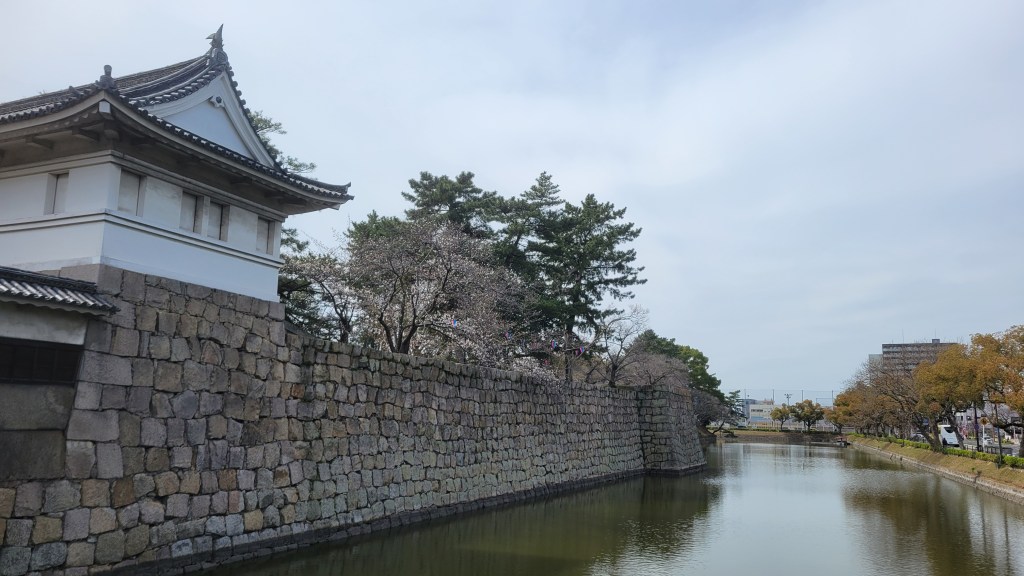
John had to work the next day so we aquainted ourselves with his town. A walk up to the mid 16th century Marugame Castle closeby was similar in timeline to Hiroshima castle and the rest of the castles scattered throughout Japan. These were built within fortifications but were more about power and prestige. It had the bonus of the elevated view of the area and a gift shop where you could learn to make the round flat traditional fan. Strong bamboo shards are split and bent with paper glued on to the structure. A few different designs and shapes also included some hand painted and themed papers. I do love a museum gift shop!!


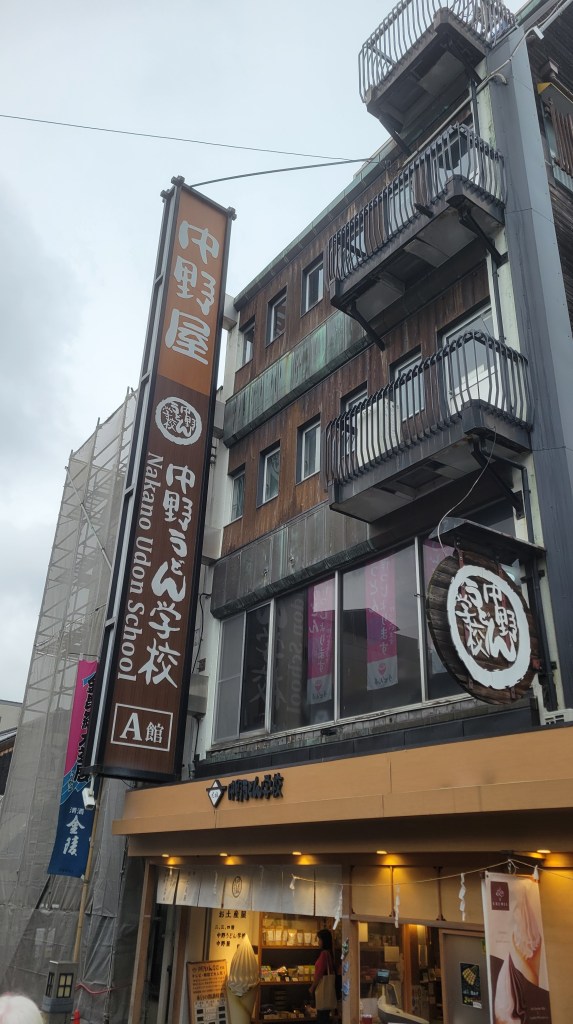
According to the locals, Udon is from the Kagawa prefecture. Our first Udon restaurant was really delicious. Udon is a thick wheat noodle of freshly made dough, rolled and cut, then boiled. They are served in a choice of broths from soya water, to dashi and bone broth, to a thin curry sauce. Toppings were shredded radishes, pickles, vegetables, eggs, meat, fish, and togarashi seven spice. Udon restaurants often have a selection of tempura too. We had an Udon lunch at a well renowned Udon cooking school below one of the temples along the pilgrimage. As with many famous locations, the schools charm had faded its quality.


Shikoku island is home of the Shikoku Henro, an 88 Temple 1200 kilometer, pilgrimage route. Kōbō Daishi, aka Kukai, was a 9th century monk who is credited with the start of Shingon School of Buddhism. Kukai, as legend has it, is still alive in a meditative trance on a mountain waiting for Buddhas return. John is pretty sure he met him. Cool! The Henro is a Buddhist religious route with a similarity to the Camino de Santiago in Spain, France and Portugal. We visited a few of the temples and spoke with some of the pilgrims who were at various stages of their journeys. The “henro”, pilgrims, are identifiable with their walking sticks and are most often seen wearing a conical straw hat, a white tunic “hakui” and a scarf. We visited a few of the mountaintop and inner city temples too.


We had mentioned we wanted to go to one of the conveyor delivered sushi restaurants and John knew just the one. Ordering our dishes off a screen on the wall above our table, our sushi arrived shortly after ordering. So that the foods didn’t go to the wrong location, a gate at our table diverted our orders to our table. Orders heading down the conveyor to other tables whizzed past our closed port to our neighbours tables. All while an electronic speaker announced each morsel of plated food in transport. Very noisy. Very fun!!
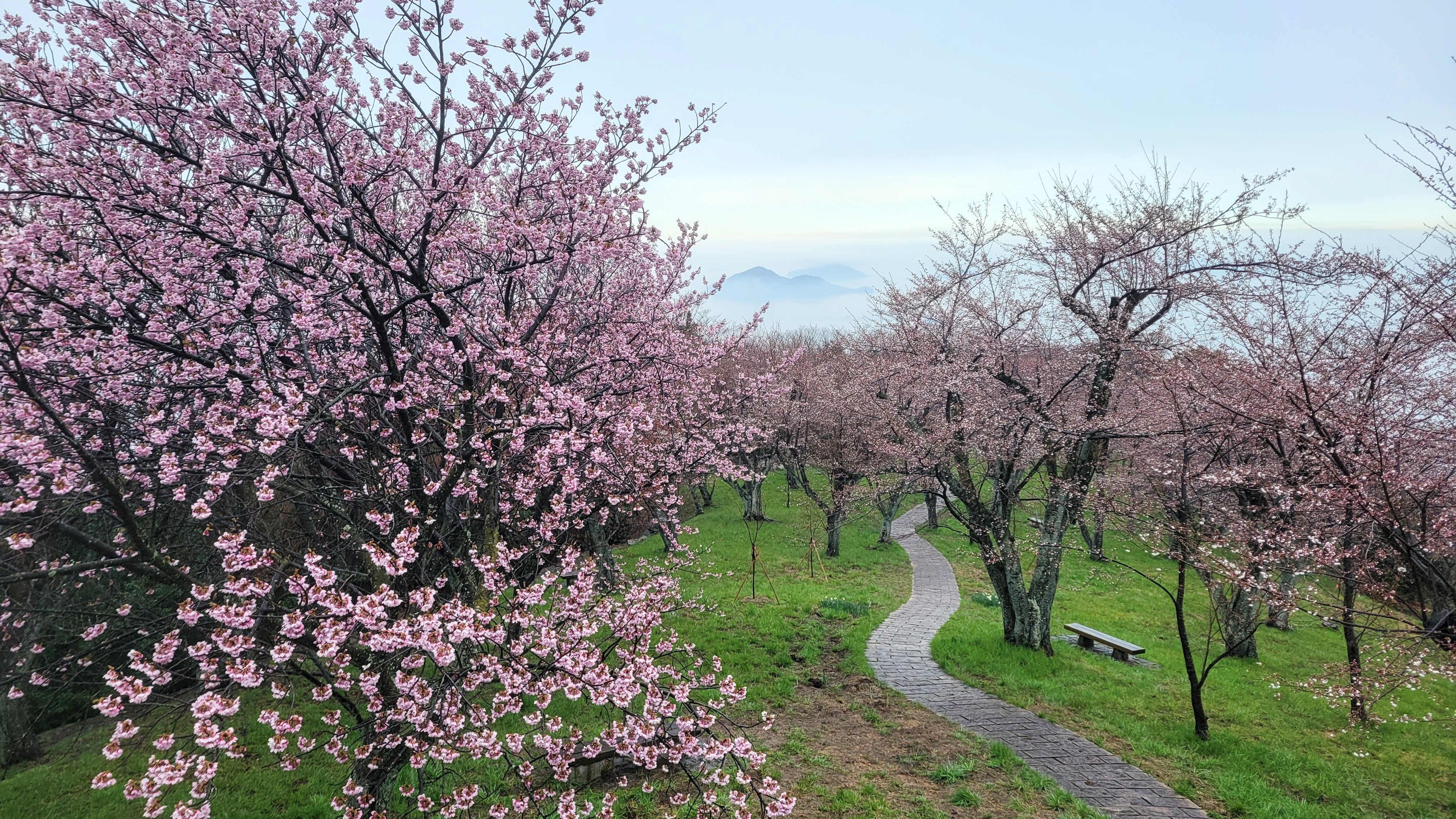
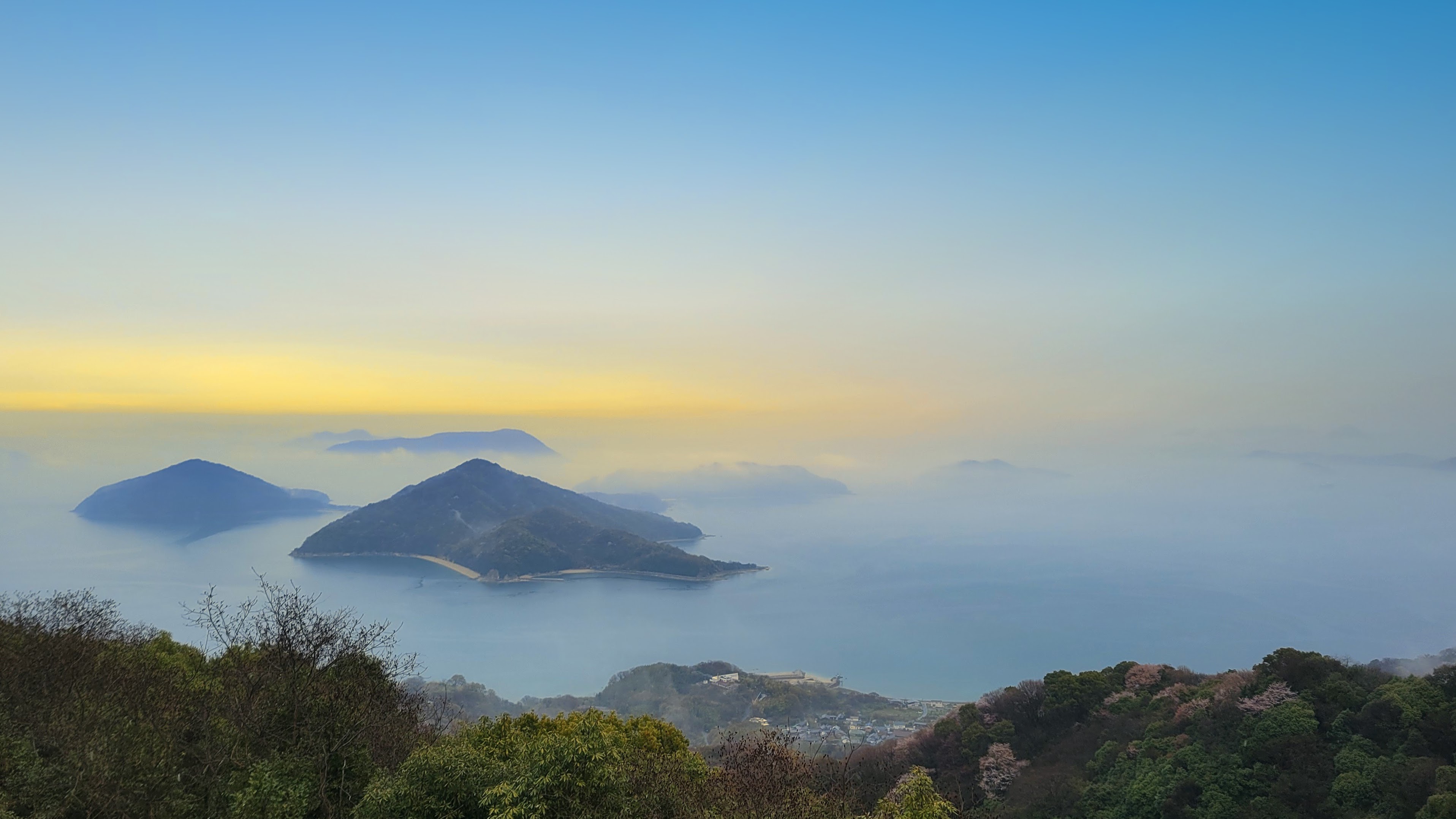
John took us on a day trip around his beloved Kagawa prefecture. We started early as the destination, Mount Shiude, had a small parking lot and after 9 am a 2 hour reservation was required during the busy Sakura season. All the timeslots were taken for our chosen day. We hit the road before 7:00am to get to the top before sunrise and beat the reservation onslaught. The parking lot was at the base of a one kilometer winding road to the summit. It had rained all night and there was mist and fog to greet our view. The cherry blossoms were in bud and promised their beauty for travelers who followed our steps over the next few days. The view over the islands and the legends that named them was mapped out on interpretive signs along the stone pathways.

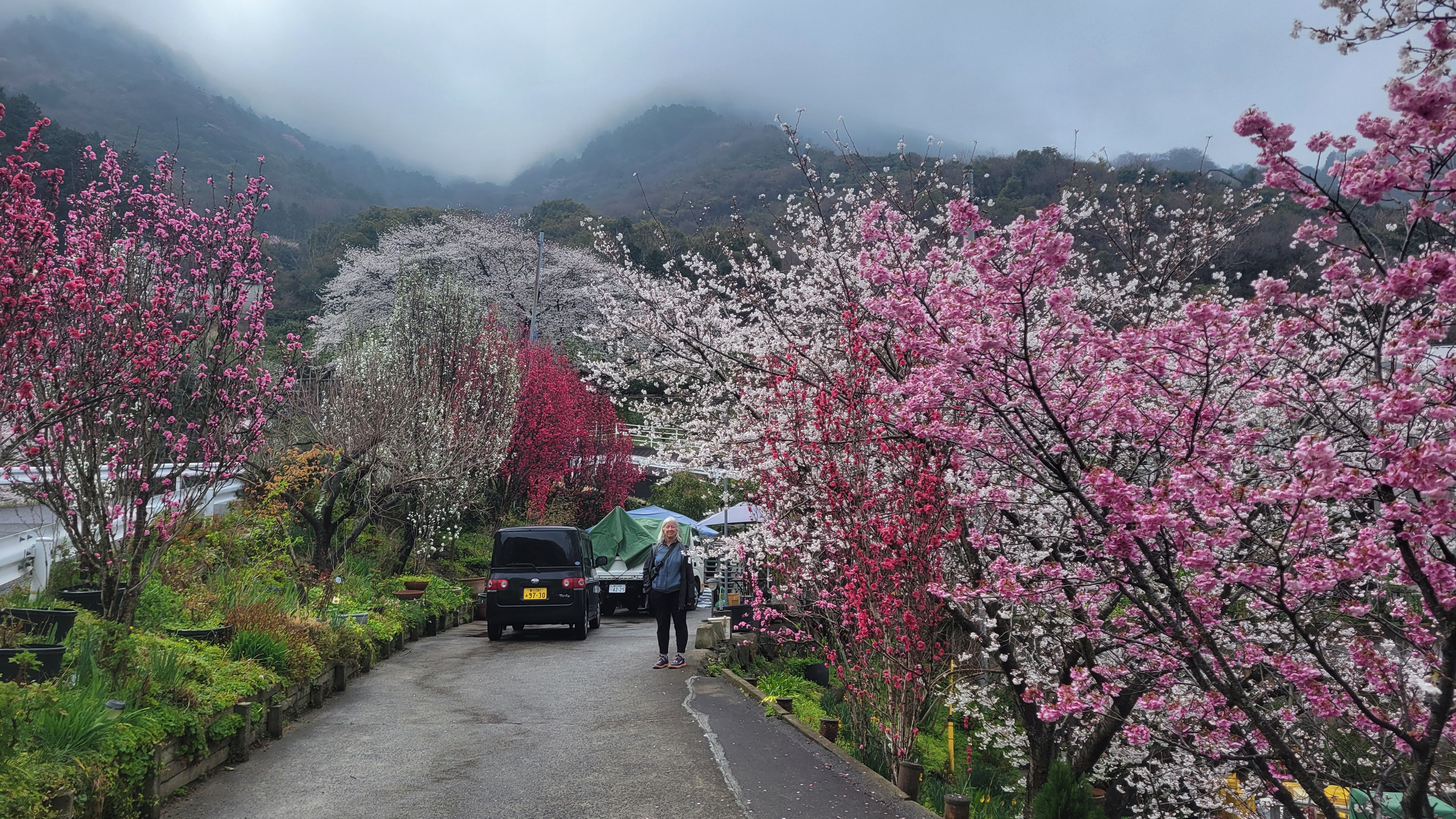

It seems Japanese people don’t prefer to drive fast. They certainly don’t wave a finger, honk, or show any impatience to slow vehicles. It is just the way. The right hand drive cars are small and to us they look like a box shaped micro mini van with a pug nose. So cute. We did get behind a few and it did feel a bit exasperating, especially to John who adores living there. Funny. So if you are prone to angry slow driving, take the train when traveling here!!
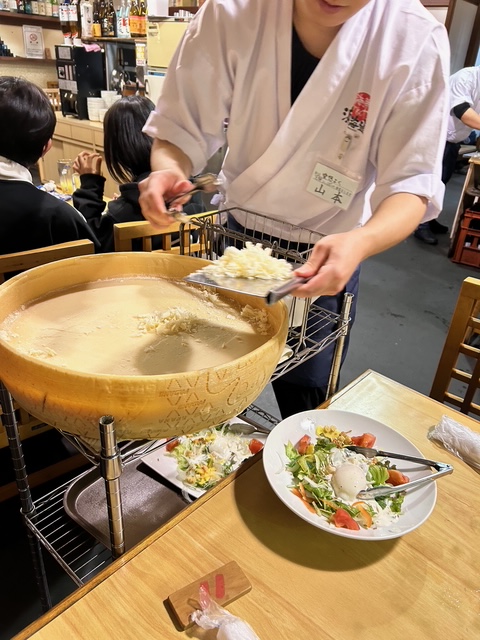
Our dinner with the locals on the mountain on our first night was not the end of our chance to connect with them. On our last night in Marugame one of the crew asked if we wanted to go to a sushi restaurant that the locals love. We couldn’t say no to that. We arrived with a short wait for a table. The wait was entertaining as the servers would bring a net to the giant fishtanks at the entrance and make a splashy catch of someones entrée. I could only think of the fish on Monty Python’s Meaning of Life wondering if the fish were having the same conversations. The sushi was the best we had ever experienced. Thick fresh shards of numerous varieties served as sashimi with freshly grated wasabi. A salty dish of crisp fried fish bones, fins and tail sounded weird but to Deb, they just tasted like more and we endeavoured to find another restaurant serving this before leaving Japan.




The following pictures are of our stops along the way.

Next stop Kyoto.
 The Grape Escape