
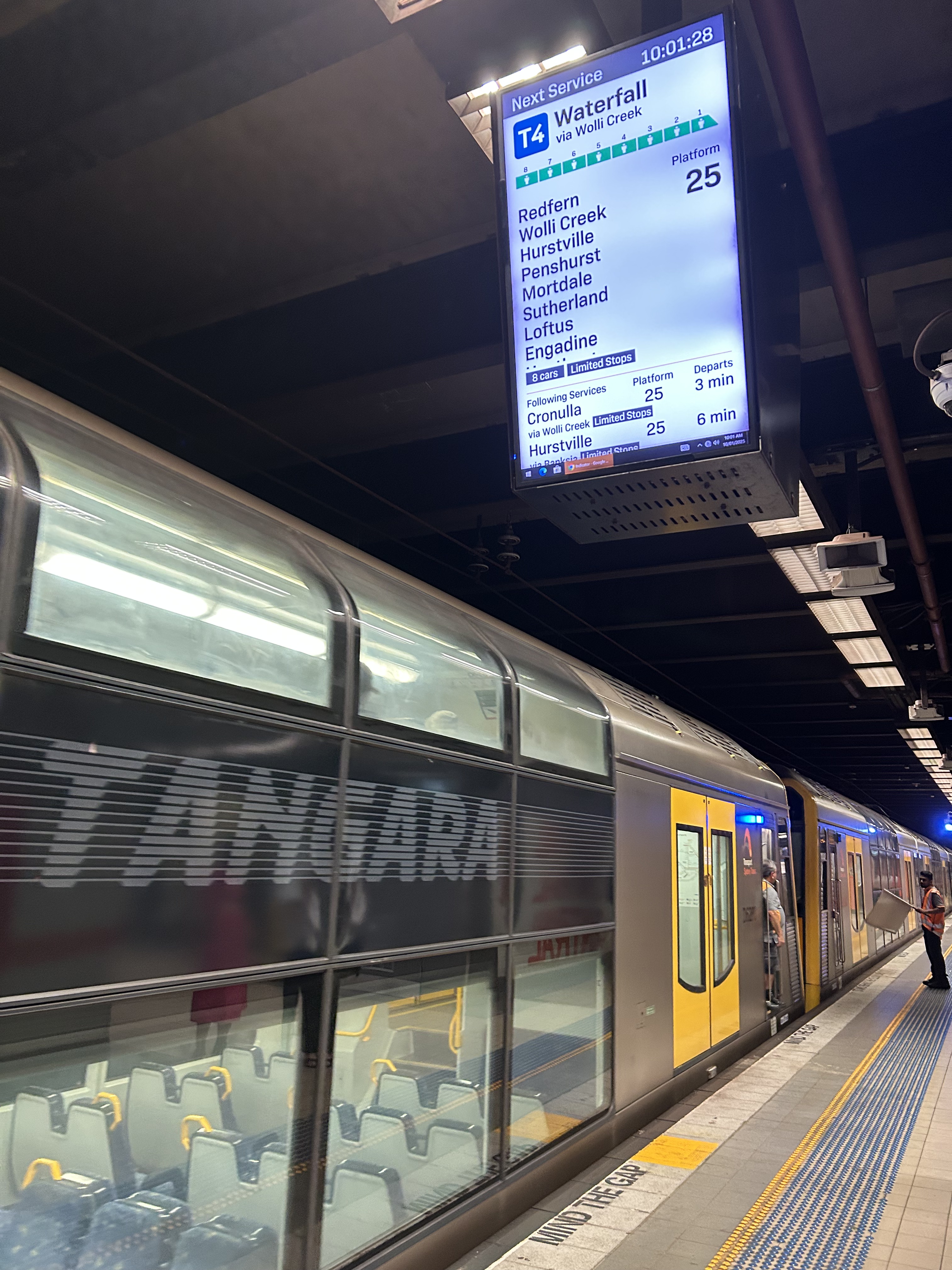
After our final sleep in Sydney, we packed up and walked the 10 minutes to the train station. Transit is easy here. Google maps lay out the route with all the details of which train or other form of transit to take, what platform, what stop, what time, what direction, and how long the ride is with number of stops and time to walk between connections. Even planning when to arrive or leave is calculated. The credit card takes care of the ticket. With a simple scanner tap on before boarding and tap off once disembarked, the fare is decided and paid. Once we got on the train we were asked for tickets and we said just our credit cards were used so they scanned the cards and explained how to get to all the awesome stuff we would miss in Sydney!! We left the train and as we crossed through the tap out barrier the friendly staffer asked us if we were going to get our campervan. How did he know? We were on the route heavily travelled for our type of journey and he pointed us to the bus stop. On board the bus I watched the gps blue dot follow the map route to our stop and we were spit out at the gate of Autosleepers, our rental company.

We had a walk-through of the rental campervan, loaded our stuff and sat in the parking lot registering with the toll highways so that we could just drive and get billed magically. The camper is tired, top heavy the steering is loose and slow to respond. Finally with Albert at the helm on the right side of the van, we navigated out of Australia’s largest city to the coastal route. With me reminding him to “stay left”, “turn right into the far lane”, “look right in the roundabout” and “you’re almost on the curb” often, we drove along a beautiful highway in mint condition. We did experience some weather and all the cars had their hazard lights blinking.
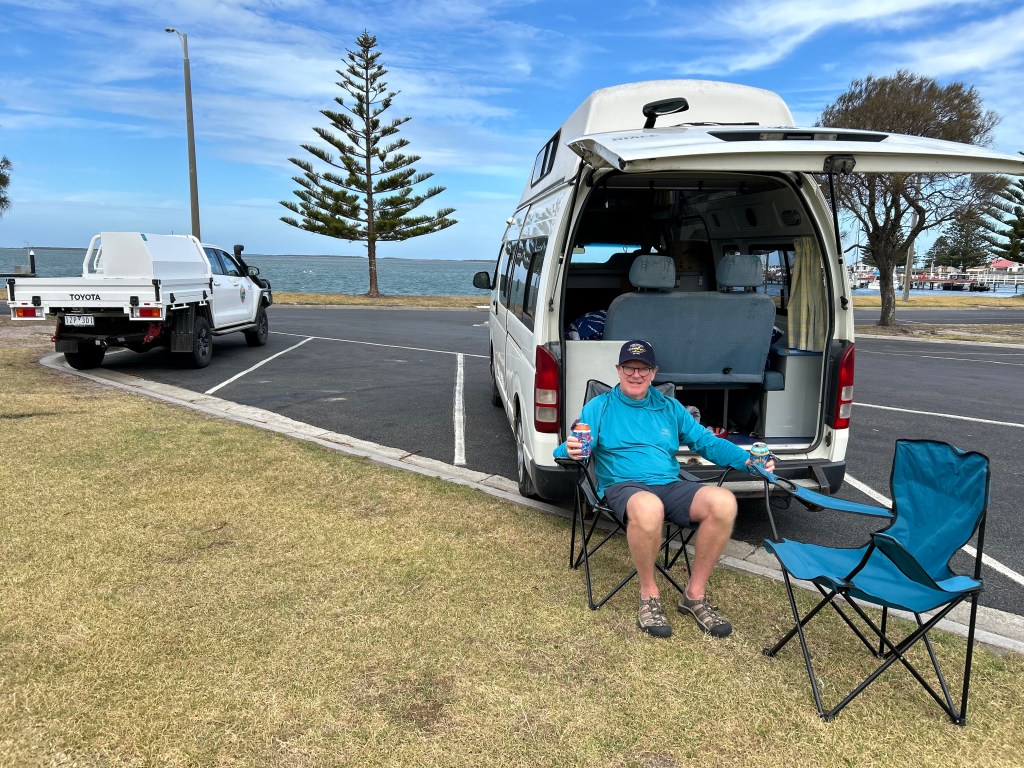
We decided to provision with food in a small town a couple of hours down the highway. We hit a few beachside areas looking for overnight campers as instructed by the friendly fellow at the train station and the clerk in the rental office. But no luck. We found an organized campground but the office closed at 4pm which seemed really early to support all those camping, and we were much later than that. We ended up at a primitive rest stop halfway to our destination of Pambula Beach between the highway and a cattle field. The sound of the cicadas was deafening. They road noise was minimal. The parrots squawking was abrupt. Sipping a celebratory cold brew Albert pointed at what looked like deer in the distance but they were kangaroos!! I am sure when Aussies visit Canada, they look out at a field at dusk and think they see kangaroos when in fact they see deer!! Same colour and grazing so from a distance very similar. What did this mean for us?? Binoculars!! So here is our first photo of the funny animals that make me sing “Six white boomers”.


Why Pambula Beach? In 1984 when I (Deb) was working in Geneva, I met and made a lifelong friend, Liz. Over 30 years ago she wound up travelling and working in Australia and met her husband and they settled in Melbourne. Facebook with all its “terrible” also reconnected us and when we decided on this adventure she said it was going to be summer and they would be camping at Discovery Parks Pambula Beach. They only accept 1 week camping reservations so we committed. This campground has swimming pools, a 5 km long white sand beach, a restaurant and convenience store, laundry, organized events, adult only and kid zones and large infrastructure for tenters to cook and clean up easily. A fantastic summer getaway destination for families from Melbourne and Canberra. We weren’t sure it would be our vibe but it would be great to see Liz and be at such a gorgeous beach.
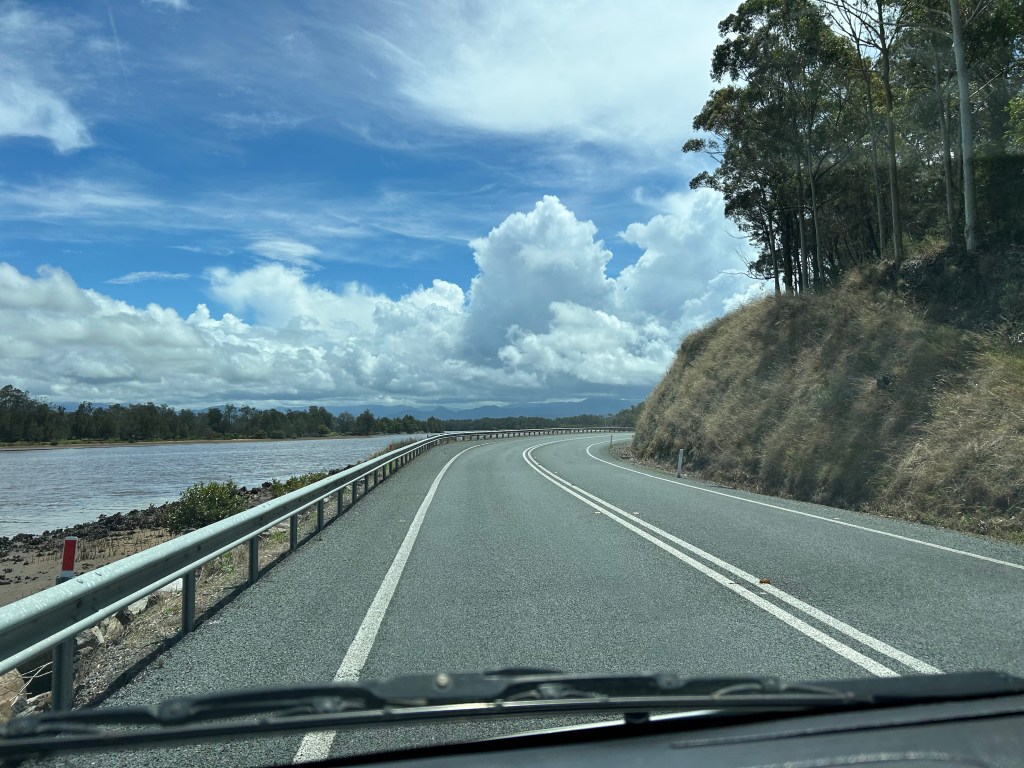
Next morning we knew we should get to our enormous campground before the office closed at 5pm. We made a stop at a lovely beach town at Bateman Bay. After a few pictures and a bit of lunch we headed out. About 20 kilometers down the road as we slowed at a roundabout we heard a pedestrian shout something. Albert looked back over his shoulder in the direction of the unusual proximity of the voice and noticed the sliding van door was wide open. Oops. The man was shaking his head. The drive along the highway was similar to some of the areas of California with rolling tree topped hills and grassy slopes and valleys filled with all colours of cattle. We passed at least two cheese making farms and one within an hour of our destination that we planned to visit while camped.
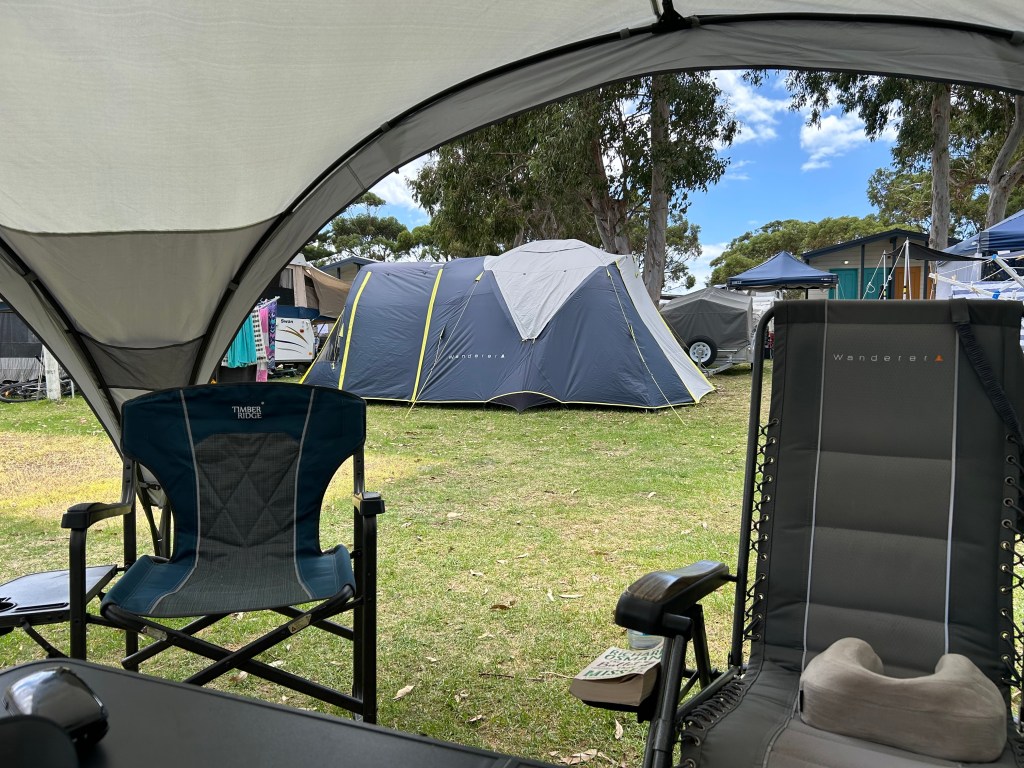
Then we arrived at the campground. People everywhere. And some of these rigs seemed like they should be in a dusty outback rather than hooked up to water and electricity with tv antennas.


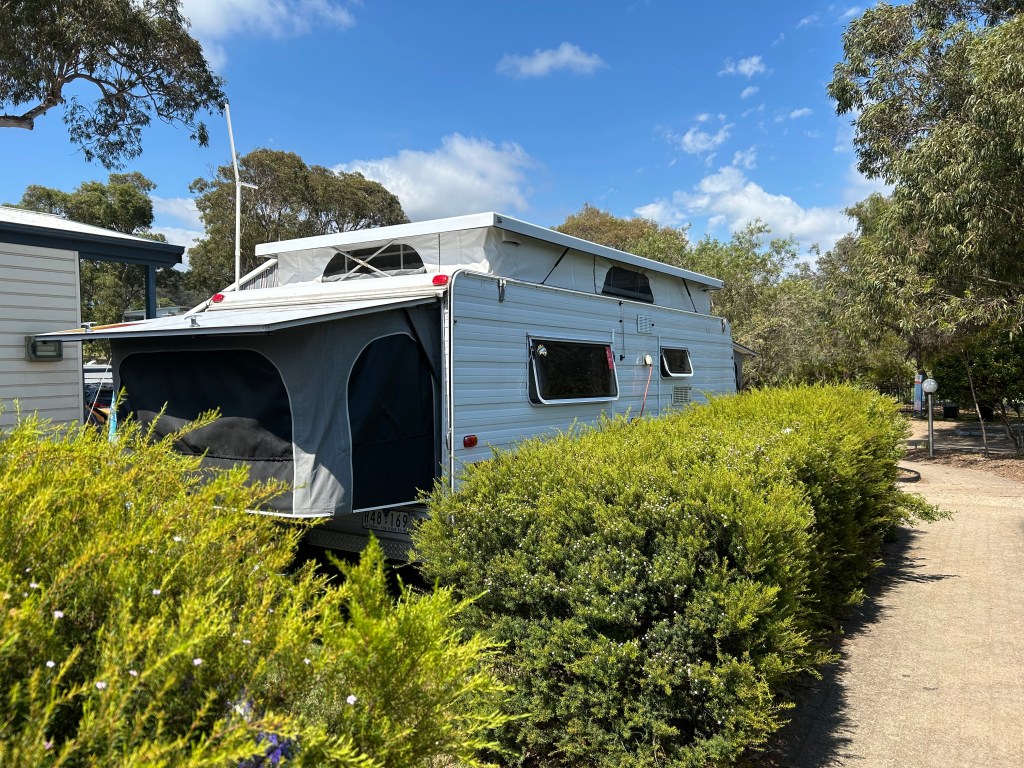

Saturday arrivals at the campground are also changeover day. The office was hopping. Beside it a massive pool area with waterslide and waterpark fountains. Joyous children were running, cycling, scootering, and screaming amongst the mini golf, jungle gym, trampolines and this enormous jumping balloon.
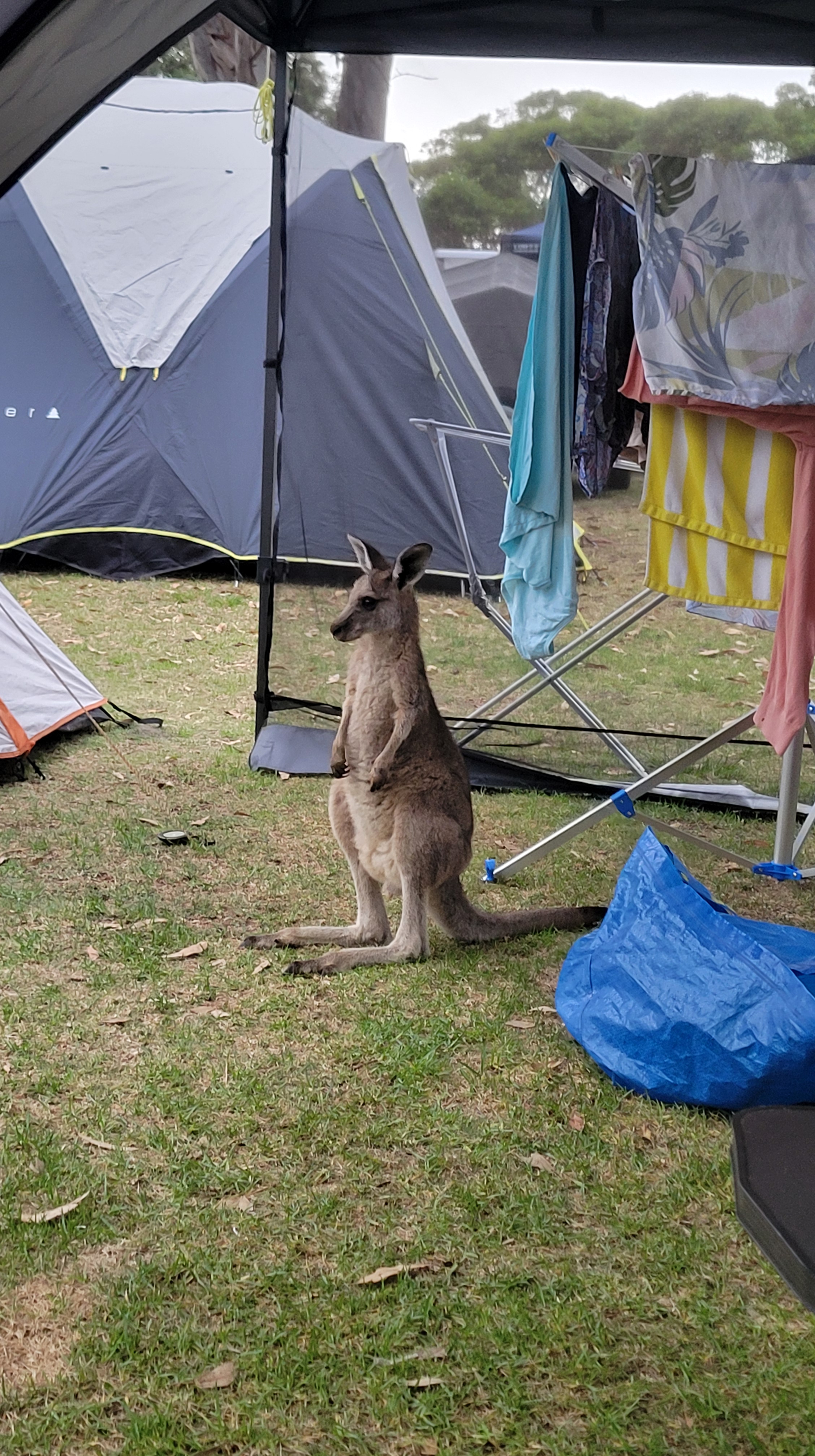
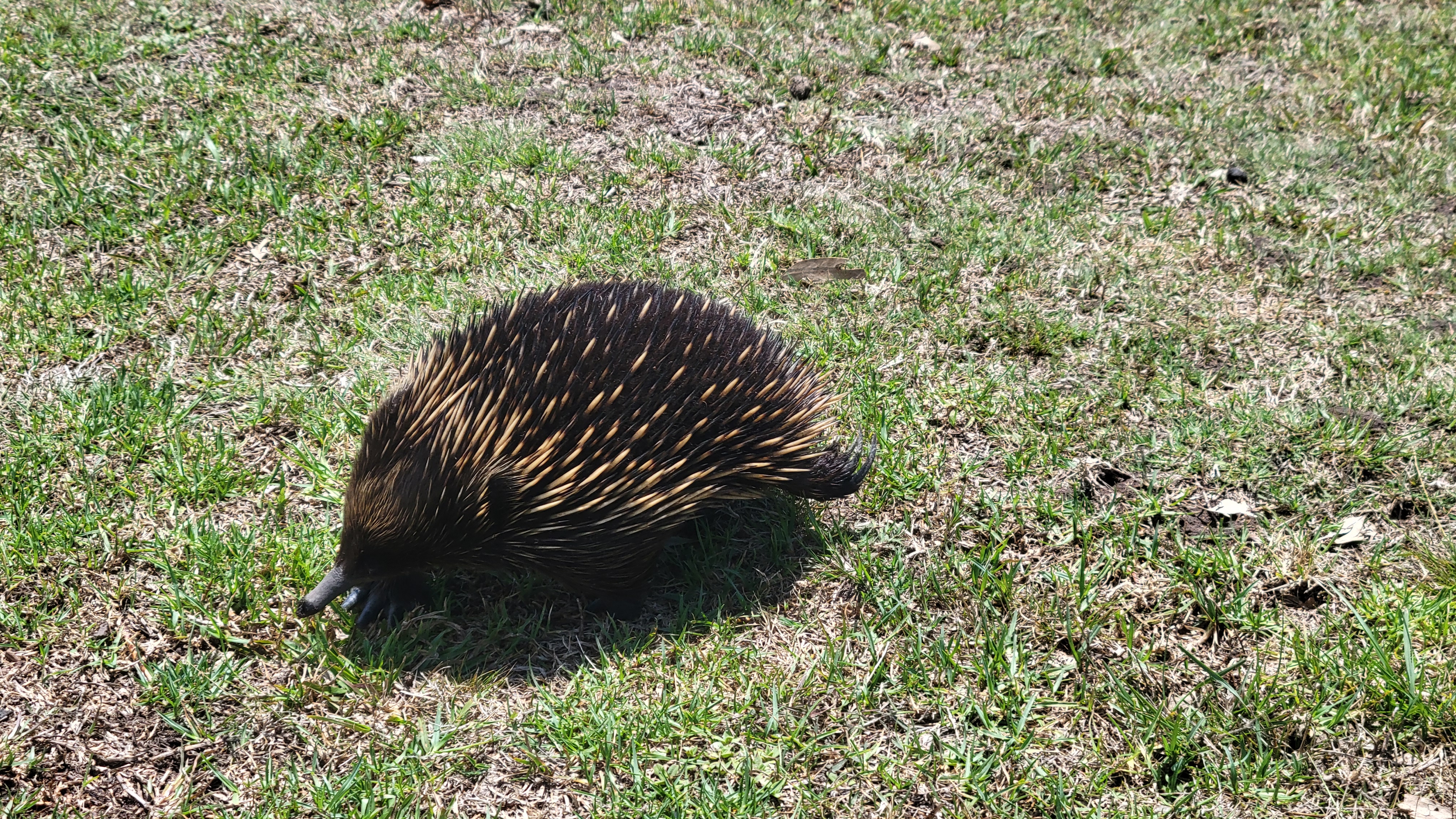
Kangaroos, squawking cockatoos and laughing kookaburras, echidnas and an elusive Goanna (monitor lizard) cohabit with mildly inebriated parents, staffers and busy kids. Heaven!

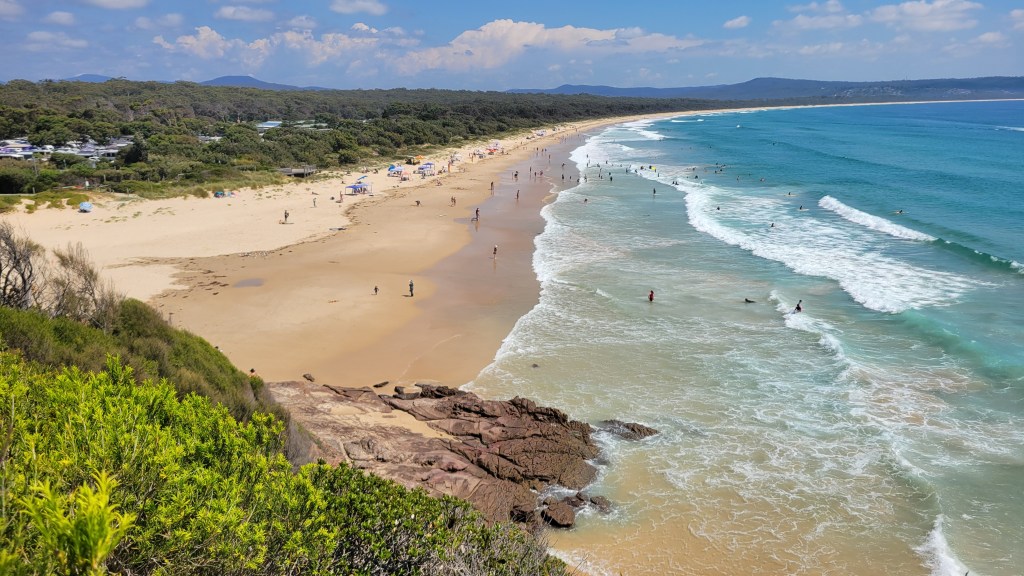
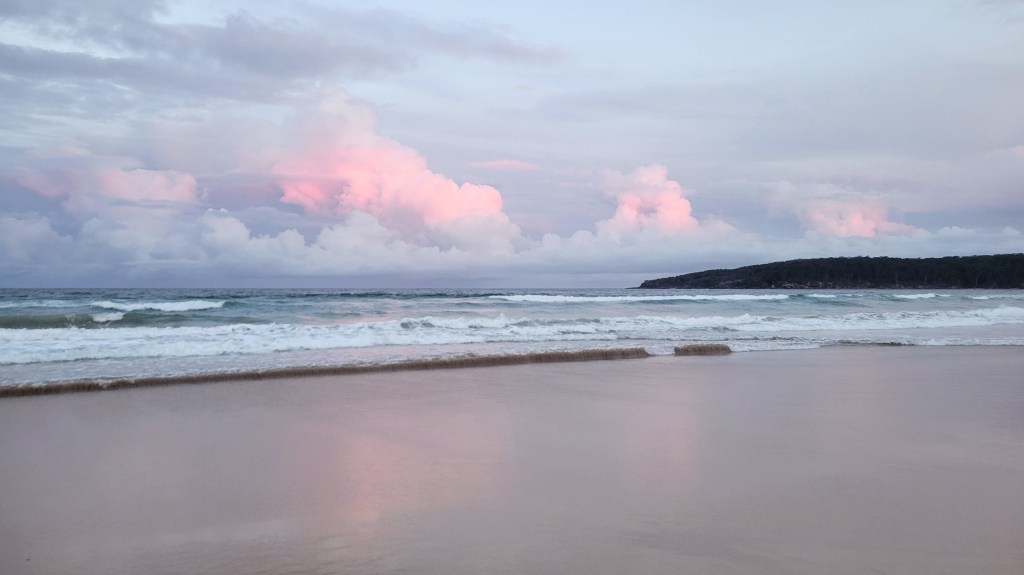
The beach is close. A natural buffer of dunes and trees separates the campers from the massive beach that joins a nearby town Merimbula to Pambula. Much of the land we have travelled through are reserved forests and national parks of all sizes and along this beach is the same.
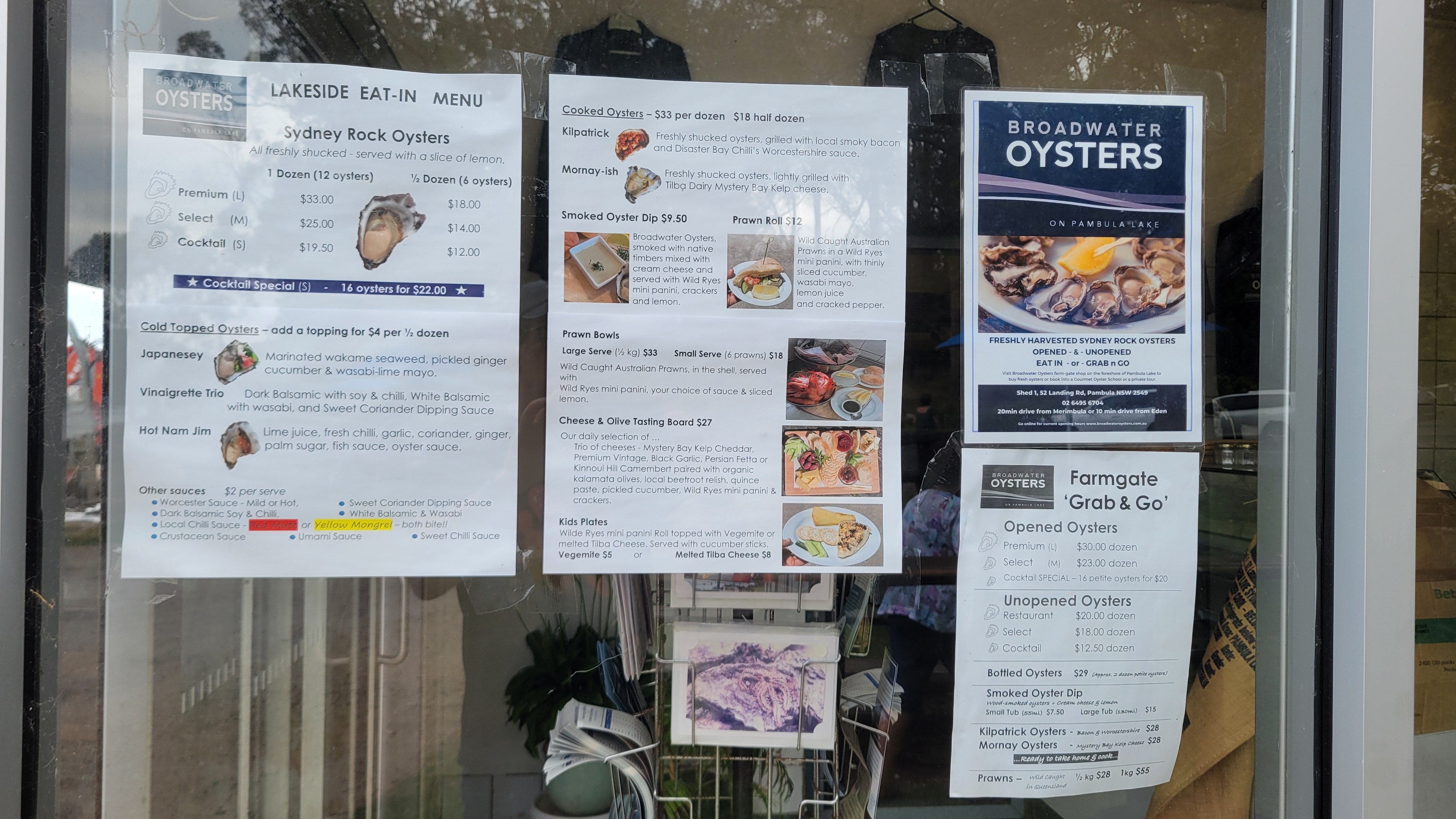
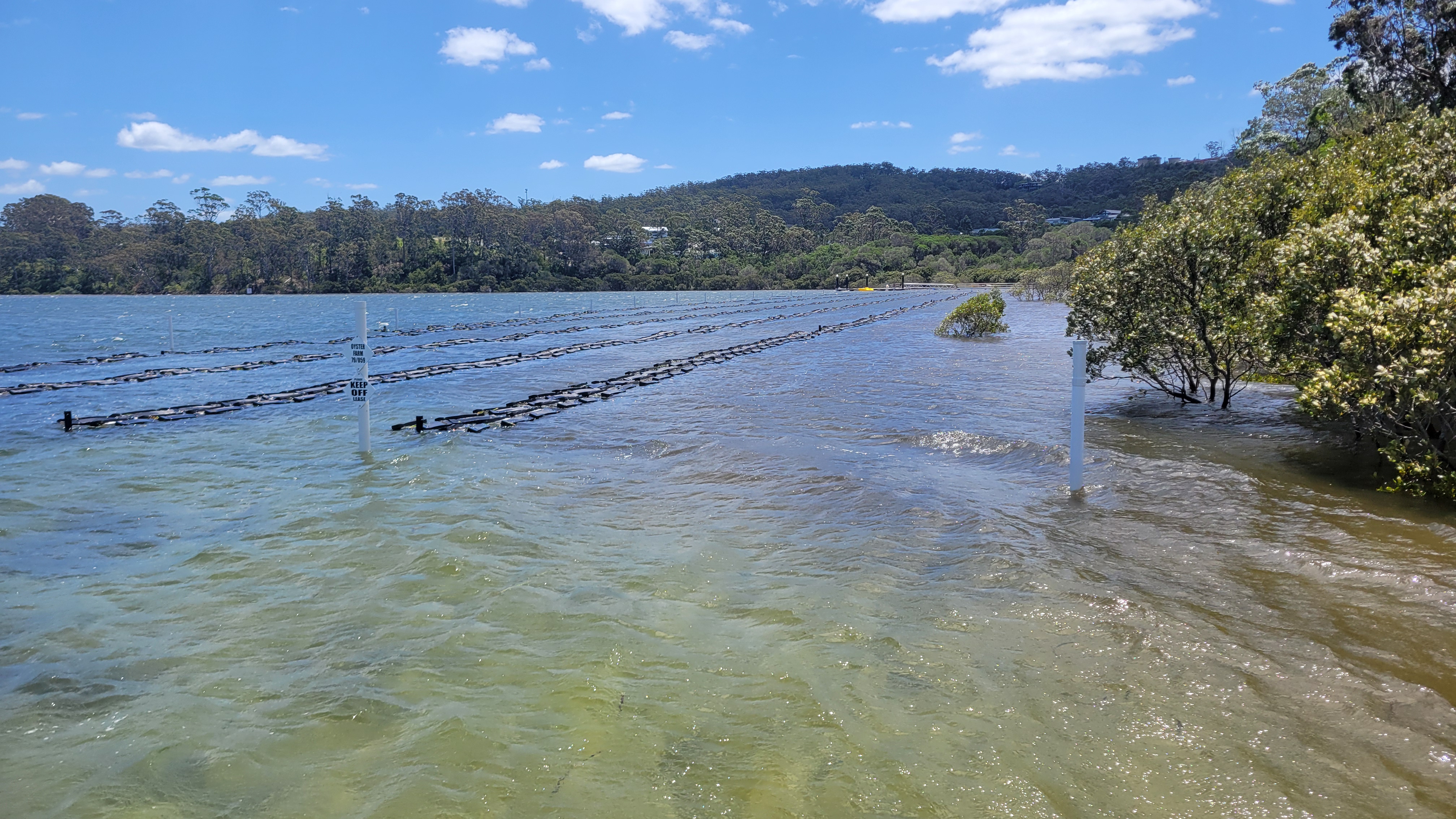
This area of the coast is famous for its oysters where in the estuaries and lagoons formed behind the dunes were massive farm operations and along the road’s signs offering wholesale prices to all.


After two nights with no electrical hookup and an electric fridge running in a hot vehicle, the battery had died so we decided to take a road trip about 90 minutes up the coast to Tilba Tilba. The anchor of this little town is its cheese factory. A byproduct of some cheese is cream, so we helped them out by having ice cream for lunch.


The single street that is the historic downtown is lined with repurposed homes and storefronts offering everything from candy to arts, crafts, clothes and pelts including kangaroo!!
The topography is pastoral with hilltop forests and cattle fields below. In the distance the ocean is visible from a nearby lookout. During the 2019-2020 bushfire season, these same forests of predominantly bark-less eucalyptus were experiencing their most catastrophic fires on record. Driving the ocean road, we saw the devastation on the trunks of the trees and marvelled at the way the trees grew many new leaf filled branches all the way up the burn scars.

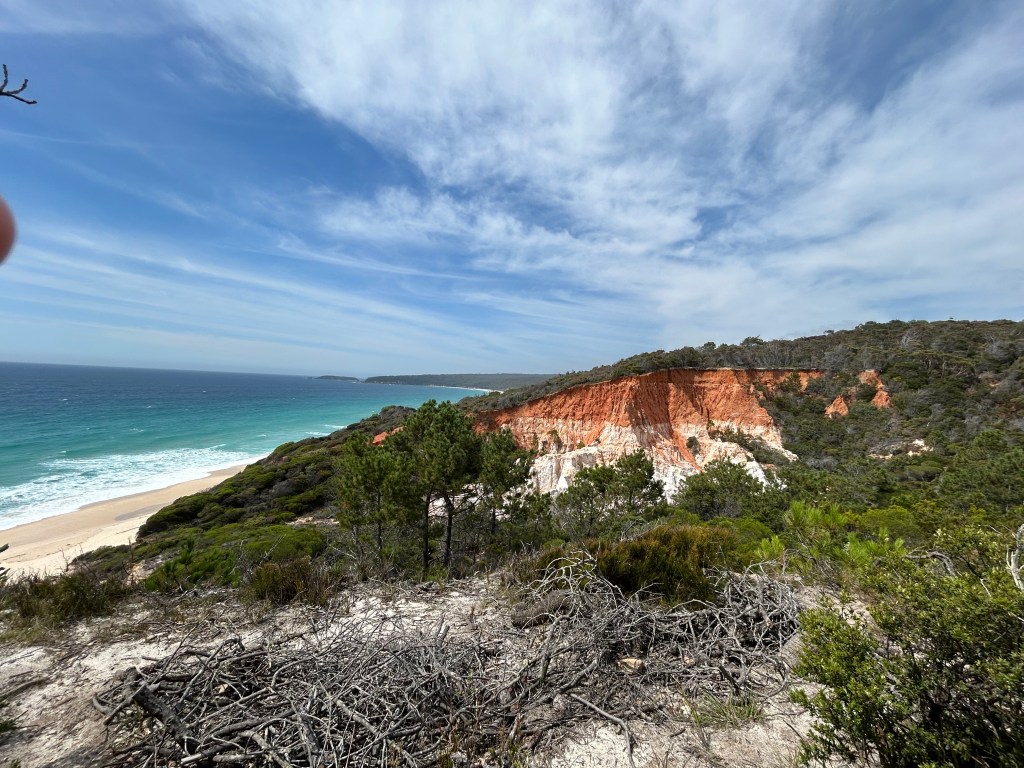
Another common anomaly in the forests and along the roadsides were megalithic stones that were in fact large anthills. From a distance we could not see any ants and were not interested in getting close as the ants we have seen here are red and the size of a carpenter ant. Big Biters?! This huge one was on a walk one beach over from Pambula Beach on a walk called The Pinnacles Loop seen here as the washed out gully with white and red striped walls.

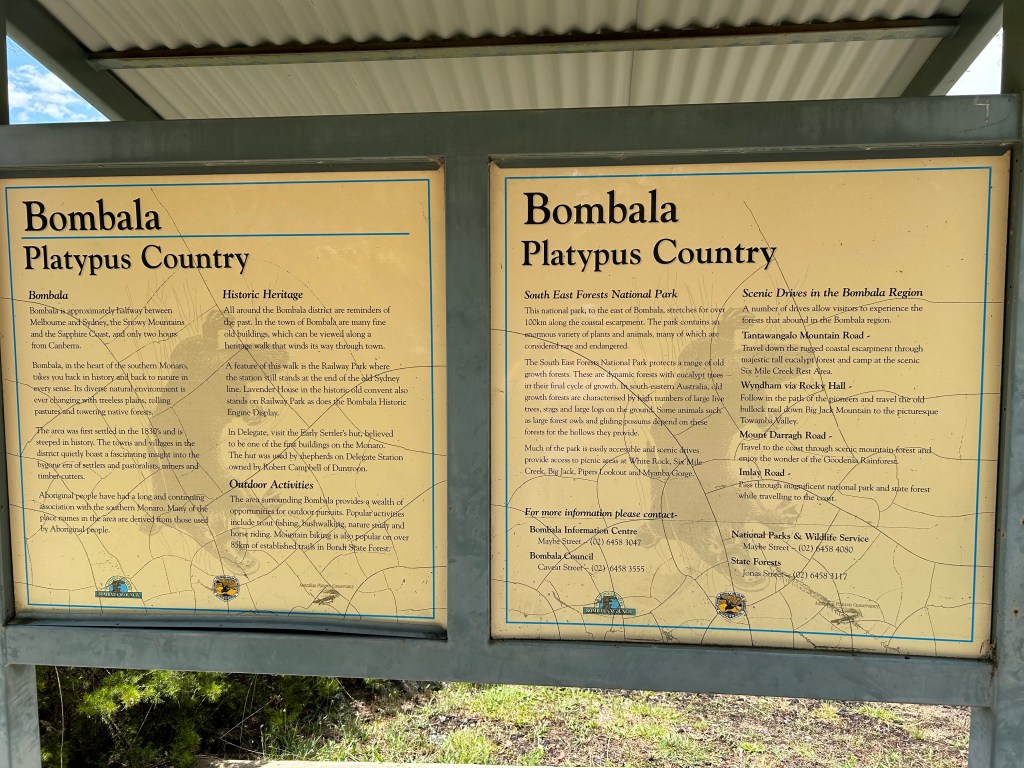
On Jan. 16th we headed inland to a small portion of the Snowy River Mountain Range. The forcast was for heavy rain so we decided a road trip was better than sitting on a beach. Australias tallest peak was within striking distance but we were sidetracked with a Platypus Sanctuary in a small village called Bombala. Albert saw a platypus. We should have bought a lottery ticket since even our newest Australian retirement-ready friends had never seen one.
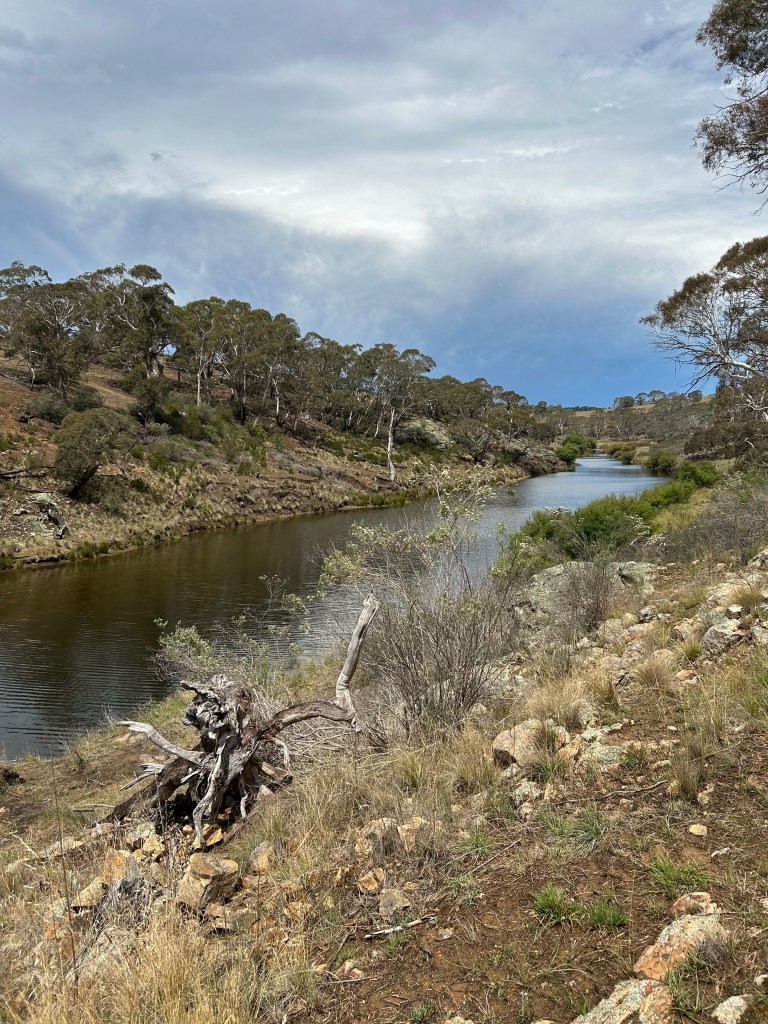

That day Australia experienced a massive storm. At home on Vancouver Island, we have weathered through some pretty intense events like “Bomb Cyclones” and this seemed close to that kind of event. Crazy rain amounts like 100 mm in less than a 12 hour period. Crazy wind gusts up too 100 KPH and rapid fire lightning/ thunder claps too numerous to count. Sydney experienced significant damage and power outages were felt all over the the south east side of Aus. Plus, we recieved a travel warning, registered as Canadian Citizens Abroad, from our government. Fortunately we had booked a dinner reservation for 7:00pm and watched the show from the safety of a window table in Merimbula (a close neighbouring town). Our happy hour, before going to the restaurant, was almost washed out and this poor puddled and befuddled kangaroo was looking confused out front of our canopy tent with all the rain and atmospheric calamity.

Next day was clear and we were off to Eden. This historic point of land was ground zero for whaling. In fact, there was an old killer whale, named Old Tom, whose bones are shrined at the museum. His claim to fame was that he would help the aboriginal whalers by locating other whales for their demise. His prize was to be fed the tongue of the doomed whale, a delicacy. He helped the colonizers as well, since they were on to his game, and would feed him whale tongue too.

On our way to town one day, I noticed huge birds flying around in the trees. But they had bat wings. We stopped. The trees were dripping in big fruit bats. Otherwise known as flying foxes.

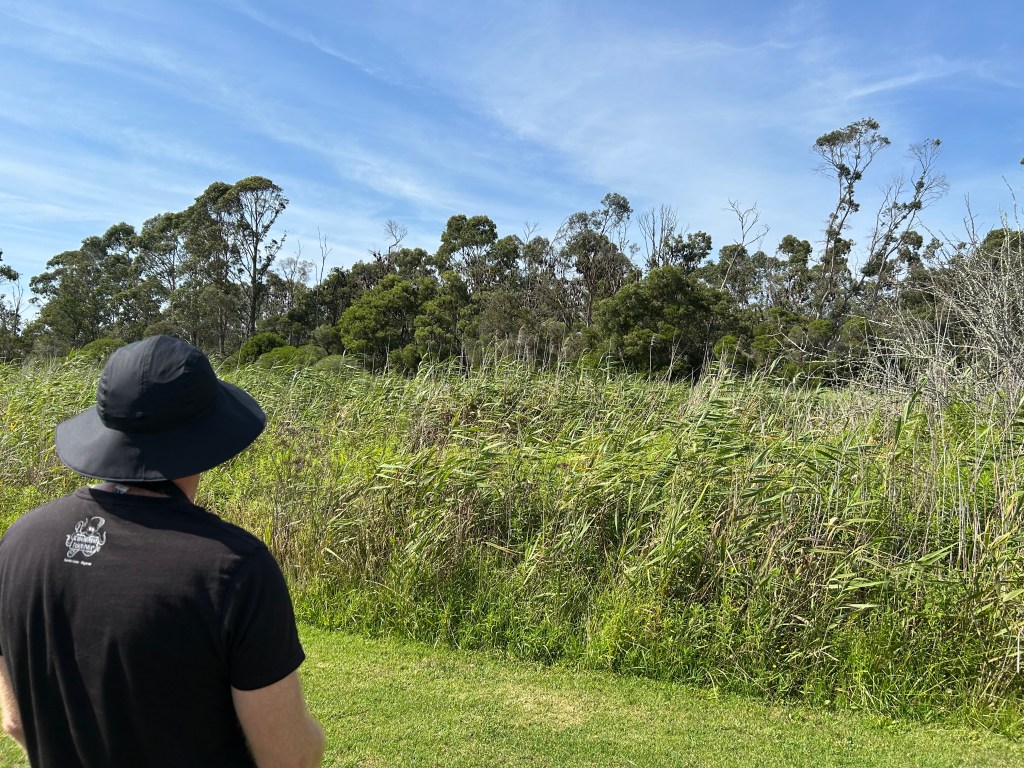
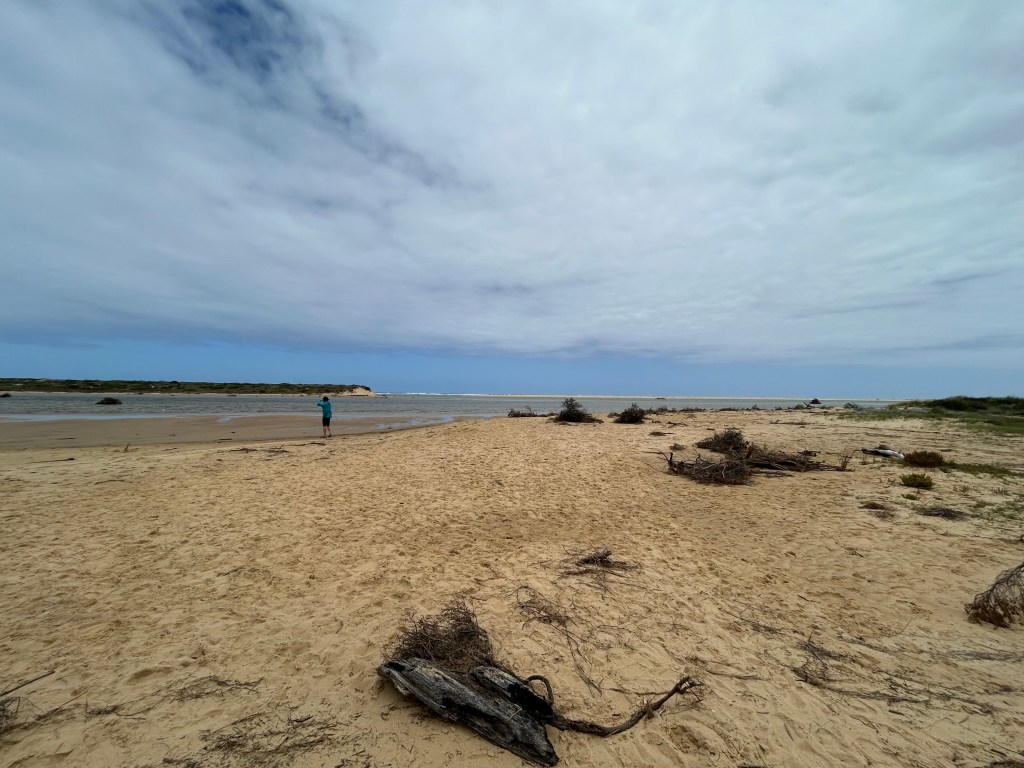
Leaving Pambula Beach took us along the A-1 or Princes Highway to Lakes Entrance. We made a stop at the mouth of the famous Snowy River. When I (Deb) was very young I was enthralled by a 1982 movie called “The Man From Snowy River”. Based on a poem about wild horses (brumbies)vs the humans who want to tame them in Australia. It was during my horsey days. I cried and cried. Not sure what became of the man or the horses, but here we were at the Snowy River!! We took a stroll along the estuary dunes and lagoon through some easy sand tracks.



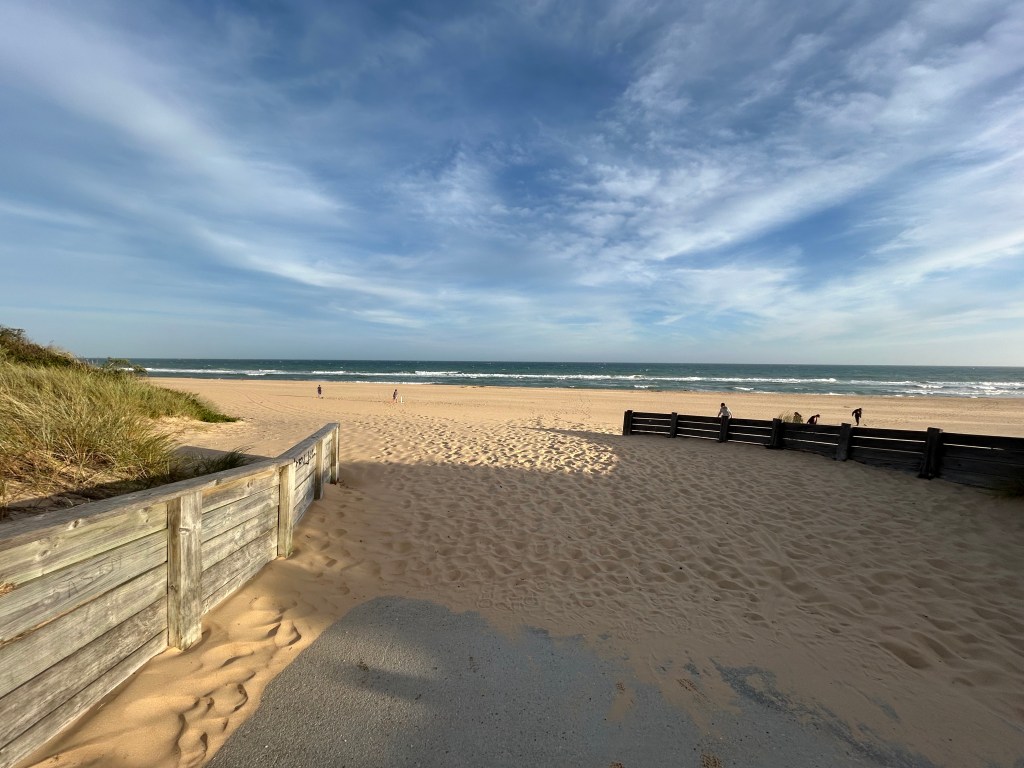
Arriving at Lakes Entrance was like arriving in Santa Cruz. A busy little town with surf shops, boats, and a midway with a tall ferris wheel greeted us. This seaside area boasts a salt water lake system with over 400 square kilometers of watery playground. It is protected by a 90 mile long beach that was human punctured (dredged) to give access to fishermen and even a one-trip-before-sinking-paddlewheeler between Melbourne and Sydney. Local lore tells of the Lakes Entrance having the largest ocean fishing fleet and the catch being trucked 22 hours to Sydney over single lane dirt roads then the driver would turn around to get back for the next 15 ton load. We did buy some fresh “flat head tails” for a meal one night from the fish packing co-op.



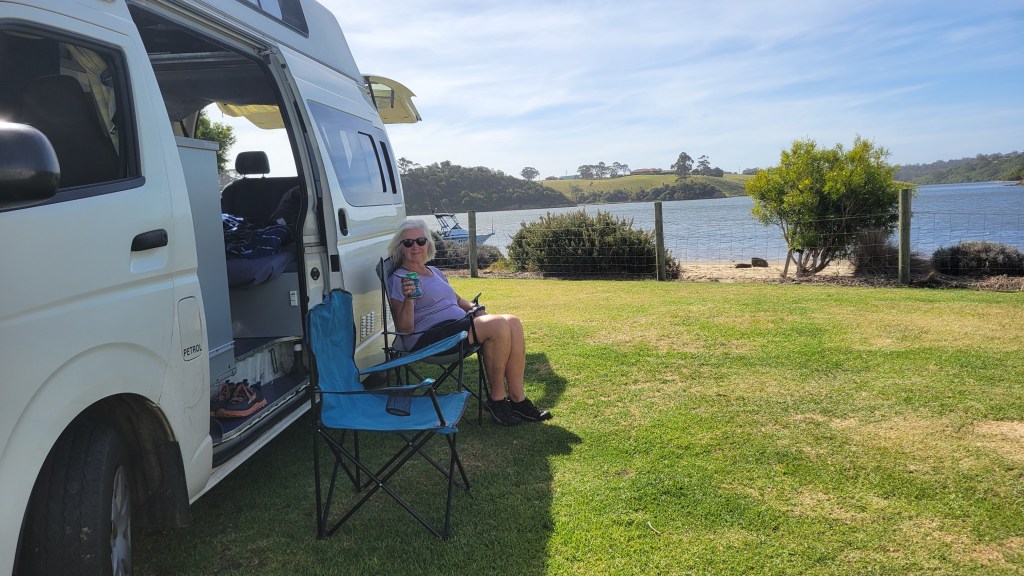
We were camped at a waterfront cricket field and our neighbour asked if we had seen koalas yet? Nope, so off we went the next day.
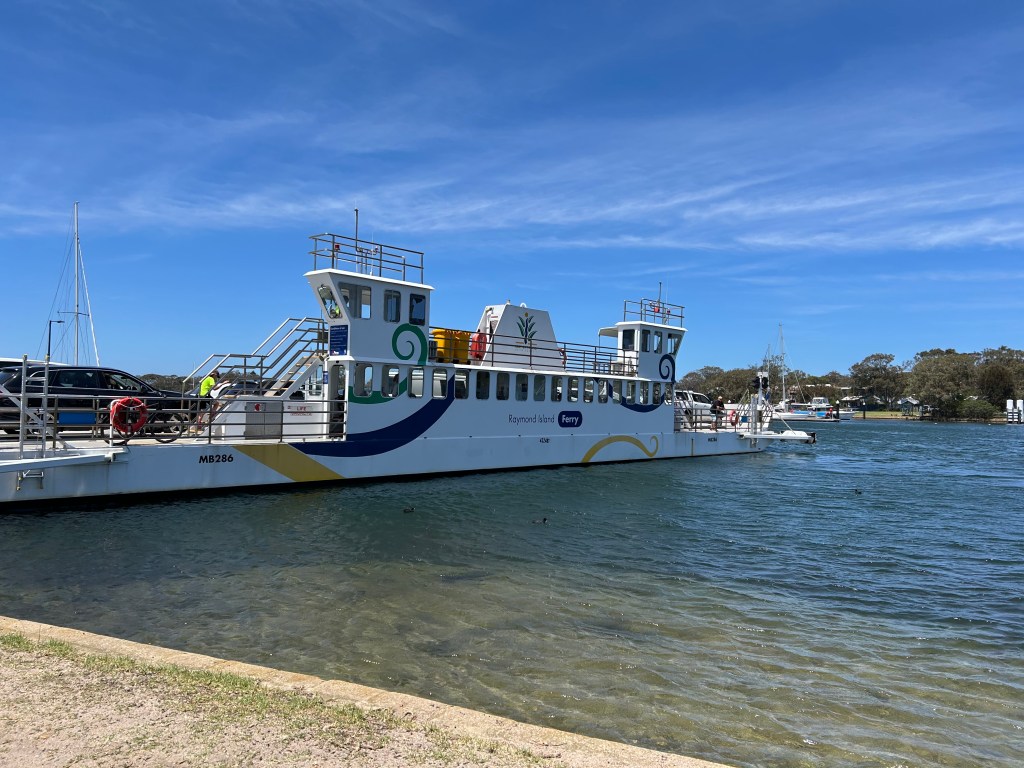
An hour out of Lakes Entrance travelling all the way around the lakes, brought us back to Raymond Island and the Koala Walk. Parking at Paynesville and walking for free on to the ferry, we were at the trail head through the village dominated by large eucalyptus trees. We spotted about 10 koalas without working very hard.



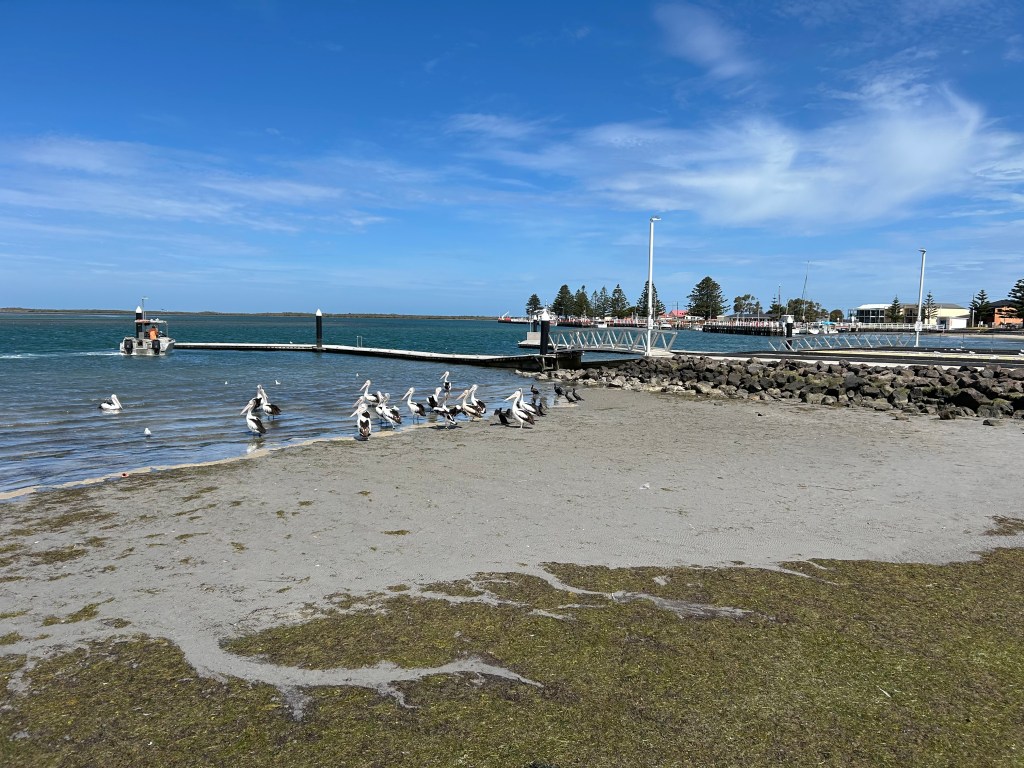
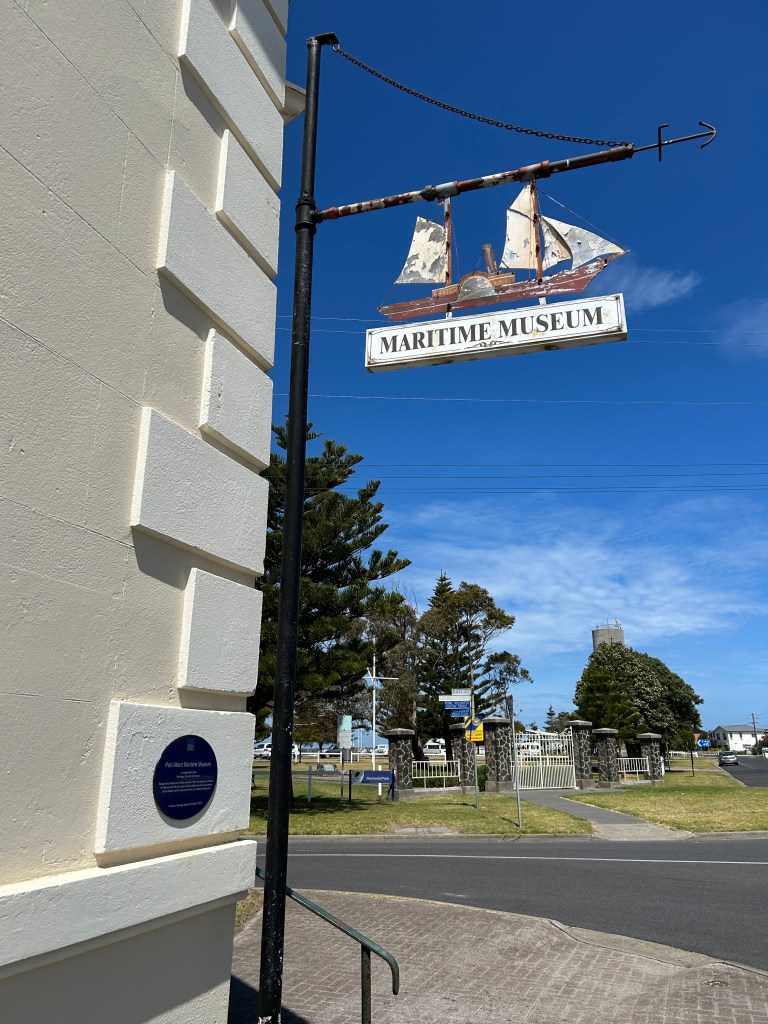
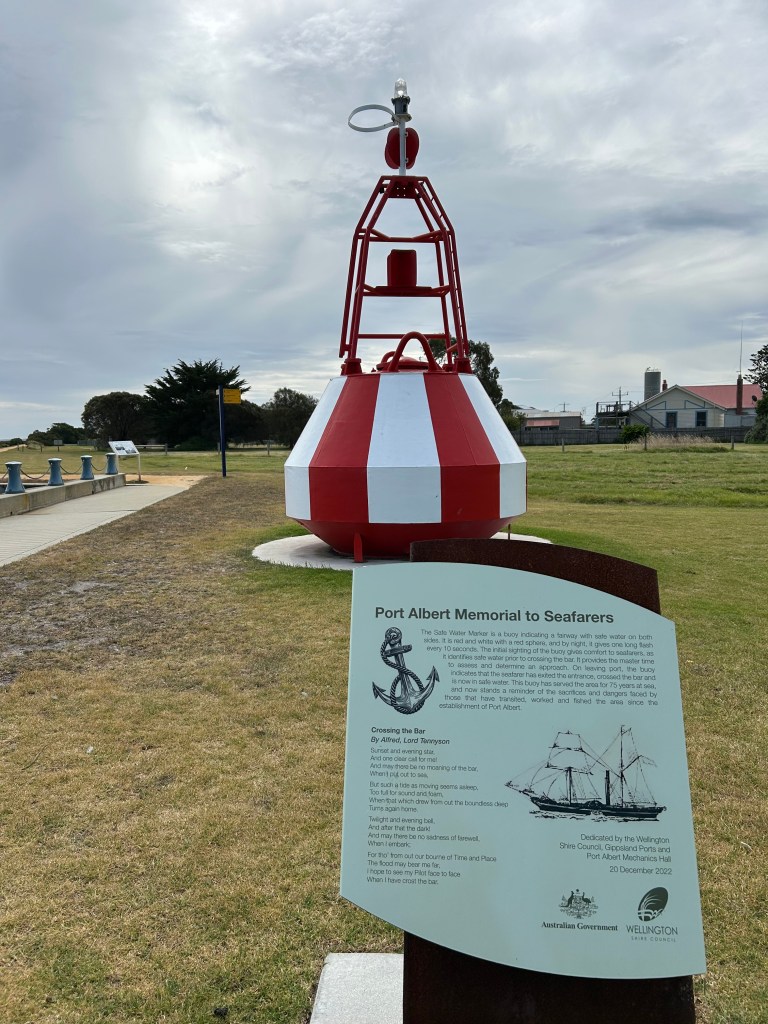
Our last stops before hitting the city of Melbourne were south of the city. We camped at a small “oldest” port. Port Albert was pretty deserted but had free overnight with toilets at the public boatramp. An historic interpretive walk taught us that this formerly bustling quaint location was where munitions and miners landed to service the gold rush.


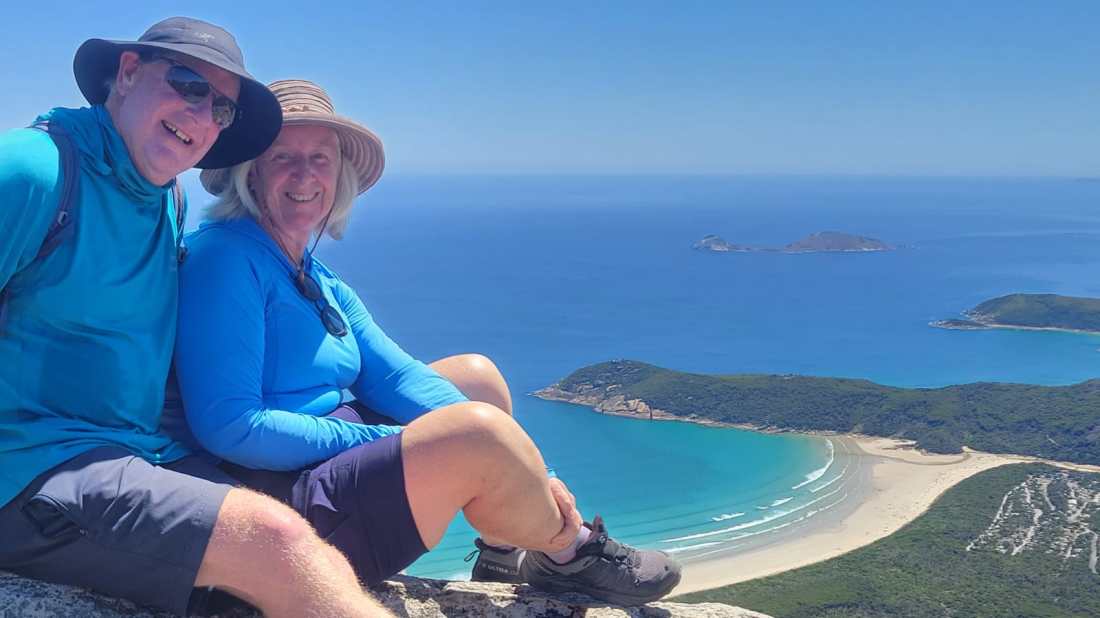
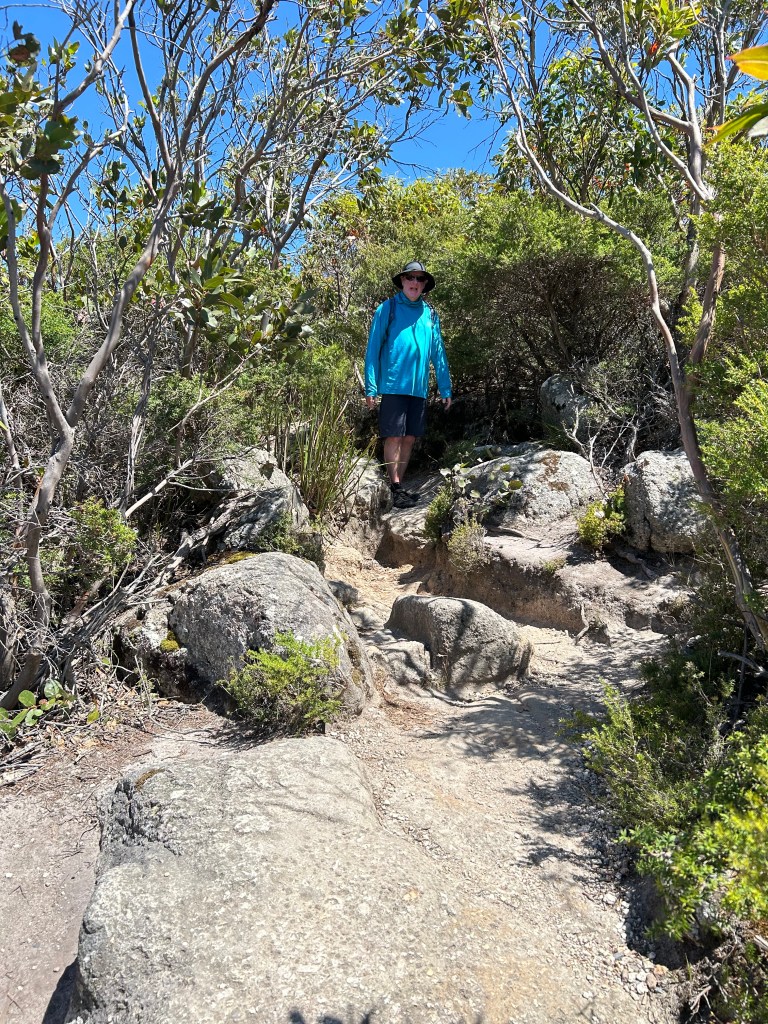
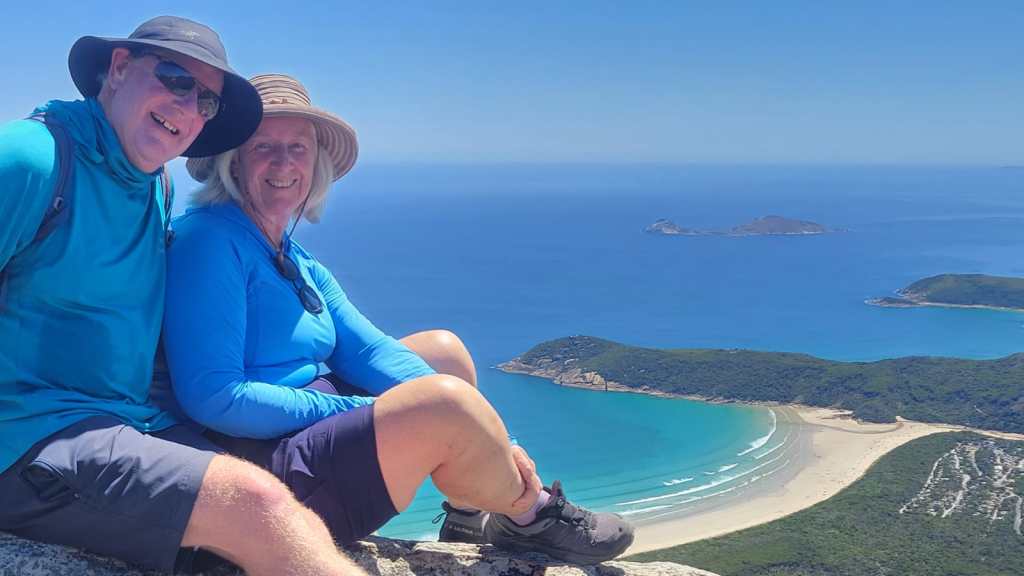
Next morning we were off to The Prom. Wilsons Promontory National Park is Australias most southerly point of land on the continent. We took a middle-of-the-day-in-the-hot-sun hike up Mount Oberon. Arriving at the enormous and fully booked (approx 500 sites) campground we parked, applied sunscreen and sunshirts, had lunch, then boarded the airconditioned shuttle to the trailhead. The 4 kilometer climb is mostly up a partially shaded road that services communications towers at the summit. Arriving at the towers there is a set of stairs carved into the rocks to the top. Stunningly beautiful we saw where our swim would be when we arrived back at the campground.




Another recommendation while we were camped at Lakes Entrance was the Penguin Parade. Phillips Island is home to a colony of Little Penguins who nest and raise their young there. During November, December and January the babies are burrowed in underground holes and as soon as the sun goes down the parents walk the beach with food collected through the day to feed them. The center opens late so we can watch them exit the ocean to their dens. Where are the pictures? You will need to look online as that is what we are up to tonight and haven’t taken any yet!! But we wanted to share this while we have some wifi at our campground on Phillips Island.
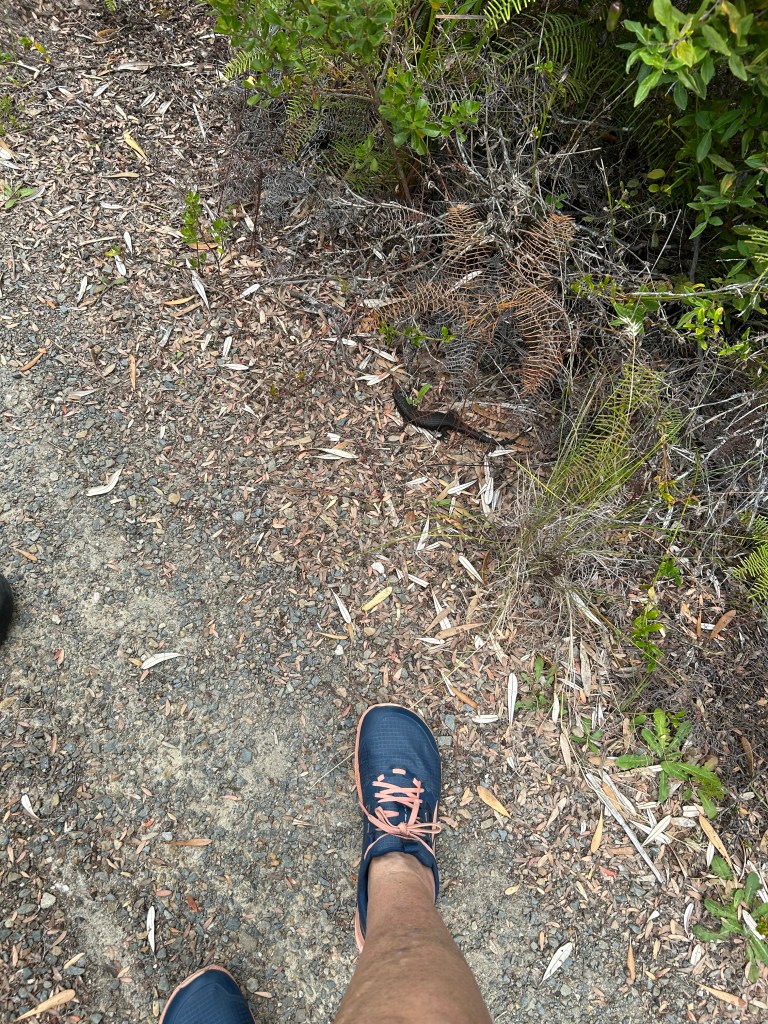
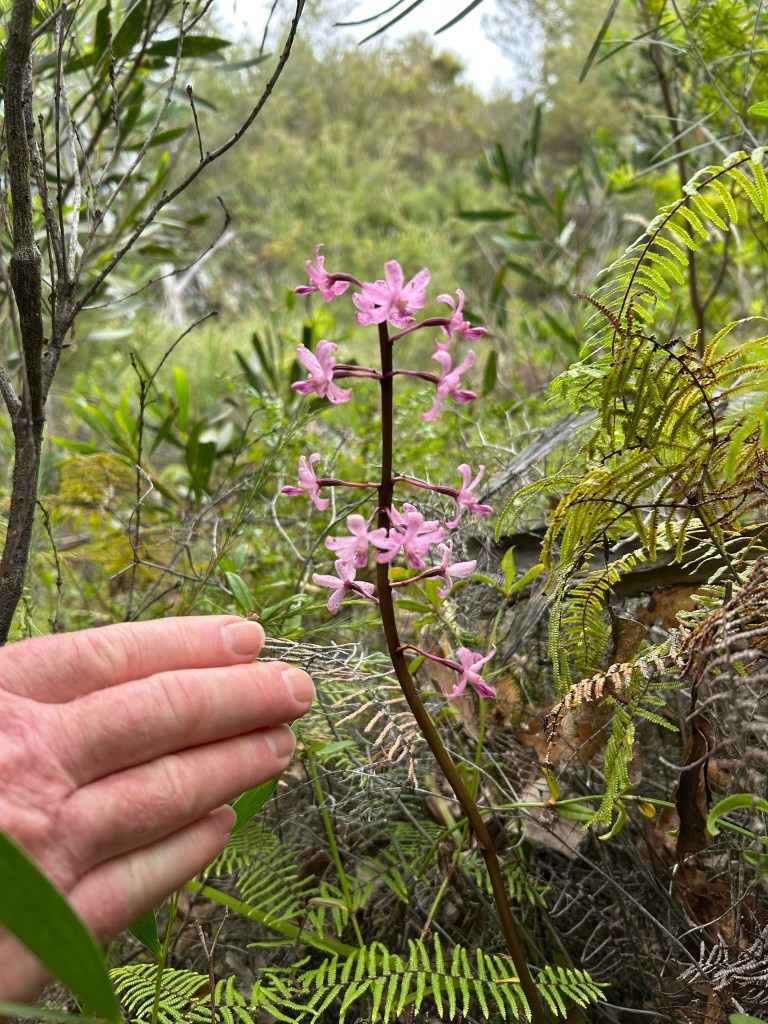
The animal and bird life has been impressive. So far wee have seen Echidna, Kangaroos, Blue Tongued lizard, Grey Headed Fruit Bat (flying fox), a Platypus, Swimming Dragon, Loalas, Wallabees, and many types of parrot and cockatoos and numerous varieties of sea birds. Here are a few samples


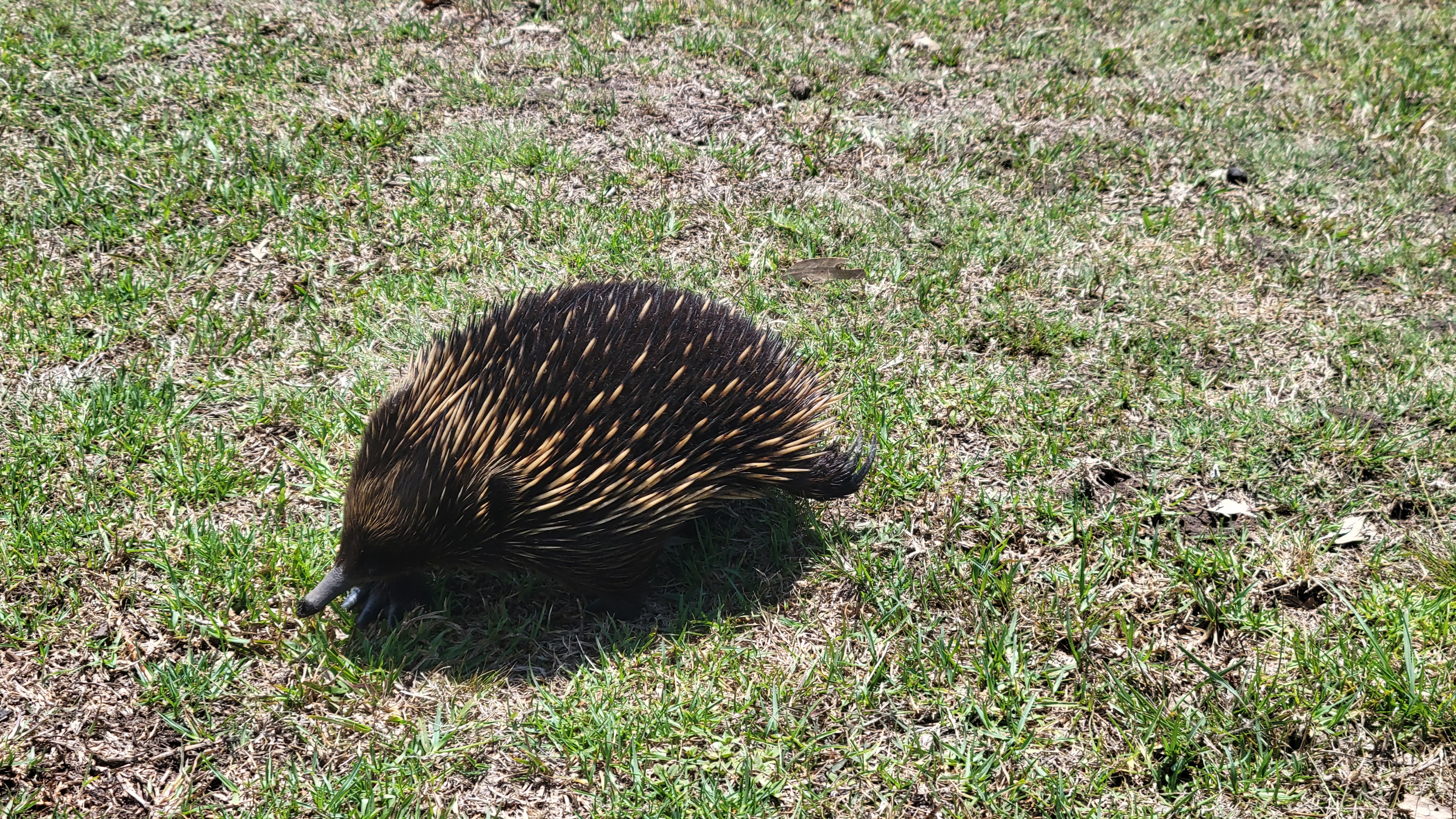
Lots of bucket list animals and lots more to come in the next couple weeks I’m sure.
 The Grape Escape