
One of the first things we did in planning this 3.5 month trip was decide we would spend Albert’s 65th in Japan during Sakura, springtime when cherry blossoms are in bloom. Even before we booked our tickets to and from Japan, we booked a hotel in Kyoto assuming accommodation would be difficult to find and pricier due to the popularity of this springtime attraction. Hindsight – we could have booked similar or same accommodations for much less than paid. Before Kyoto we decided to visit Hiroshima and the Peace Memorial.
We flew out of Hanoi in the morning and arrived in Osaka in the early afternoon. The airport has a train station and once we had activated our Japanese eSims, exchanged our Japan Rail vouchers at the ticket office, we headed for the trains. Our final destination that day was Hiroshima.
A bit about navigating the trains. We had heard that the Japanese train system is super easy to use but it was all new to us. We had also downloaded the Navitime Japan Travel app that assists with all things public transit throughout Japan. It tells the route, platform, train line, price, times etc. Google also does but it didn’t tell which trains were included on our pass. The helpful attendant at the ticket office told us what trains would get us to Hiroshima right away which made our lives a bit easier. If we were to bus or drive it was about 4 hours away. The connection with the bullet train would take us just over 2 hours.


Our train was scheduled to leave in 8 minutes. And they leave on time! Scanning our new tickets in at the nearest gate and heading to our platform was about 4 minutes. We made it! On board we sat down and immediately were told in Japanese that the seats on that car were all reserved. We had to go to the non reserved seats on a different car. Off we went (one minute to departure) then the music started playing signaling the train is about to close its doors, we jumped into a non reserved carriage just in time. We were on board but all the seats were full. So we stood for an hour on a screaming fast train until arriving at the station we would change trains at. Considering we had only been in the country about one hour we high-fived our victory of even finding the right train! During that first experience we had time to look around and figure out how the trains organized their non reserved seating. It definitely got easier the more we used the trains. At each platform there is an electric billboard that says what train is arriving next and the direction it is heading. It also says which cars are non reserved. The sign flips between Japanese and English. The deck of the platform is painted with markings that easily identify where the train doors open and the corresponding car number you are waiting for. Getting on a train involves finding your platform (and there are many), determining when your train is coming, and finding the car that you are to ride in (whether that is a reserved or non-reserved car). Once on board announcements and real-time progress maps allow you to easily anticipate your destination by the number of stops before your chosen station or by knowing the name of the stop. Right before the train is to stop, some music will play giving you time to get yourself and your stuff to the door. We did become really good at this. And because we were mostly in big centers, there were many time and transit options including varying prices. It seems the trains run often so even missing a train meant just getting the next one that would come soon. Within a couple of days, we were able to just use the app to decide which trains to use. On our connecting train to Hiroshima we did get seats on board our first Shinkansen Bullet train! Compared to the diesel trains in Vietnam, the trains in Japan were comfortable, quiet and didn’t bounce along. Even the Shinkansen sped up to 300 KPH and slowed down without feeling any G-force. Smooth!
Hiroshima train station was big and eventually finding the right exit through the maze of shops, restaurants, bars and throngs of people, we found ourselves outside, in the dark, in a torrential downpour. Our “businessman” hotel was about a block away so we walked. Arriving in the lobby we were each handed a fluffy white towel to wipe down. At first the staff’s towel gesture seemed about being genuinely concerned for our discomfort at being soaked by the rain but in retrospect its more likely they were cringing inside about our dripping attire on the impeccably clean floor and carpet. We checked in and headed to our compact little room. These hotels, like much of Japan’s public spaces, is cleverly engineered for comfortable two person occupancy in about 200 sq. ft or less. A firm bed, new slippers, kettle with an assortment of coffee and tea, two Yukatas (housecoats), toothbrush and paste, hairbrush and elastics, all the toiletries and a Japanese bath/spa for guests included on another floor. We changed out of our wet clothes and went for our first meal since a breakfast of leftover Indian food from our last night in Hanoi.

We hadn’t eaten all day so wound up eating in the lobby restaurant. This was also a new and fascinating adventure in Japanese restaurant automation. Japan has automated many of its services and this place had a menu order screen at the door. Once we navigated to the English instructions, we put an order together but by the time we had figured out how to pay it timed out. Good thing there wasn’t anyone waiting behind us because it took us 4 tries to fully understand the system and submit both of our orders. It spit out a couple of receipts and further inside the restaurant and above the kitchen pass was a screen that showed where our food was in the queue. Minutes later we each had a big Asahi beer, delicious chicken curry, perfectly cooked rice, finely shredded cabbage salad, served with miso soup, and a wealth of condiments at the table. All in for both of us it was about $25. Not disappointing at all!
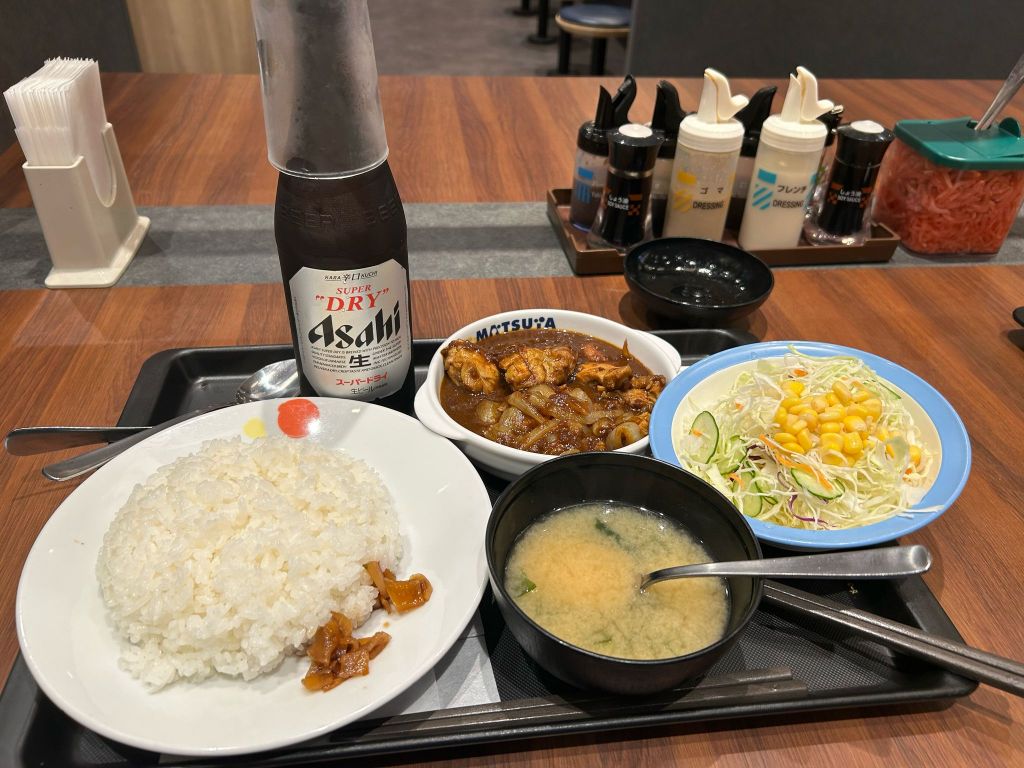
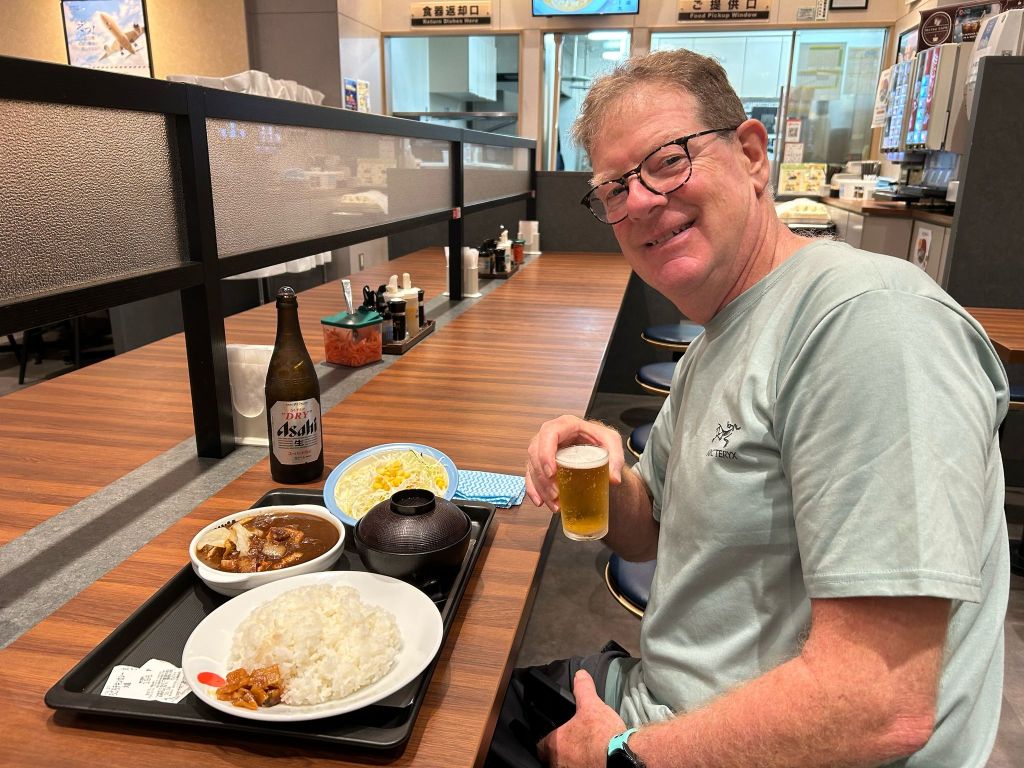
We decided we would have breakfast in the same restaurant. Perfect rice, perfectly cooked omelet, miso soup, fresh salmon lightly cured and seared, cabbage salad was about $14 total.

Hiroshima is modern, roads are wide, sidewalks are huge, clean and clear of any tripping hazards. Sewer manhole covers are curated art pieces.

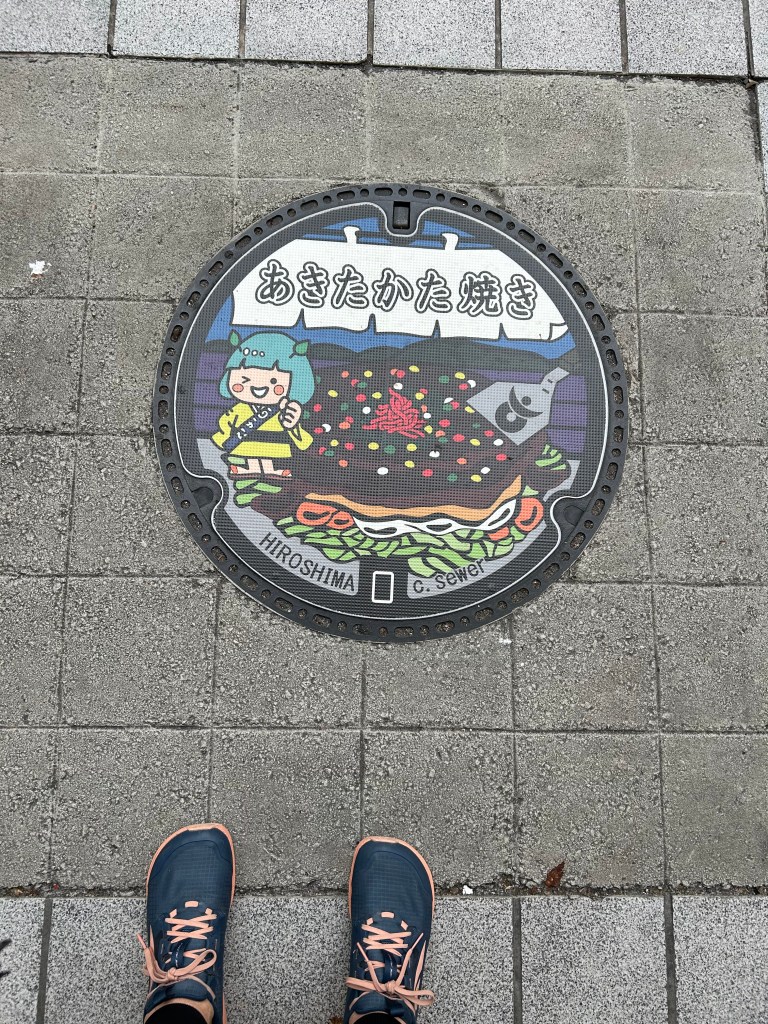


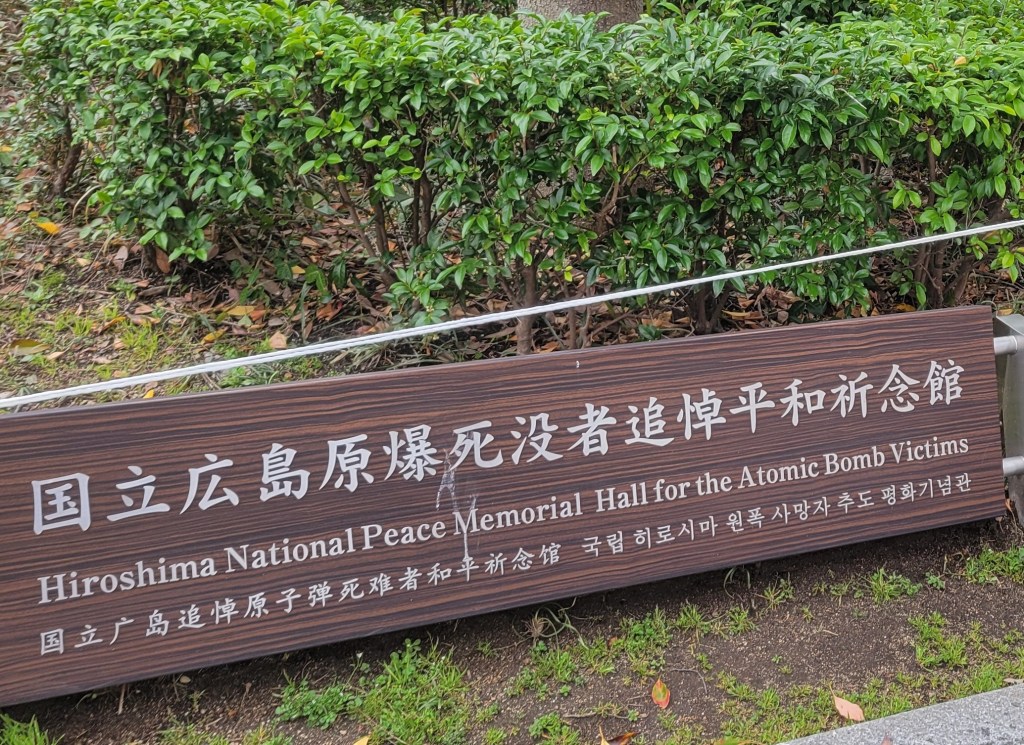
We decided to walk to to the Peace memorial. The artful streets are also whimsical in their functions.

As we walked to the Hiroshima National Peace Memorial Park we saw a small unassuming cairn with a plaque before we crossed over the Motoyasu River. Quite by chance, we were standing 600 feet below the hypocenter where the first nuclear bomb had exploded evaporating everything all around us. NOT WHIMSICAL AT ALL!
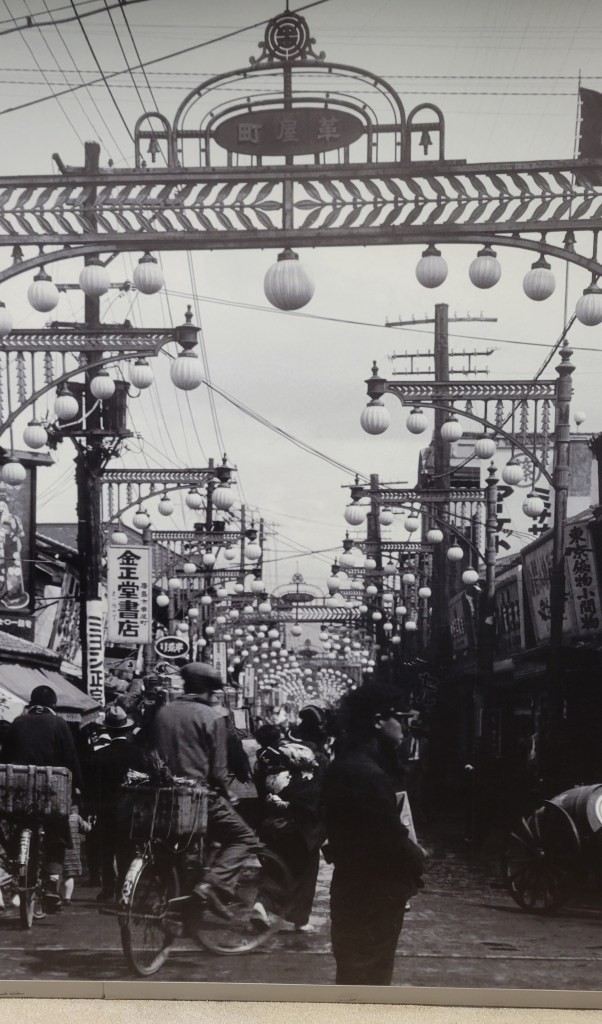

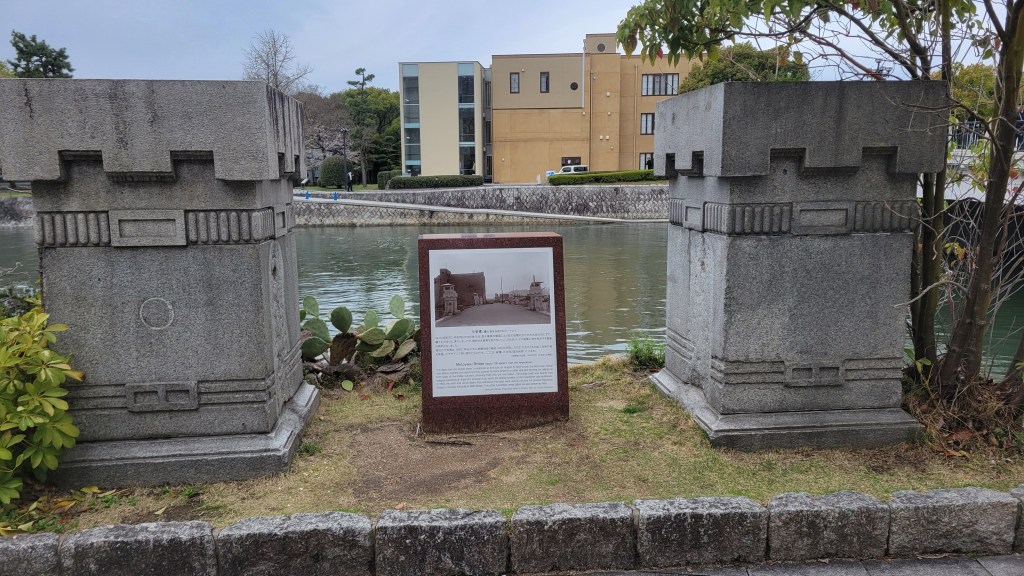
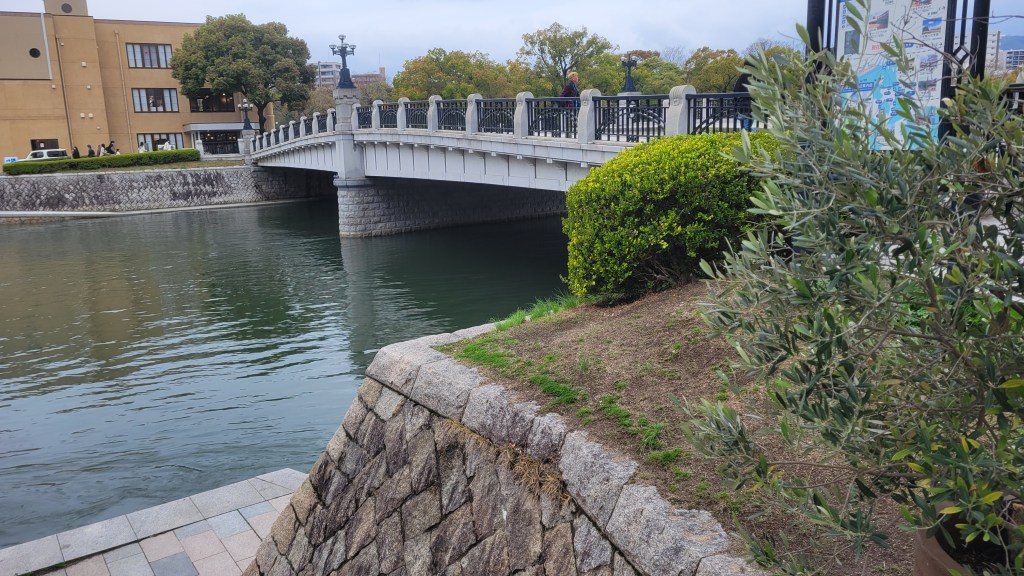
Whoa. The heaviness hit us. As we rounded the corner and were at the bridge, another plaque explaining the two pillars that were part of the original bridge before the explosion. The bridge beside had been repaired using the few pillars that survived the blast.
Looking up we saw a beautiful public space, eerily quiet, with sculptures and artforms commemorating the people and children, lost or maimed, surviving or sick, and a giant message of hope for a future world without nuclear war.
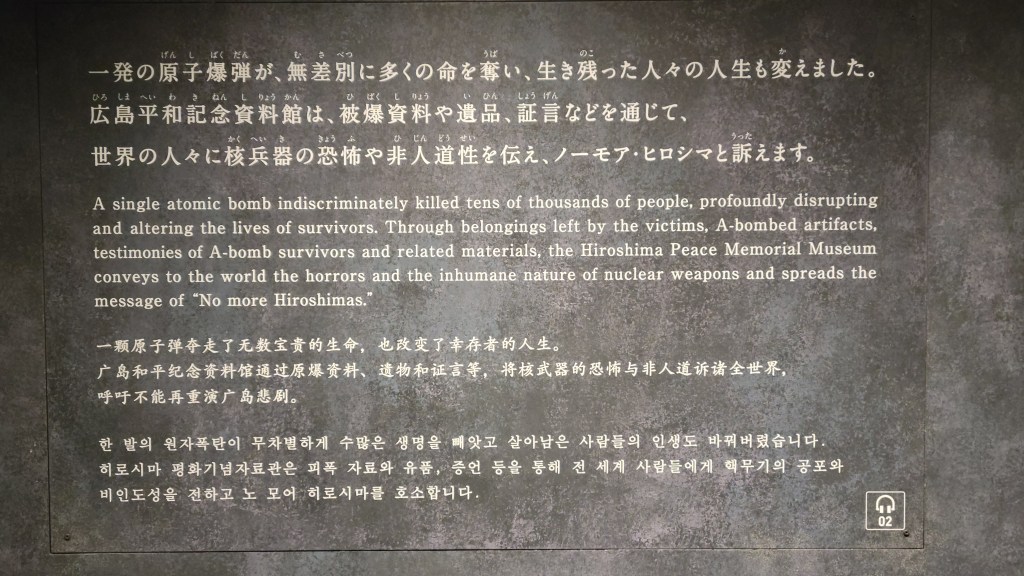
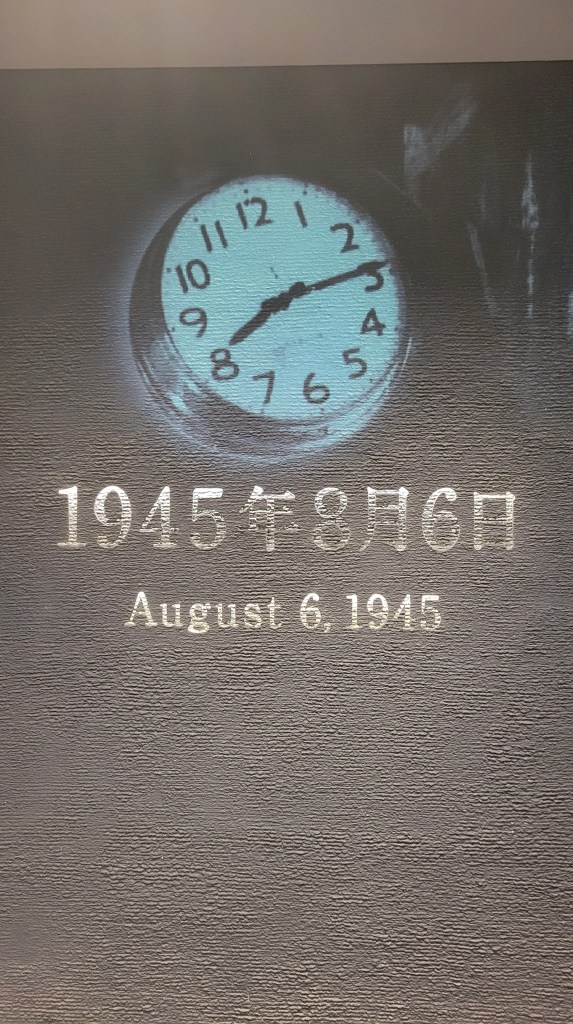
The large museum on site takes visitors through the event. It is very emotional. It is important.

Outside is a childrens memorial with tens of thousands of origami paper cranes attributed to the Japanese belief that the crane is a symbol of long life. After the bomb, many people including many surviving children became sick with leukemia from radioactive Black Rain.

A famous children’s book, Sadako and the Thousand Paper Cranes, tells the story of one such bomb survivor. A sick child who attempts to make 1000 paper cranes, one every day, in hopes that it would fulfil her wish to live through the disease. But she dies. Seeing all these paper cranes brought the tears. So sad.

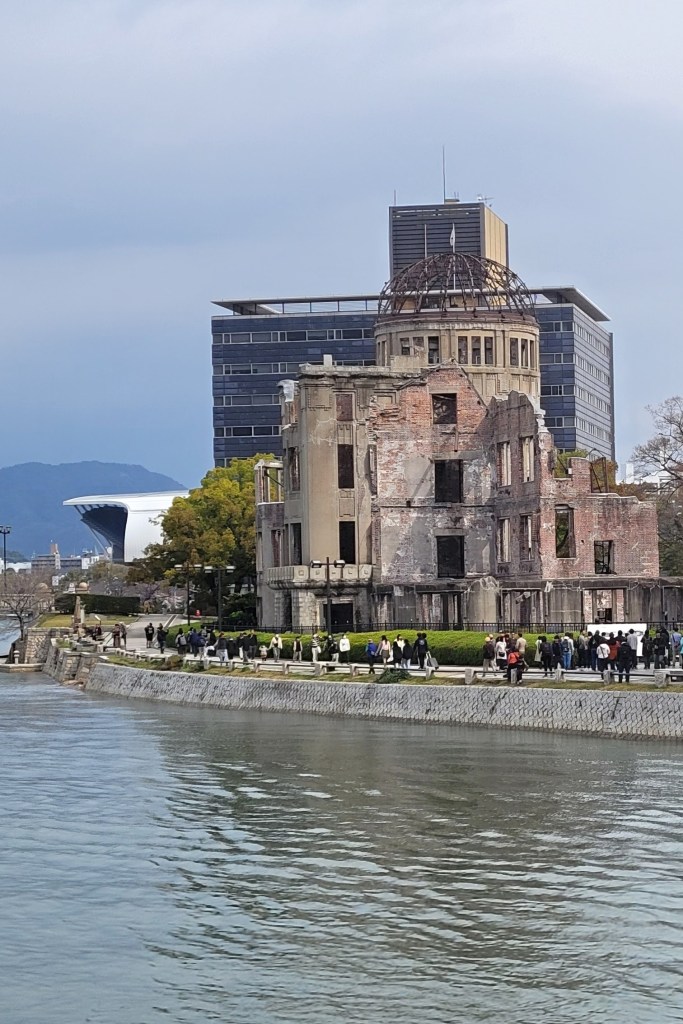
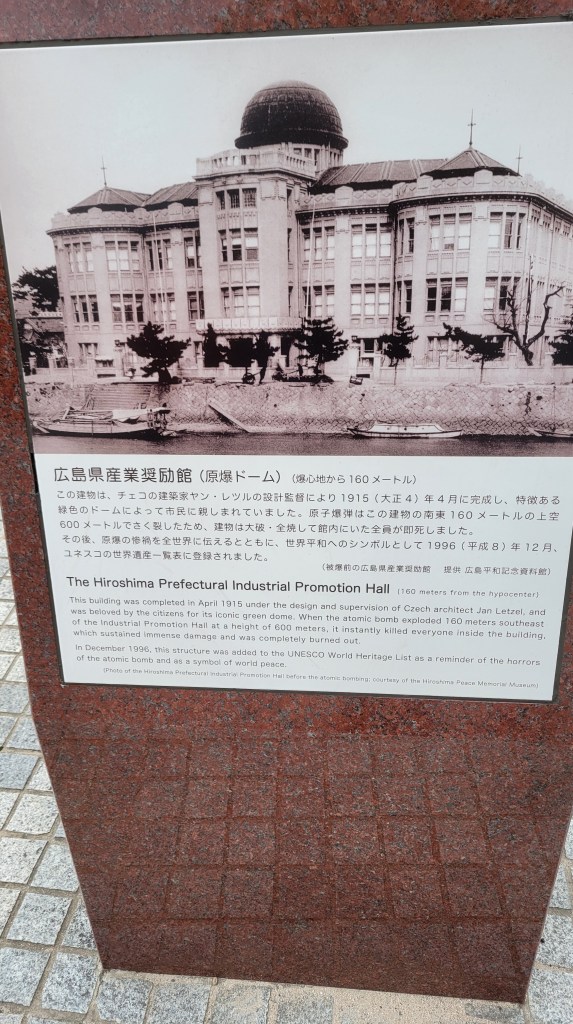
Few buildings were left standing. The blast from the detonation of the “Little Boy” atomic bomb created a firestorm of 3000 degree F that vapourized most things within a 3 kilometer radius. One building that remained, but in ruins, was renamed the Atomic Bomb Dome. It has been preserved as a ghastly warning from WW 2 and the byproduct of war in general. Inside its glassless window frames, and around the building, is rubble left after the explosion on August 6th 1945 an eerie reminder of the hellish carnage unleashed by the flying crew in the B29 Superfortress Bomber named Enola Gay.



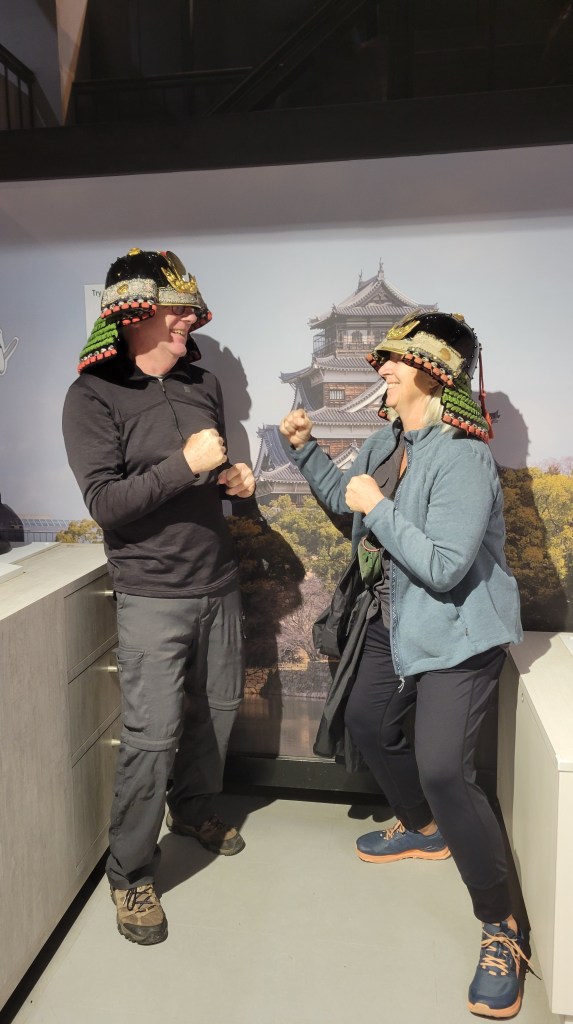
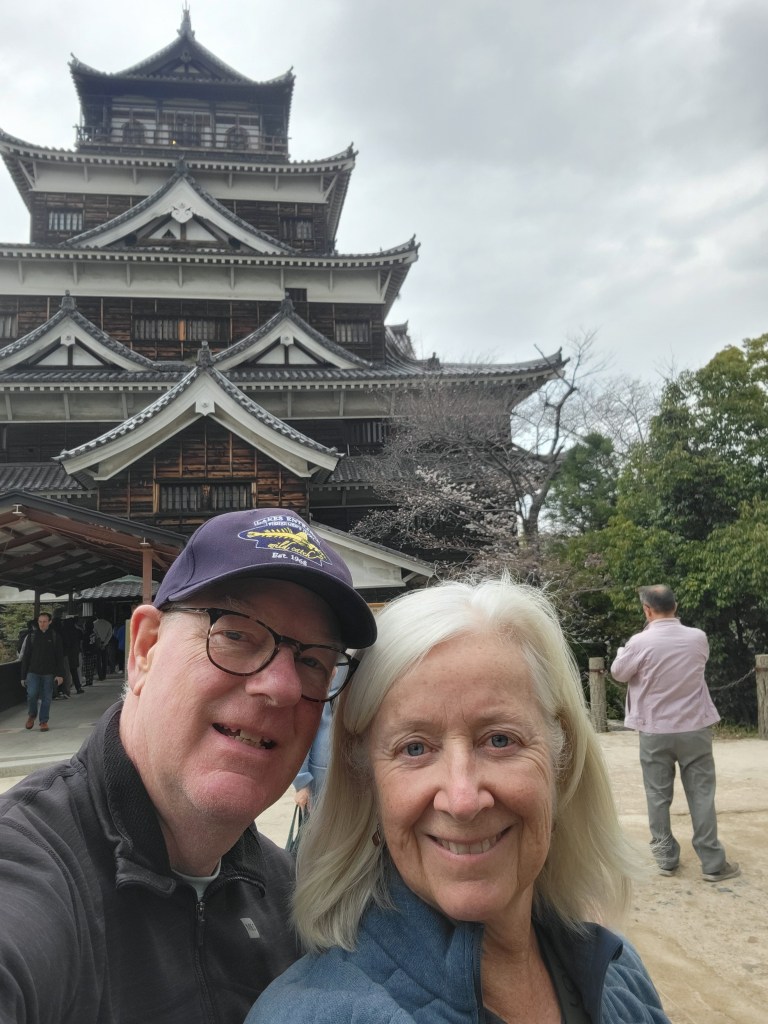
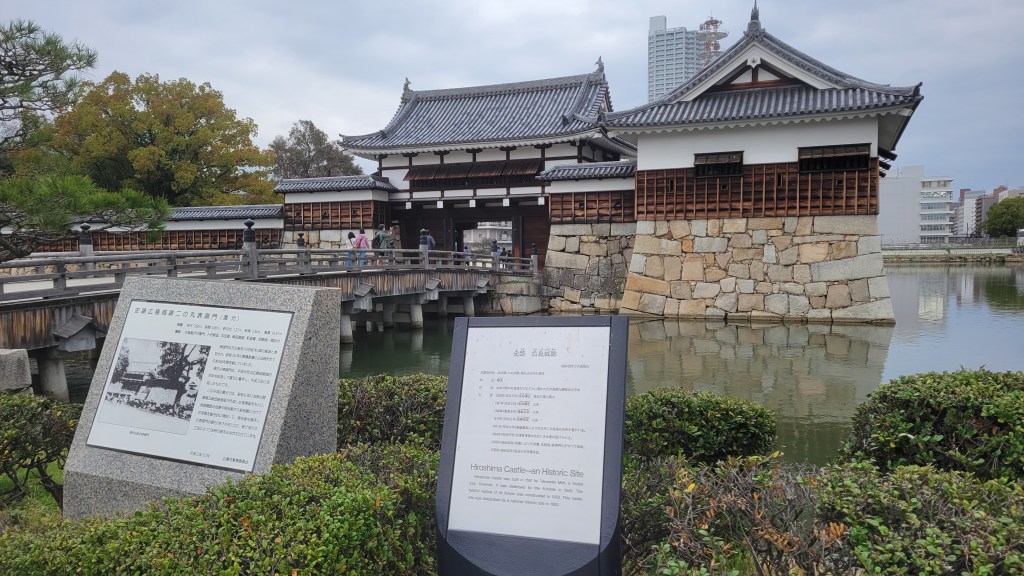
After the Peace Memorial, we decided to go back in time by visiting the Hiroshima castle. This castle was flattened and authentically rebuilt on its original site within the moat. It now serves as a history museum with peep holes for shooting marauders and Samurai sword slingers !


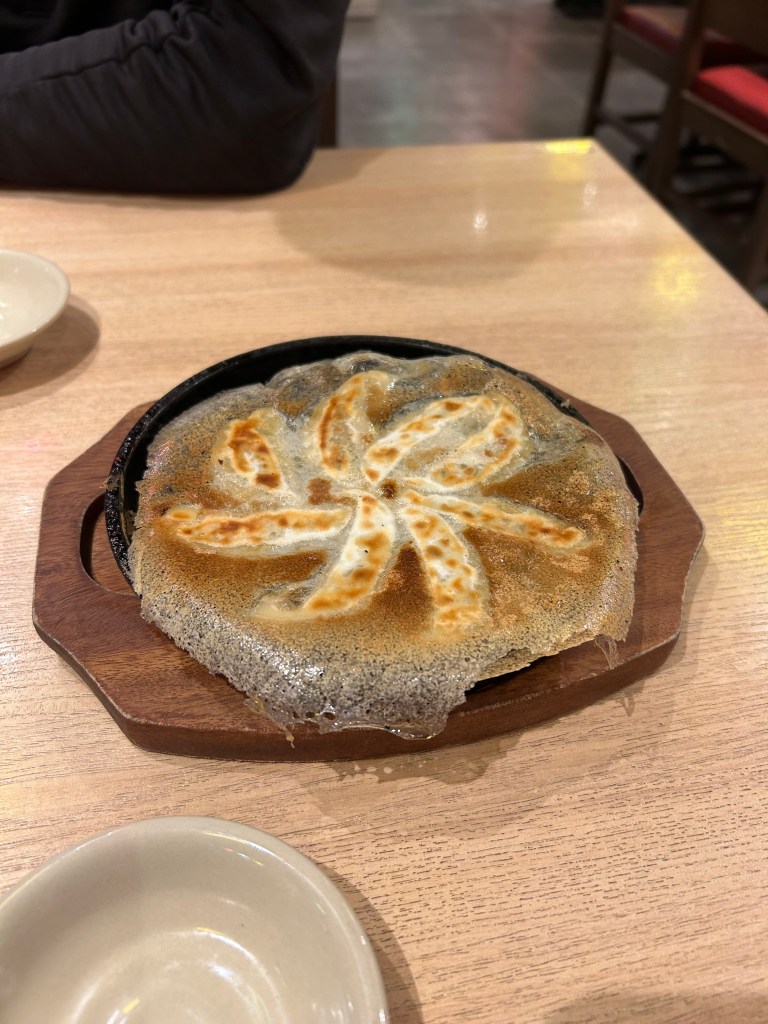
Our brains were done! Museum brain for us is when you have taken in so much information your head says “NO MORE!” and its time to go have a snack, a beer or a bit of both! We found a spot with a $2 beer, poured perfectly in an icy glass by a machine. In fact once again the technology prevailed with us scanning a QR code to get to a webpage where we did all our ordering for our table in that restaurant. Servers brought food but otherwise didn’t really speak to the patrons. It was so fun to watch the pouring machine we ordered 2 more and some gyoza and then headed for dinner at the 8 story Okonomiyaki restaurant!
Hiroshima’s “dish” is Okonomiyaki. It is made on a bar-side griddle that is warm but not too hot in front of the guests who order it. This 7 story building had 3 designated floors of it for the public.
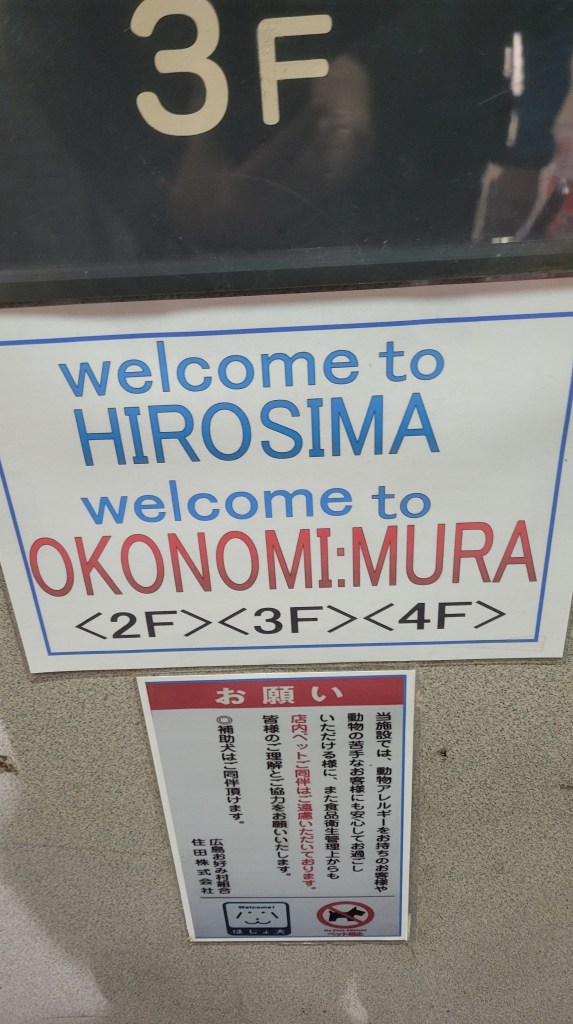


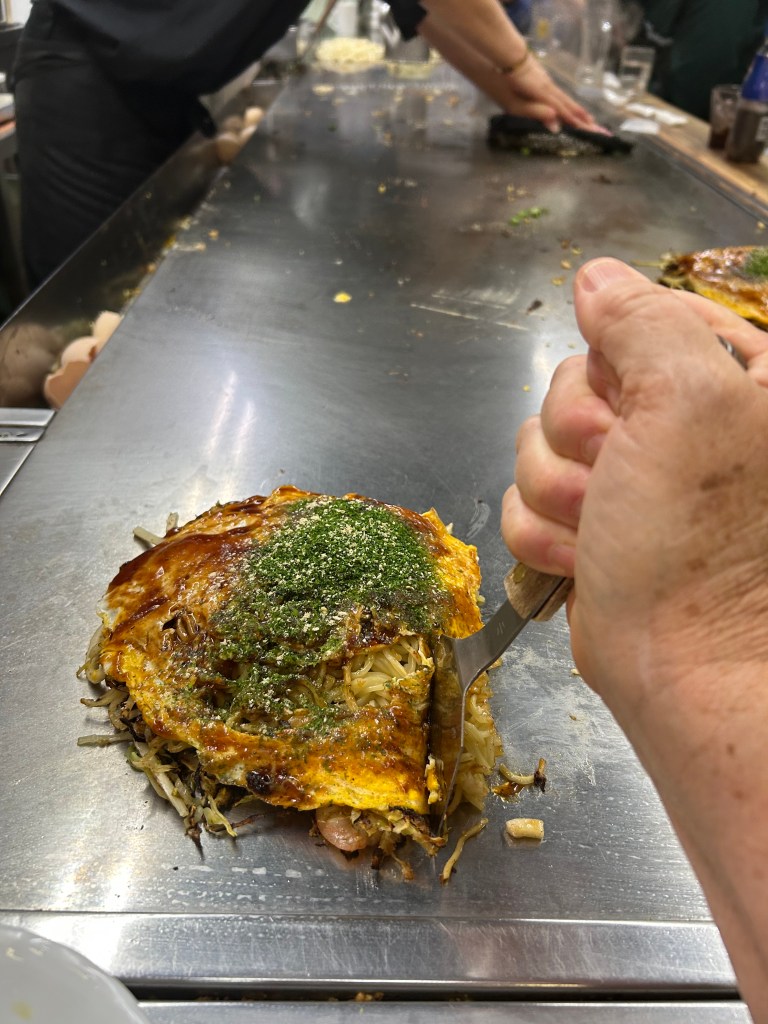
A thin pancake is laid down then topped with finely shredded cabbage, seaweed, spices, dry shrimp, bacon, noodles, scallions, sesame seeds, then flipped and topped with a fried egg, seafood of choice or cheese, pickled ginger, daikon and a sauce similar to Tonkatsu. Kind of an everything and the kitchen sink on a grill! It is served with an offset metal spatula that is used as a knife to cut bitesize morsels and eaten with chopsticks. Of course.
We spent two nights and one day in Hiroshima. The next night, in Kure, we planned as a quick detour between Hiroshima and our next grand destination of Marugame on the island of Shikoku.

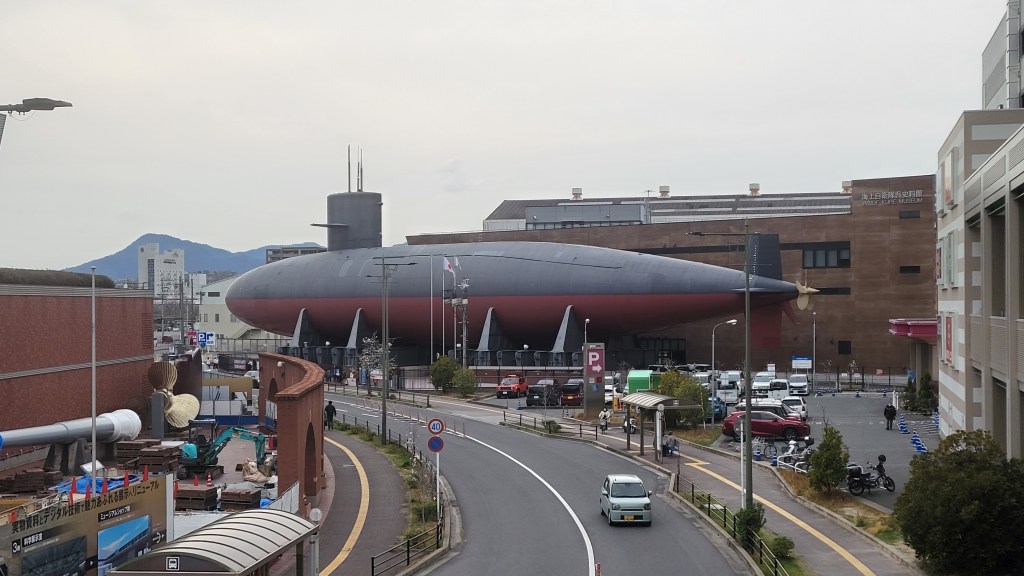
Looking at the map and how the proverbial crow flies Kure was a coastal port town that was part way to that destination of Marugame so it fit the bill. Kure was more of a working navy and port town It had a naval museum with a big beached submarine which was quite interesting.

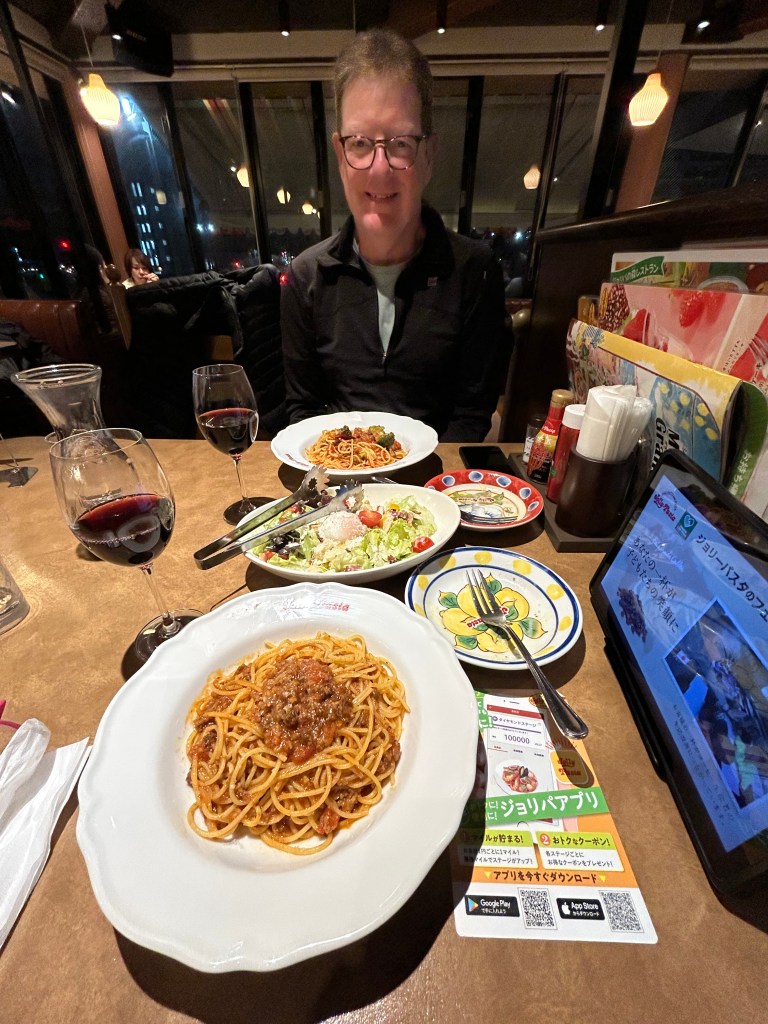
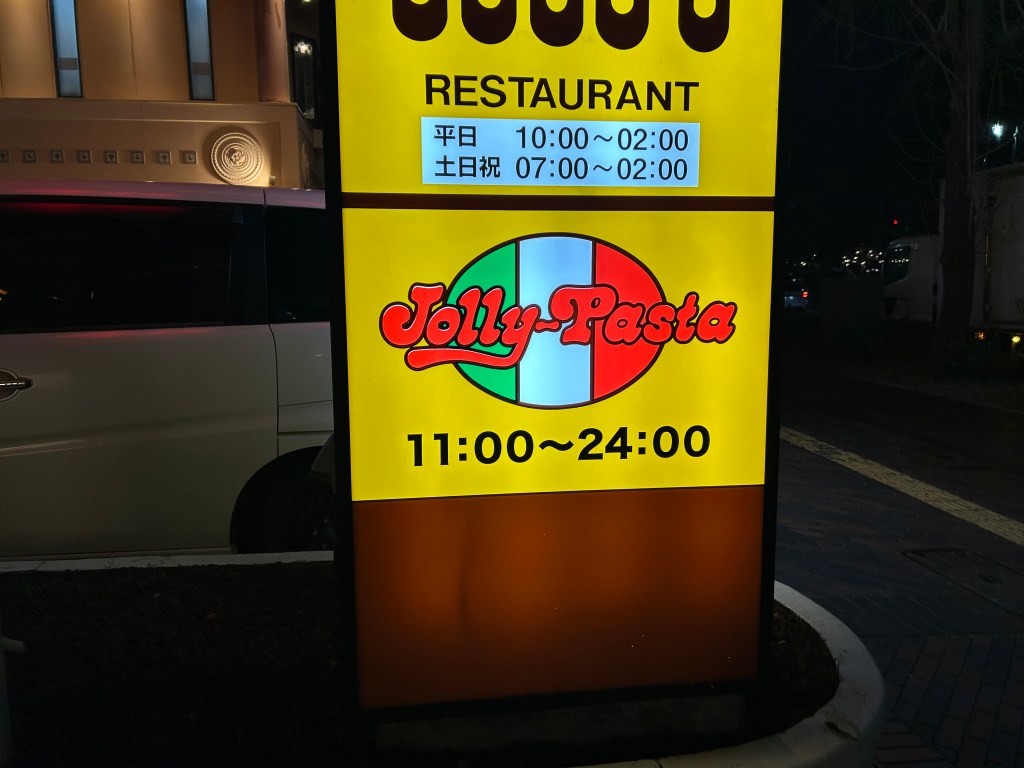
We found a busy chain restaurant “Jolly Pasta” and with the help of the ipad on the table, ordered the best pasta bolognaise since Italy and a glass of red. Truly memorable and delicious. No culinary disappointment in this family style glittery chain restaurant.

Next day we had to backtrack through Hiroshima as the trains actually didn’t continue “as the crow flies” to visit our friend on the island of Shikoku.
See you there!!
 The Grape Escape
A wonderful blog -interesting, great photos especially the rain shots – getting us excited about our fall trip.
Stephen
LikeLike
you will love it!!!
LikeLike
You will love it!!
LikeLike
Hey Deb – love this posting and the images. Our flights are booked – Sept. 28 – Nov. 10!
LikeLike