
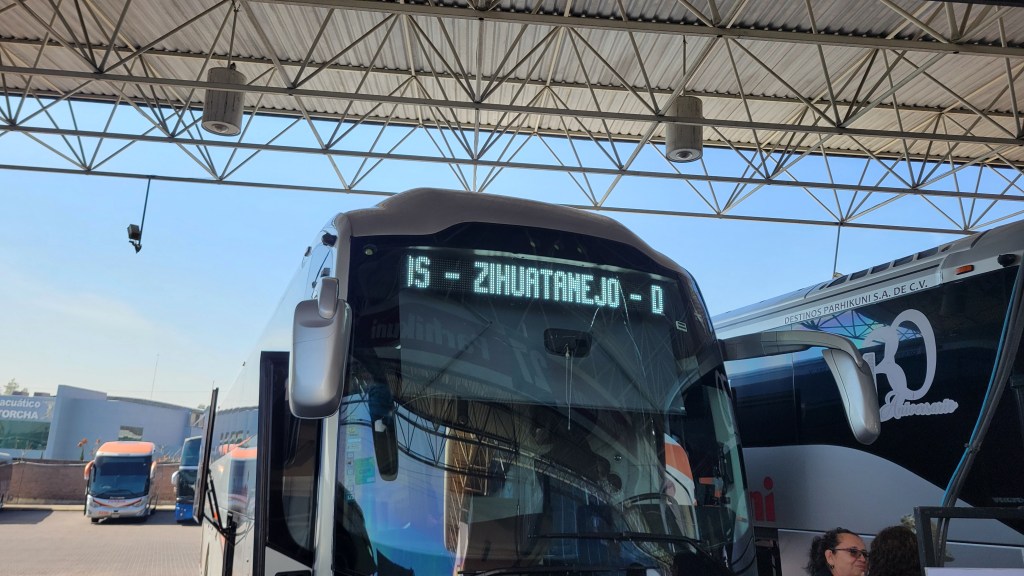
How do you get around? They ask. This year we chose to use public transit when we had to. Navigating the internet with different bus companies in different regions and an algorithm that doesn’t quite get what I want means digging down to find the right company. In Bucerias we had Pacifica to give us a cushy trip to the airport and longer trips such as Guayabitos or Guadalajara. And an even nicer bus run by Vallarta Plus. The Compostela busses were 50 peso school-bus ride to get us to the PV downtown and loads of other destinations inland and up the coast. Mini vans that seat about 7-12 with destinations painted on the front windshield also carried us back from La Cruz for 20 pesos each. These little workhorses will stop anywhere along their route to pick people up with a simple wave. When we were just wanting to avoid a crowd, get to a destination quickly or go to an off route location we grabbed an Uber or DiDi, the cheaper than Uber option. Taxis have a reputation for overcharging but can also be bartered with. To get to Morelia from Guadalajara we used Primera Plus. From Morelia to Zihuatanejo we needed to use Parhikuni. (ADO bus line for our travels in that include Oaxaca, Puebla, Mexico City, Querétaro) Google Maps is pretty good at giving route details with the big players but misses all the little ones. Talking to locals is the best and for that we appreciate Google Translate when needed!! It seems like a lot but you have to pivot when you need to and build the knowledge to adapt along the way.

The bus trip from Bucerias to Guadalajara was very comfortable. We got our tickets at the Vallarta Plus terminal half an hour before the scheduled bus. These busses leave on the hour. We had seats together at the back. Bonus! However we are sure they were available because of the proximity to Los Baños. Two bathrooms labeled hombres and mujeres for men and women were off gassing like crazy beside our seats. In fact the pristinely clean biffies were less smelly inside than at our seats! Lesson learned – seating close to the front is more desirable!!
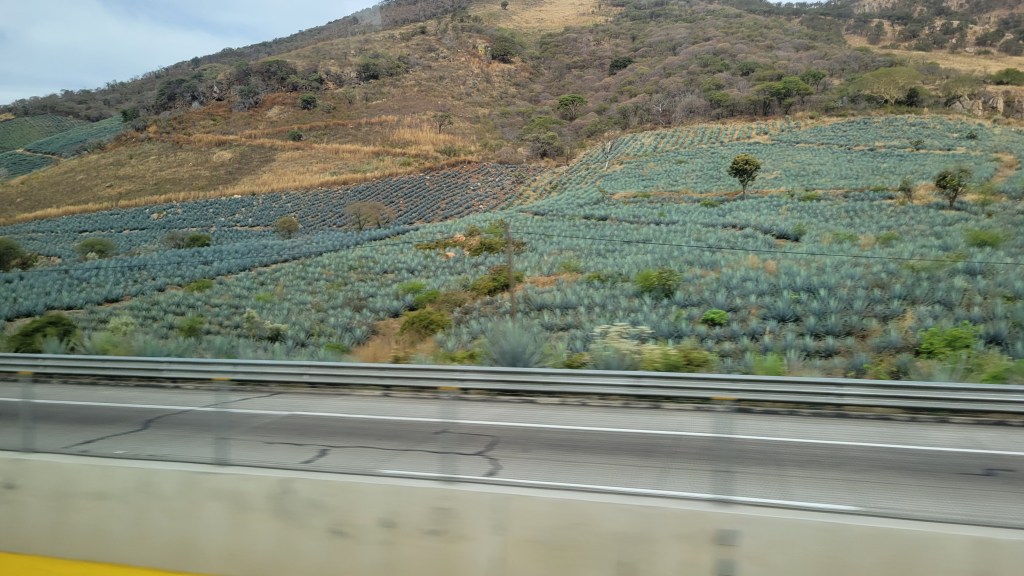
The 4 hour drive went from coastal jungle to inland arid where the fields of blue agave dominated the landscape. Arriving at the bus station was easy, we ordered our DiDi and were at our Centro accommodation in 25 minutes.
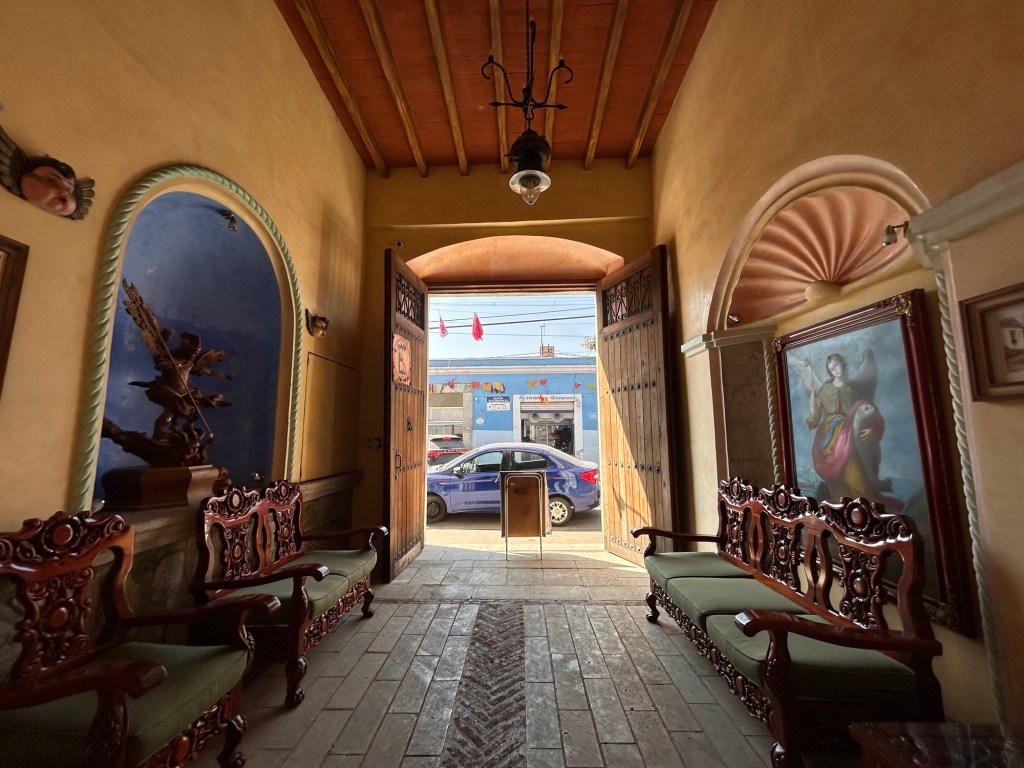
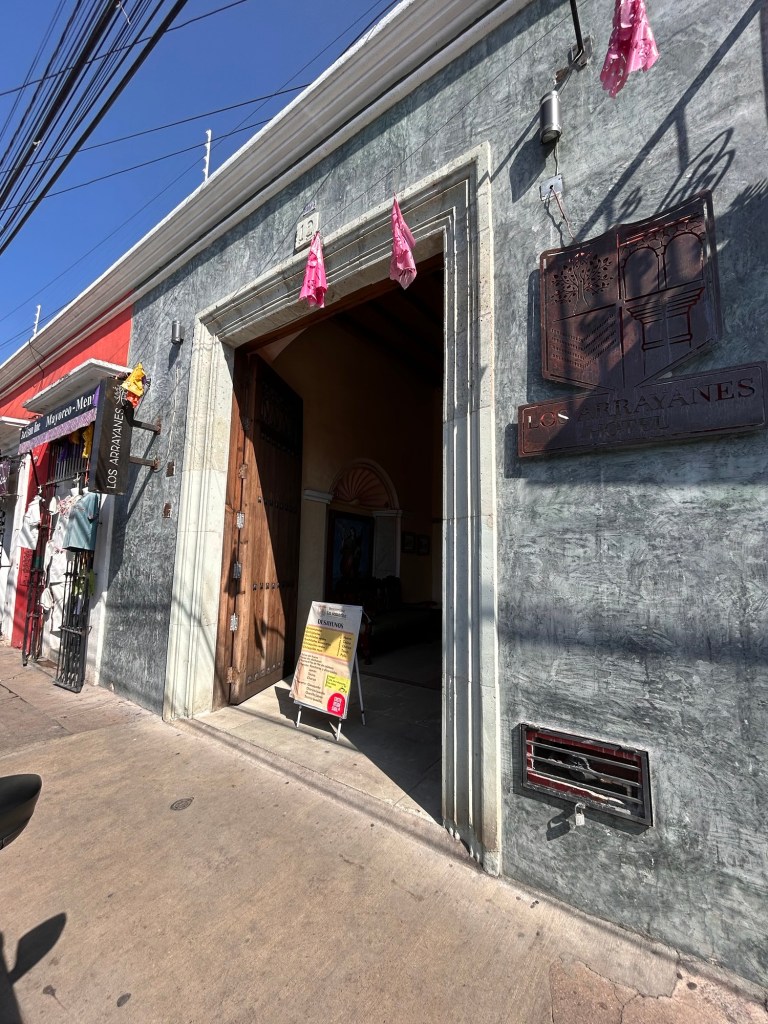
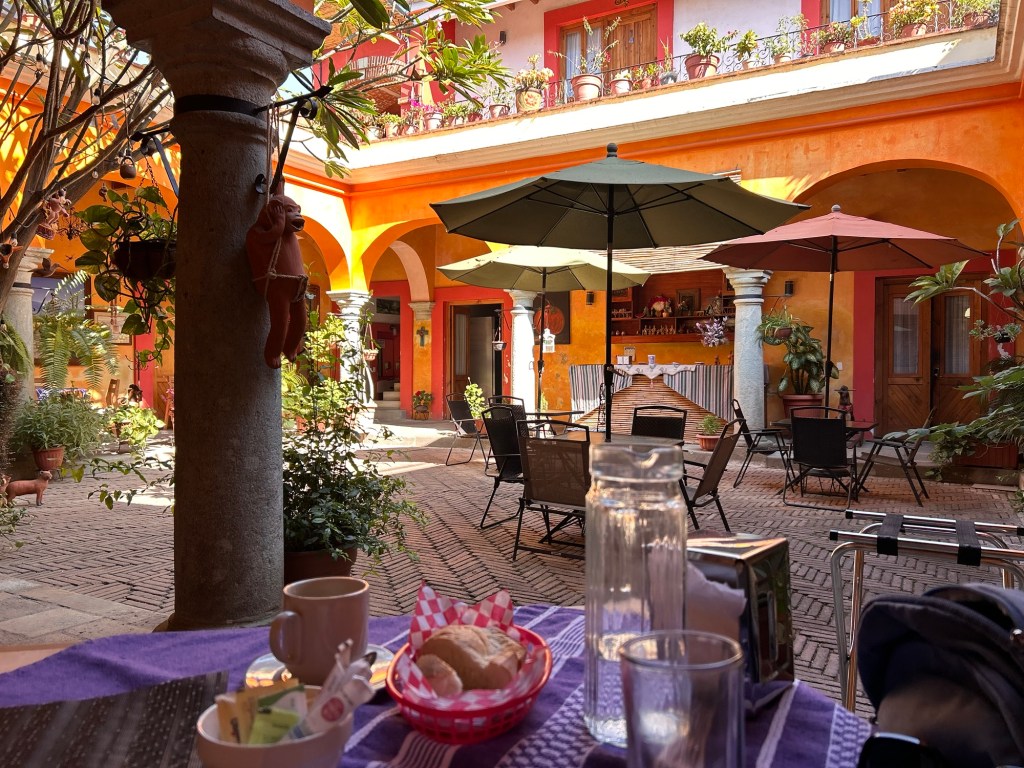
Guadalajara, Jalisco, is affectionately known as the “Pearl of the West”. Colonially established in 1542 the blends of indigenous and colonial cultures that define Mexico are displayed through arts, architecture, food and music. Mariachi and Tequila are probably the most famous contributions abroad. (NB. Just before publishing this we learned another reason the region is famous – a particularly notorious organized crime network that has made headlines in the last few days {Feb 23} is from here. More on that and our proximity to the headlines in the next edition of FWTR.com. We are tardy bloggers).
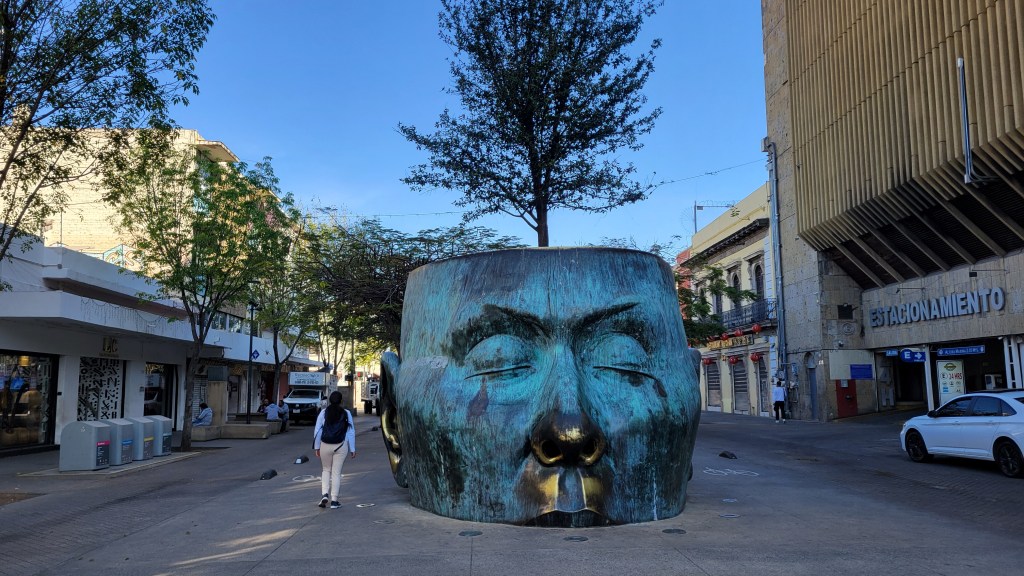
We dumped our stuff and headed out to see. The vibe in the old centro quarter is educated and affluent. There is poverty and homelessness everywhere but also a calm generosity and acceptance of hustlers just trying to stay afloat. People are happy to return a greeting rather than dip their chins lower to avoid contact. We felt safe yet aware of our privilege.
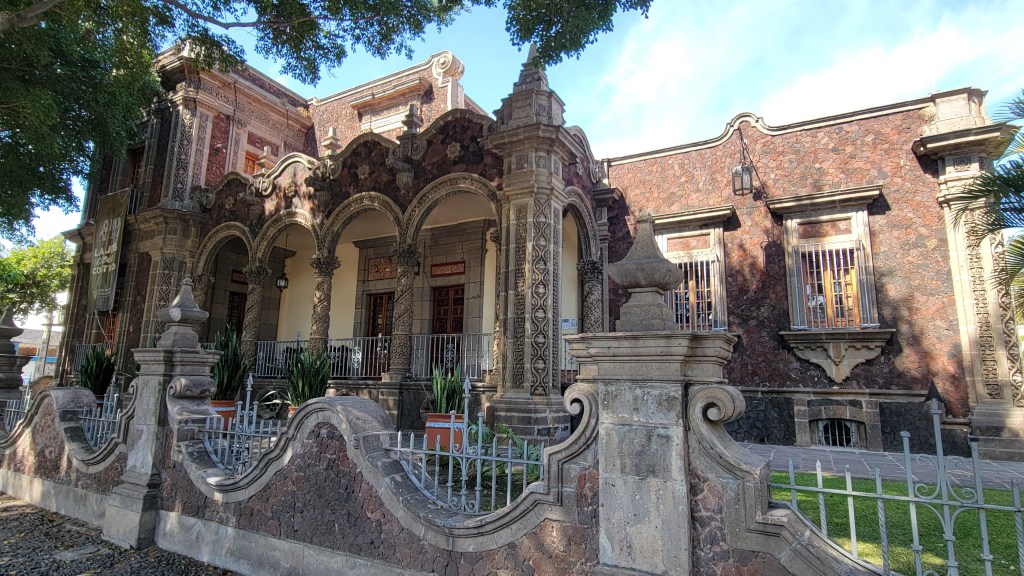
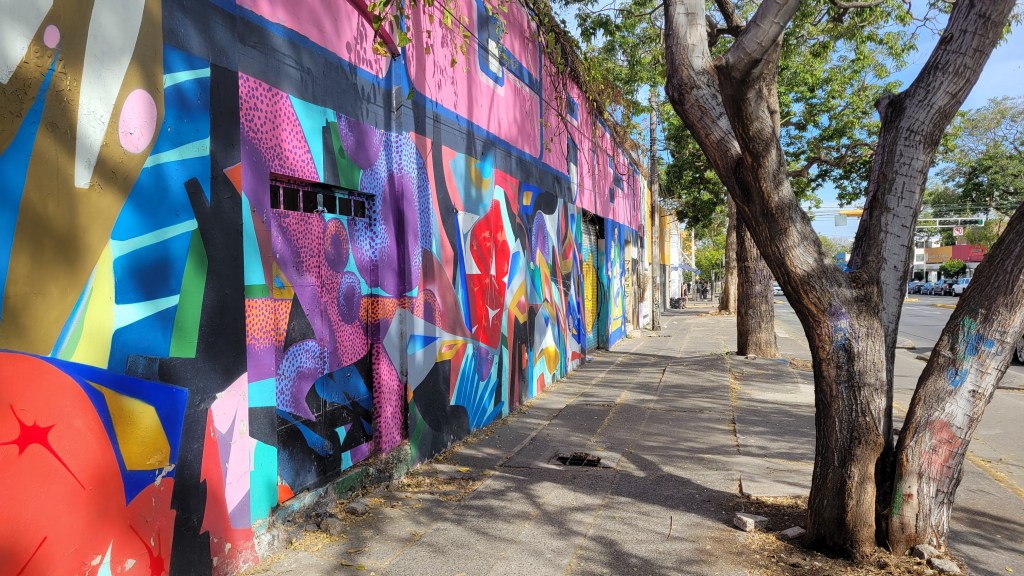
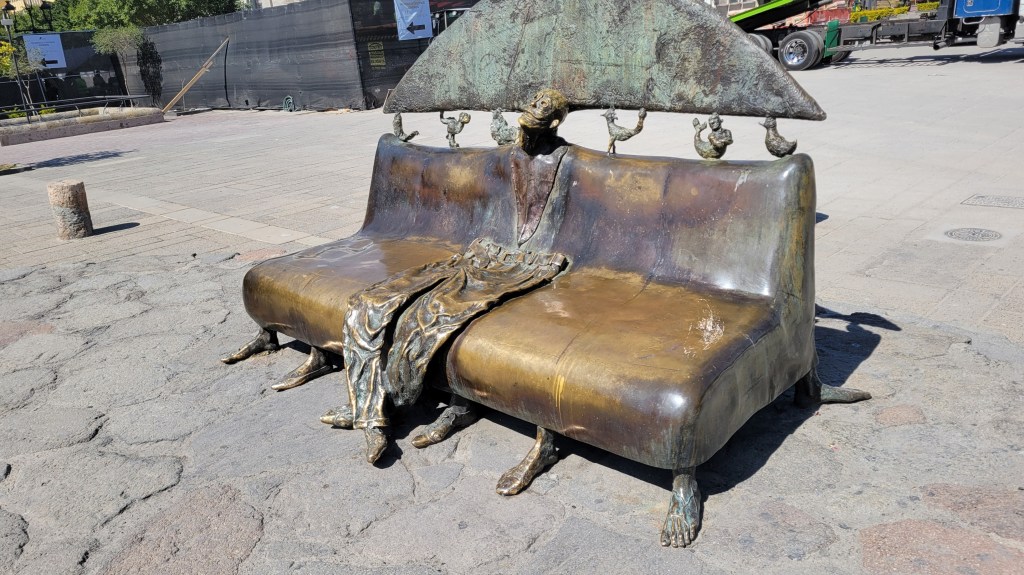
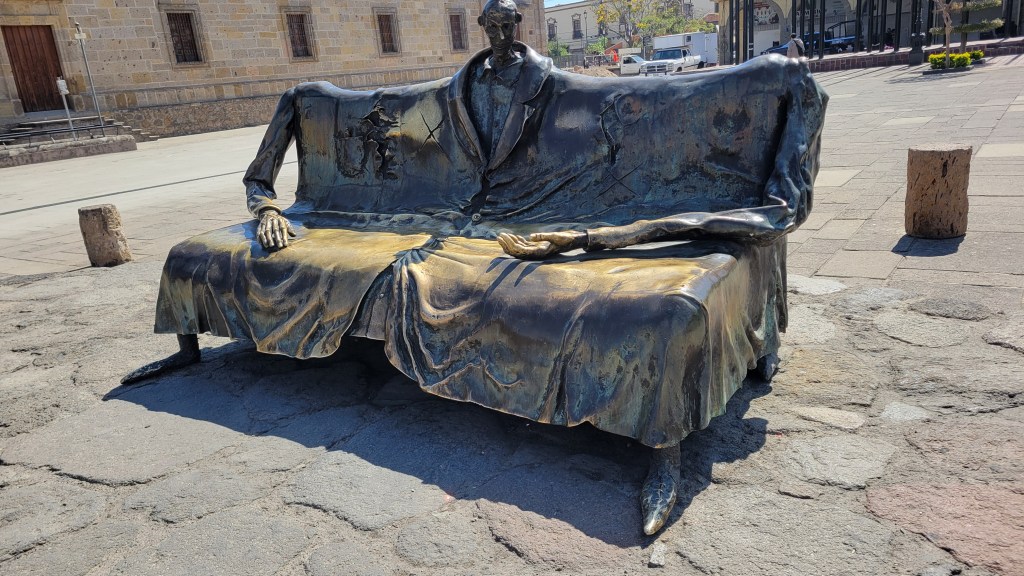
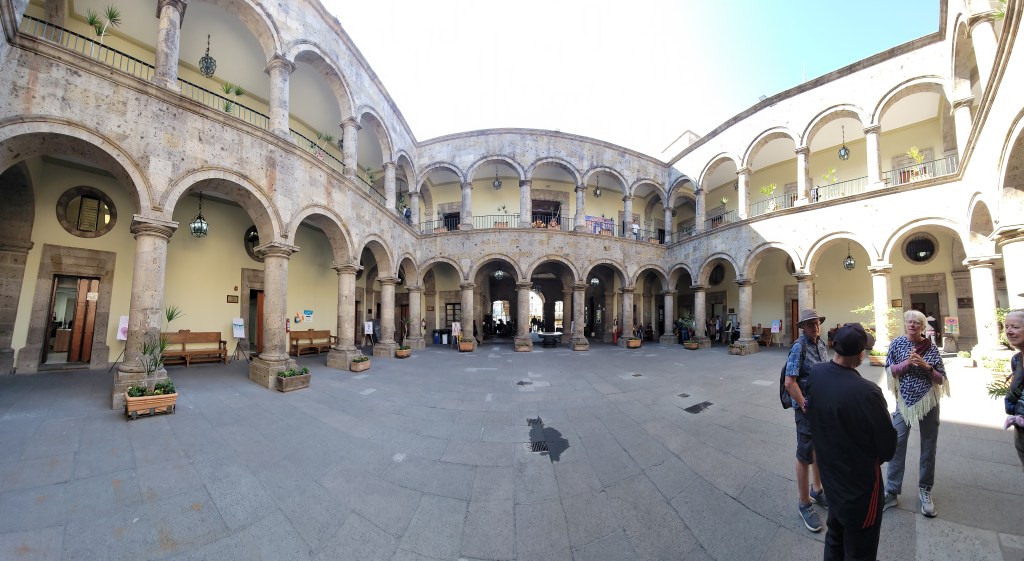
On travel days we don’t do much. Figure out our surroundings, provision a few meals and milk for my morning lattes. Knowing we had a walking tour the next day, we walked to the meeting point to scope out our route the following morning. It was also a good reason to casually take in the cathedral and then, doing as most do – people watching around the photogenic fountains, ogling the public art while relaxing in the seating purposely provided for the bustling square.
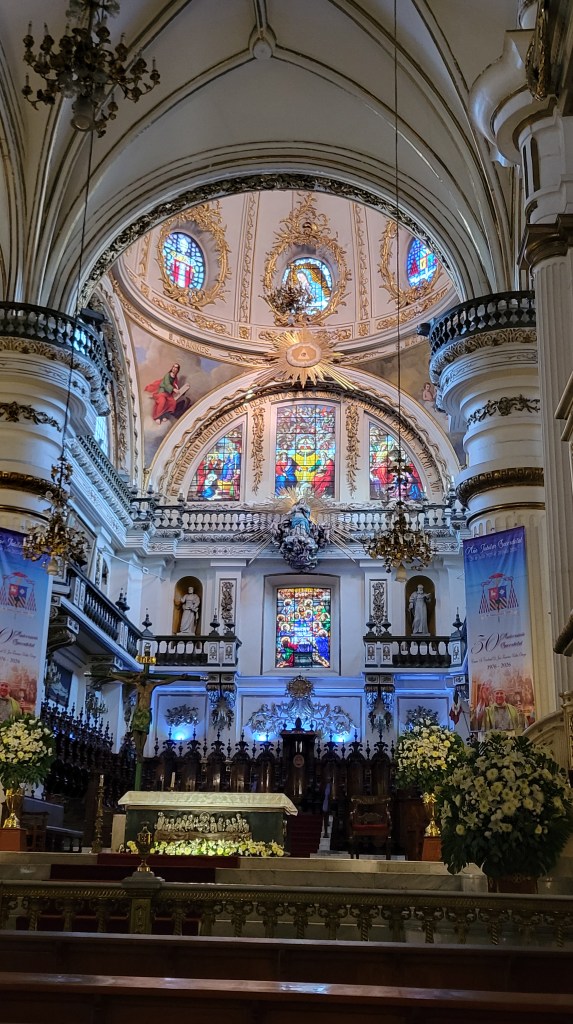
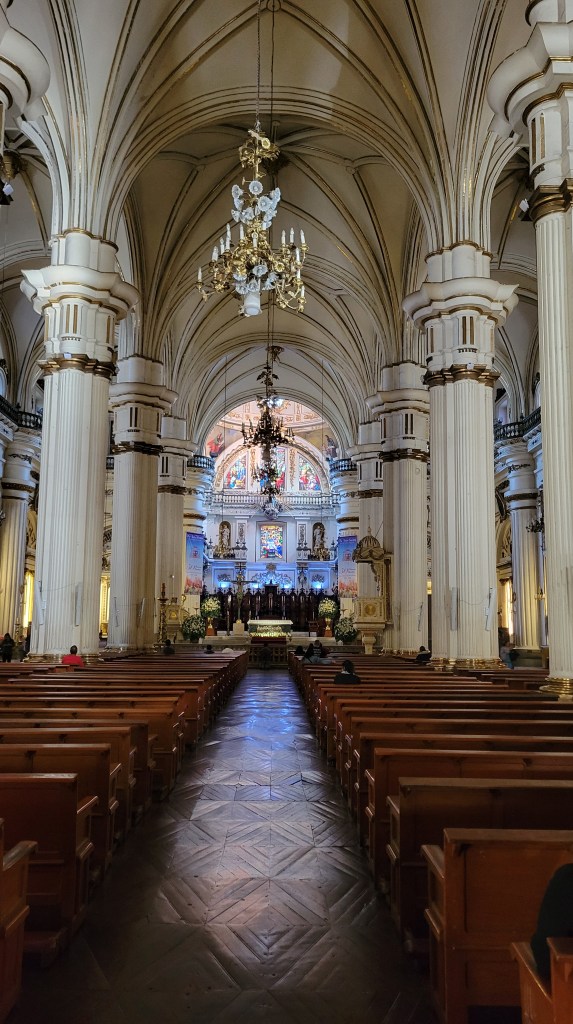
Our tour guide, Alex, was a Mexican born and raised in Texas. He is a techno musician/ producer and foodie with a degree in Liberal Arts and History. We found him on the ap “Get Your Guide” and he was excellent. Lucky us!!
This temple square was a mausoleum for the important historic personalities whose passions and convictions made significant contributions to make life better for Guadalajarans. Represented here are many men and women’s statues and, within the columns, their exhumed remains.
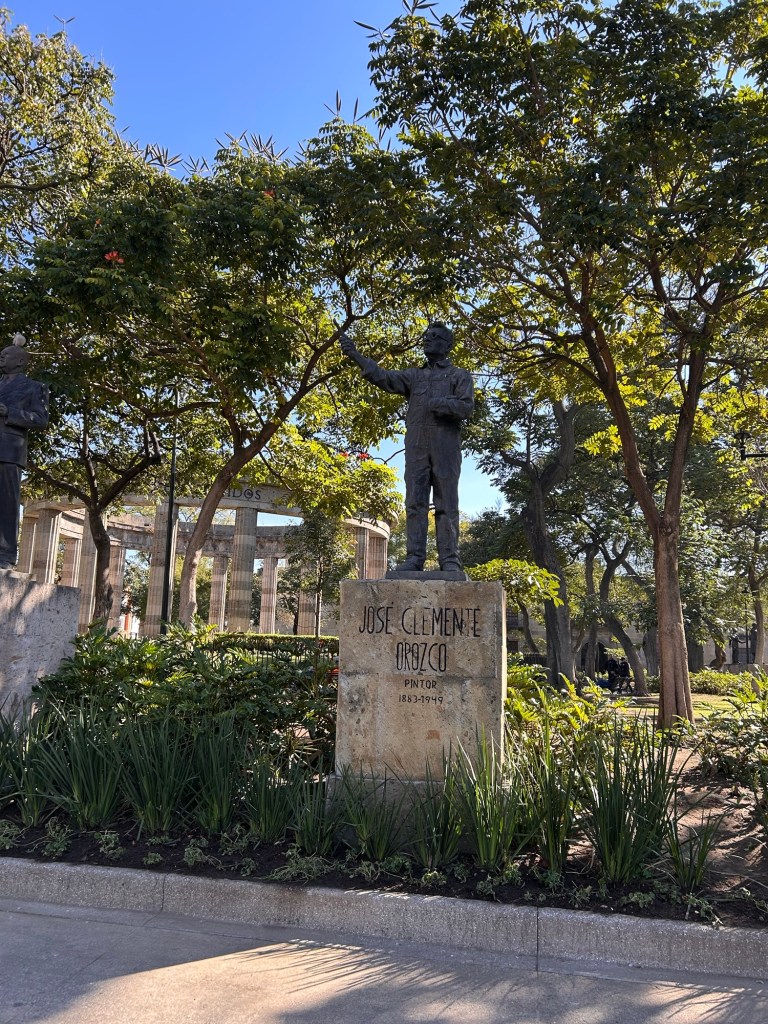
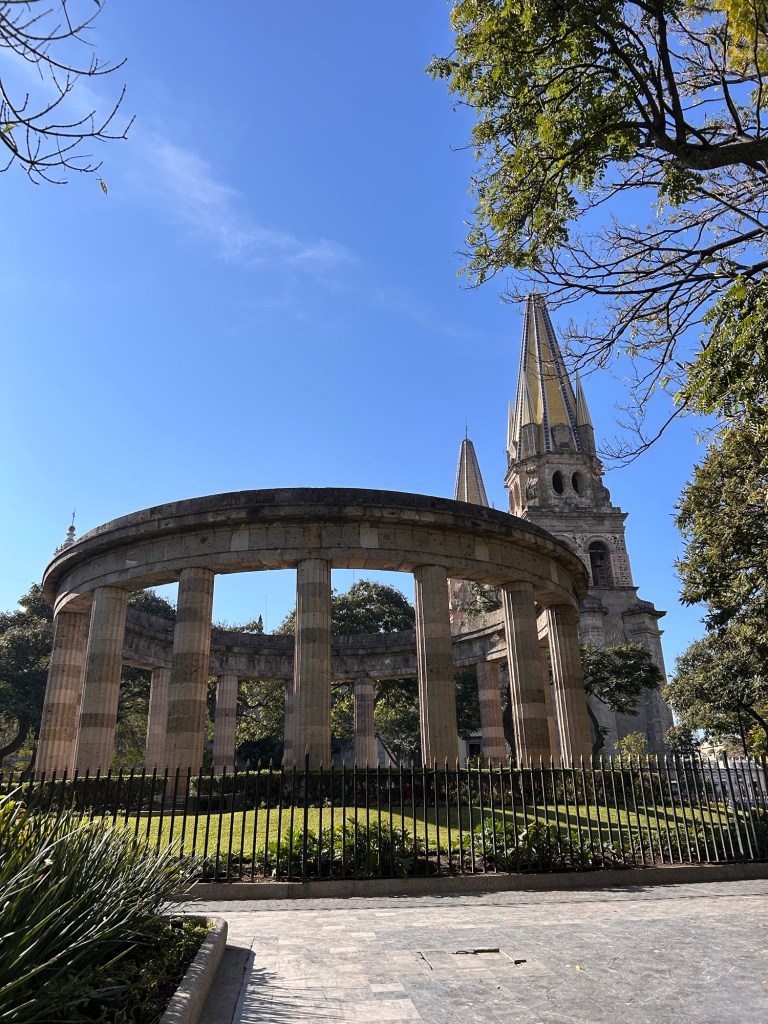
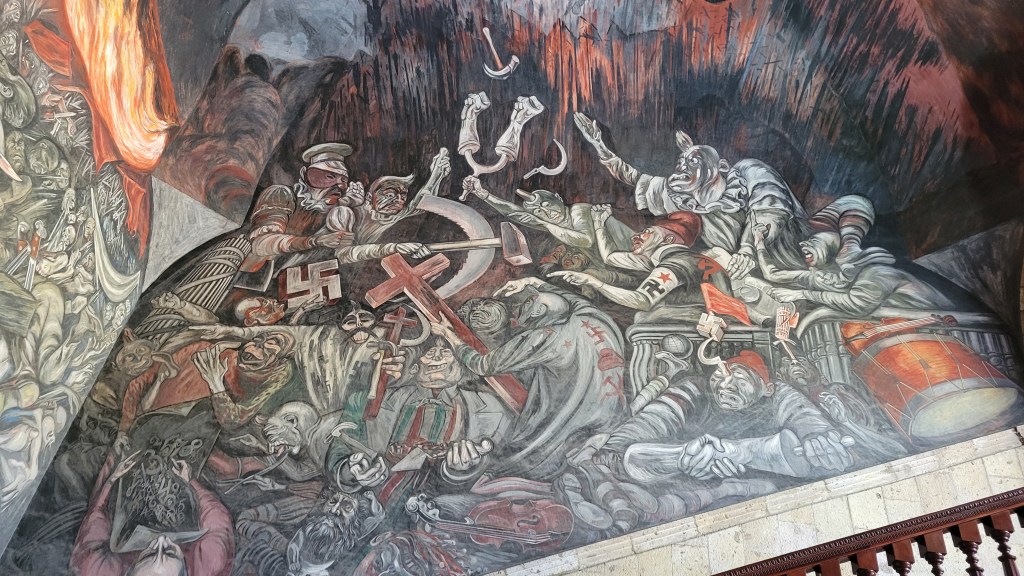
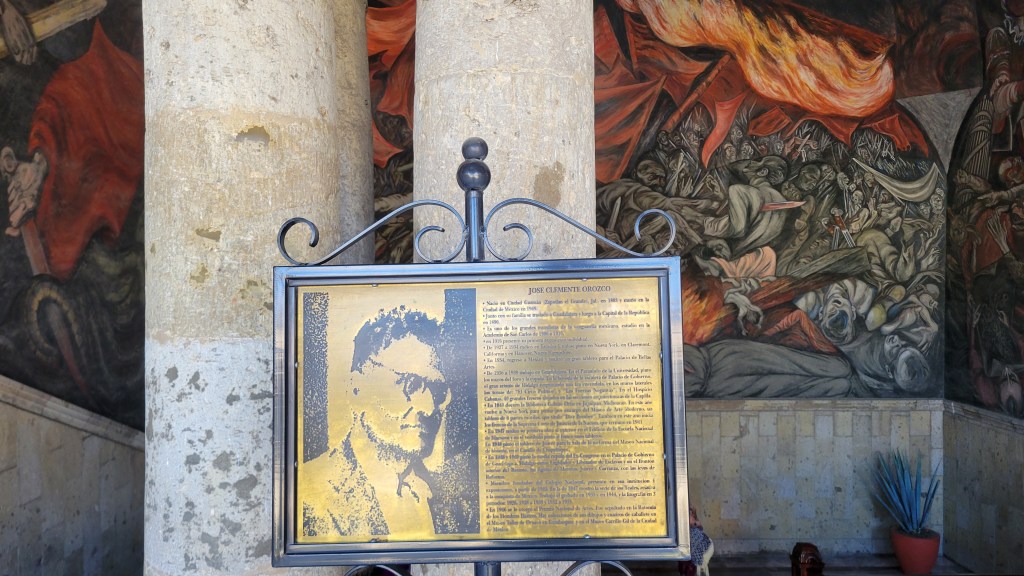
Alex told stories from the priest who gambled on building a hospital during a tuberculosis epidemic to Jose Orozoco a handicapped mural artist who recorded the history and abolition of slavery on the walls and ceilings of government buildings. We made our way over to the government building a short distance away to take in the magnificent murals of this artist.
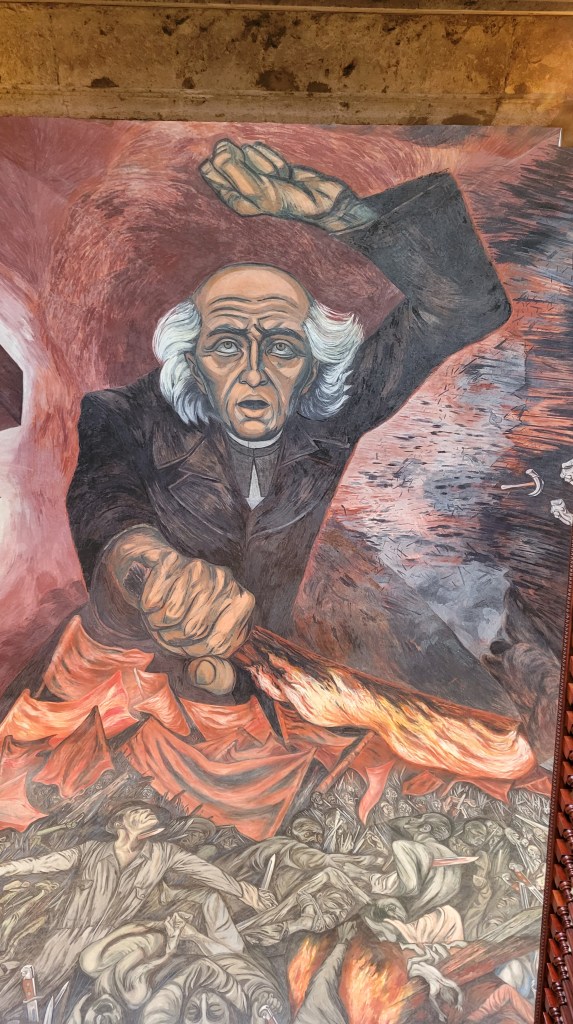
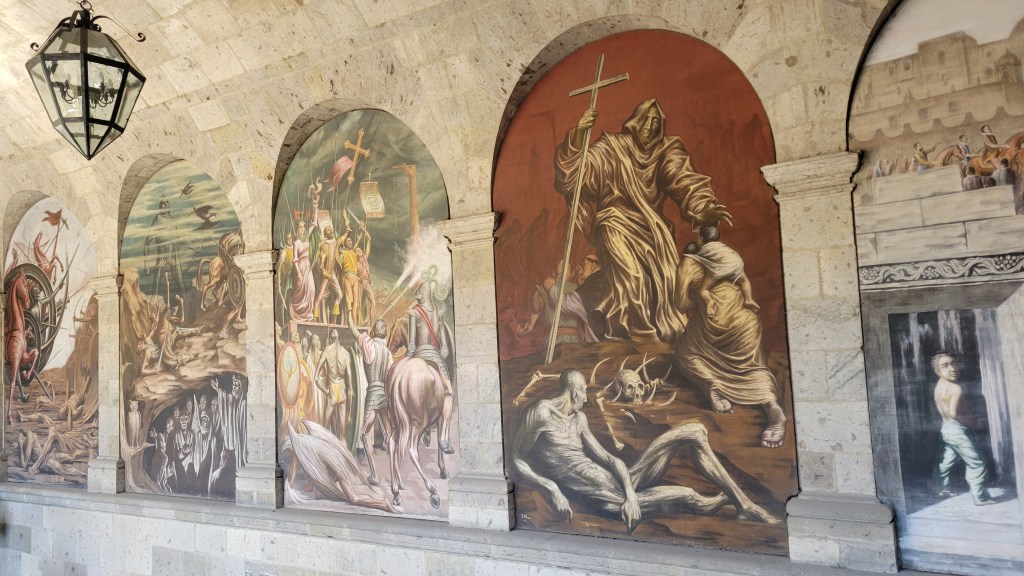
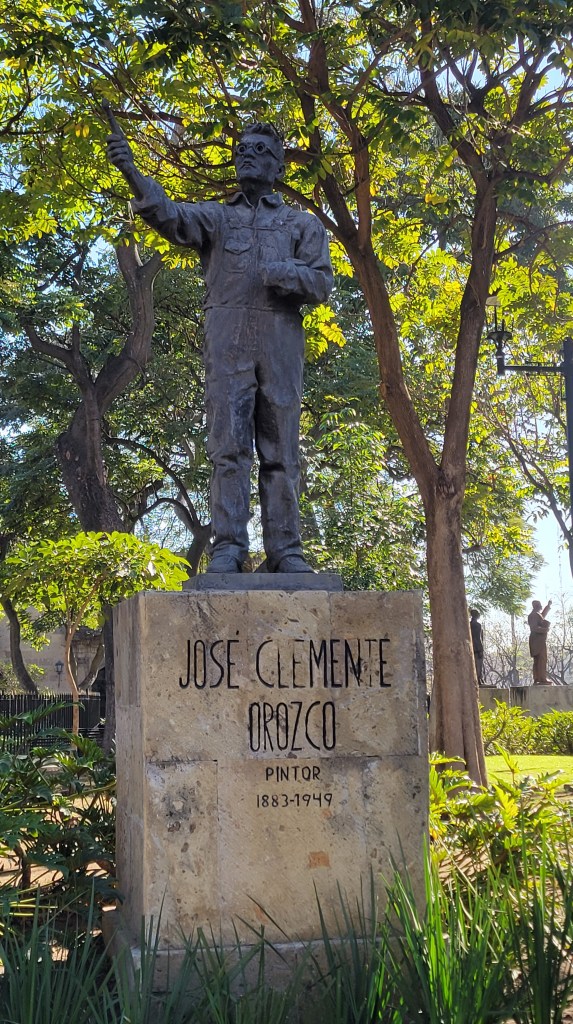
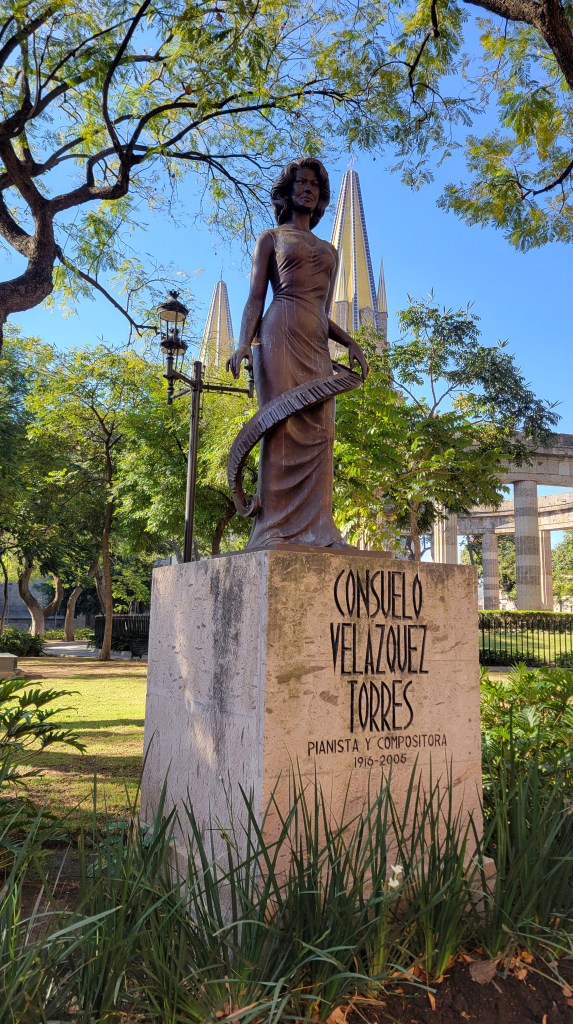
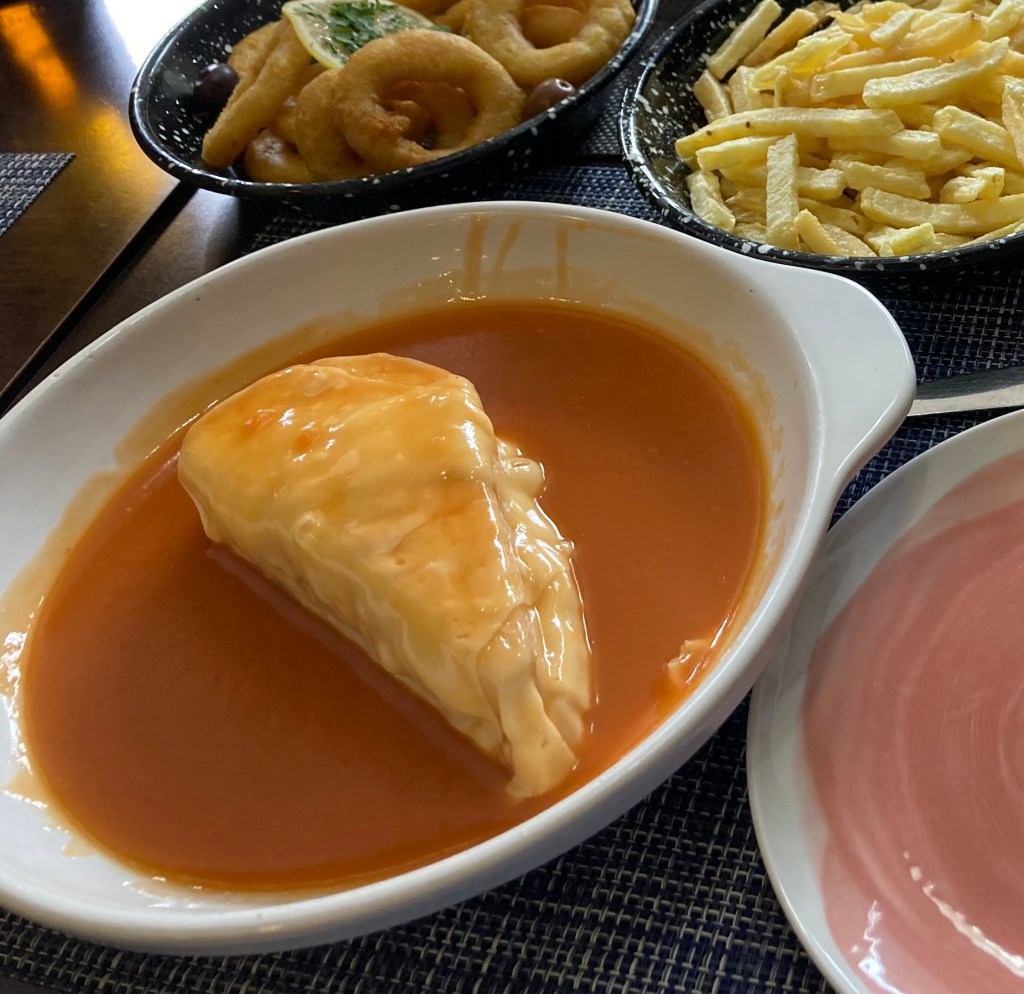
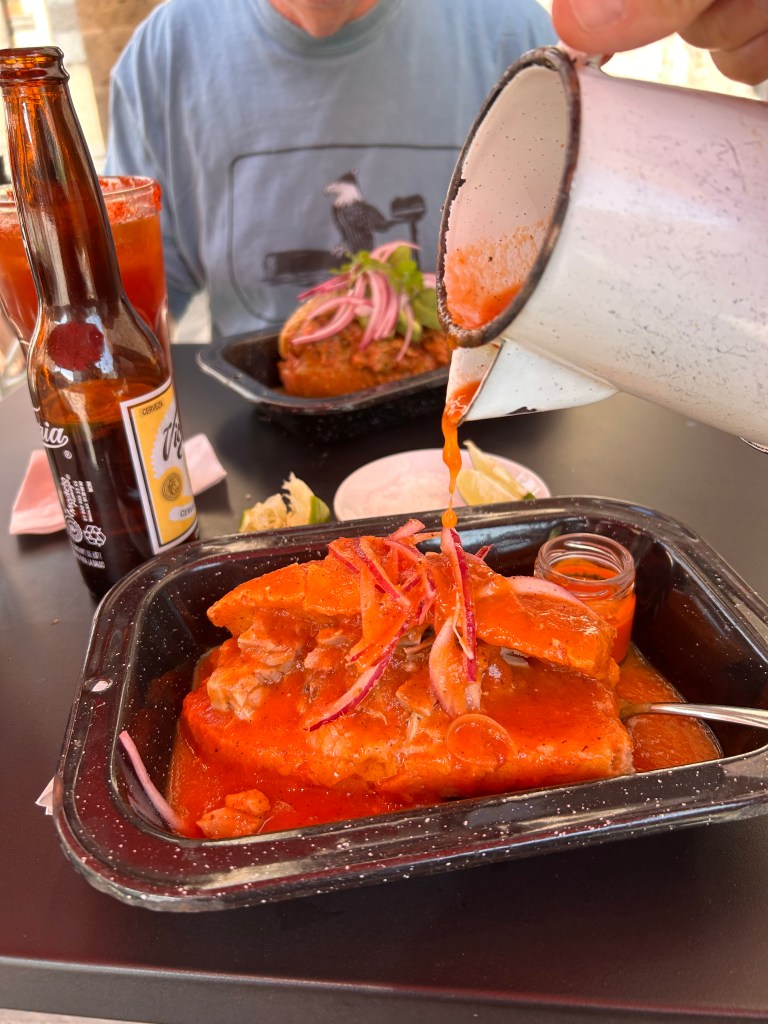
In Porto Portugal a few years prior to this trip, our guide told us to try the Francesinha sandwich: a bread meat and cheese sandwich drowned in tomato sauce. In Guadalajara our guide said have the Torta Ahogada, a baguette-meat sandwich drowned in tomato sauce. Messy street food (but pretty good) and found “No where else!” except here and there LOL!
Our next day was a 9 hour guided day trip to Tequila. Time flies when you are having fun!!!
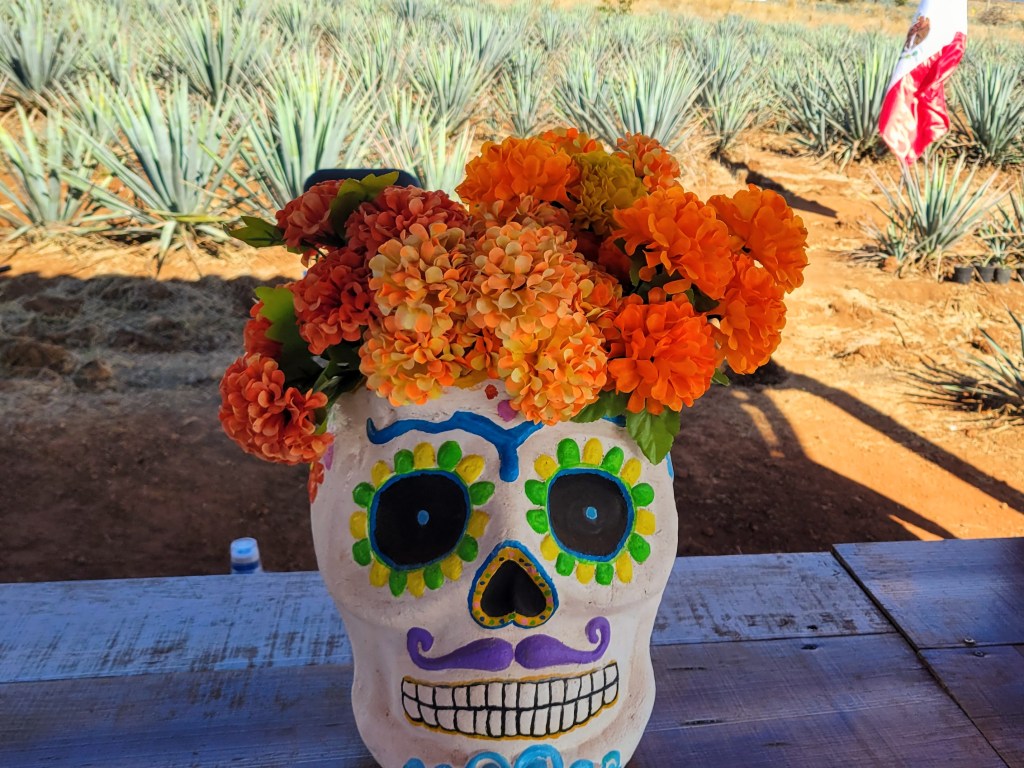
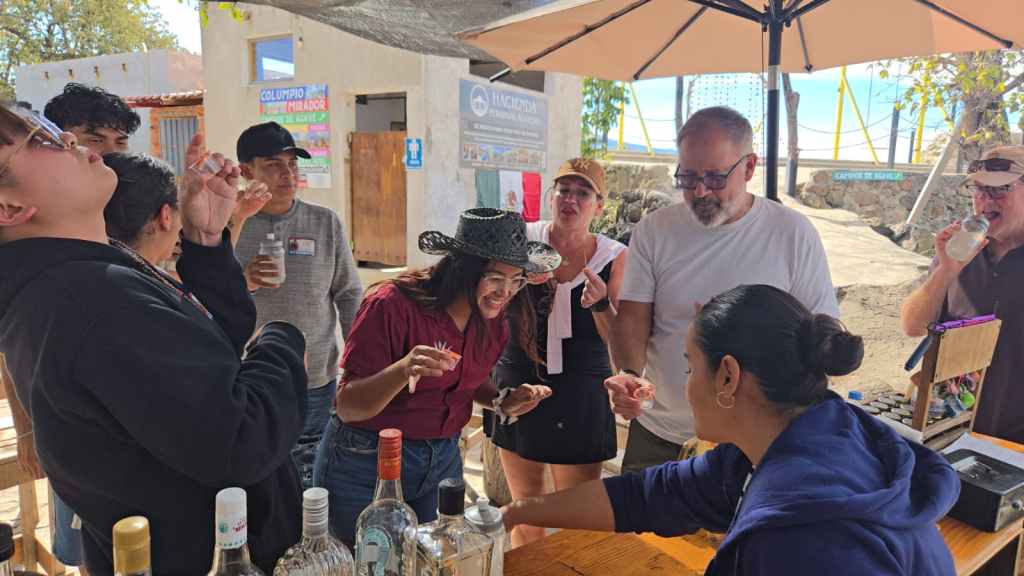
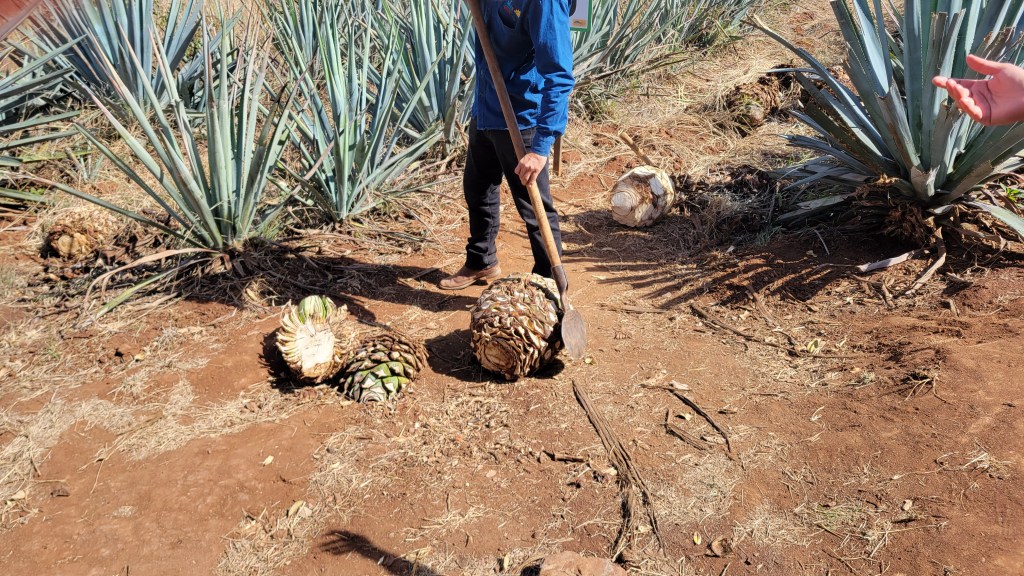
When booking a tour I read all the most recent comments and decided this tour would be informative and fun. Our guide had great knowledge of the process of taking 5-8 year old blue agave from plant to tequila. We toured a small growers field to understand the growing and harvest. She also made us aware that tequila produced from 100% agave syrup gave no hangover. Larger producers harvest plants that grow quickly but lack the necessary sugars to produce alcohol of required strength so sugars are added to increase production for the gringo Margarita or lime/salt shooter market. I know those hangovers well! Que the Sammy Hagar – “MAS TEQUILA!”
These photos show the plant and the leafless pinas that are roasted to produce the syrup.
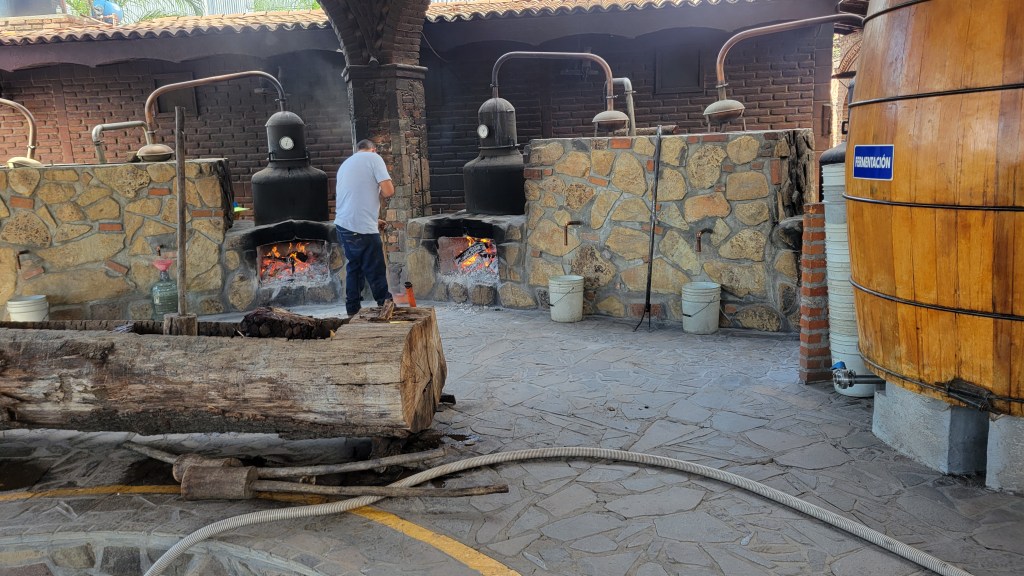
Then to a small distillery that produces its spirit with 3 techniques. Artisanal, combination of artisanal and commercial.
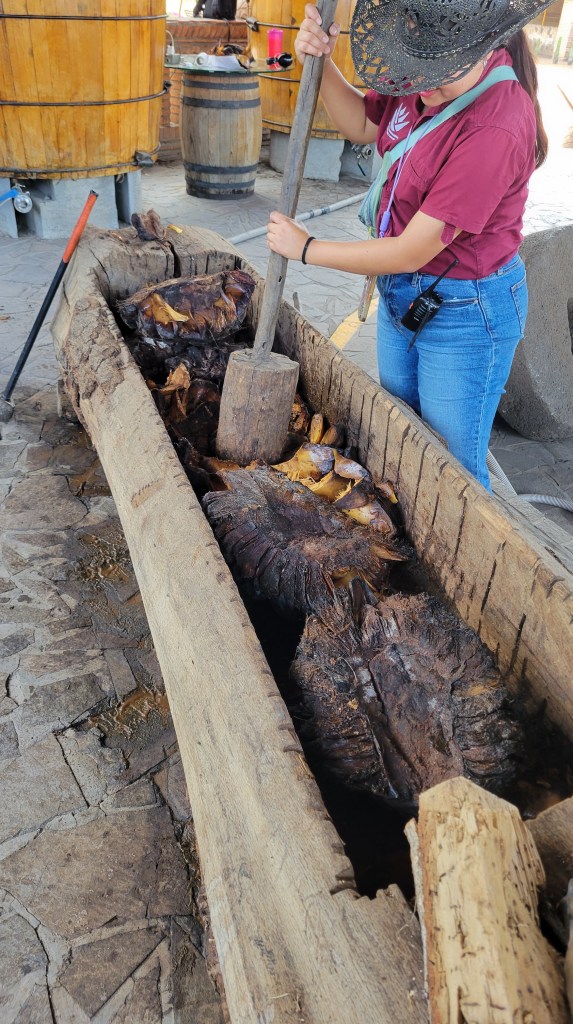
Artisanal and combi involves roasting the “pinas” in stone ovens where commercial is done in giant steel tanks with added steam. The juice is also fermented in tanks.
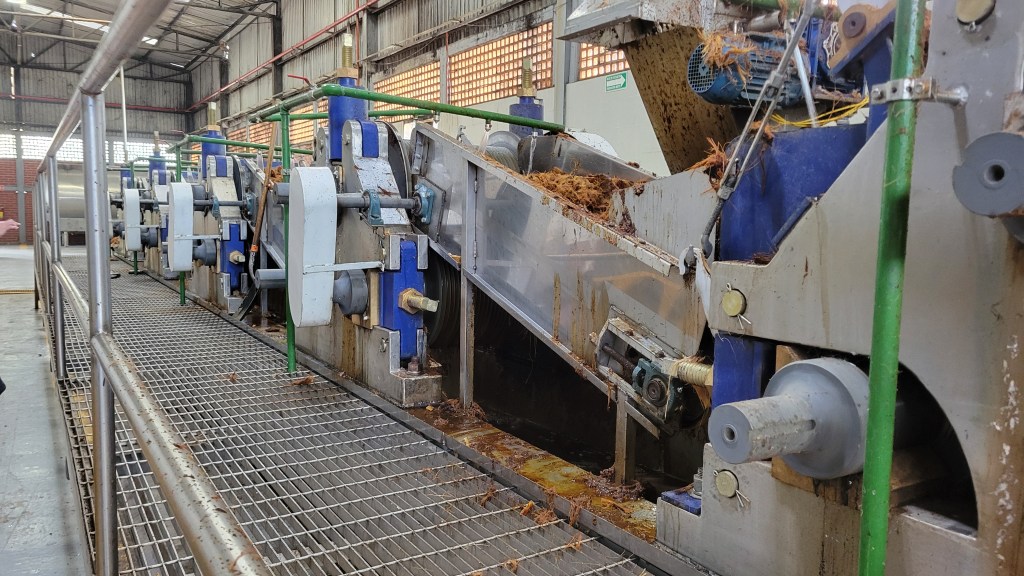
Artisanal crushes the roasted pinas with a press where combi and commercial are run through a machine that strips the juice from the fibre.
Artisanal and combi juice is then fermented in large open vat barrels.
After fermentation it is distilled in copper to produce a clear tequila.
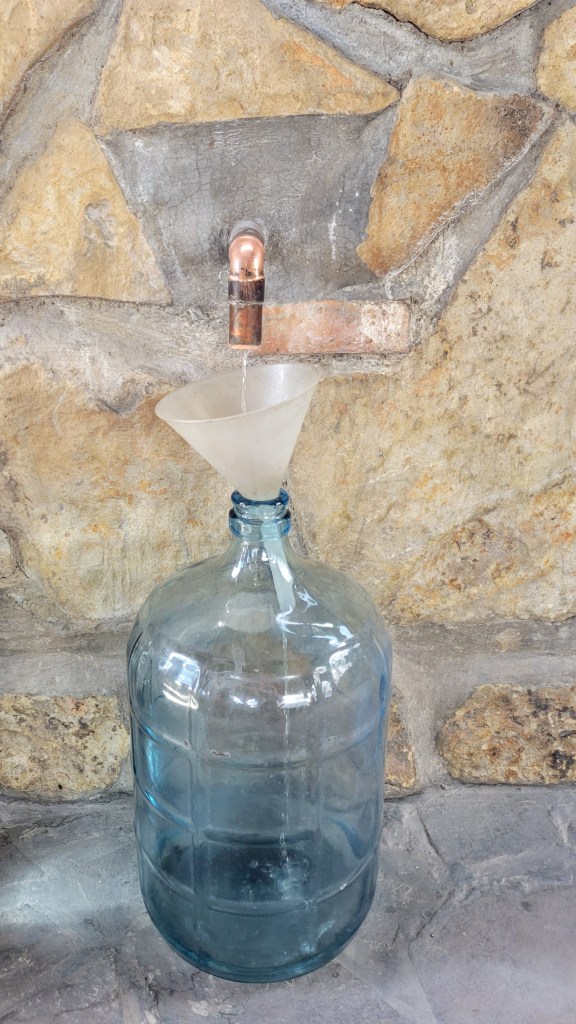
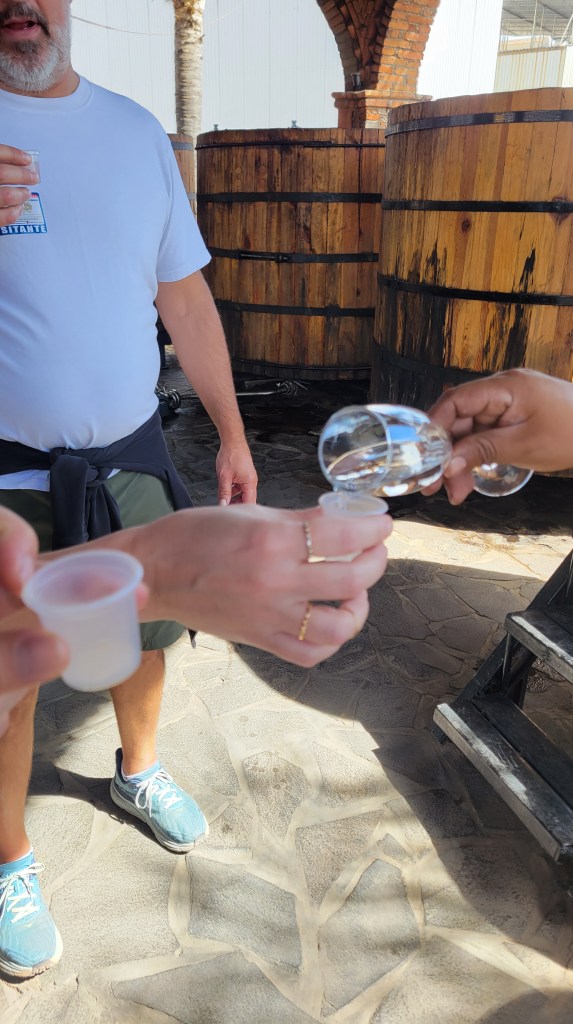
Shown here are a cellar full of barrels aging tequila reposado.
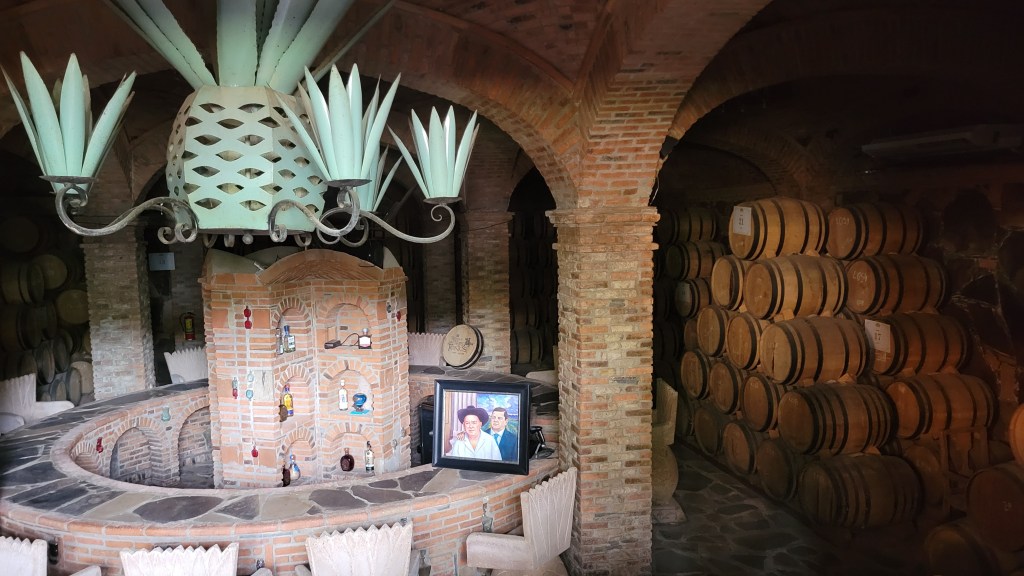
We also visited a couple of bars that served their tequila with juices and scorpions.
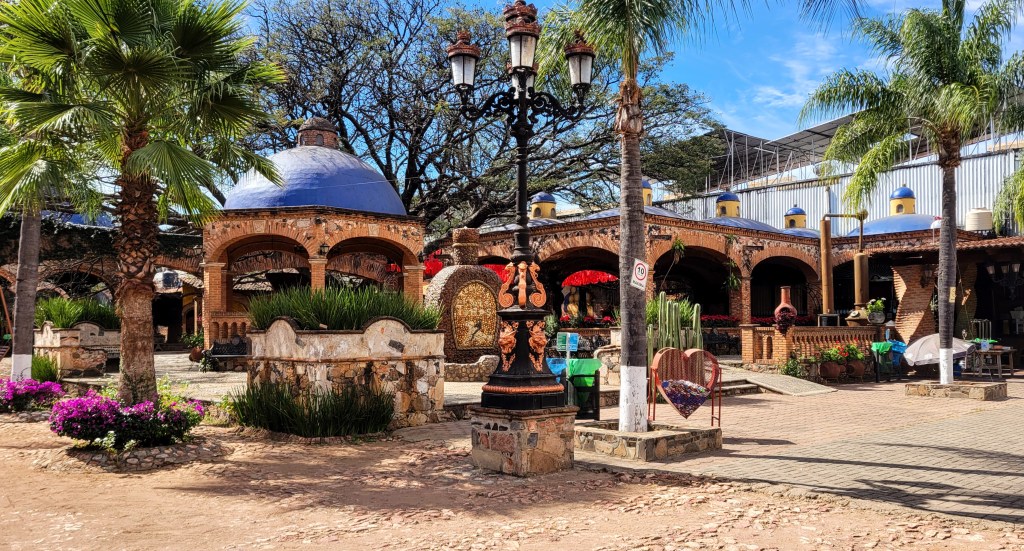
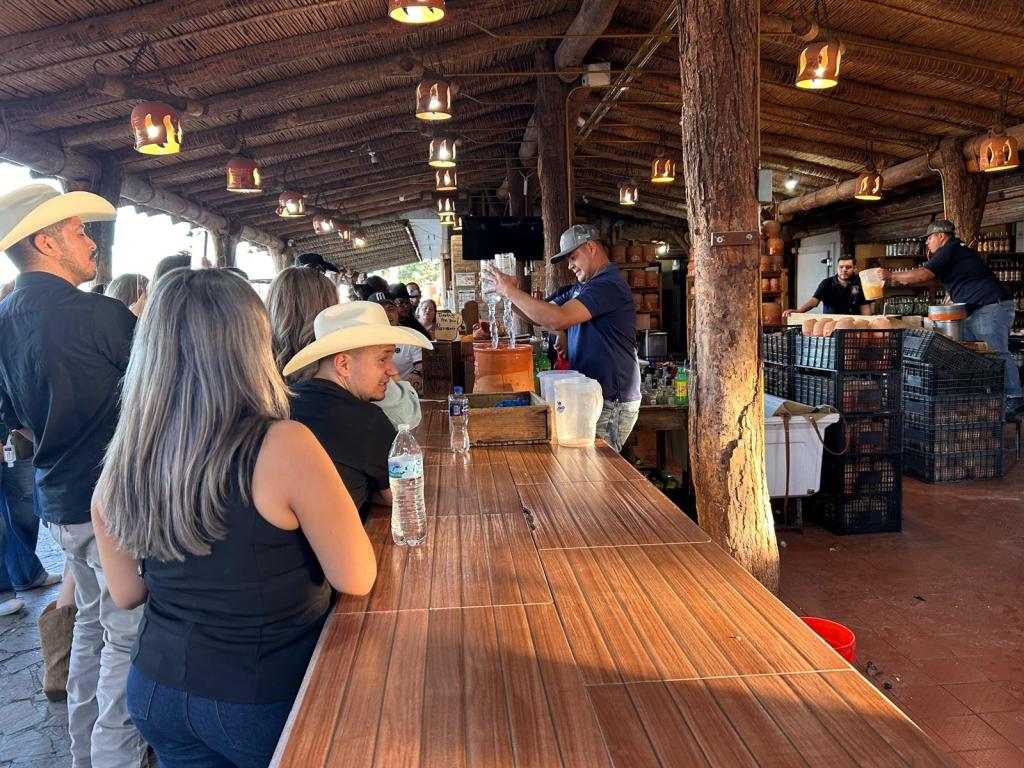
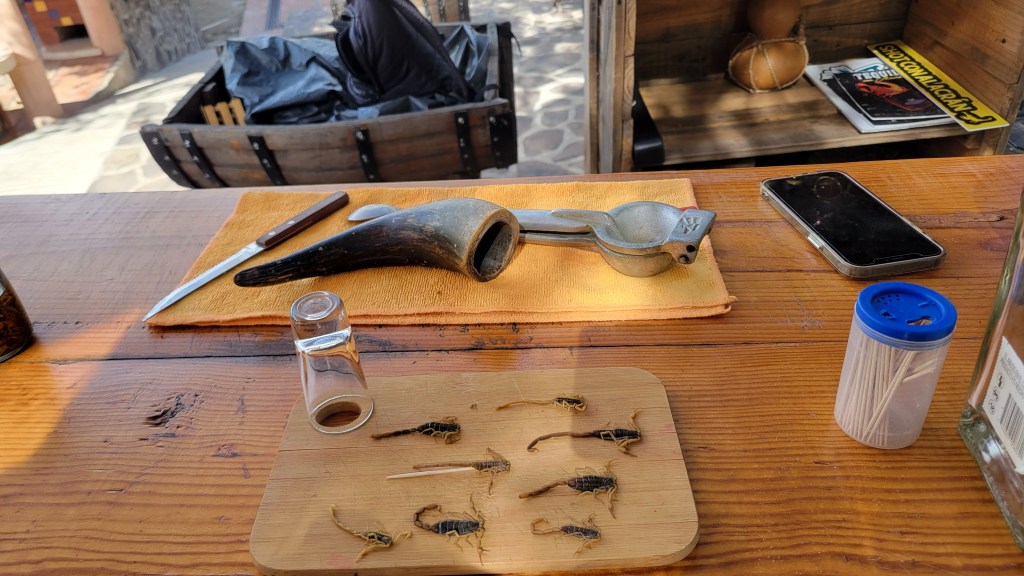
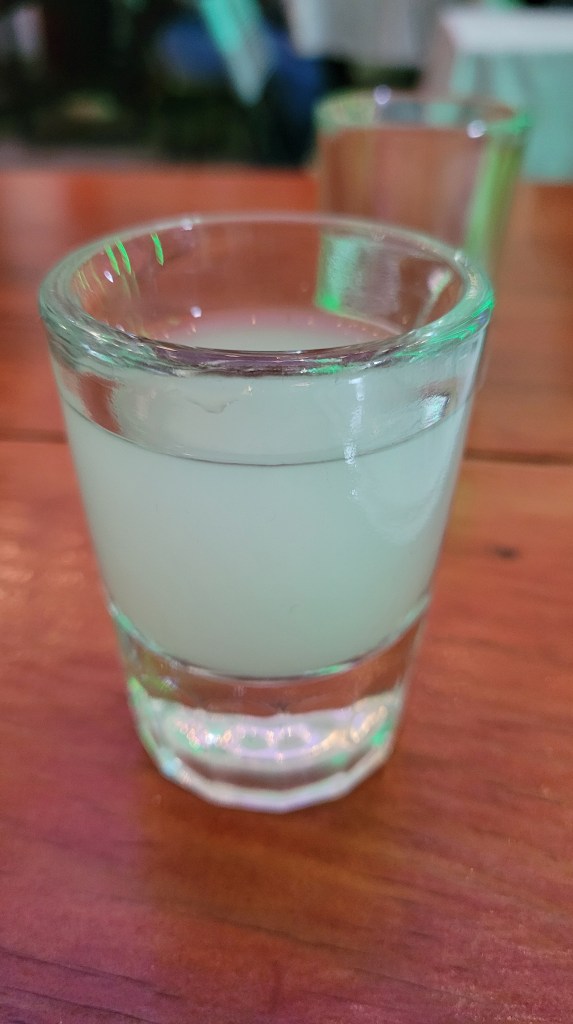
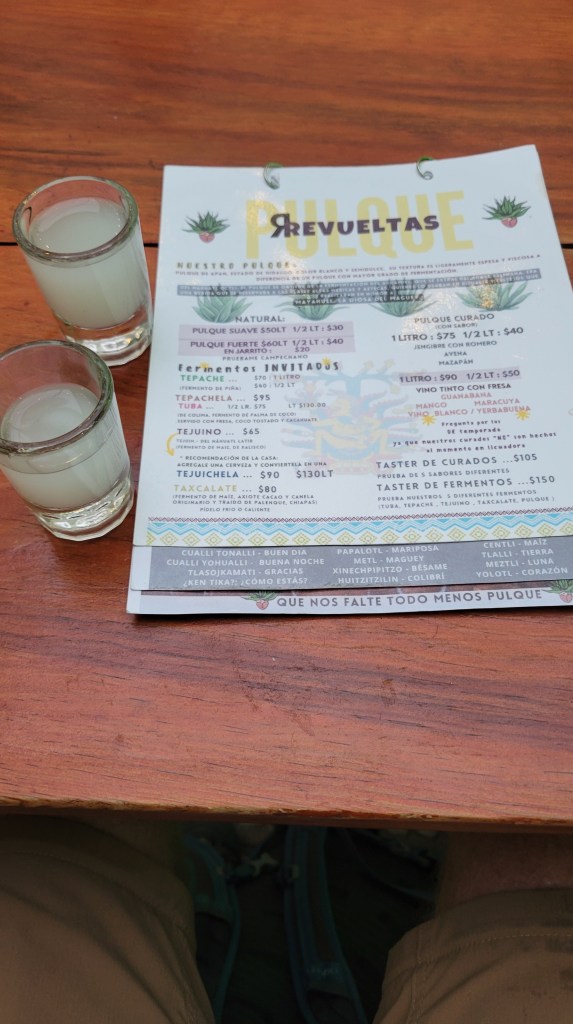
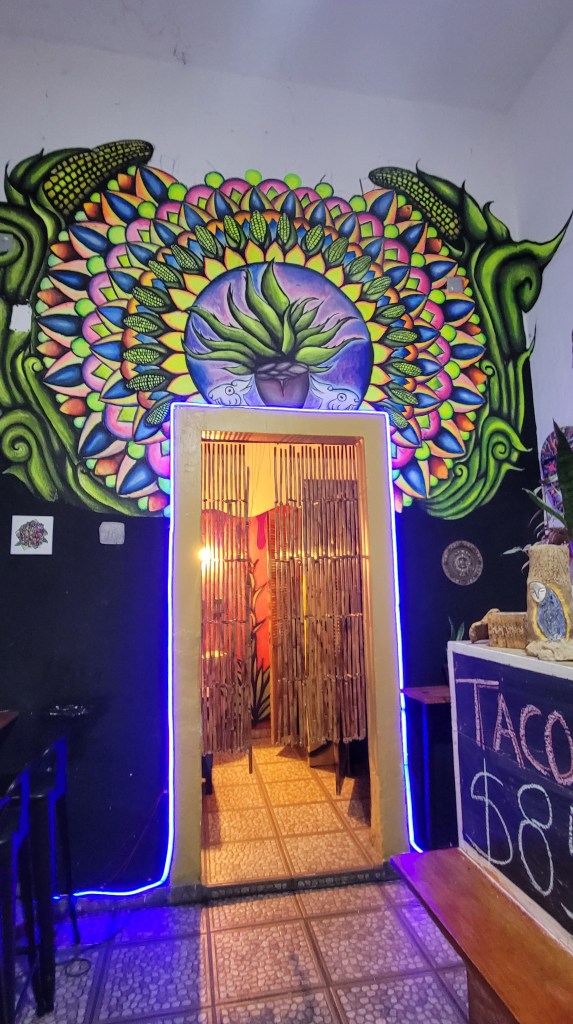
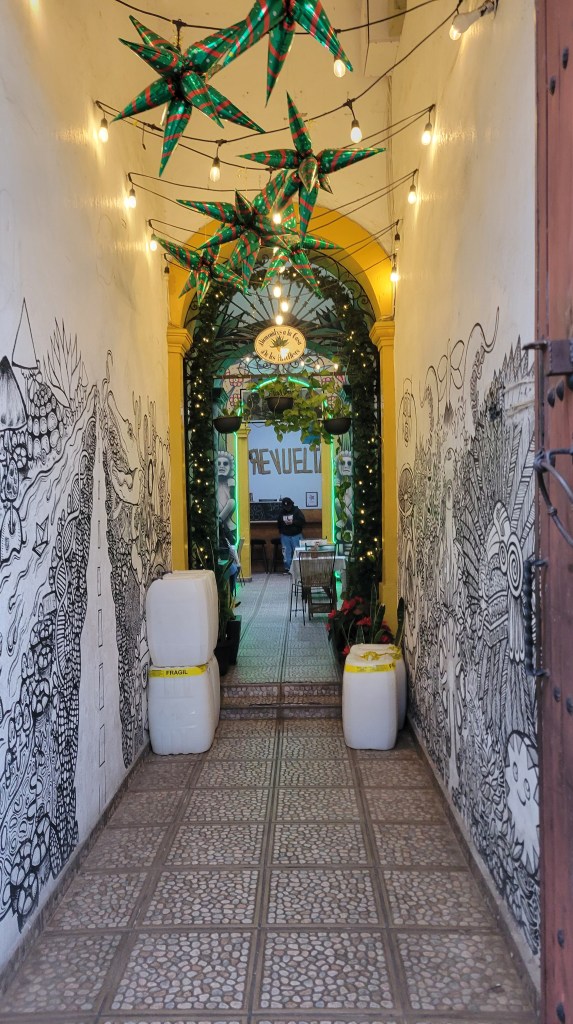
Al had heard of a very historic libation that had been consumed in Aztec times referred to as “The drink of the gods”. Ok my (Al) interest was piqued. Pulque is a fermented alcohol beverage from the sap of the Agave Salmiana Oratropus plant (the same Agave that Mezcal is made from). So after getting a couple of recommendations for the best Pulqueria establishment in Guadalajara from the two guides we had met, we set out for the investigations into this outlier of the beverage world. During the tour through Tequila we met a very nice couple from Minnesota and asked them if they would like to join us for our initiation to Pulque one evening, they heartily answered with a “sounds great” so off we went. The venue was mysterious and decorated in cool black light and corresponding art atmosphere. The menu had many different flavours of mixed Pulque drinks but Al wanted to sample the raw pulque before taming it with fruit or other watering down effects. Two small pours arrived and it became obvious as to why there were so many adulterated choices on the menu. The liquid presents as a opaque, milky, cloudy and viscous substance that smells of sweaty feet. Ok this is going to be a bit more challenging than I thought! Deb was not interested in ordering the stuff straight up at that point (she ordered a bottled beer) but in the interest of science I soldiered on. If it wasn’t for the complex, slightly slimey, thick viscosity with multi-layered texture and slightly sweet finish I may have stopped right there but I needed more analysis so I finished Deb’s pour and mine then ordered a strawberry smoothy sort of concoction. Our friends had a special dinner planned so we said Buenos Noches to them and went in different directions. Below are some pictures from Pulque experience.
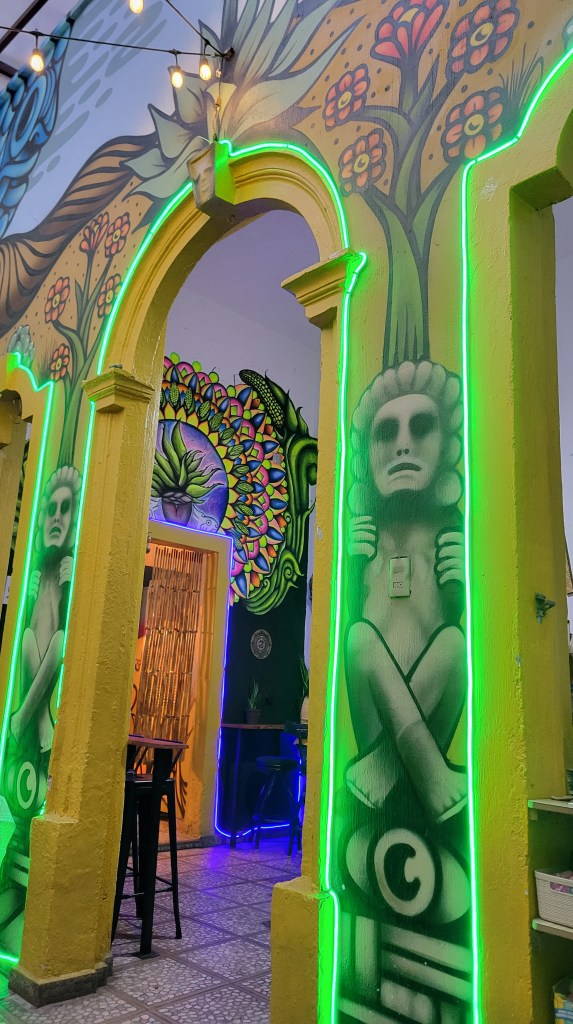
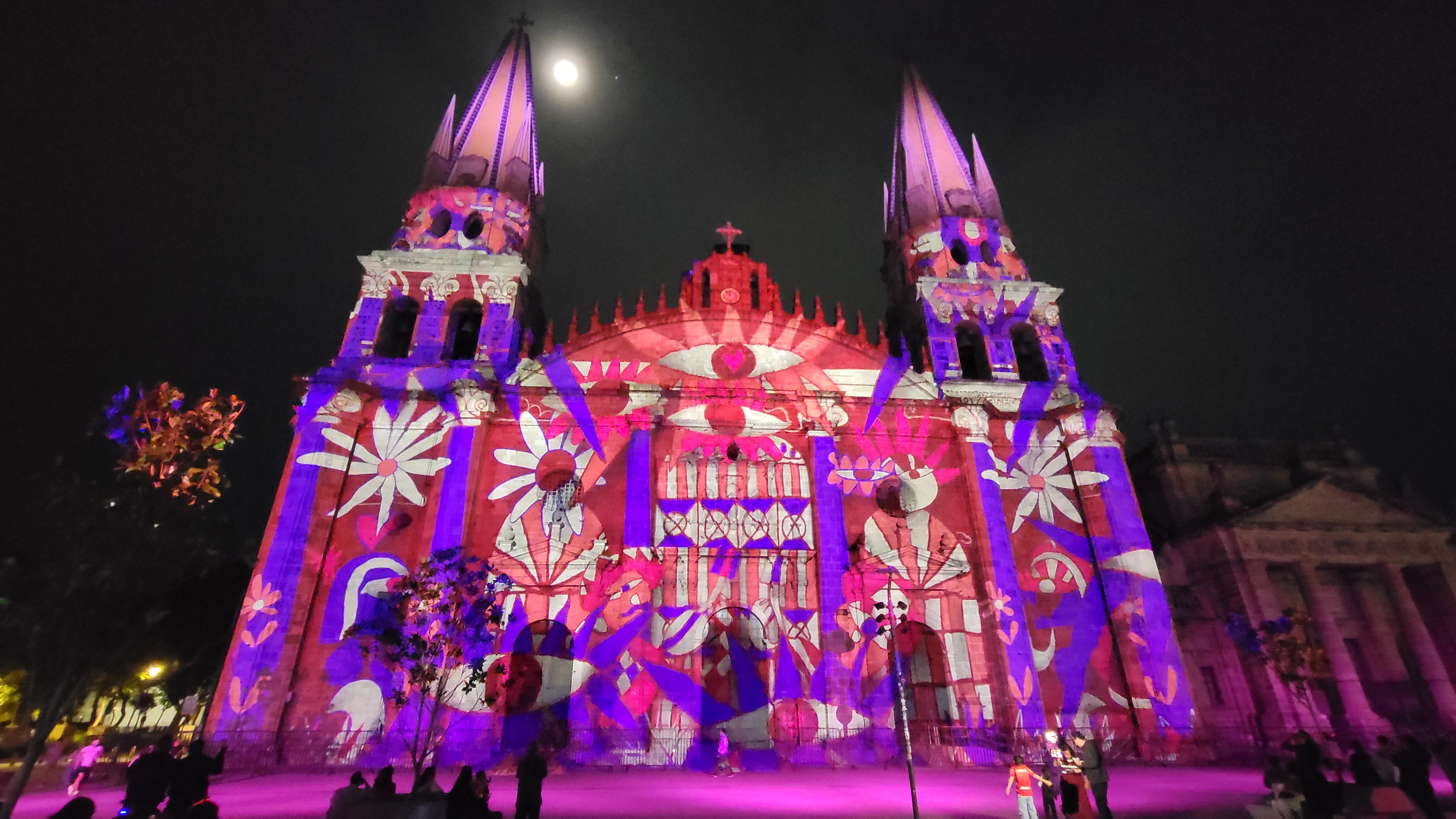
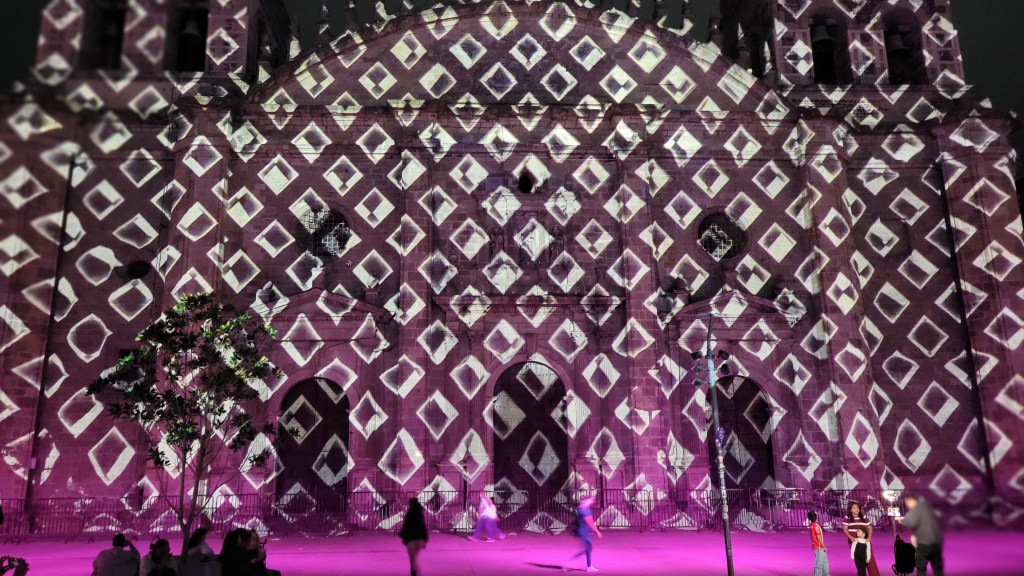
While searching for a dinner venue we walked into an art exhibition displayed on the cathedral to advertise the upcoming festival of the arts. It was fabulous or was that just the Pulque running around in my head…
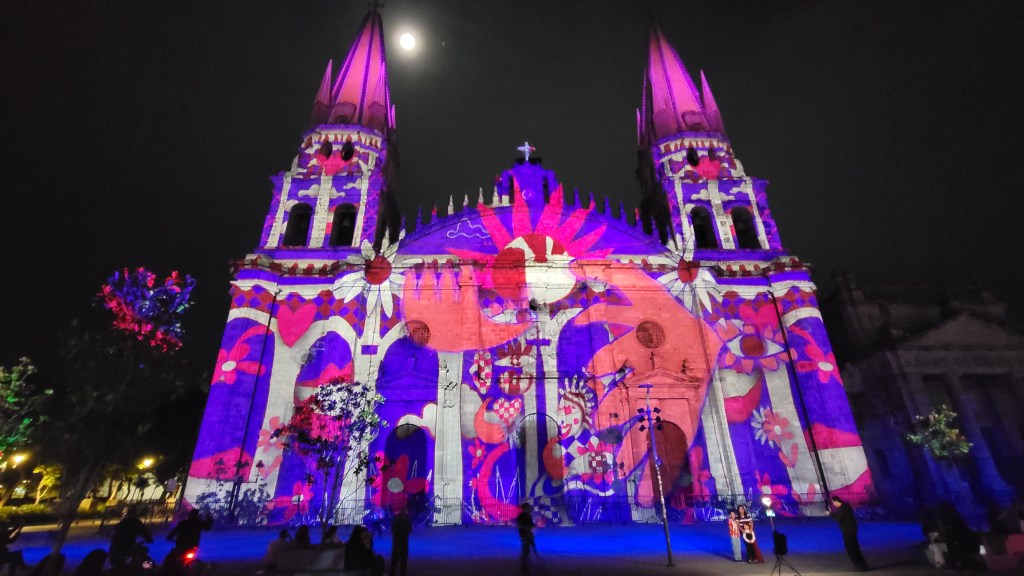
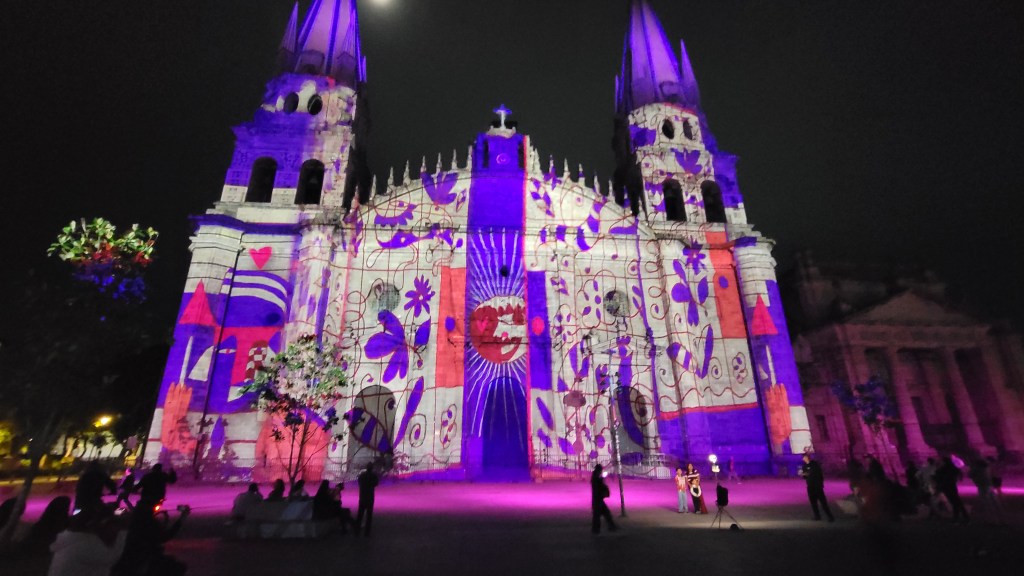
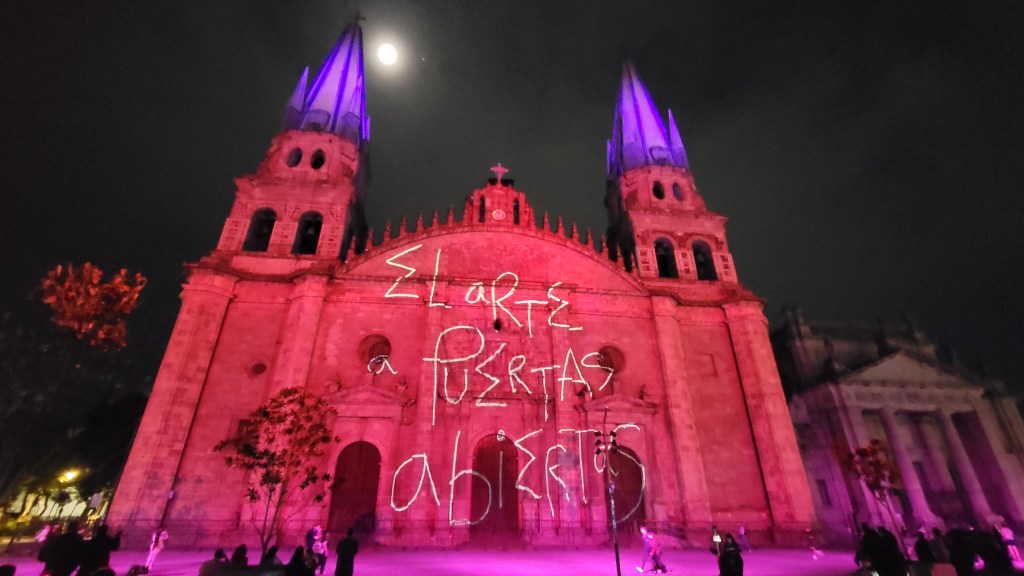
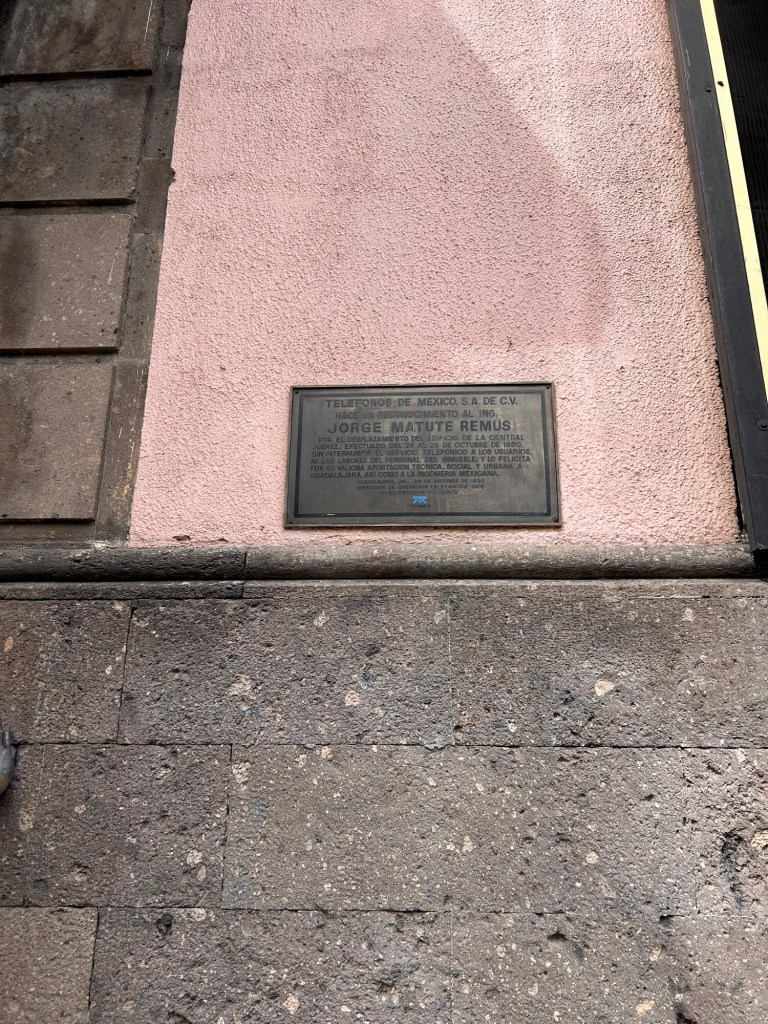
We only touched the surface in Guadalajara being immersed in the old centro. There are many modern touches and artworks to explore on a return trip one day. Like when the moved the telephone building to widen the road, while everyone was still in the building working.
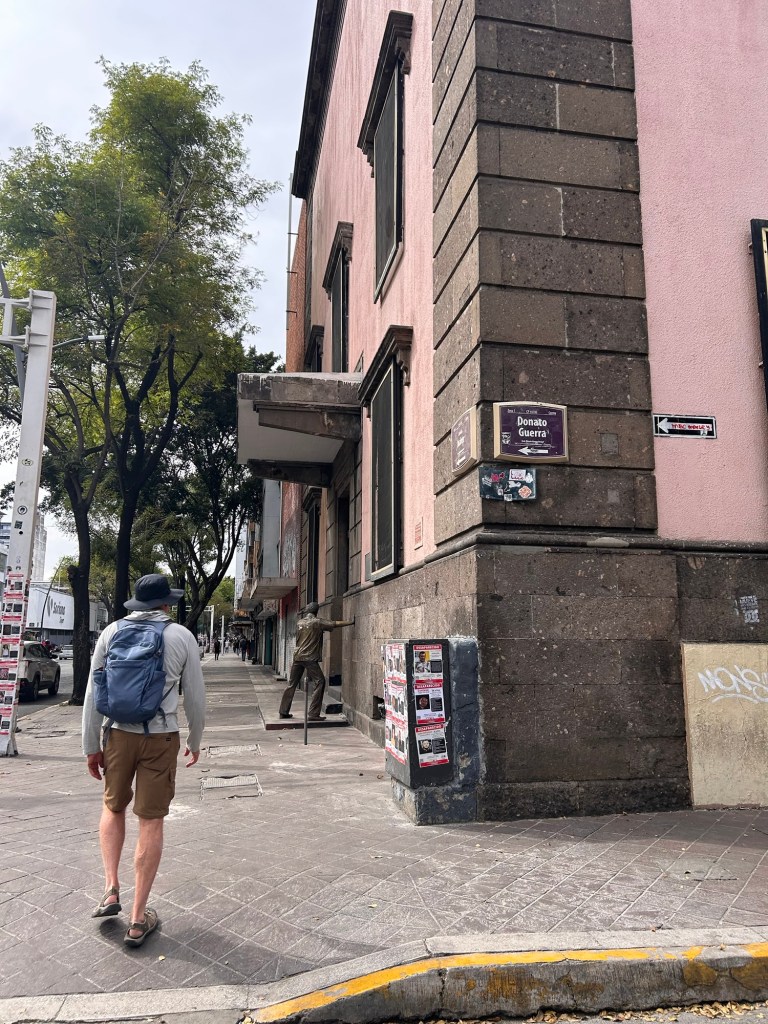
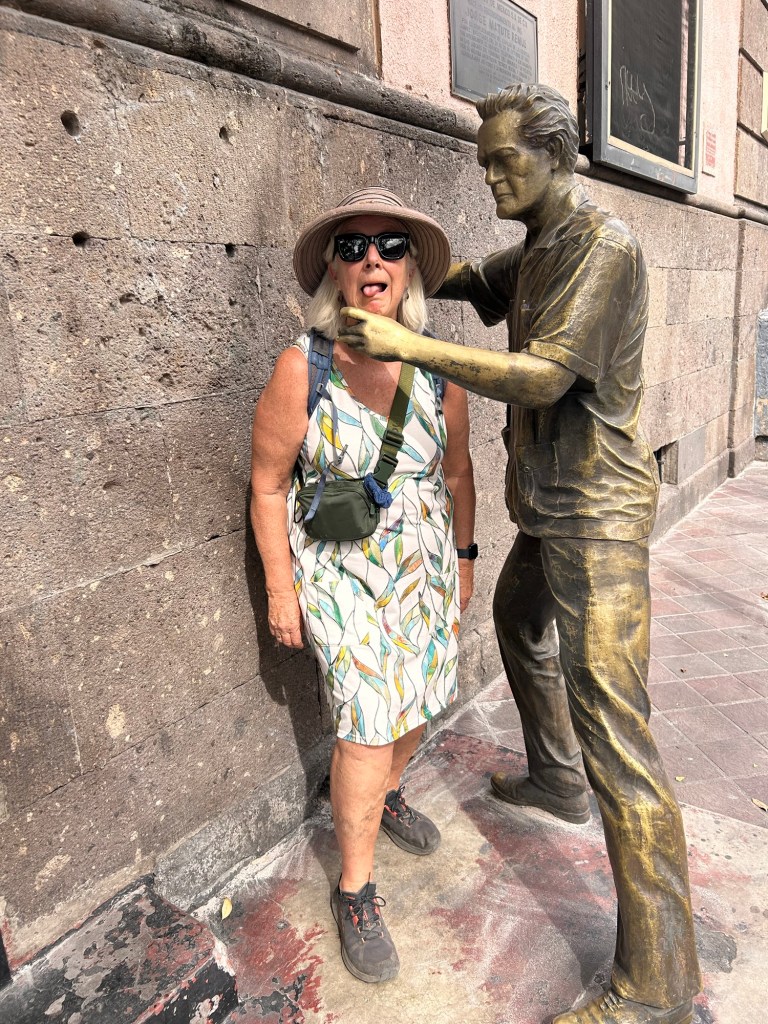
We hopped a bus out of Jalisco to Morelia in Michoacán and arrived in what seemed an even more medieval city than Guadalajara.
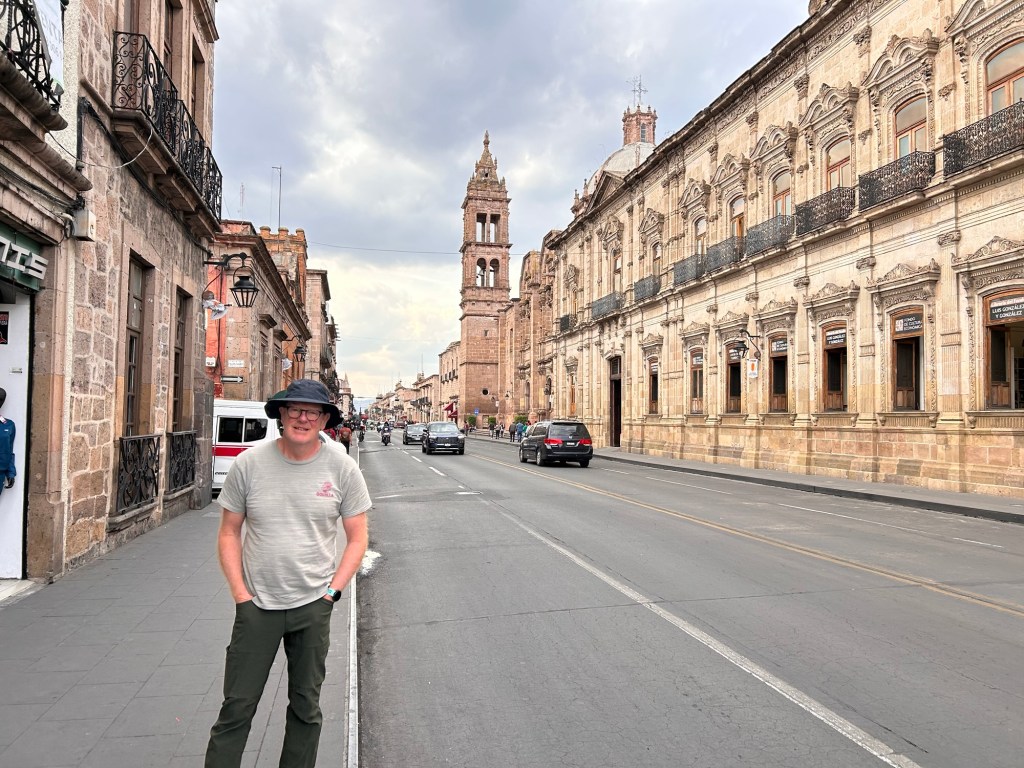
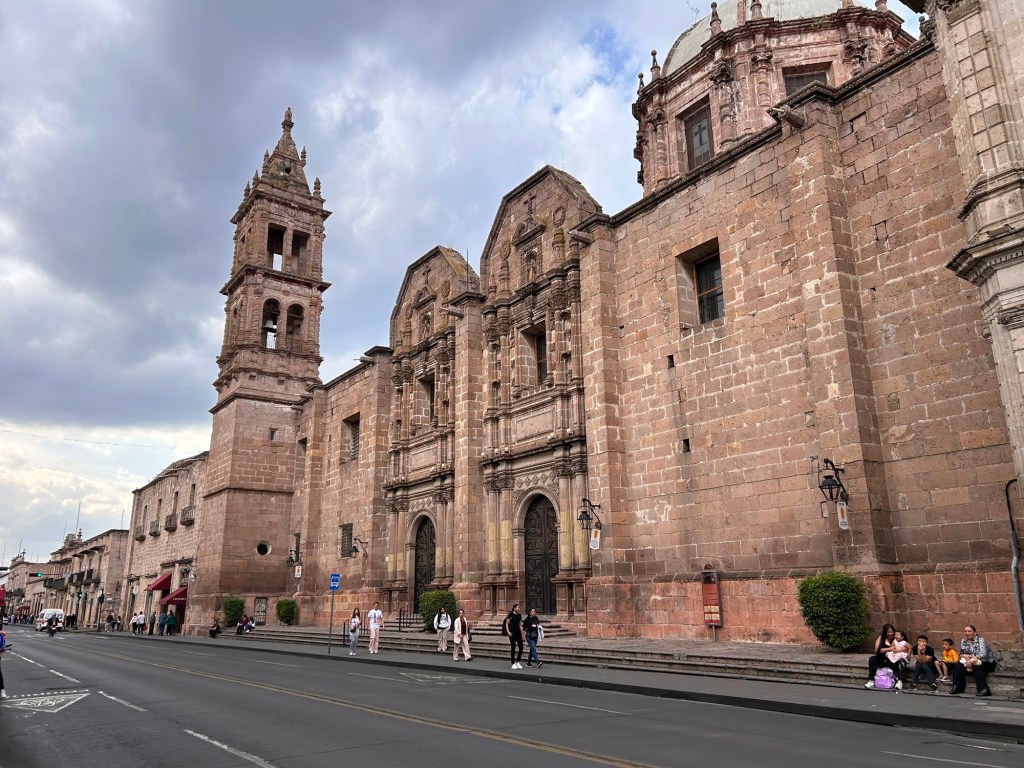
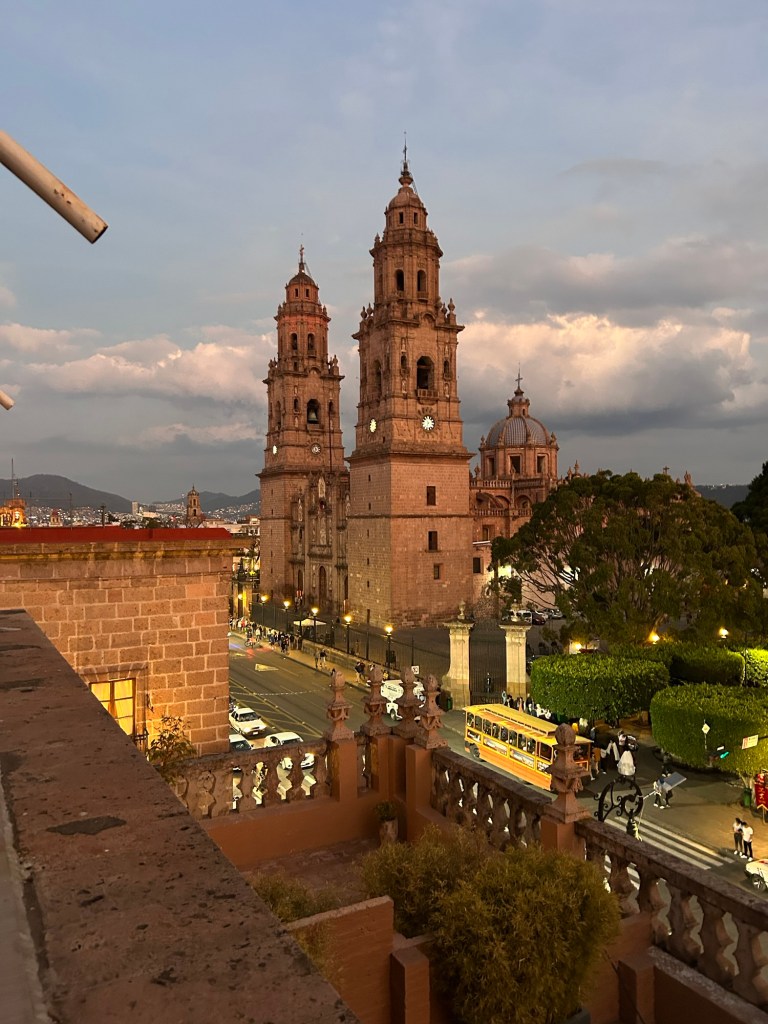
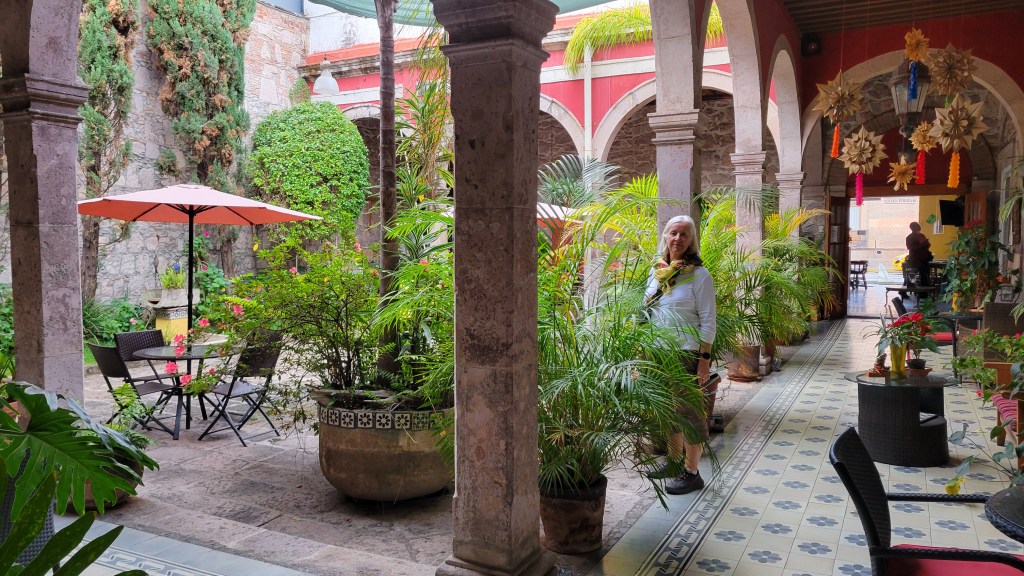
Morelia centro is a hilltop city with over 1100 pink cantera stone buildings. In the early 1500s the Spanish priests and explorers arrived and the indigenous societies were indoctrinated with Christianity. Five hundred years later a syncretism of these religions has created a resilient culture that boasts traditional foods and artworks with a multitude of churches, convents, an ancient aqueduct and a massive cathedral.
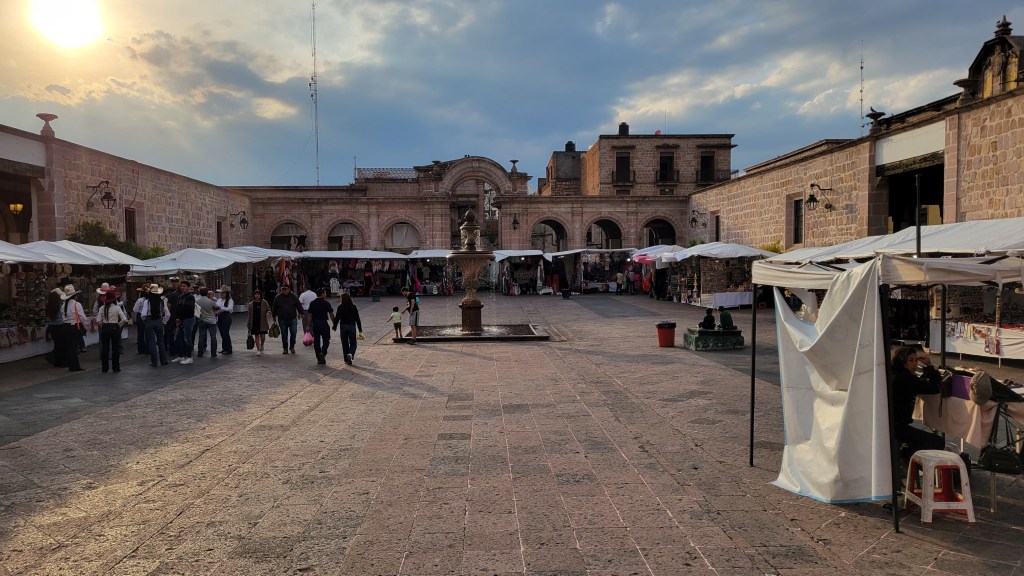
Recognized as a UNESCO world heritage site it was easy to forget again that we were not in medieval Spain.
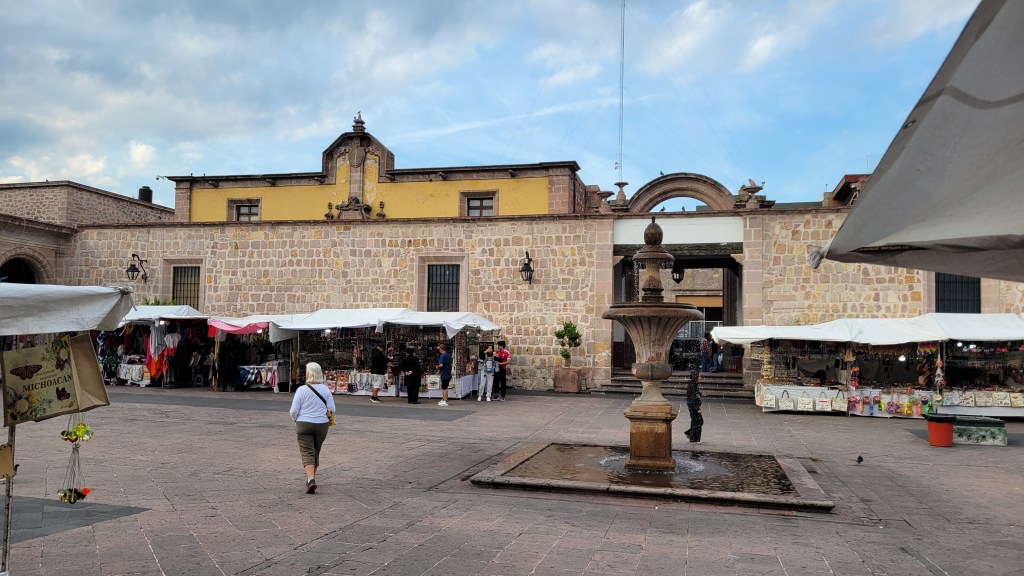
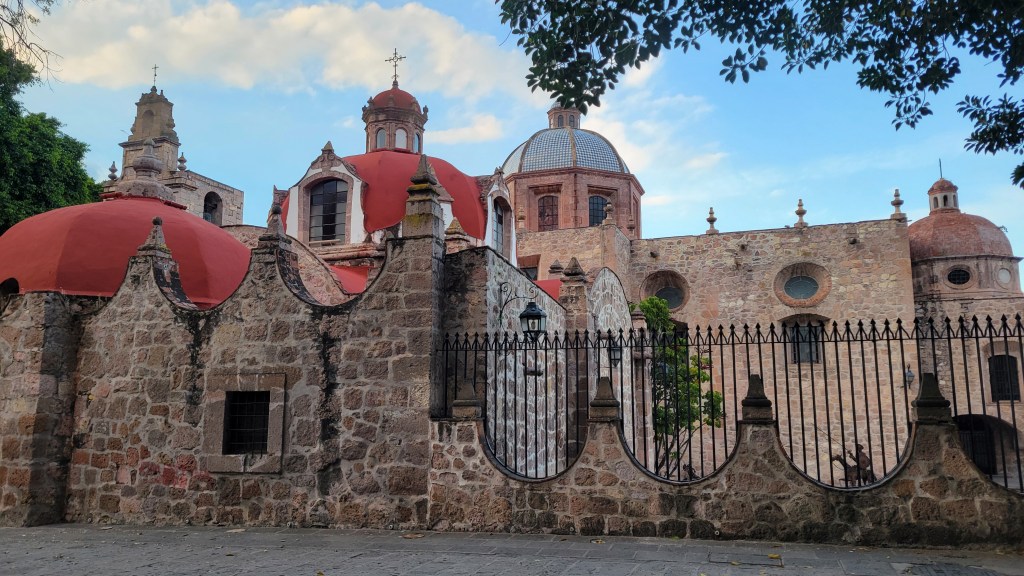
Our wanderings discovered the birthplace of José Maria Morelos who led the Mexican War of Independence.
We dined on delicious Michoacán foods.
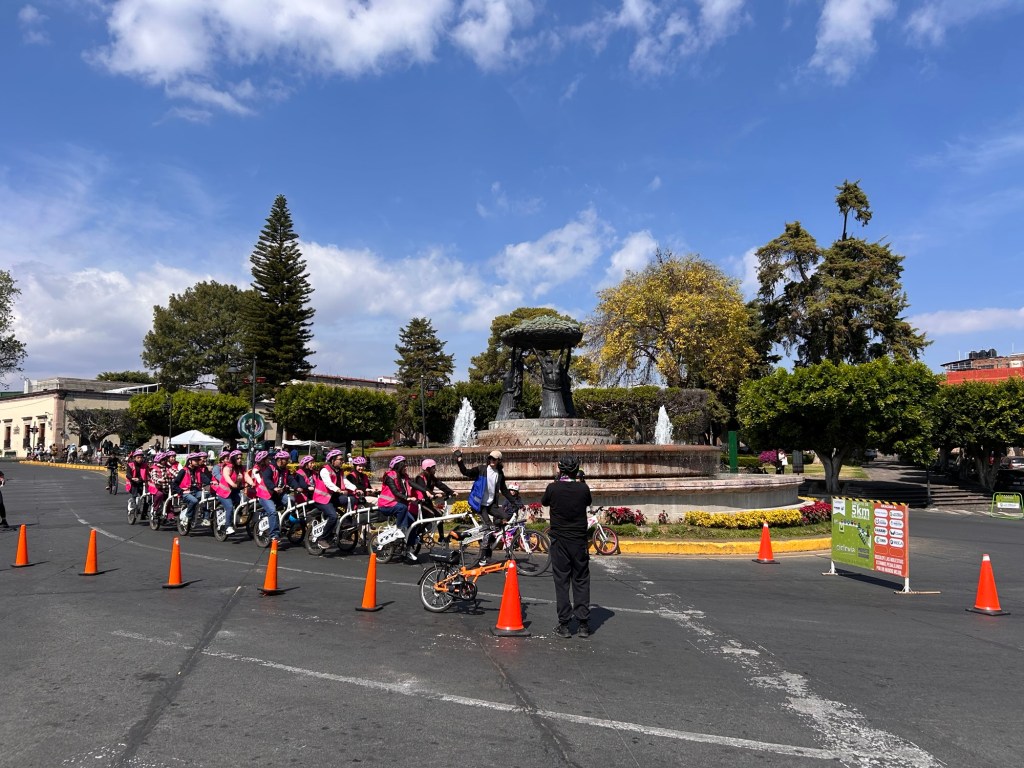
On Sundays a group of streets are closed to create five kilometer space where no motors are allowed. This group of cyclists were joyfully linked together like a caterpillar.
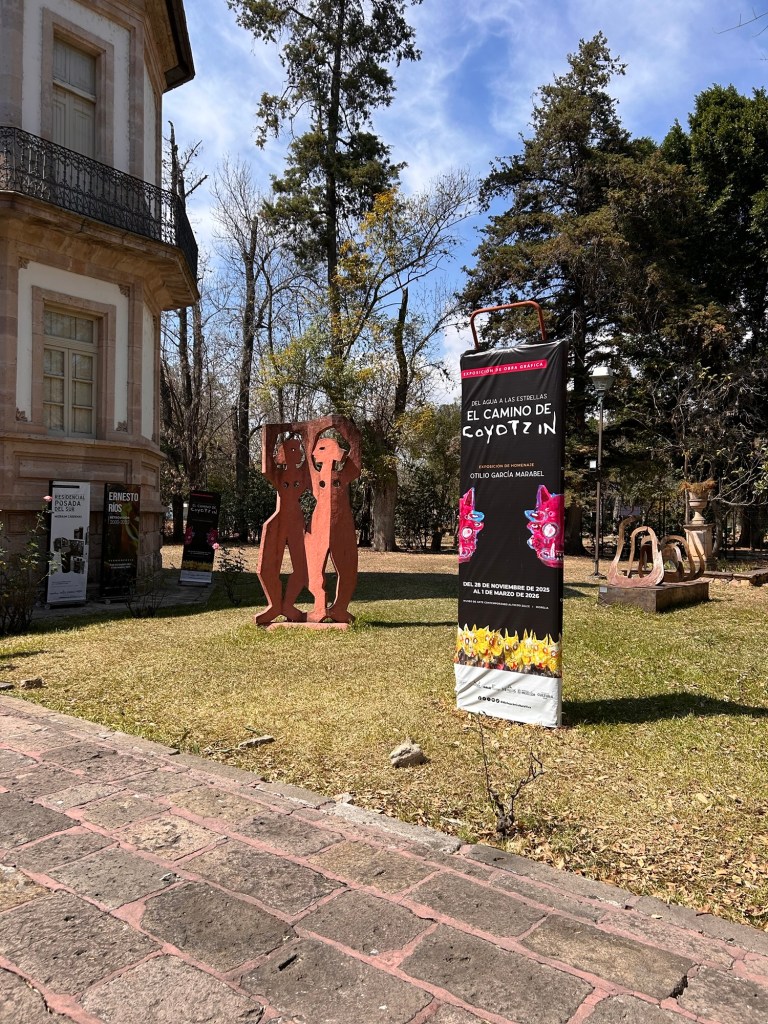
This modern art gallery very near to the defunct aqueduct.
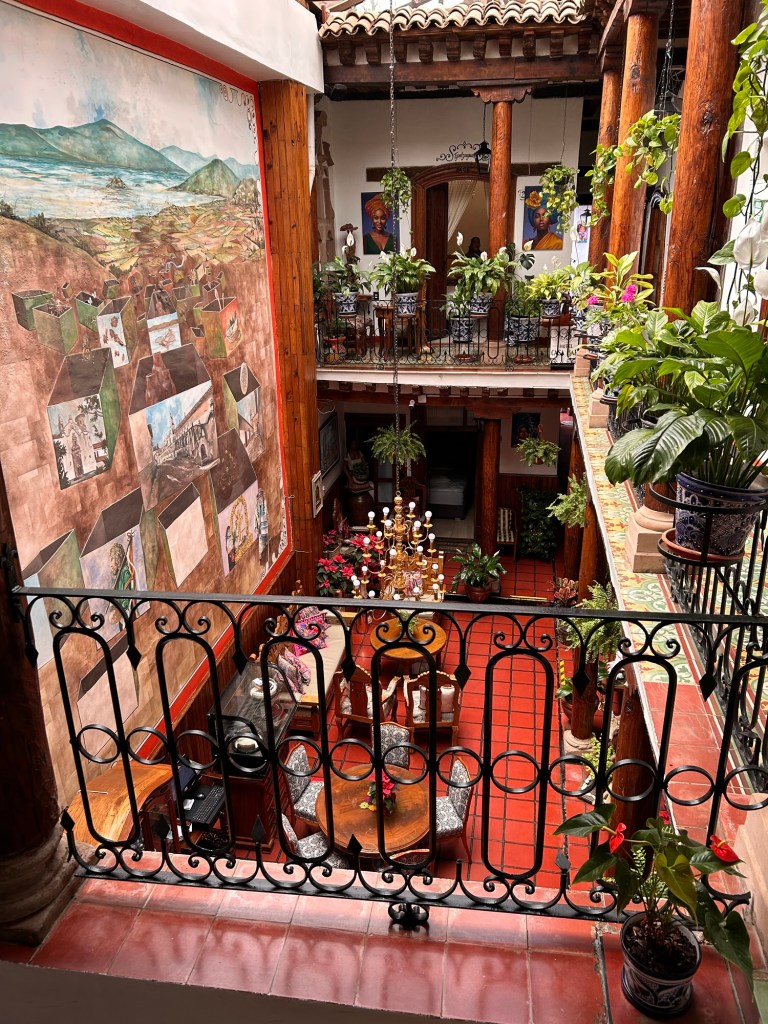
Then we were off to Patzcuaro to meet Albert’s high school friend, Russel, who lives in Zihuatanejo. His entourage included Canadian visitors interested in the monarch butterflies.
Patzcuaro is about an hour from Morelia. This Pueblo Mágico boasts a large square with musicians, hawkers and palm trees.
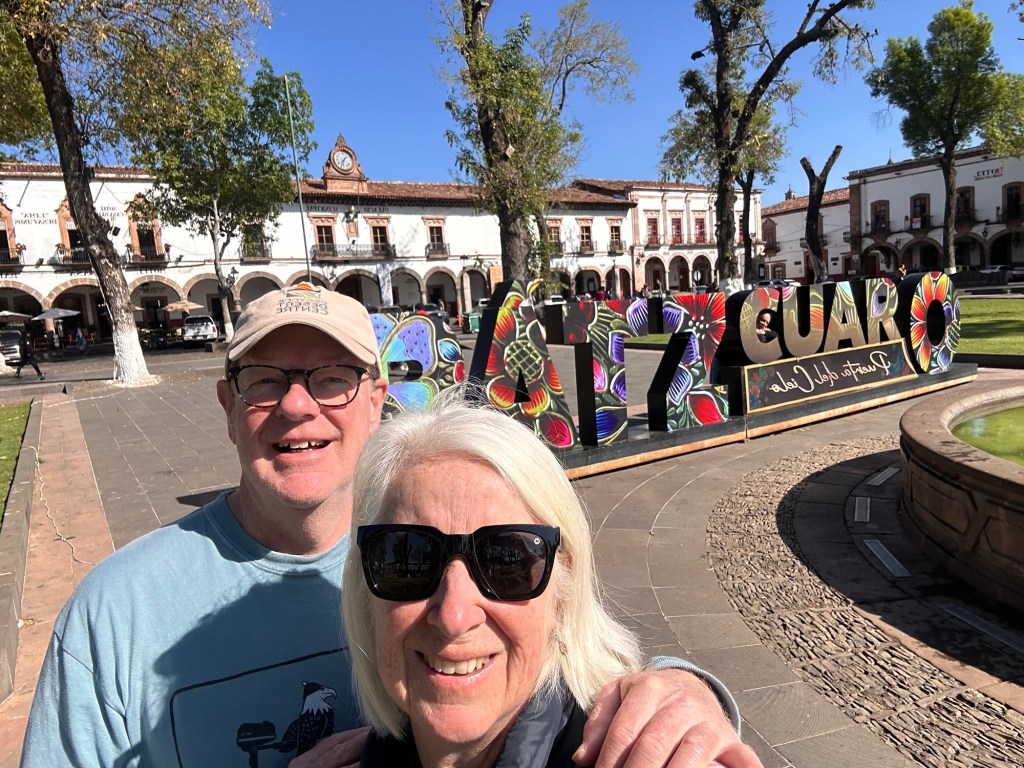
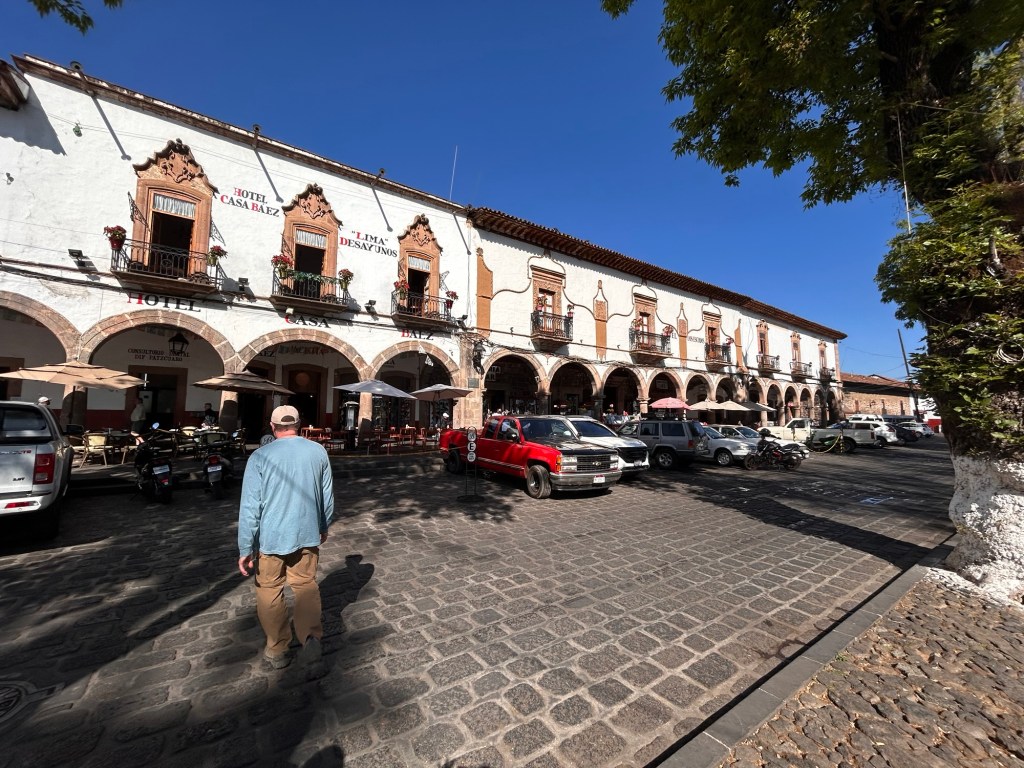
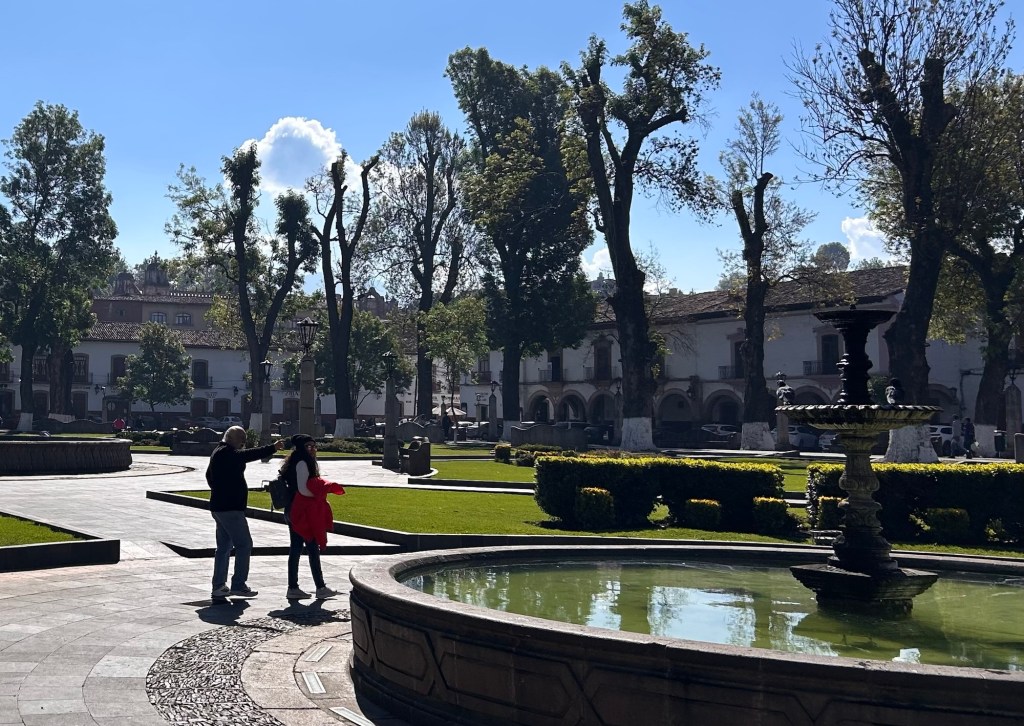
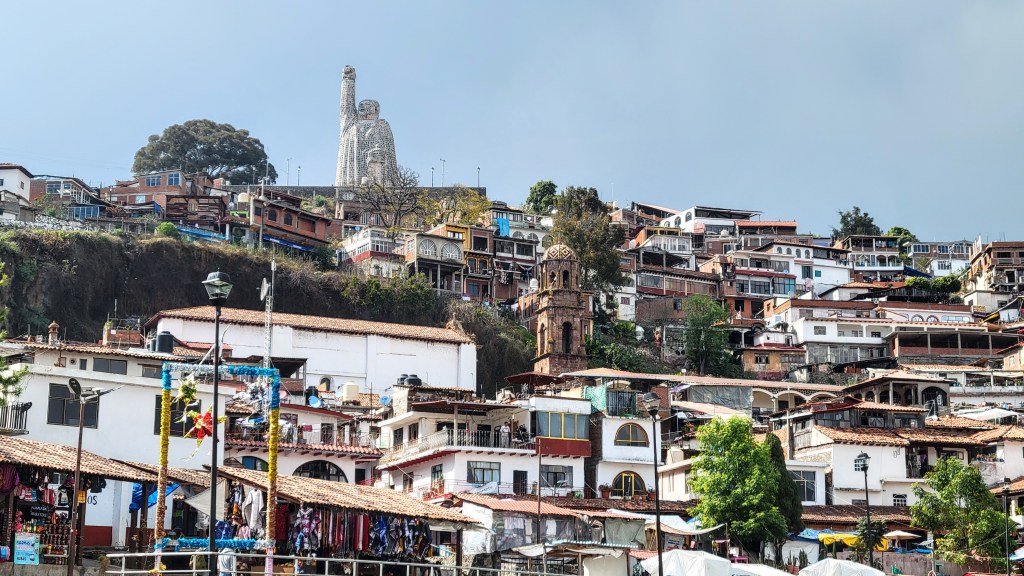
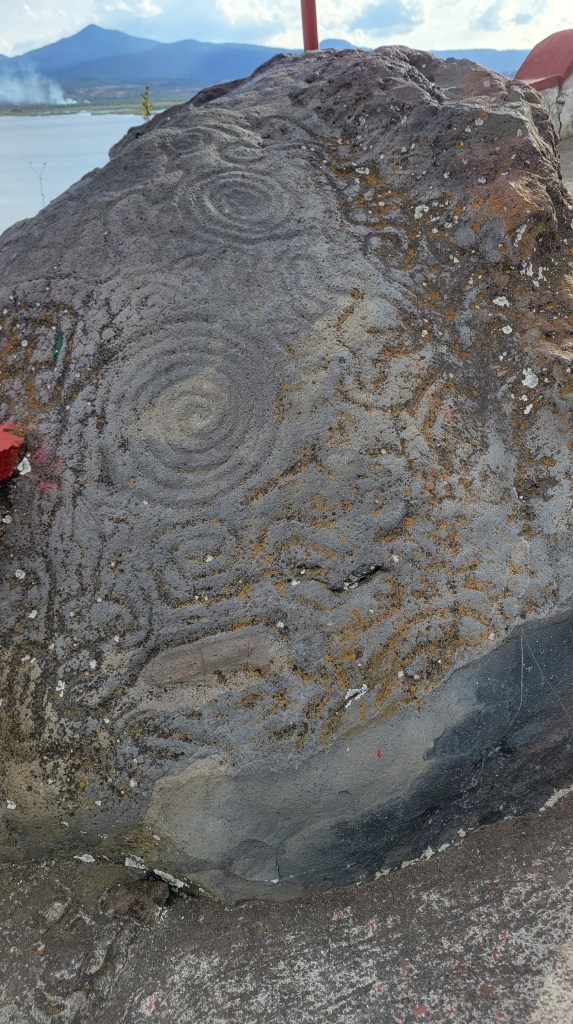
It also is close to Patzcuaro Lake and Janitzio island where the Purépecha indigenous population still fishes the tiny charales white fish. Janizio is famous for its Día de Muertes celebrations.
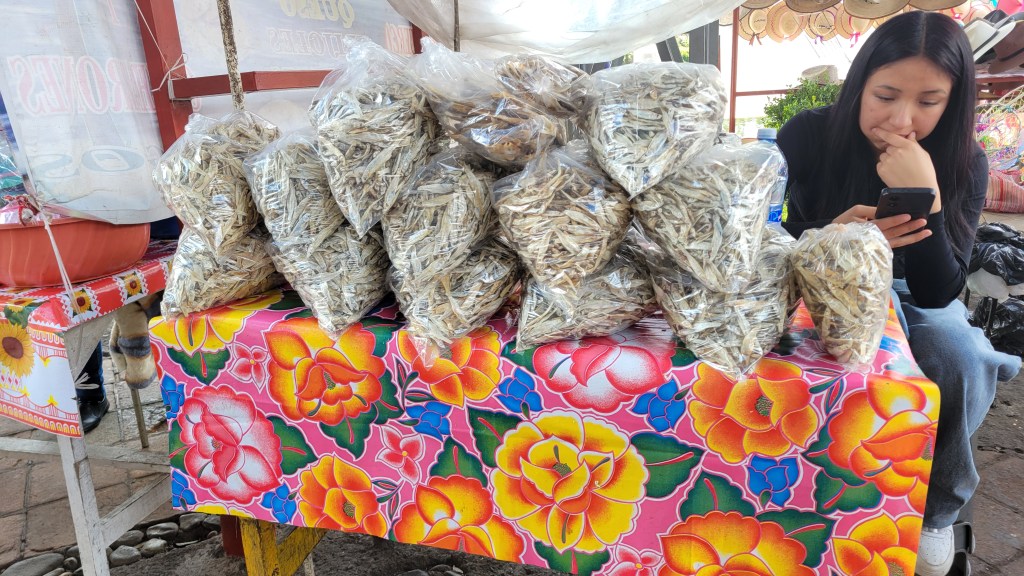
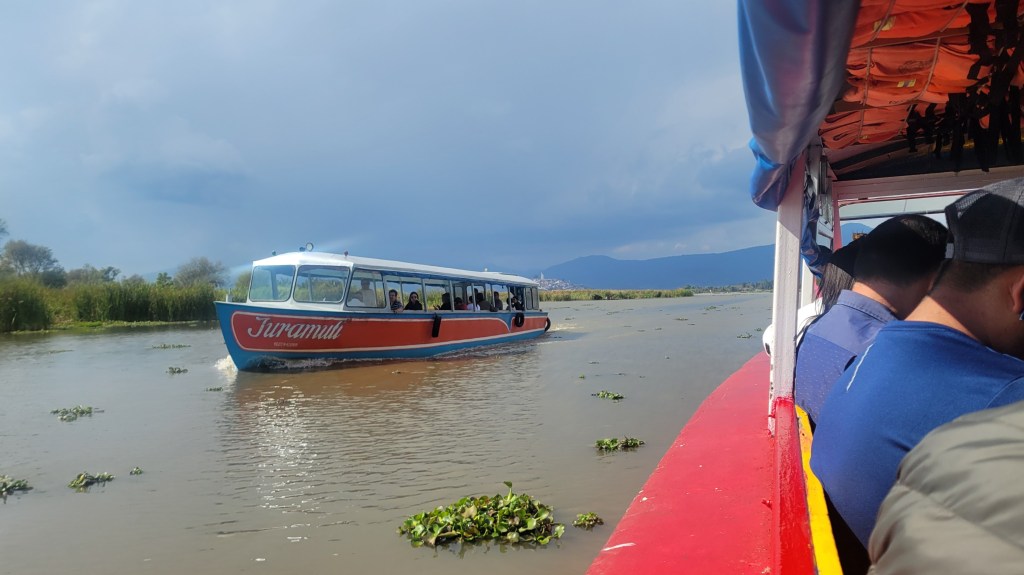
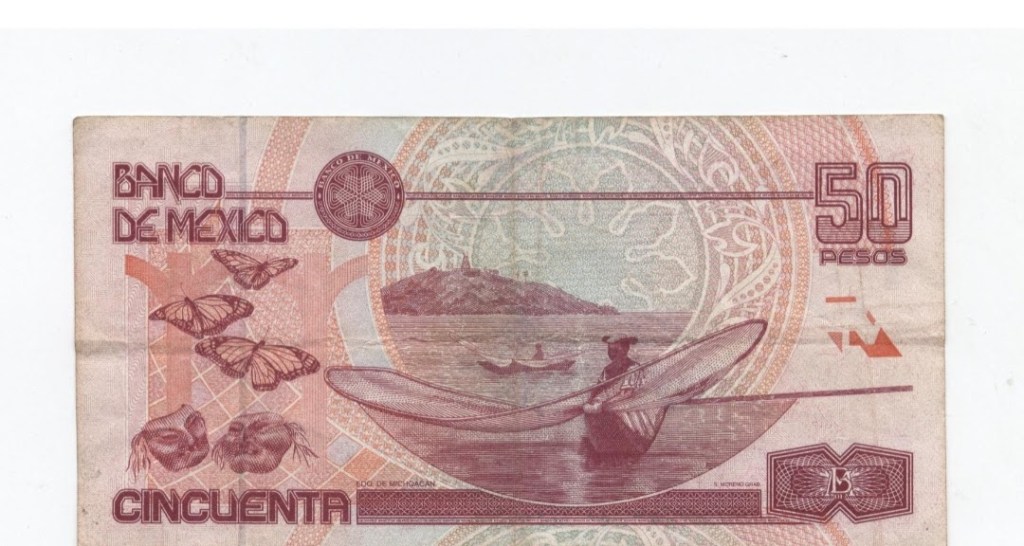
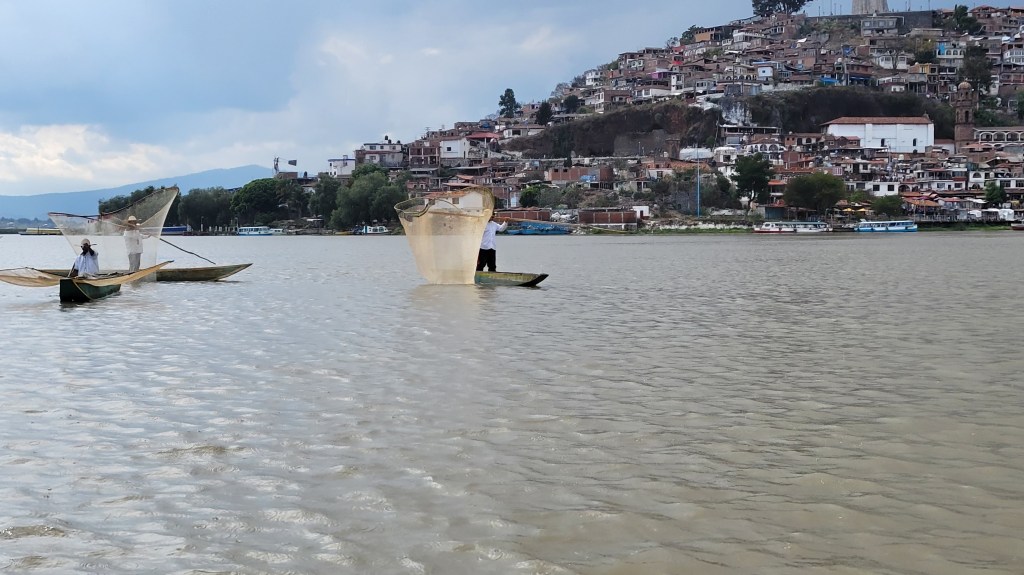
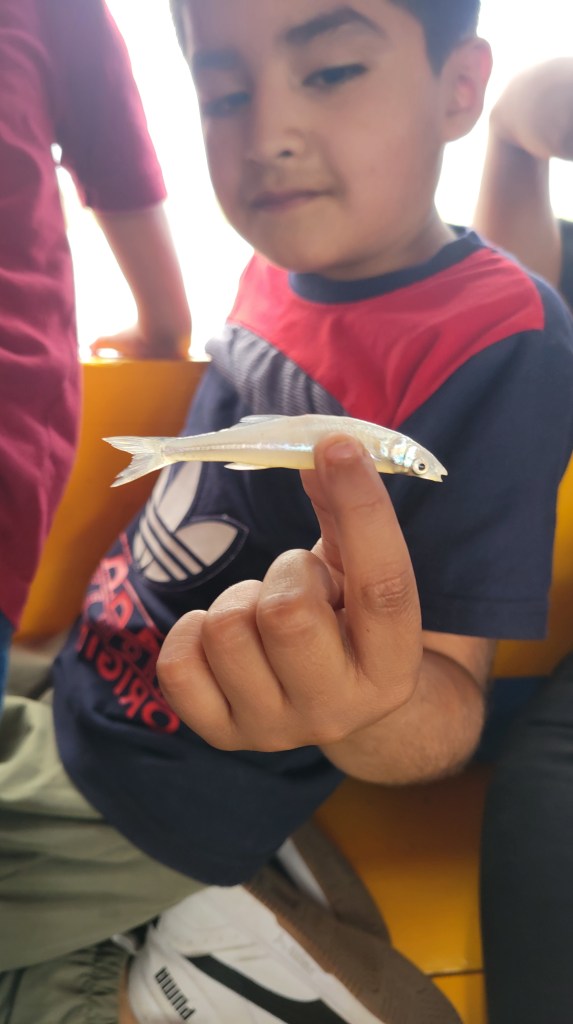
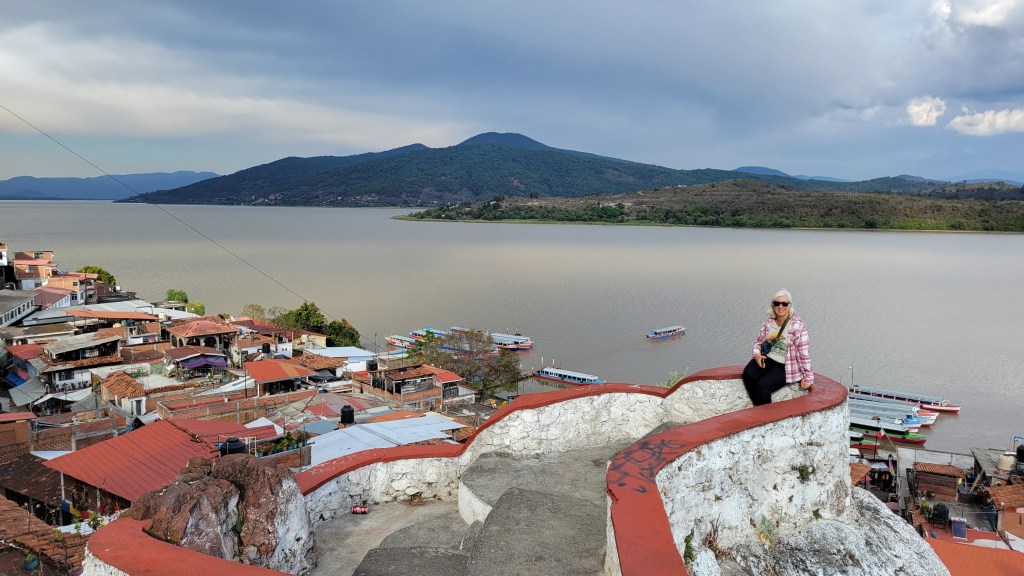
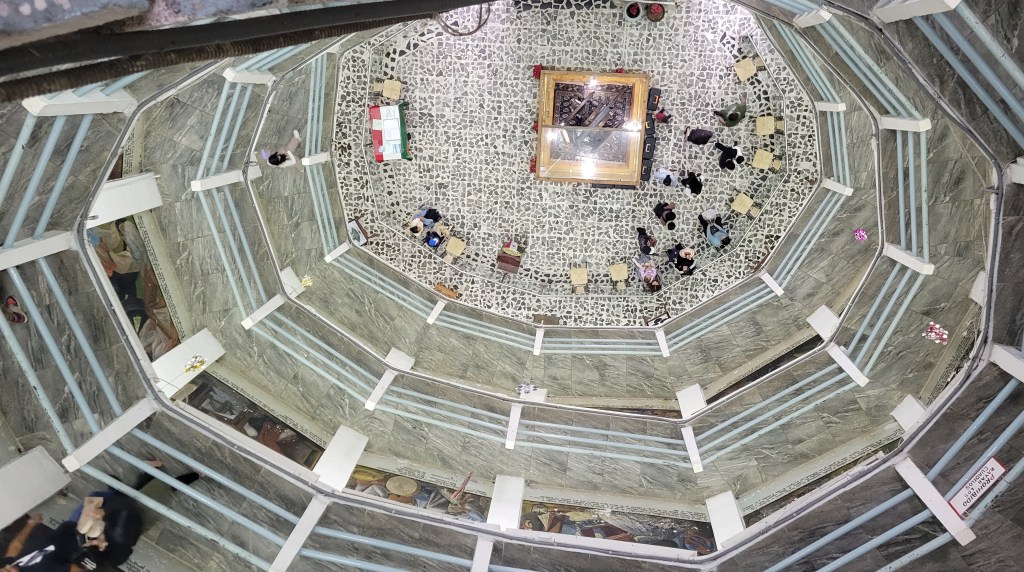
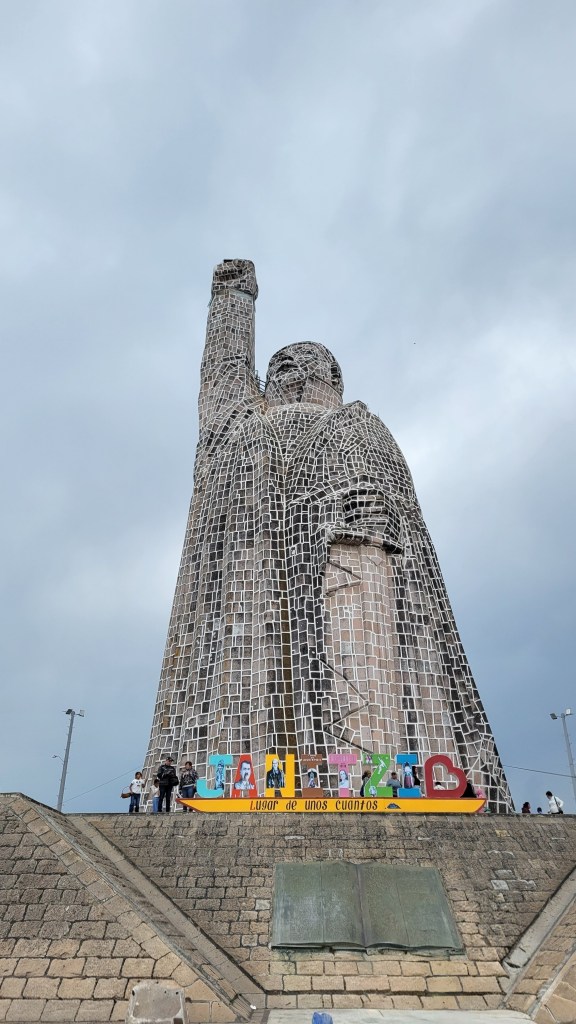
Atop this island is a statue of José Morelos that we summited.
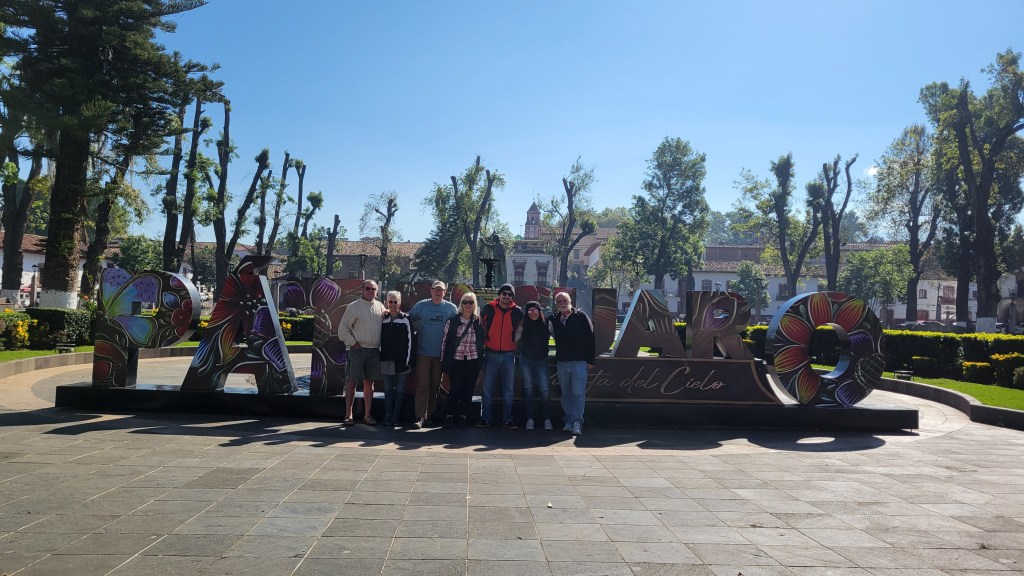
Next day we jumped in Russel’s van and were off to Tlalpujahua, the gateway to the winter residence of the Monarch butterflies.
Tlal is another Pueblo Mágico situated high in the north eastern Michoacán mountains. It was known for its mining in gold it has transformed to Christmas ornaments and and stone sculptures. High at the top of a hill the cathedral’s Baroque design towers over this small city surrounded with cobblestone streets.
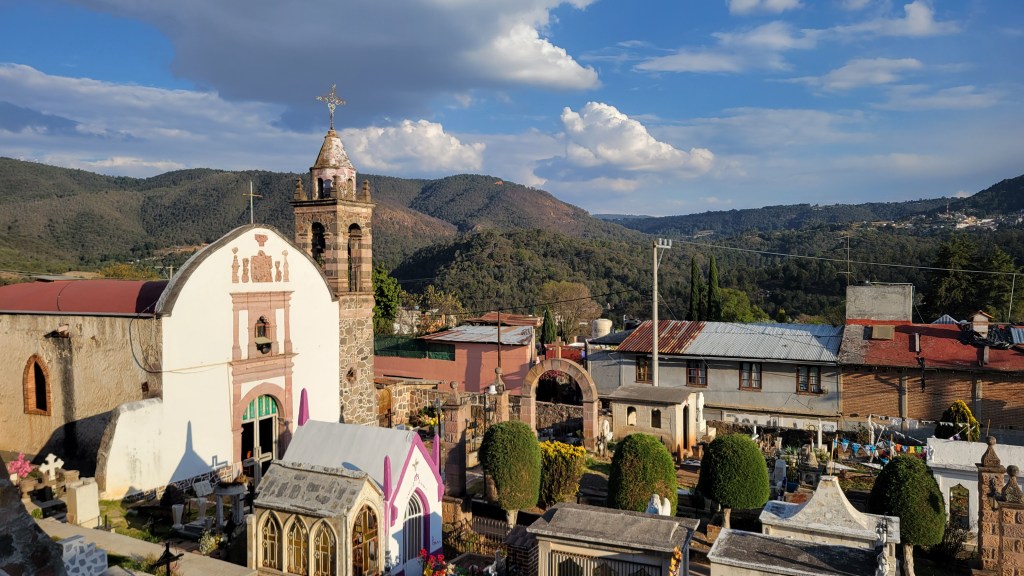
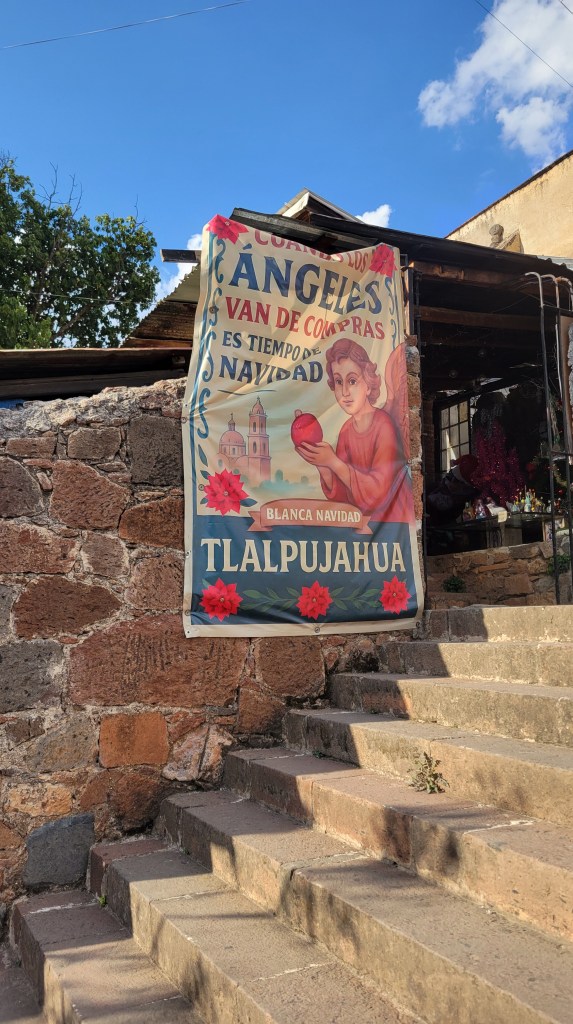
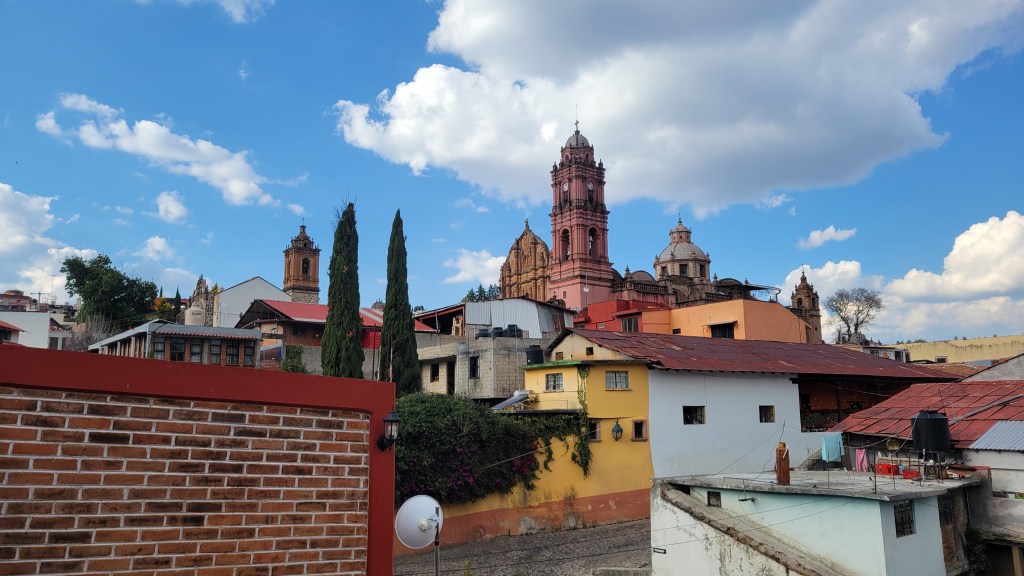
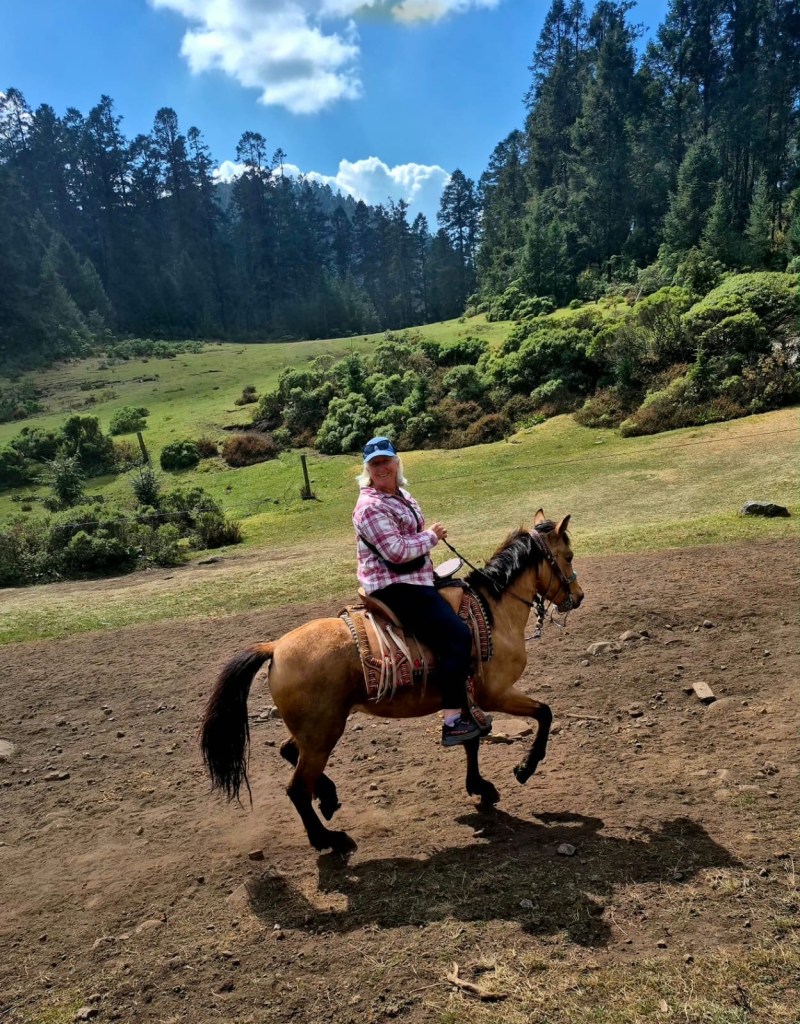
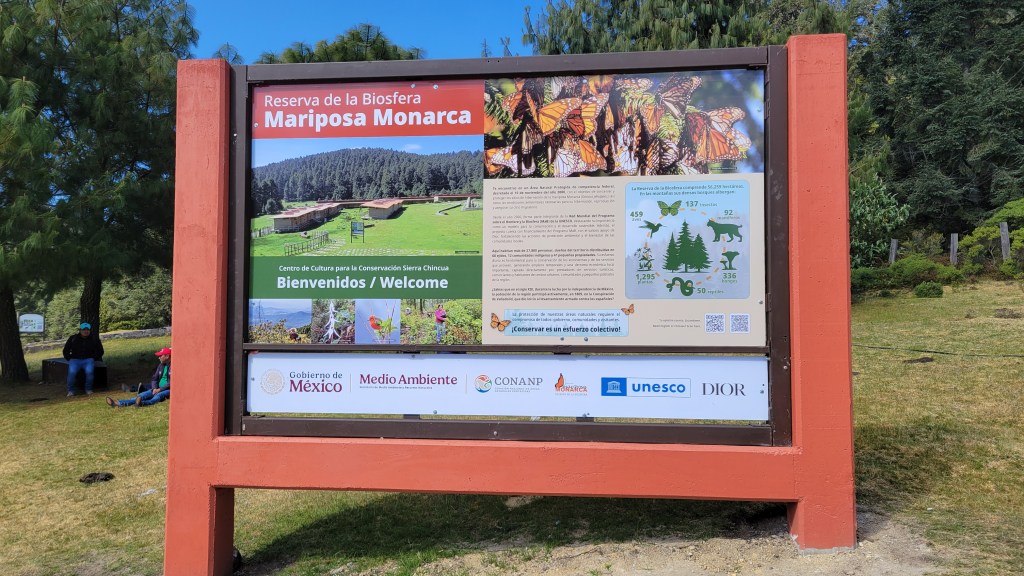
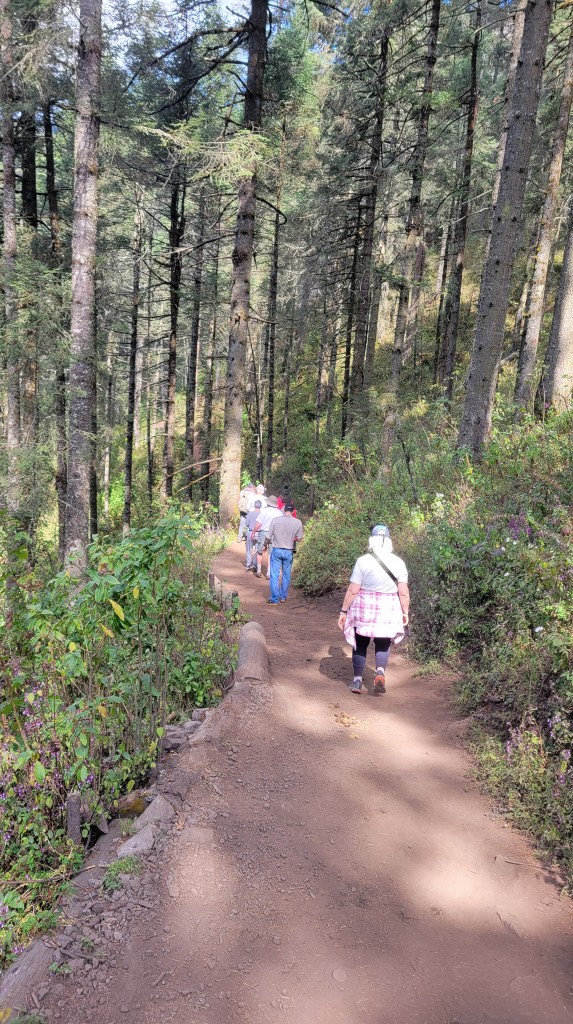
In the morning we checked out and headed for the butterfly sanctuary before the crowds and the clouds rolled in. Riding horses to the point where we disembarked and walked the trail where the universal language of “shhh” abides.
Surrounded by trees dripping with dark moss like clumps we watched as the clumps burst into orange sparkly clouds when a beam of sunlight touched them. At 12,000 feet above sea level we felt the thin air in our heads and lungs. This was quickly a non issue when we saw the butterflies swarming in the sun, knowing they had flown non-stop 5000 kilometers from Canada.
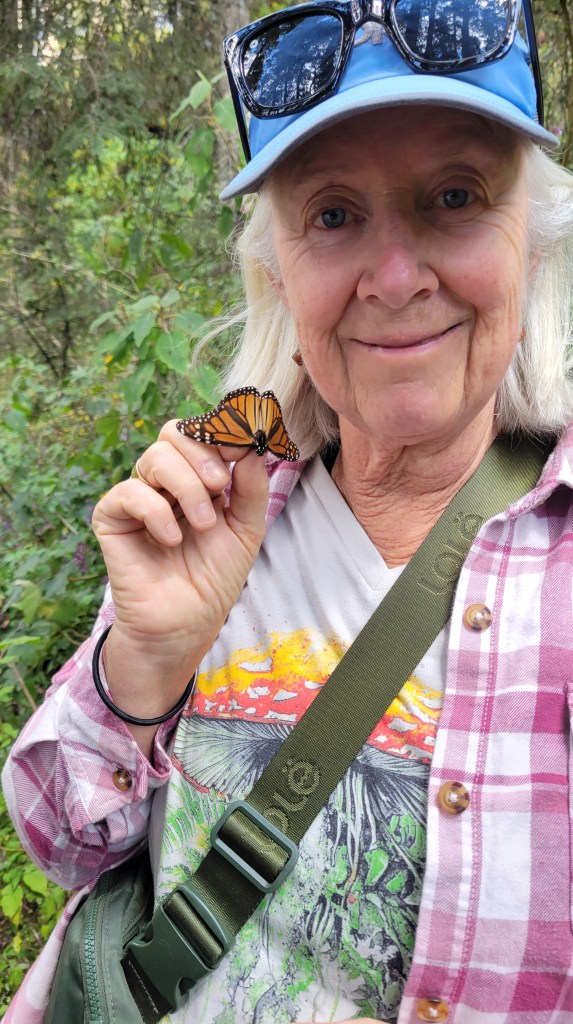
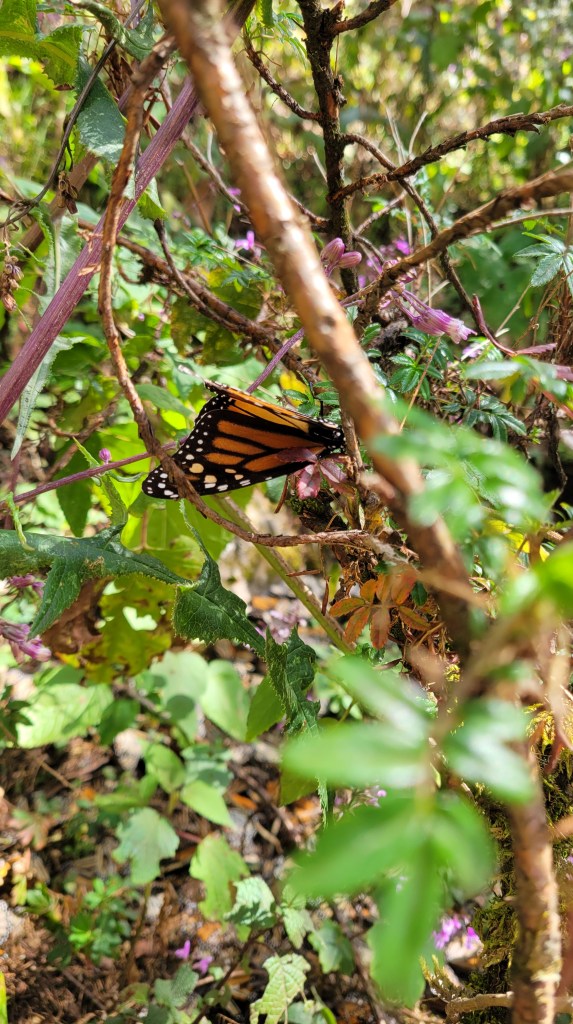
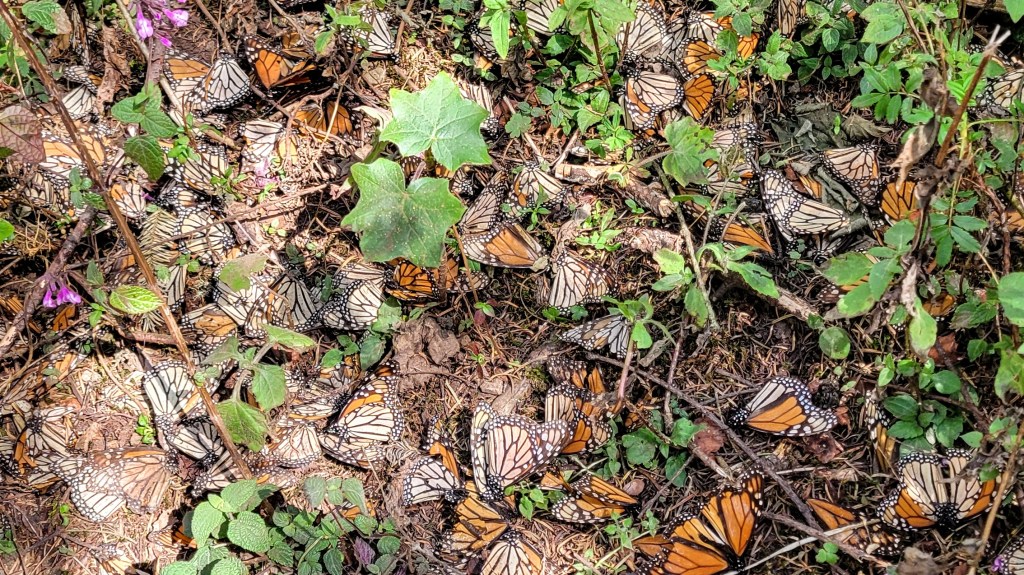
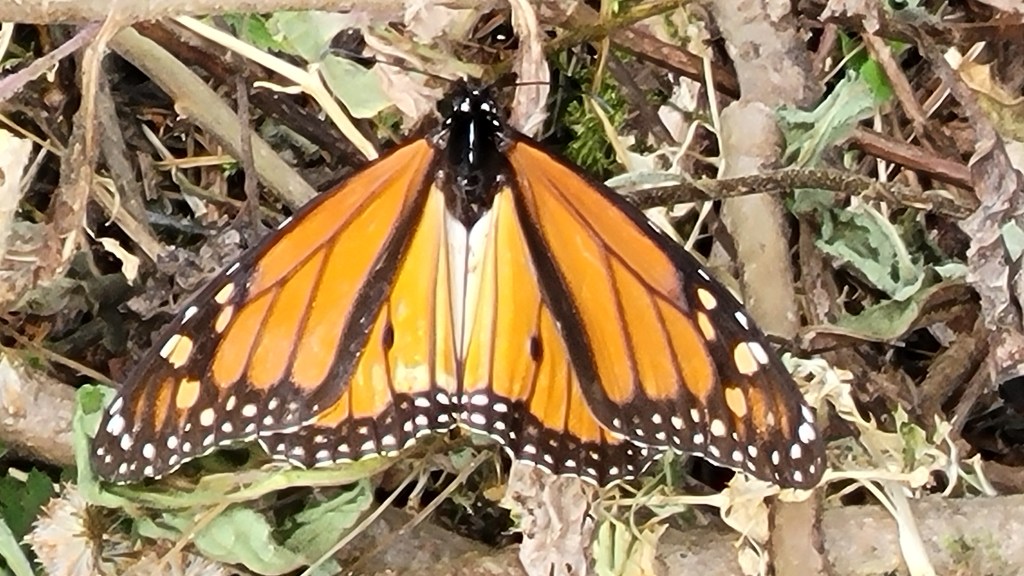
Their offspring will hatch and produce a 3-4 generation hopscotching north for 3-4 months. The generation born in Canada will live 8-9 months and fly the whole distance south.
Back to Morelia for a couple of nights before jumping on a bus to Zihuatanejo.
 The Grape Escape
Hi Deb & Al.Totally incredib
LikeLike
Oh my— what are rich, intriguing, and beautiful contrast to the images and narrative we are all reading online. Thank you for sharing your journey with us. Please continue to stay aware and safe!
LikeLike
The news does tend to profit from headline grabbers. That said if we had been in PV or Guad smelling the smoke and watching busses and cars burn we would have been pretty skittish. We were nowhere near any of that fortunately.
LikeLike
very much enjoyed your narrative. Upon your return I’ve a few more secret hideaways to show you
LikeLike