
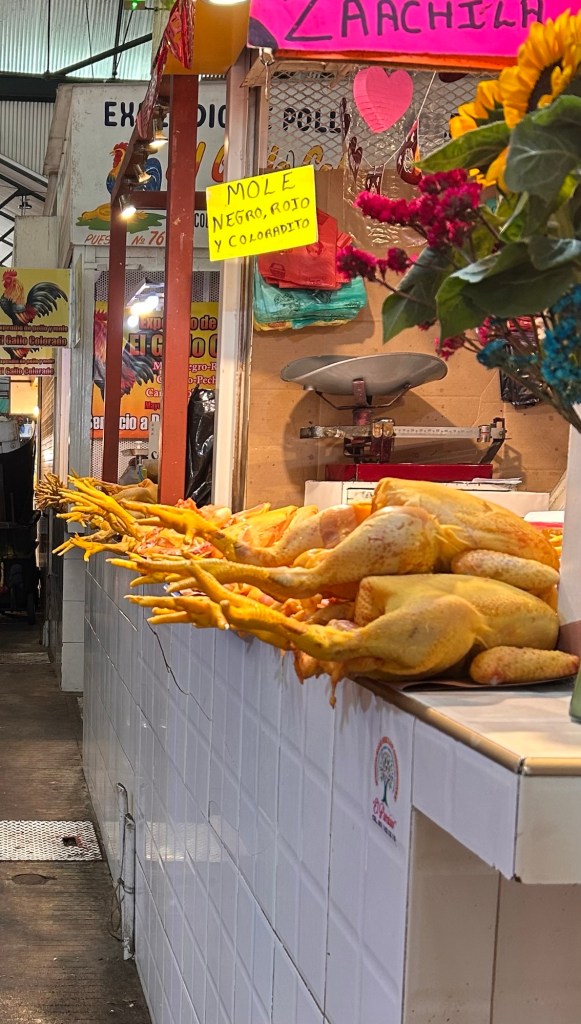
Zihuatanejo is perched on a small picturesque bay with two main beaches: Madera and La Ropa. This bustling fishing village boasts a significant “snowbird” population of Canadians and Americans. The centro area has been modeled into a walkable jumble of souvenir trinket shops, restaurants and bars divided by the Mercado Municipales and shops selling gorgeous produce, fresh caught fish and land based proteins ready to stew or grill. The clothing stores are a mixed bag of new and previously owned, and the pharmacies will sell you sunscreen, bug spray, digestive tract helpers and Viagra (all or none may or may not be on a shopping list) LOL. Our observations of seaside Mexico so far has been the contrasting stereotype of “beached snowbird flock” on the one hand to “Mexican locals” on the other hand. Comingling and symbiotic, both of these communities being codependent they mix and share the relaxed atmosphere. Sand beach waterfront and golf courses hold sway for the bleached snowbird sun-worshippers side. “Zihua” has a mix throughout the town and up the hills overlooking the ocean. Ixtapa was purpose built for tourism in the next bay just over the ridge of mountains. There is a trail between the wealthier side (Ixtapa) and the less so, but no short, direct easy road due to precipitously steep cliffs. So staff need to take a long road around to get to work or use the rugged trail. Ugh. That said there are some surrounding villages that workers commute from for work. Just a hot 30 min jaunt in a crowded combi bus.
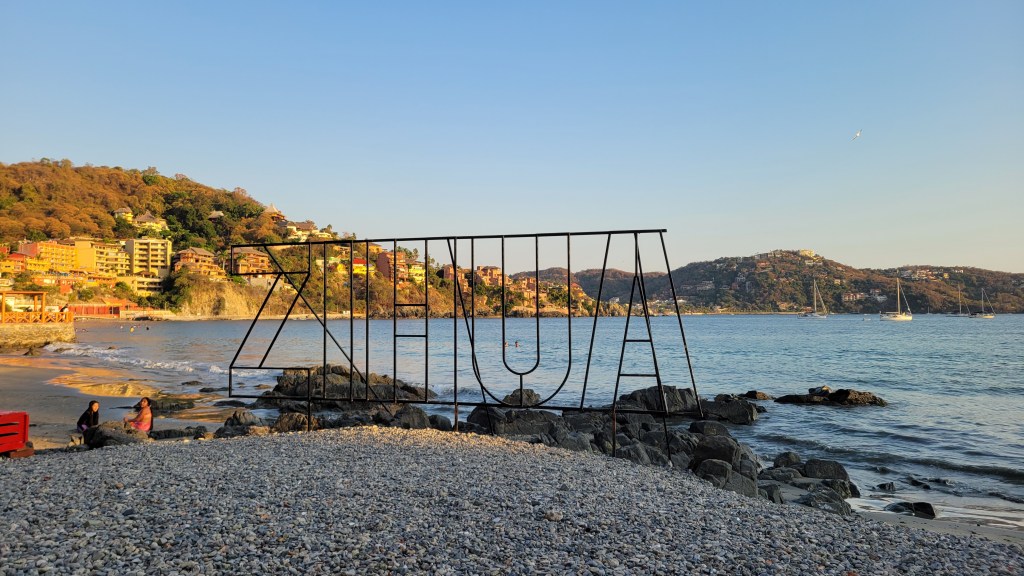
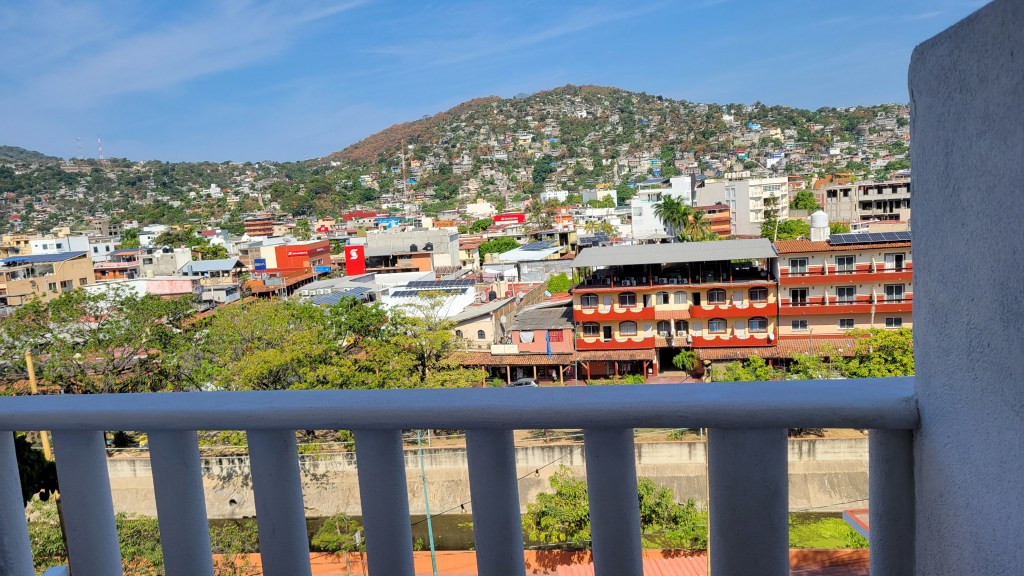
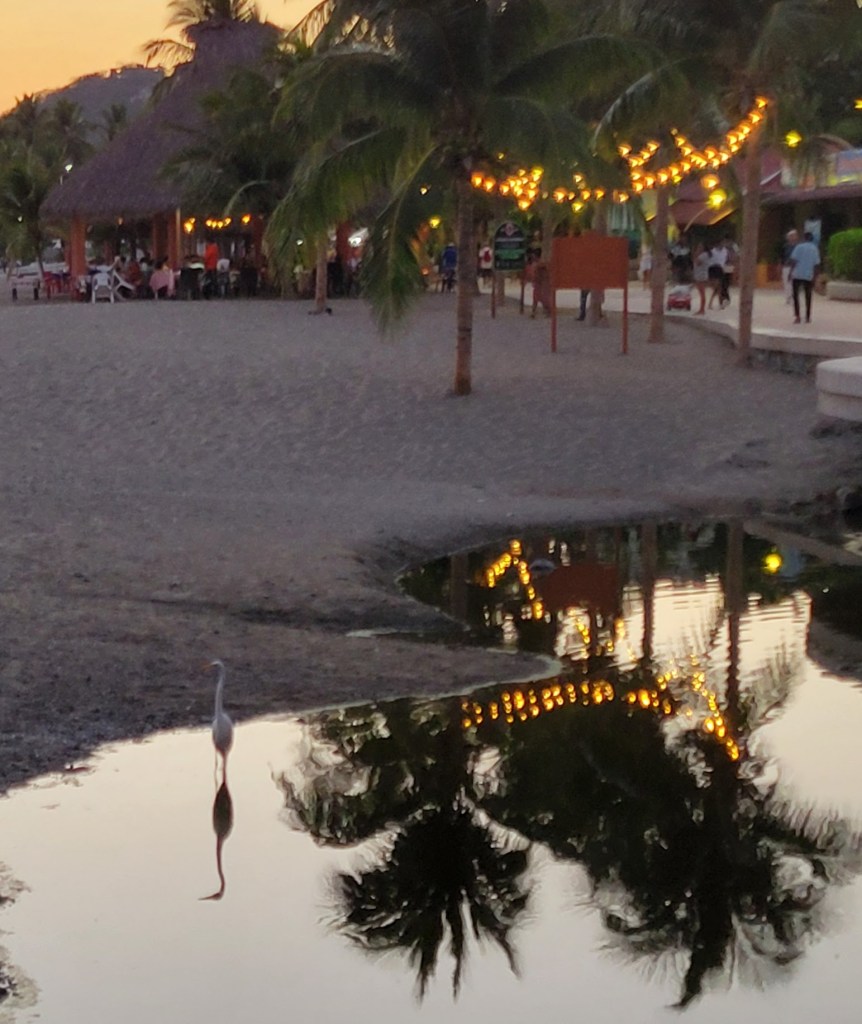
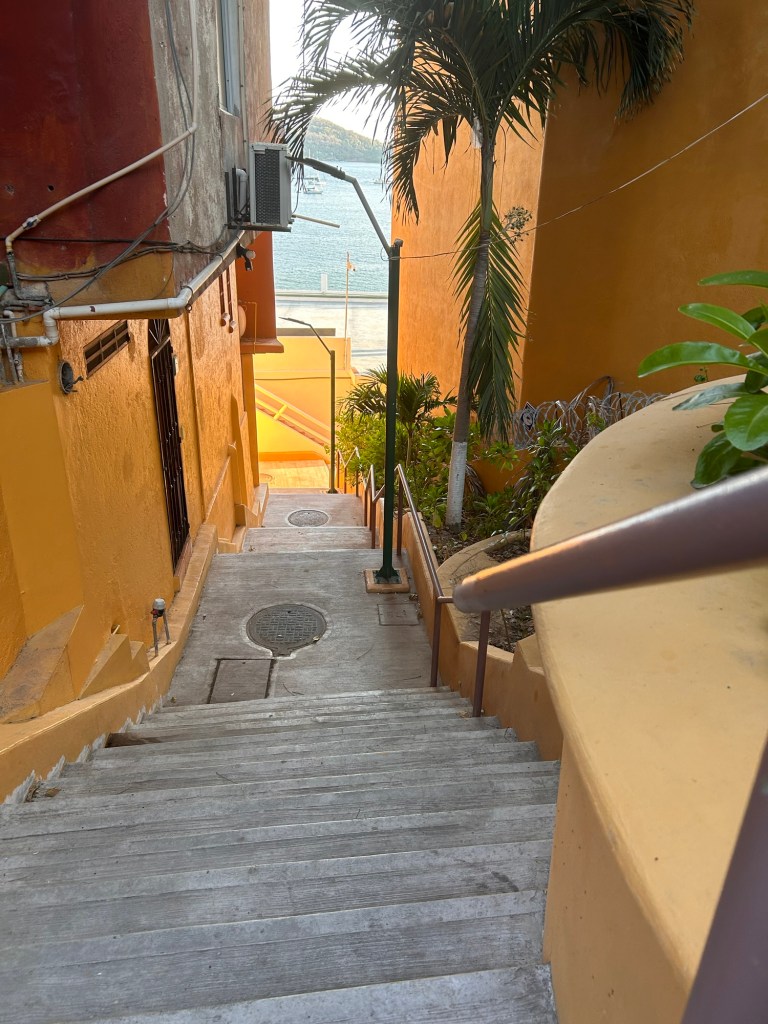
Our first impression was less positive than we had hoped but sometimes first impressions need time to be put into a wider perspective. We were initially disappointed that our apartment wasn’t facing the beach but within a day or two we welcomed the fact that after walking for hours in the 30 degree heat our shade facing and town view digs was cool and comfortable in the late afternoon. Our room, accessible to the sandy beach, by 100 steps, was conveniently located above Madera Beach with numerous other accommodations clinging to the cliff. A scenic Malecón ties the sand beach on one end to the marina on the other. Perfect for sunset strolls.
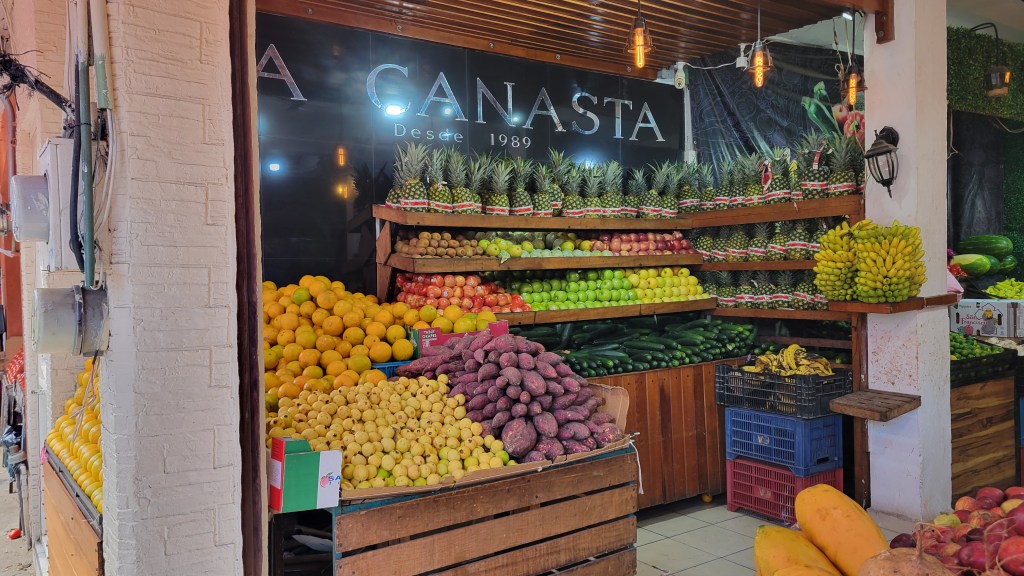
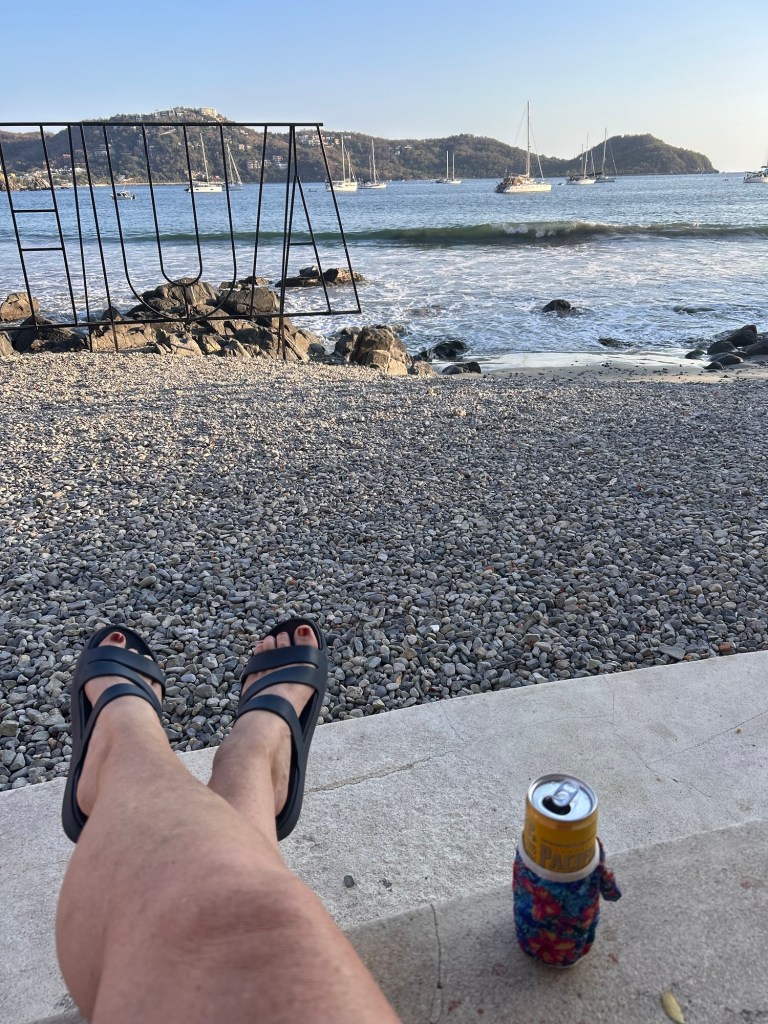
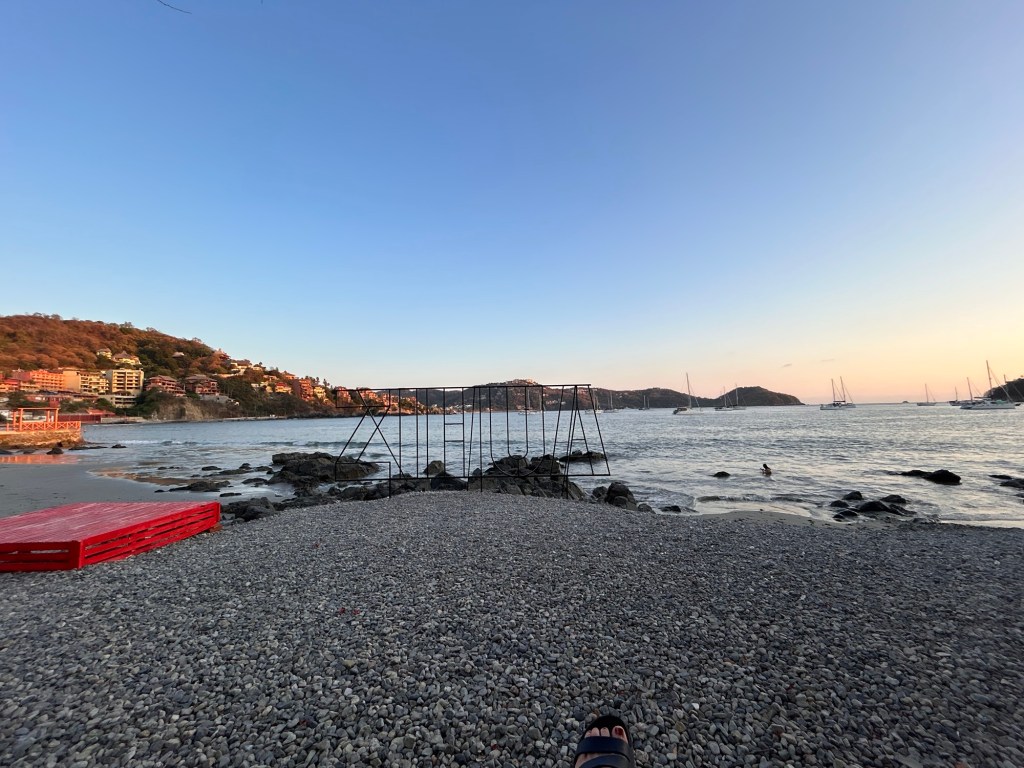
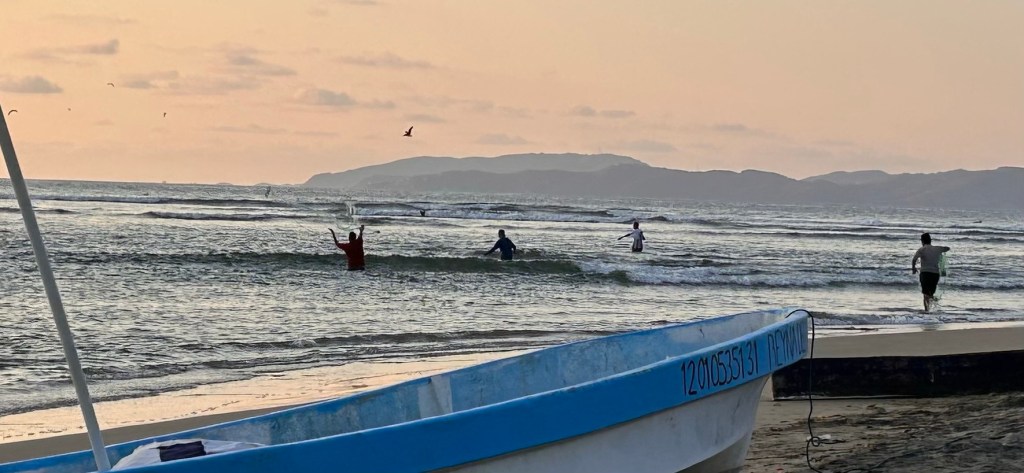
On day one we bought a few provisions for our fridge-only room (water, milk for coffee, beer, limes) and headed for dinner nearby. Expensive touristo friendly but relatively disappointing food patronized by white haired white folks (our crowd in reality) eating in the restaurants, mostly English speaking, and a few who exercised their privilege in loud comments were dropping us into a discomfort that we didn’t want to be associated with. The next morning we walked into town and started to see the magic of the area. We decided to walk to the big Soriana store, a large chain catering to expats with everything; food, clothing, booze, washing machines, electronics and motorcycles. We got our breakfasts organized and headed back along the multiuse paved trail-way beside the canal that drains the low areas during the rainy season. Next we took the main road to the centro Mercado for fruit and we met the magic. Walking in an inland direction the main road cuts the restaurant and marina area on our left away from the small vendors and taquerias to the right. All was visible from our balcony facing the pool and the mountains but invisible until we were in it. The right side was Mexican territory. The left was touristos being fed and hydrated on beer, margaritas and smoothies. Over time our one-fridge home cooked menu grew from yogurt and granola to marisco ceviche tostadas, pollo asado (grilled chicken take out) with gorgeous spinach, and tasty tomato, queso fresco, cucumber, mint and lime salad. Our daily happy hours were spent at the foot of the stairs watching fishermen cast lines from the malecón railing. Joyful Mexican families swam in the mellow crests of surf with their laughing children, many of whom, also enjoyed a picnic on the beach enchanted by another perfect orange sunset.
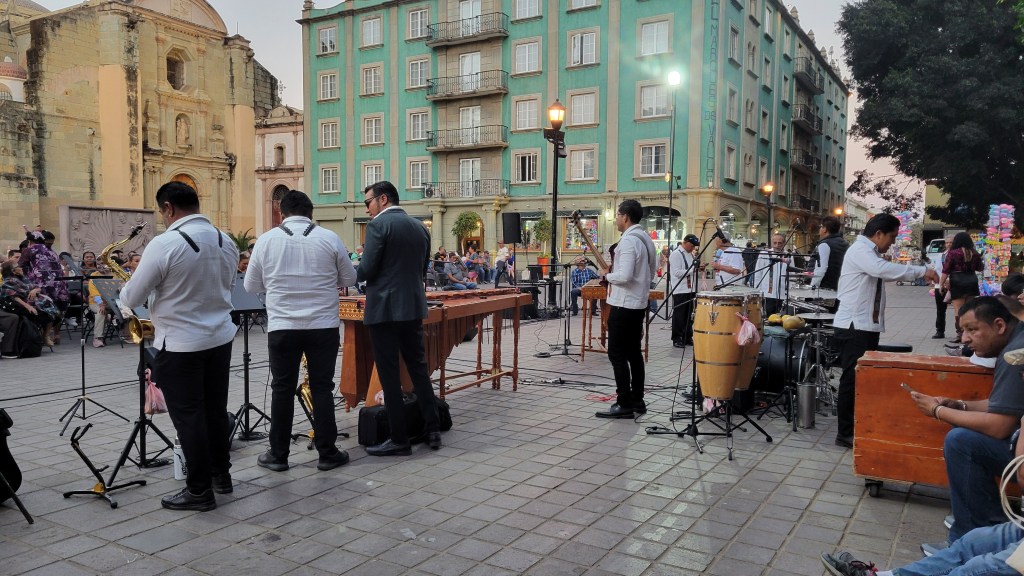
One evening we walked towards the marina and a band was playing folk songs while all ages danced, sang, tapped and clapped to the familiar lyrics and choreography that described the story. Vendors sold artisan goods behind the crowd.
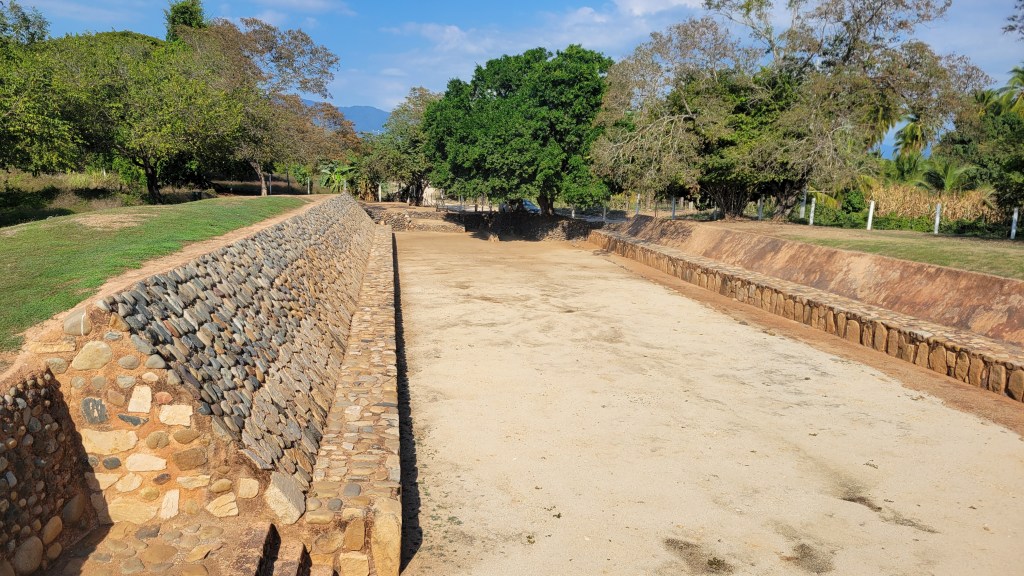
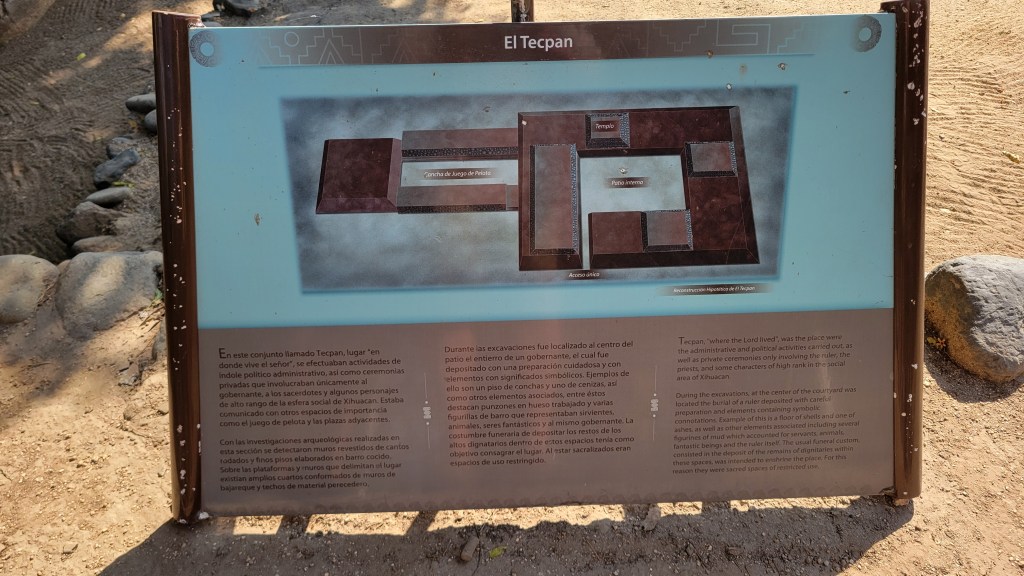
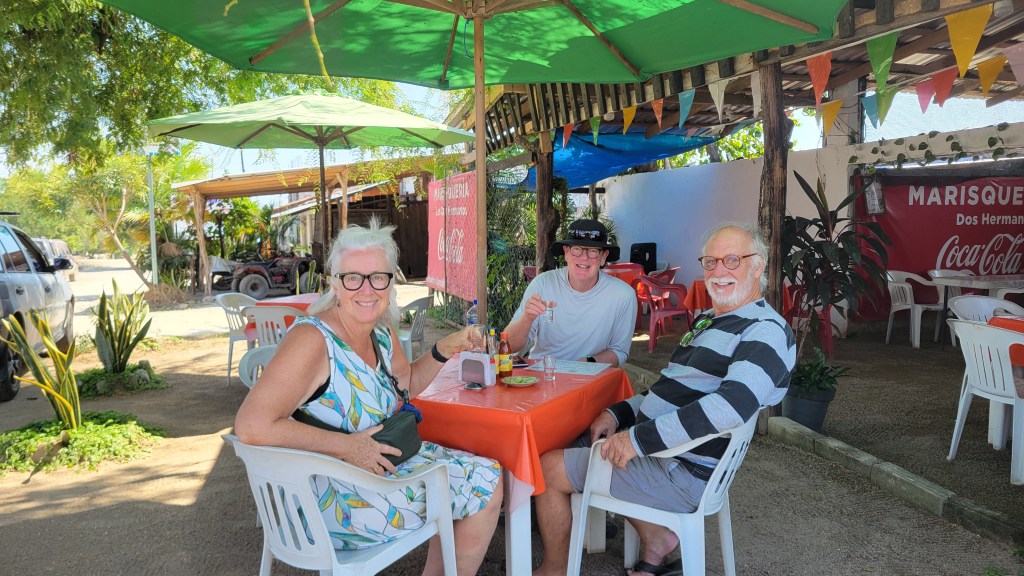
We visited with Albert’s high school buddy, Russell, who lives at La Ropa beach. La Ropa beach has multiple resorts, boats towing parasailors between waves packed with swimmers and multiple music systems blaring oompah and mariachi! Russel had mentioned a few local attractions that would take us out of town so we took him up on the offer of showing us around. We jumped in Russel’s car and had a day of exploring inland at the foot of the Sierra Madre. We visited an ancient, rustic, ruin near the village of La Soledad de Maciel called Xihuacan. The area has likely been inhabited for approximately 3000 years dating back to occupation by many cultures such as the Olmec. The Mesoamerican stick ball game playing court was free to see beside the road but our arrival must have set off the grape vine because shortly after arriving we were greeted by two separate locals wanting to escort us around the fenced in ruins for as much as 200 pesos pp. We declined as our plans to see other more elaborate sites in the coming days was an expense, we knew, would likely be pricier. We snapped a couple pics of the local attraction and moved on in search of lunch.
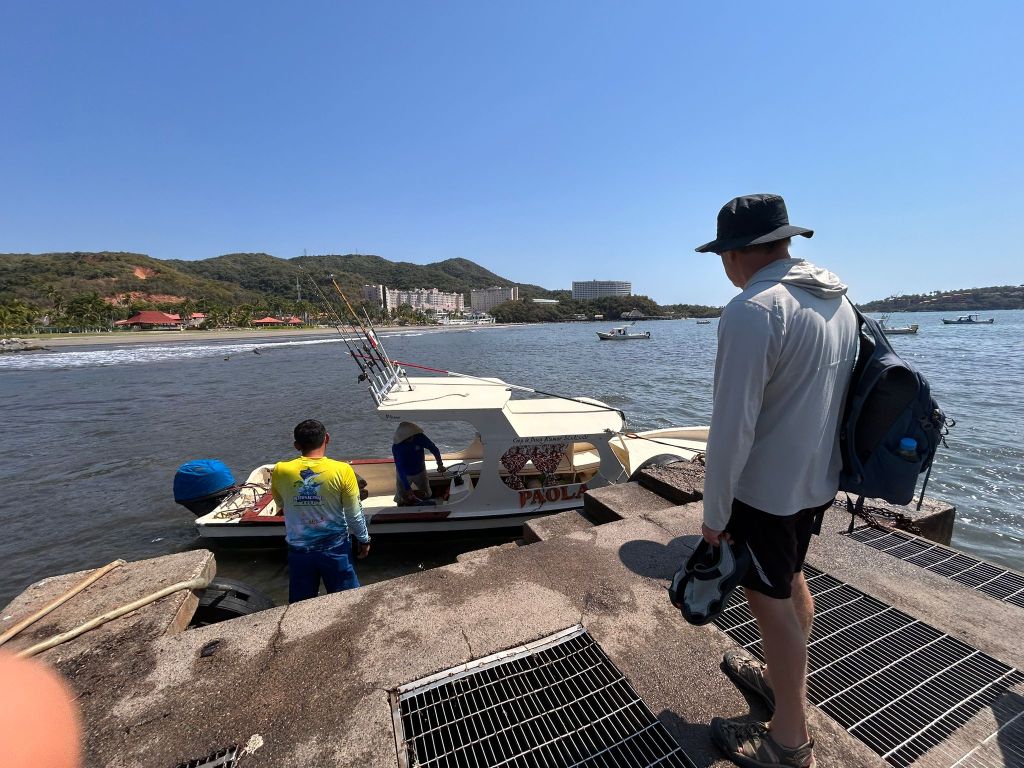
On another day we jumped on a boat to an island off Ixtapa and went snorkeling. Magical day with cold beverages and fresh fish for lunch then swimming the coral reef within a school of tropical fish.
The baño change room was less than great as there was nowhere for me (Deb) to put my dry clothes on except the back of the toilet. When we left the island on the last shuttle of the day I realized my phone had been left on the back of that toilet at least an hour before. Russel said it was gone because in Mexico the opportunity of receiving a free phone is a gift from God. We paid the hesitant boat captain to take us back to the restaurant. My stress level was way up as I, like many, have EVERYTHING on my phone. Plane tickets, hotel bookings, credit cards, all of it, and the thought of cancelling cards, finding all the booking information was taking me to that dark expensive place of imperfection. But alas, someone turned it in!!! The restaurant staff were loading into their boat and brought it to us. Crisis averted. Back to “wow, what a day” mode.
We checked in on my phone for our flight to Oaxaca and loaded the boarding passes on my phone, contacted the accommodation to confirm time of arrival on my phone, and checked which apps between Uber and Didi were best in Oaxaca all while giving thanks to the unidentified individual who had turned in my phone.
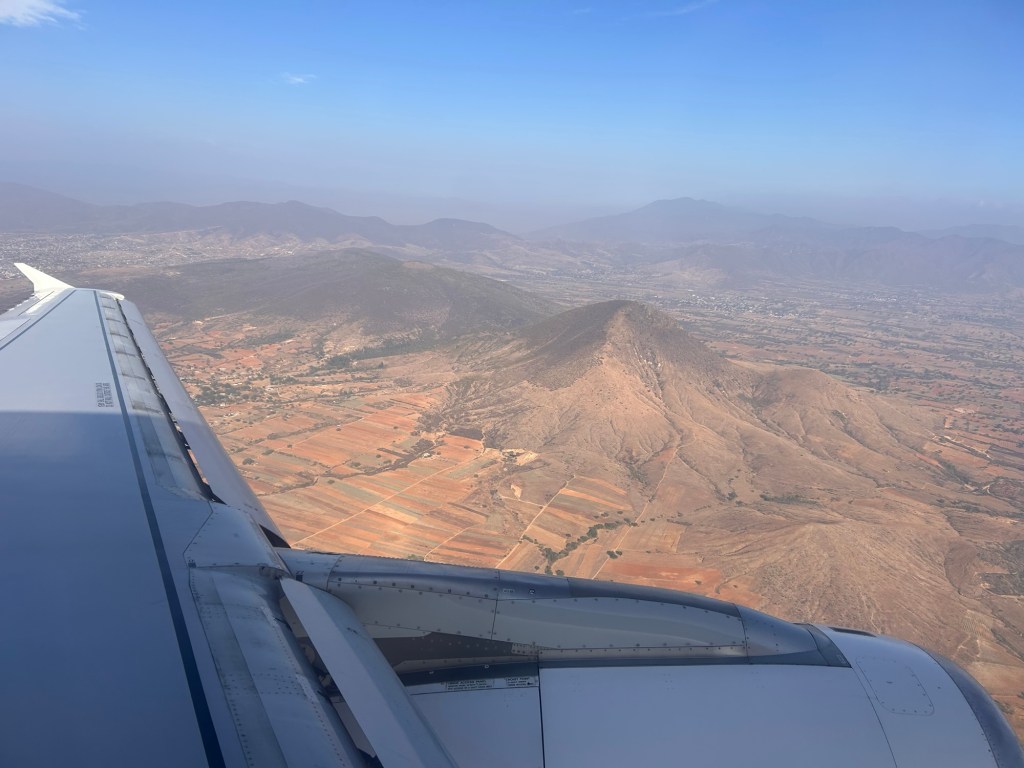
Oaxaca is recognized as a UNESCO Intangible Cultural Heritage location for its seven mole sauces, ancient ingredients like chapulines (grasshoppers), caterpillar/ worms known as meocuiles and cooking techniques. Known culinary distinctions include ancient ruins, mezcal, natural dyes and weaving. A big check mark was needed in our Mexico travels for this place.
We decided to stay in Oaxaca city for the entire duration rather than bouncing to the coast and its beach scenes. Although a visit to Puerto Escondido did get considerable debate, we decided to focus on local culture apposed to beach basking.
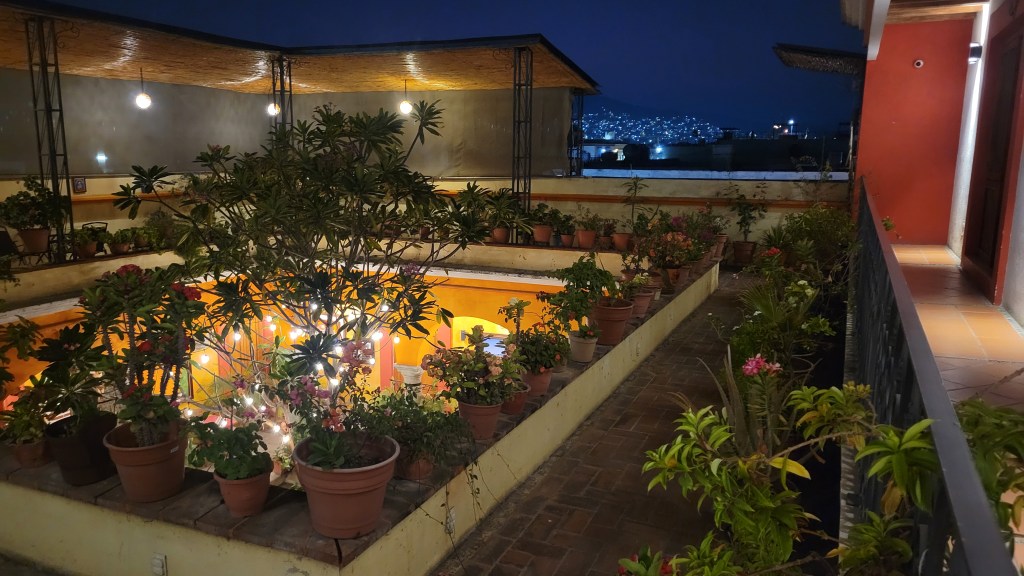
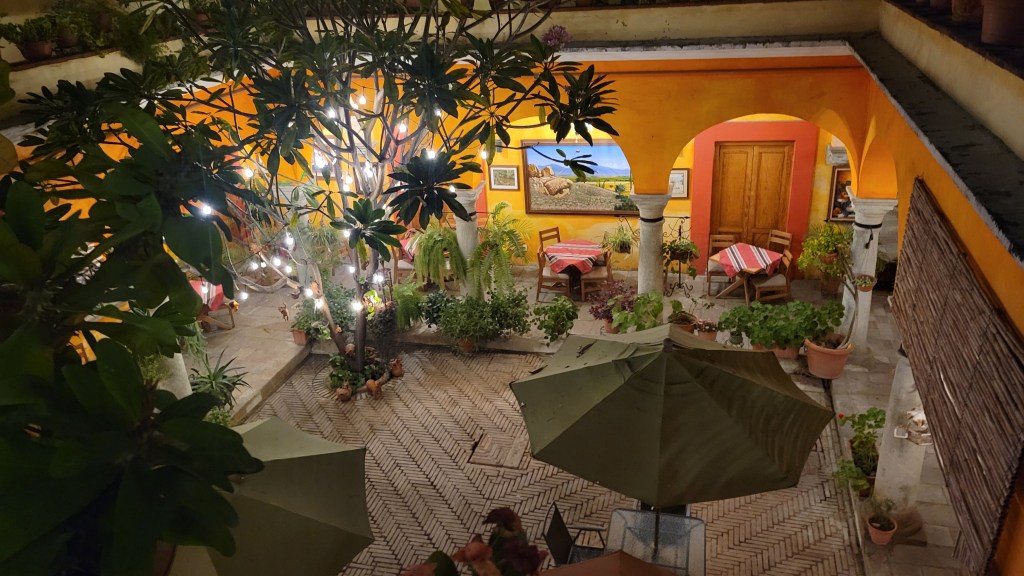
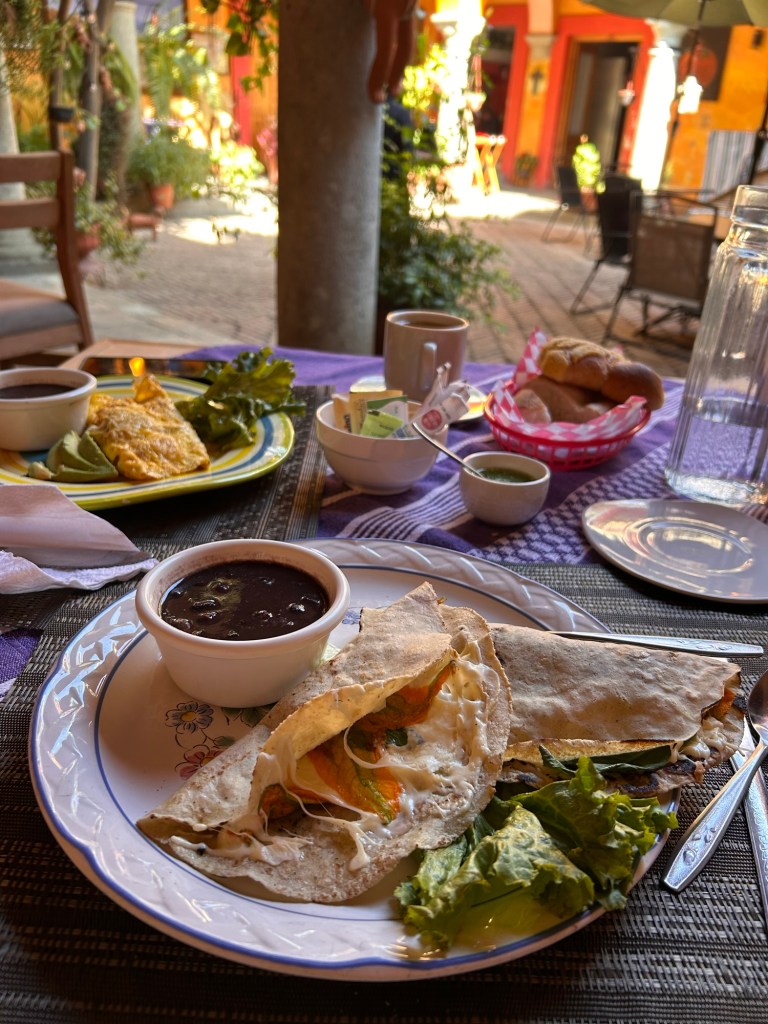
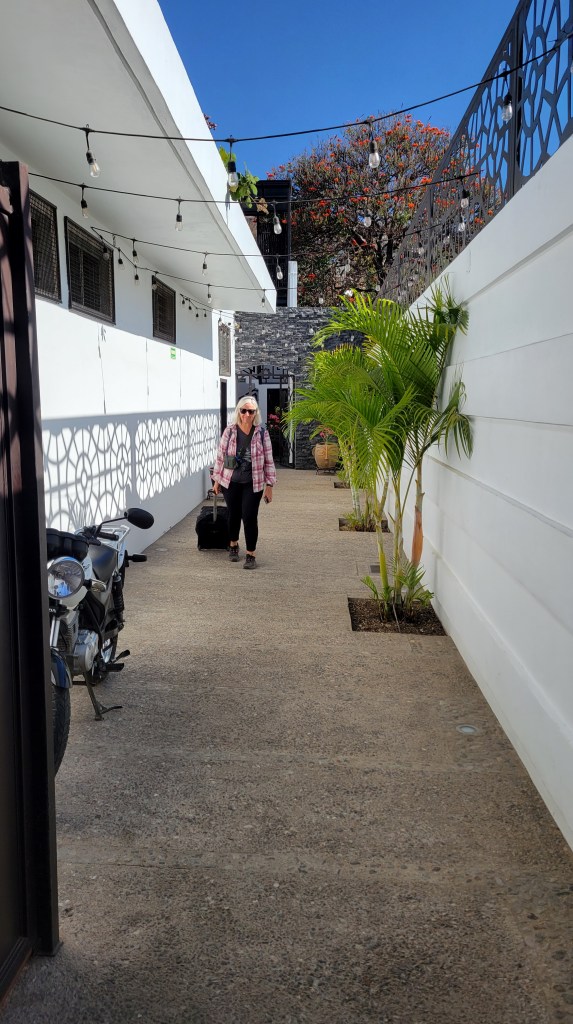
Our first 4 nights were in a quaint hotel with a central courtyard that served delicious and very affordable big breakfasts. This set us up for our full days of getting to know the place.
The next 5 nights were in a studio apartment with a kitchen. While the food is good, Mexican food is shy on fresh vegetables. Beans, corn, chiles, cheese and markets selling a wide variety of veg that never seems to arrive on a plate.
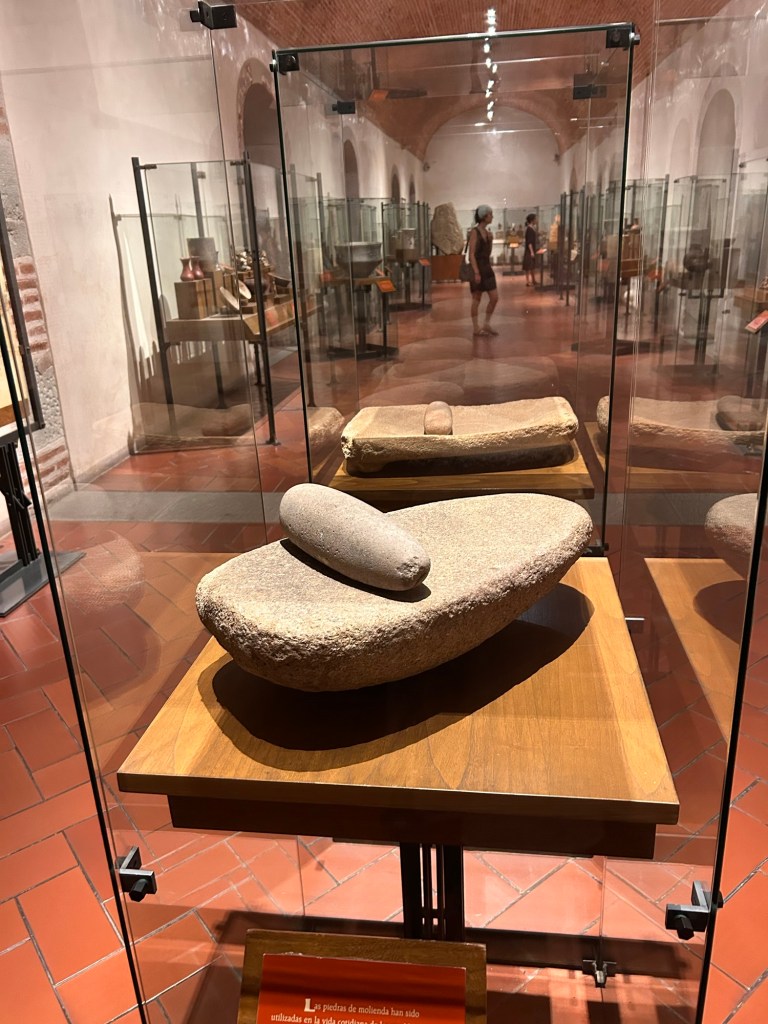
We signed up for a cooking class at a residence a half hour outside of the city. The class promised and delivered traditional methods of grinding the ingredients in molcajetes and metates. We cooked on a ceramic comal over a fire. We made salsas with dry chilis, fire roasted vegetables and green mole with local herbs. Local mezcals, chapulines, caterpillar larvae and 3 different masa mixtures – blue corn, white corn and cacao were transformed into part of our final meal.
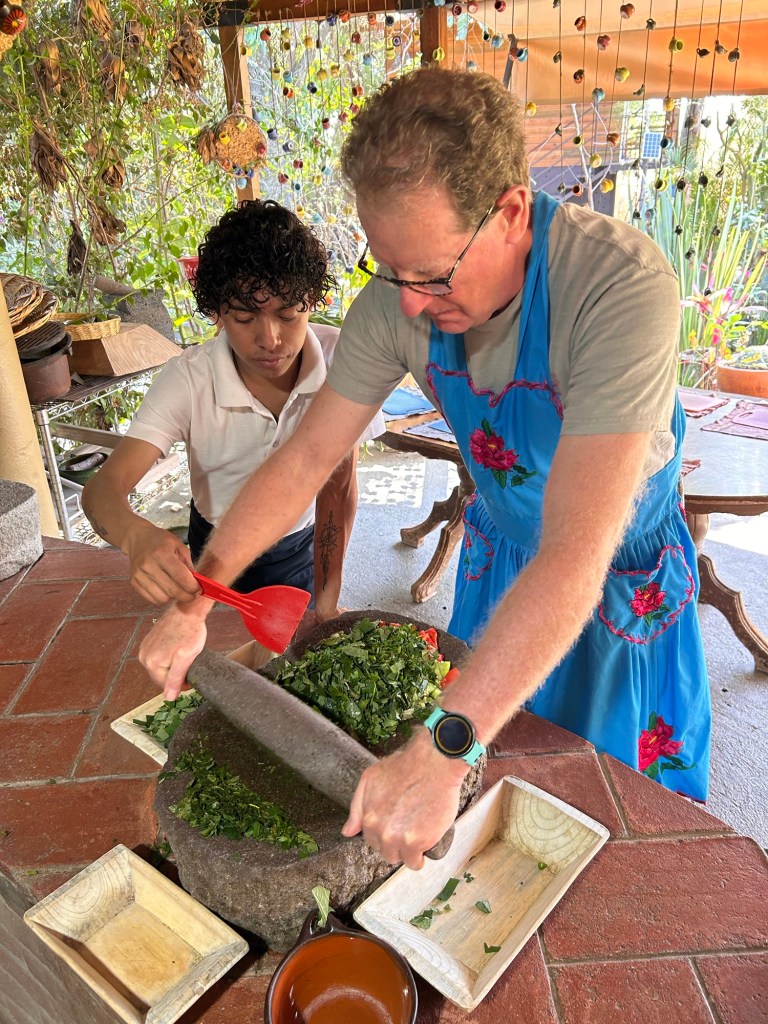
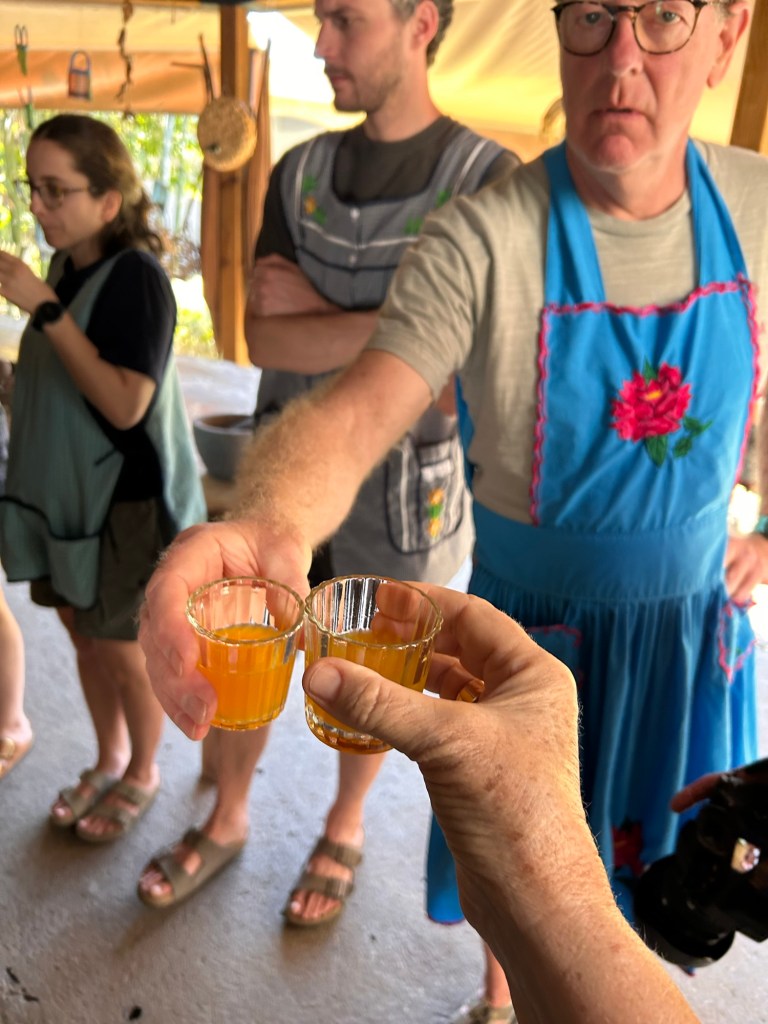
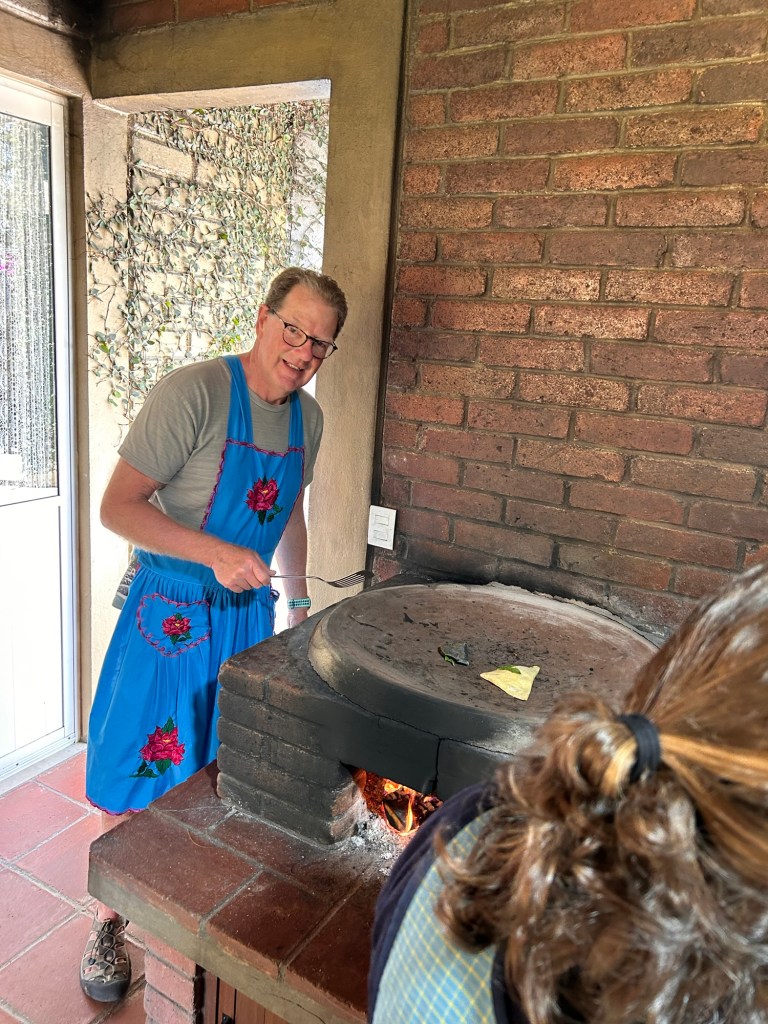
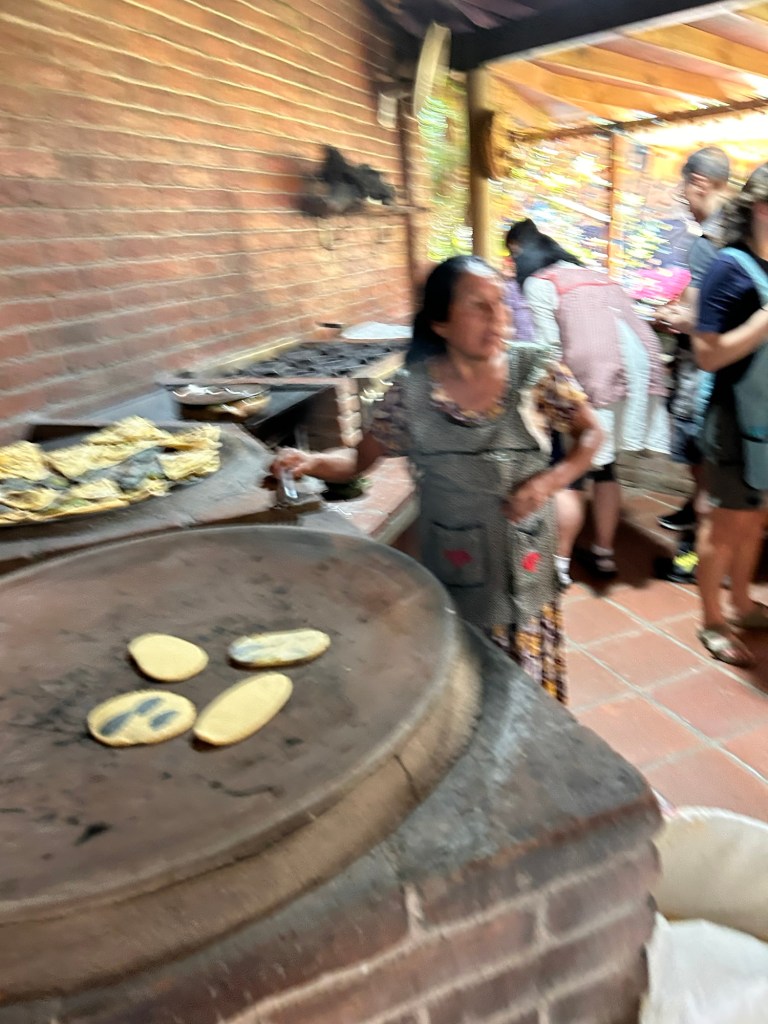
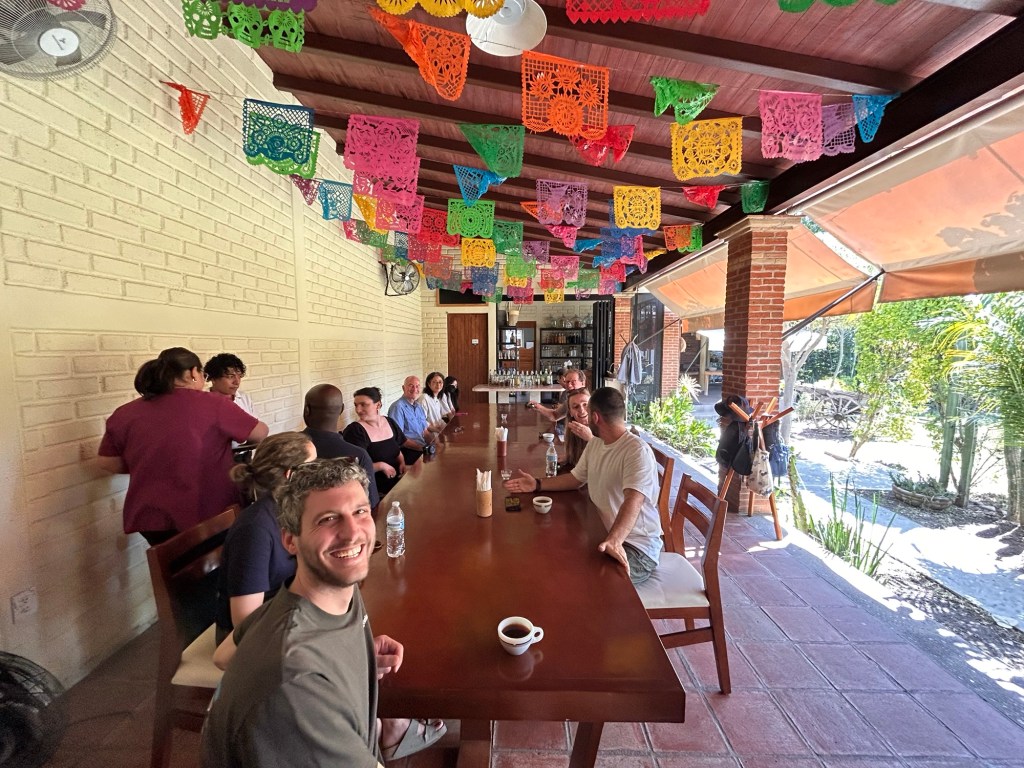
Mole negro, using cacao, nuts, seeds dry fruit and other ingredients, was premade and served with the explanation that its preparation takes over a week. Delicious and available freeze dried in many local mercado vendors and shops. We were enthusiastically booked and paid before you can say super-cala-fragilistic-expee-deliciocius (easy for you to say!).
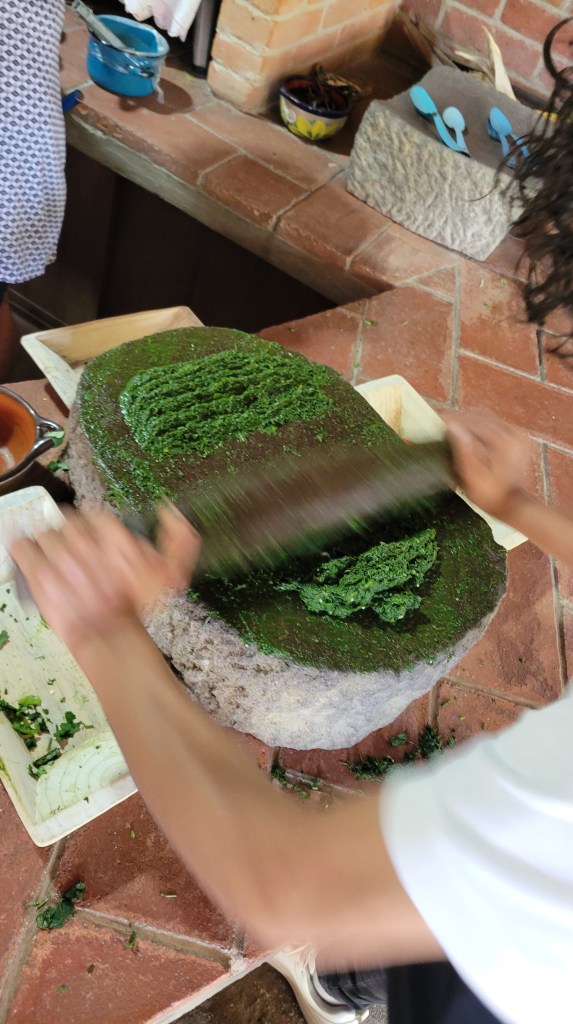
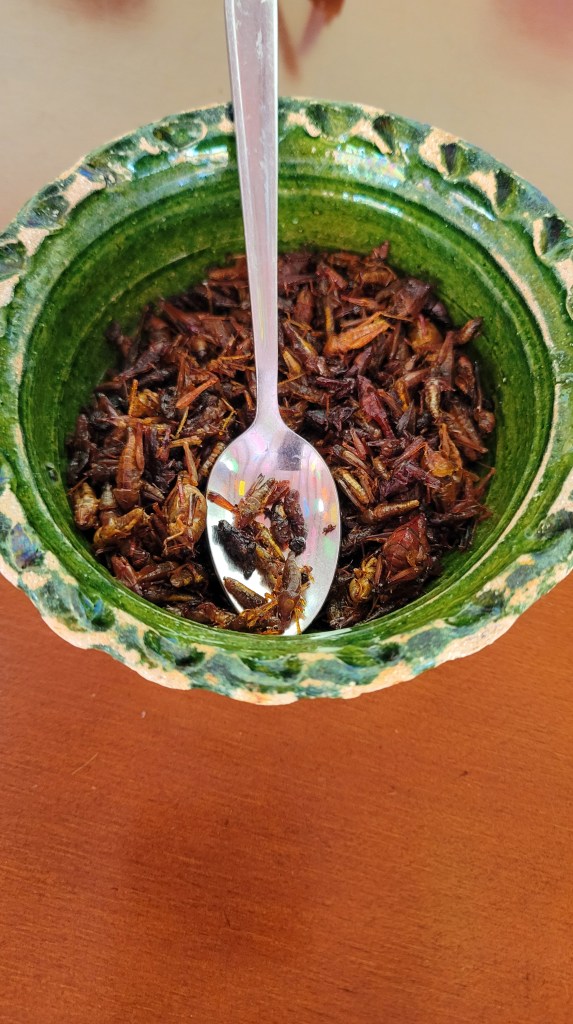
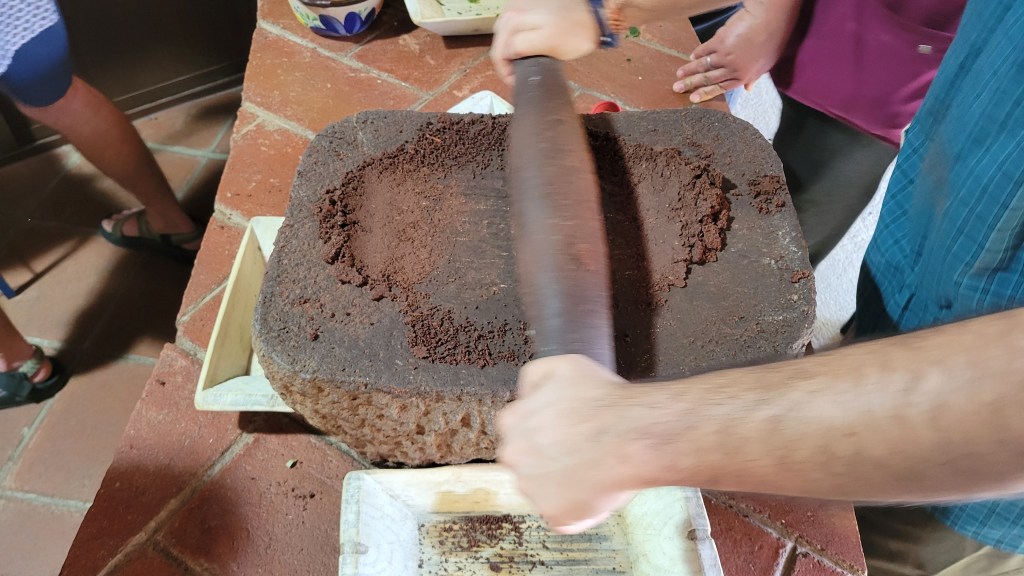
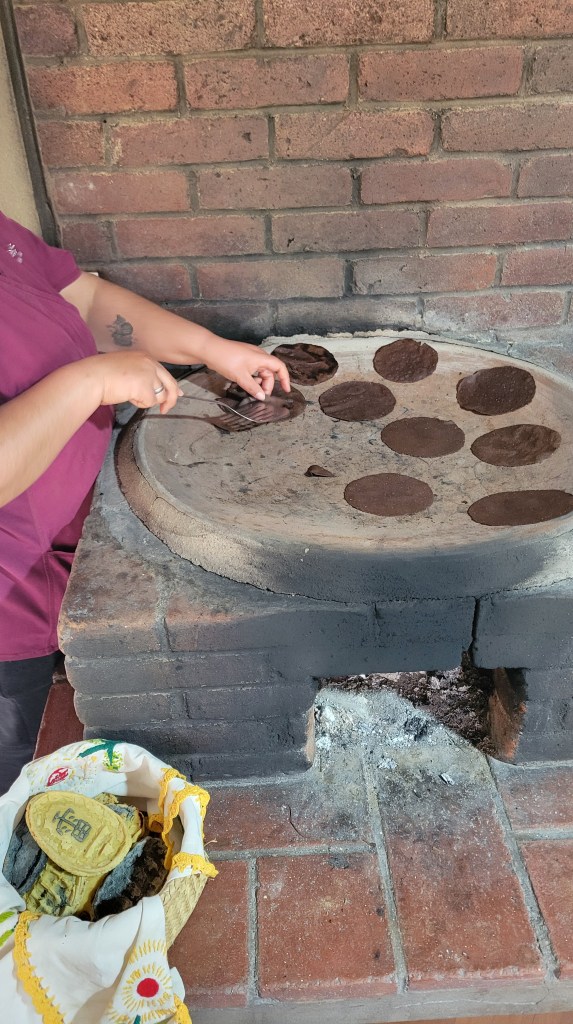
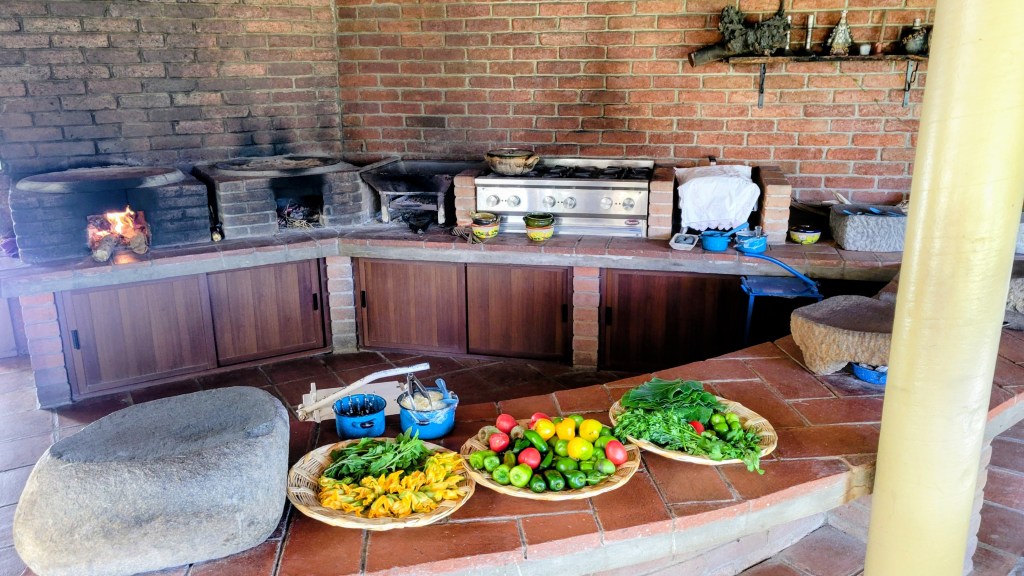
It was a super enjoyable day with the promise of recipes sent to our emails. We are still waiting for that detail. Fortunately, all is available online for when we revisit those techniques.
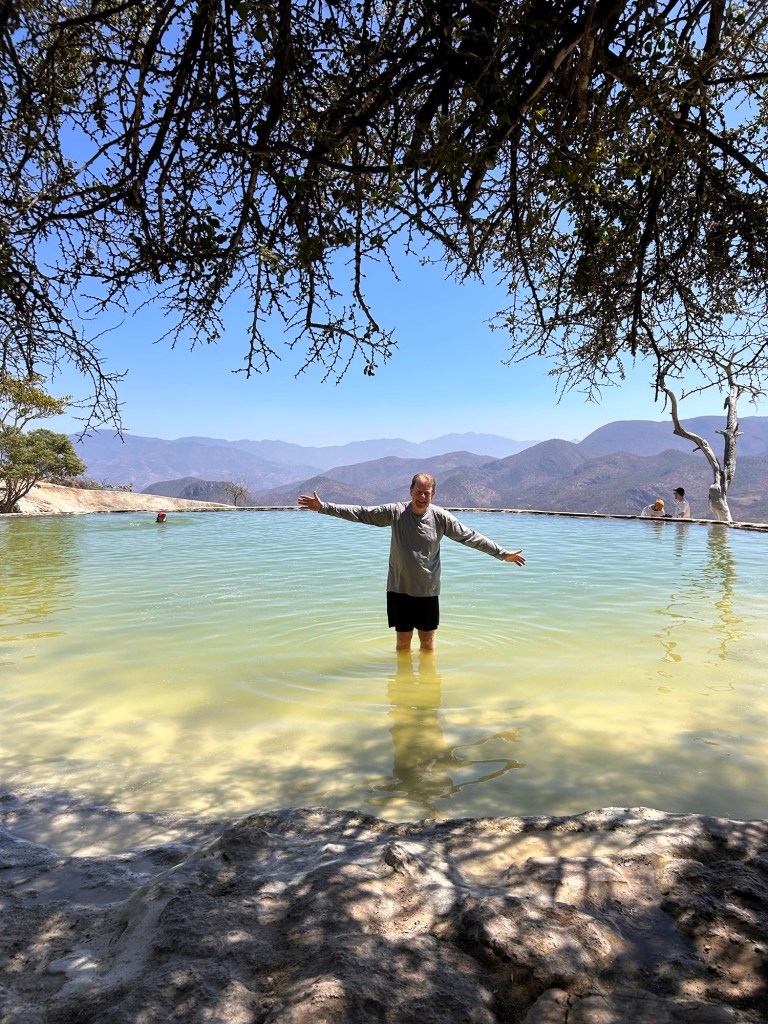
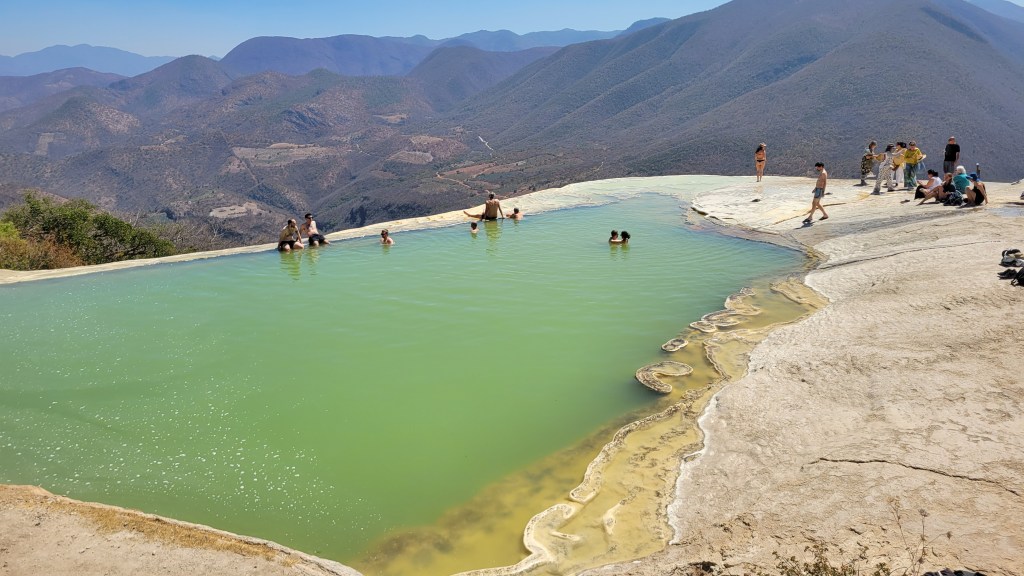
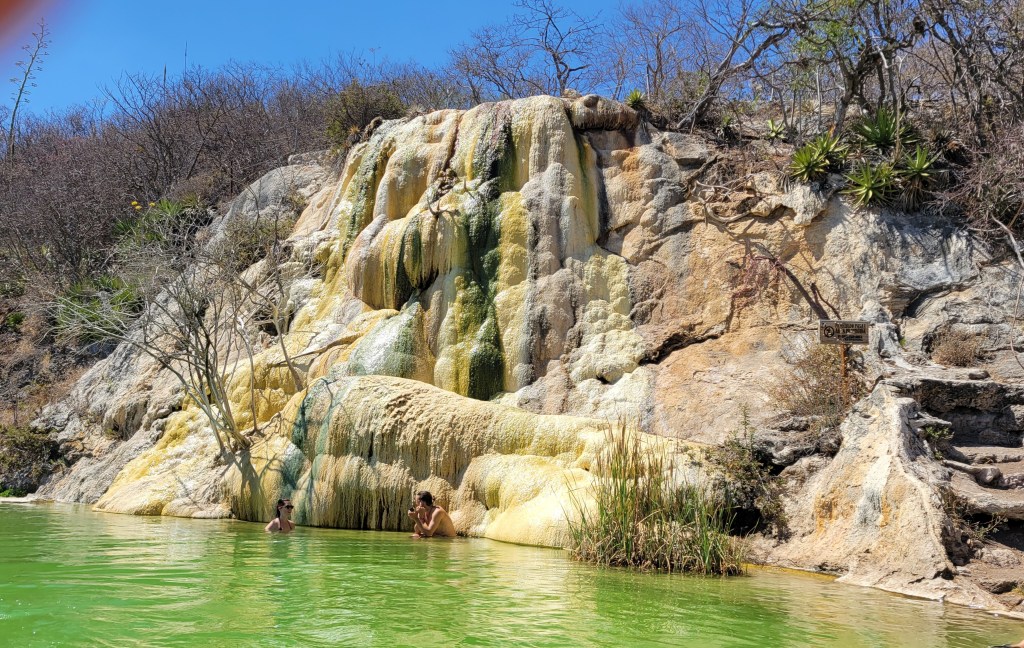
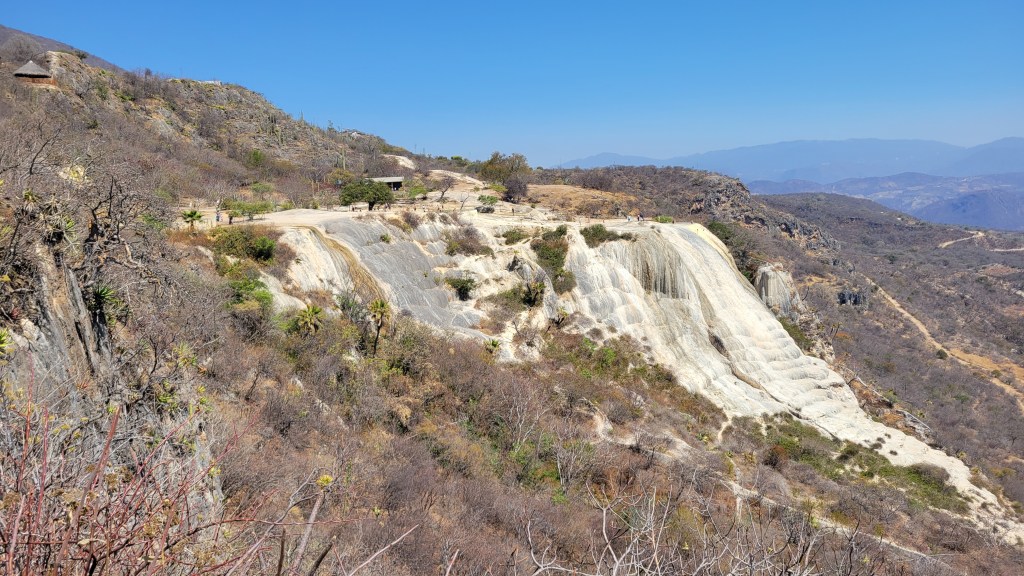
There was much to explore in the surrounding country-side so we looked into what was in the offing in that regard. A full day trip to the Hierve de Agua springs in the mountains gave us a view of the agave agricultural land with views of other types of agave that produces famous artisanal mezcals.
We passed yards with simple, covered stills, Alongside these were small horses and donkeys monotonously circling a grinding system to crush maguey agave into mash for roasting in the production of mezcal.
Our bus drove so fast we missed a good picture of this part of the modest, high mountain mezcal production.
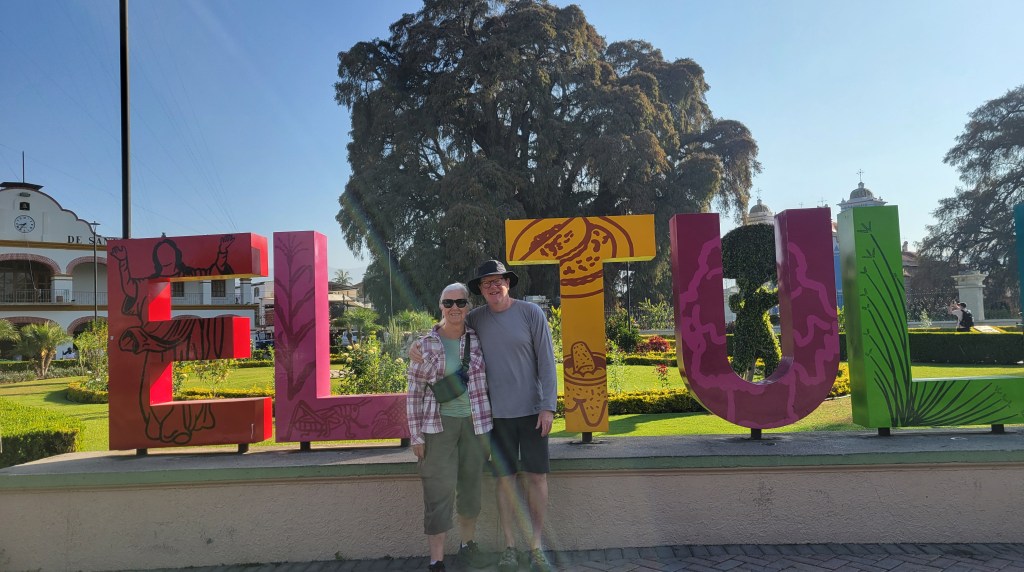
We stopped at the worlds widest cypress tree “El Tule”.
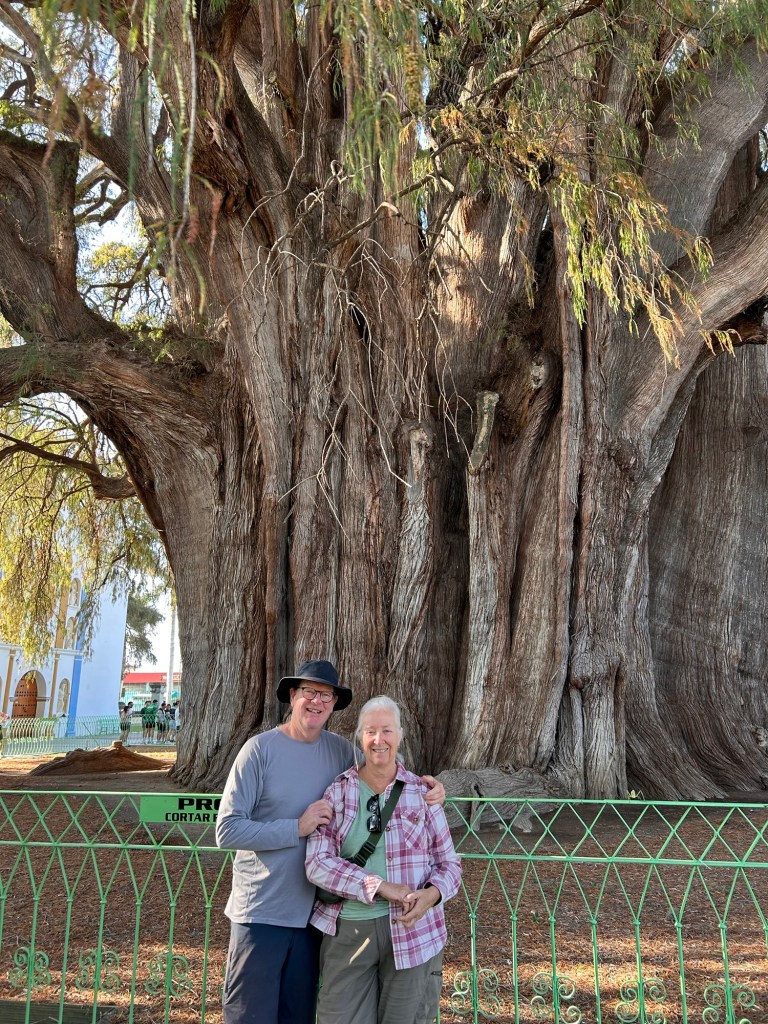
After approximately 2000 years this tree specimen has become 14 meters across and 42 meters tall. An impressive site and we have been awed by some big trees in our time ie. General Sherman from the California Sequoias fame.
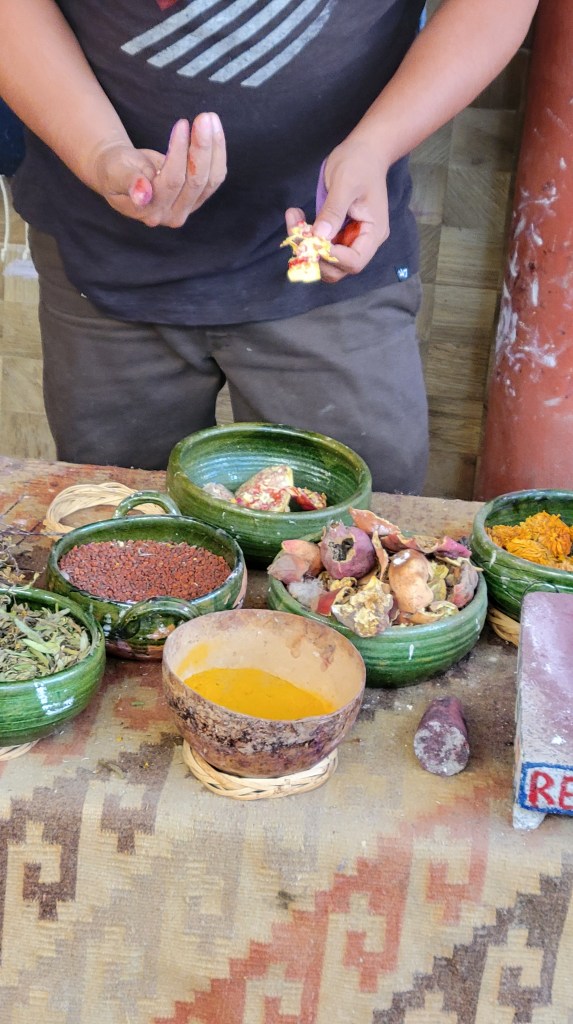
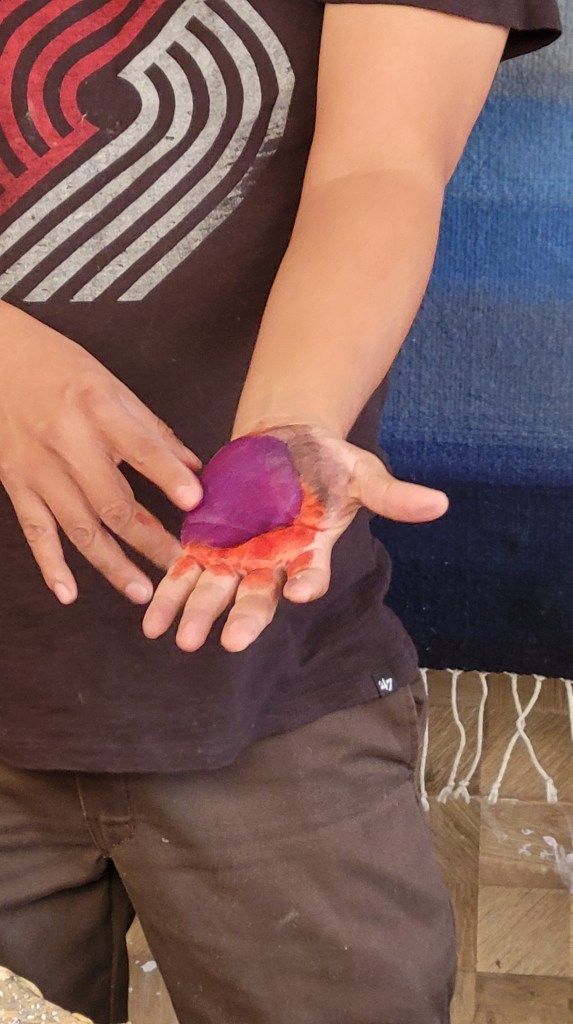
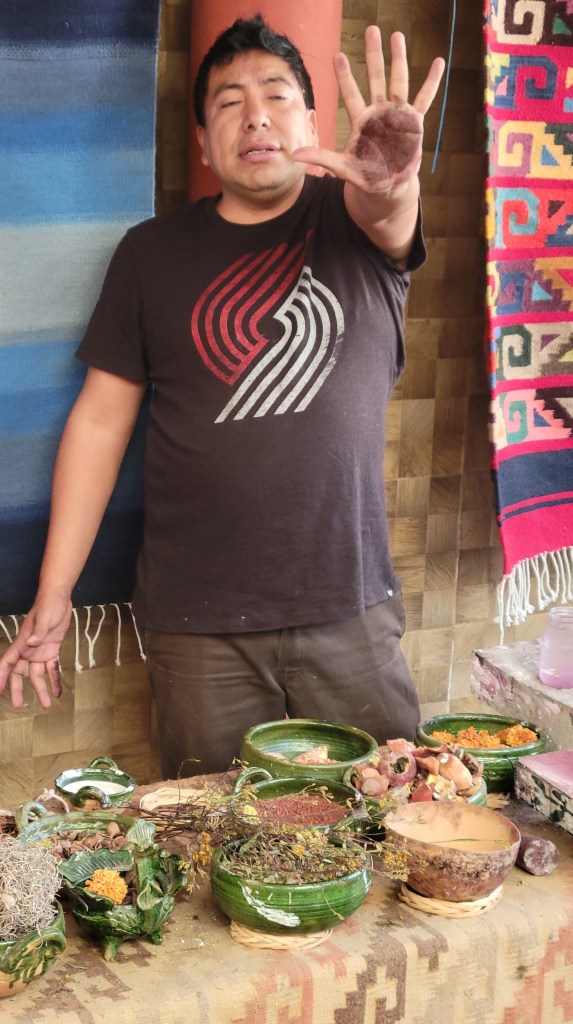
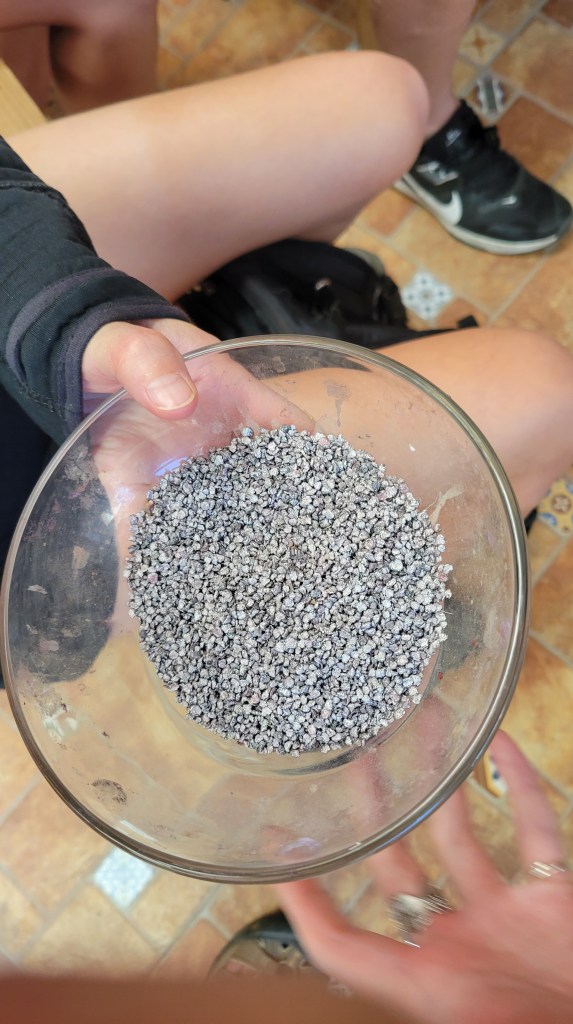
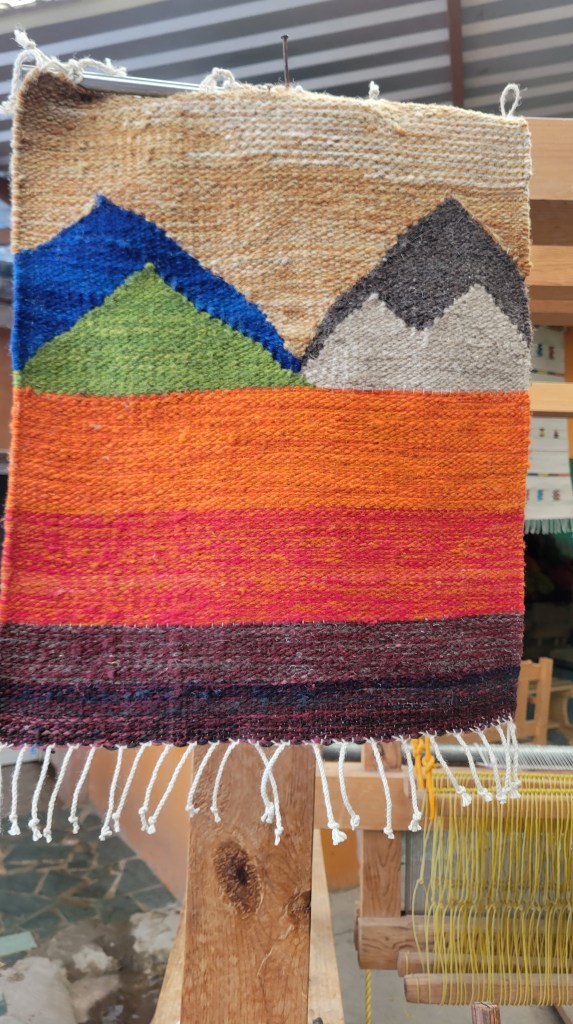
We stopped at an indigenous village for a weaving demonstration and the way to make red spectrum dyes from a worm found in the agave and blue/green/turquoise dyes from pomegranate.
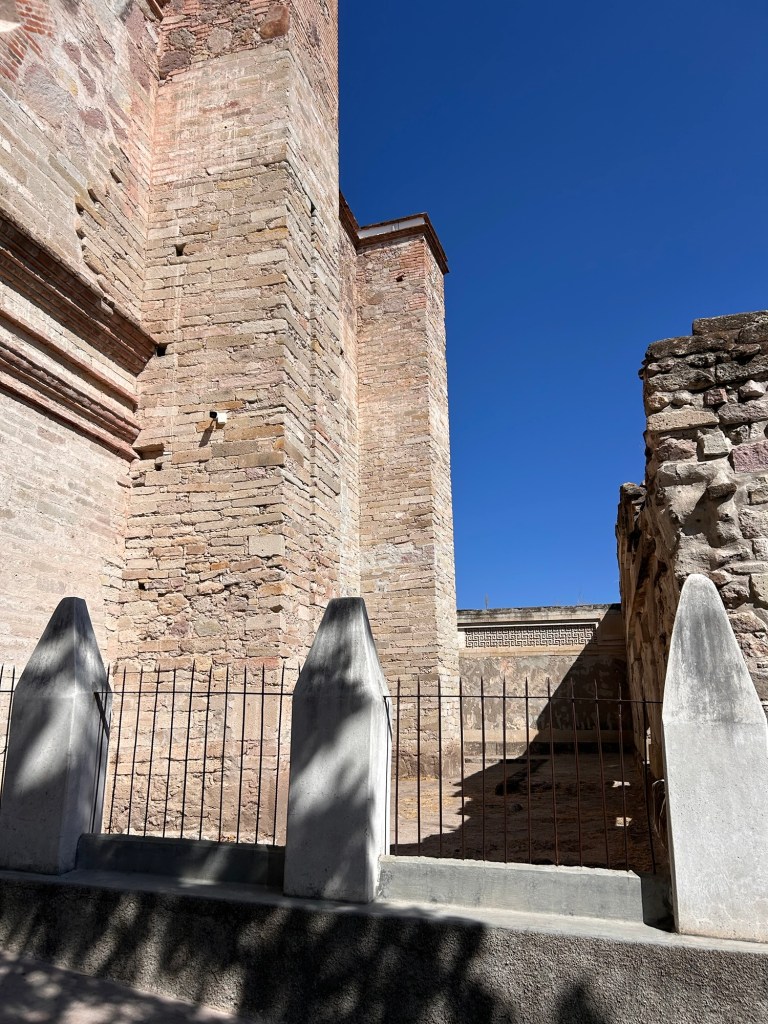
A stop in Mitla expanded our knowledge of the timeline between Indigenous Olmetec, Zapotec, Aztec, Mayan and Spanish conquests. Teotihuacan in Mexico City, Monte Alban beside Oaxaca city, pyramids in Puebla and throughout mesoamerica included Mitla in its significance. As a thriving Zapotec community it was chosen as a destination to bury elites, priests and rulers giving them a subway gate to the afterlife.
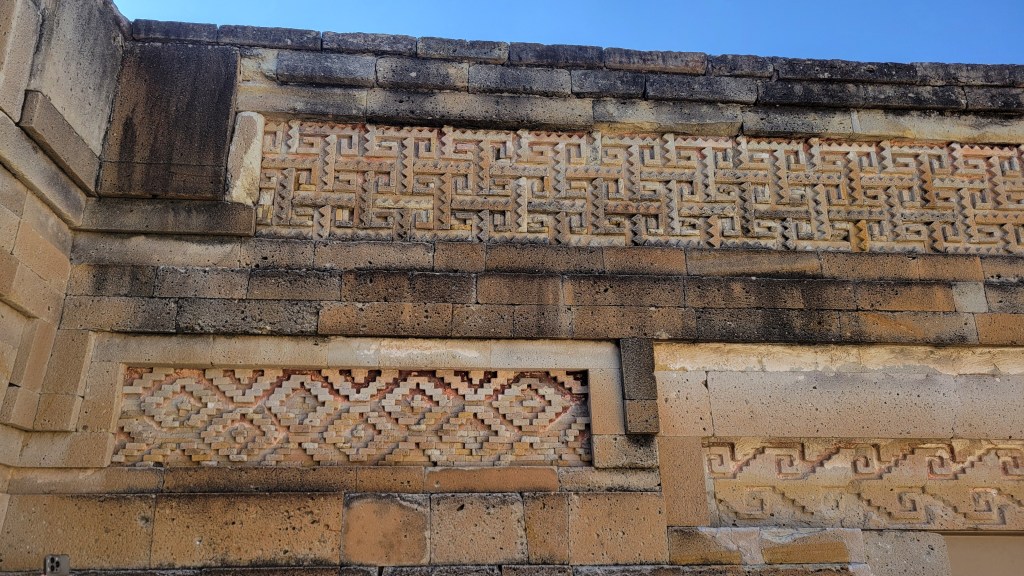
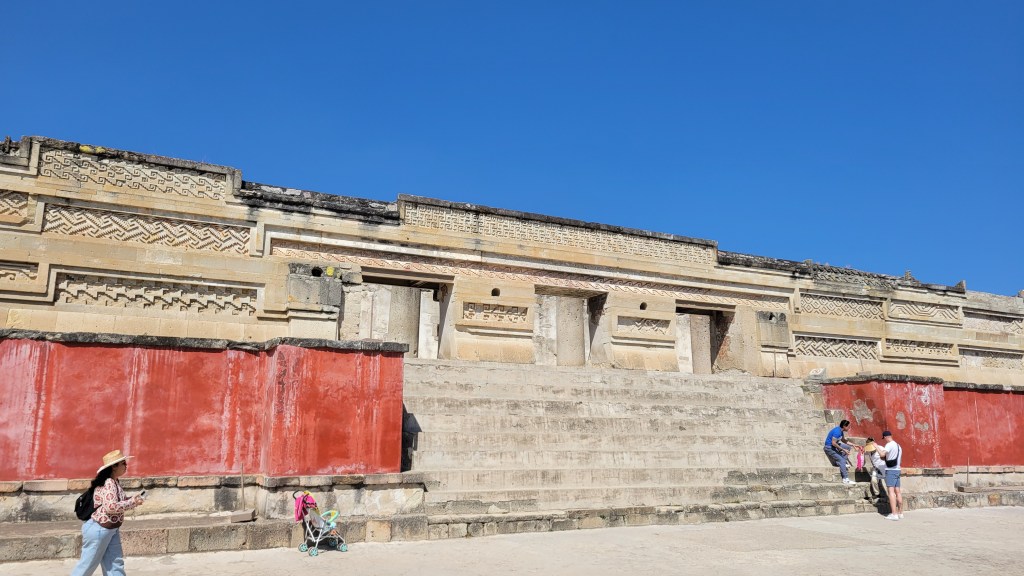
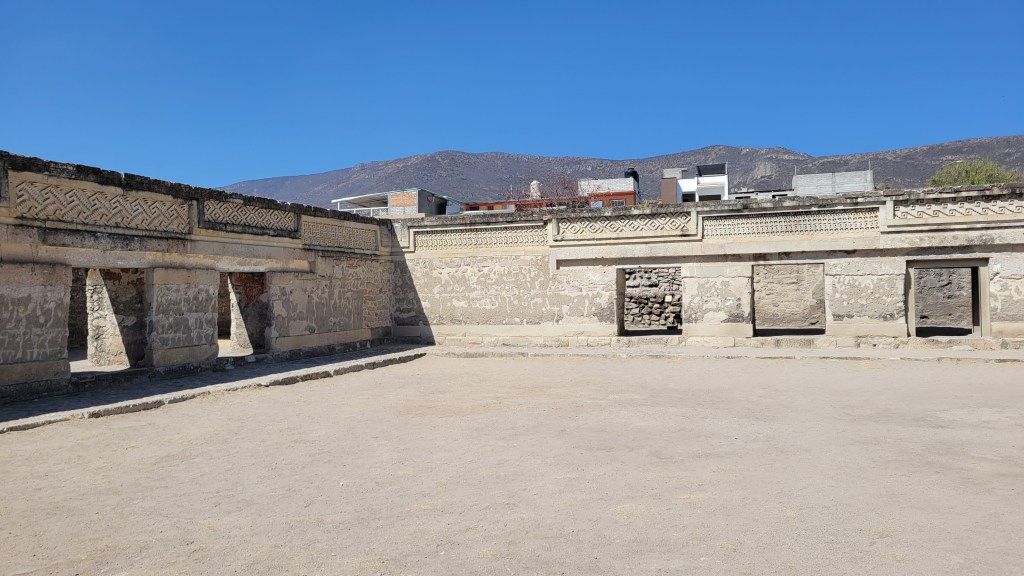
The palace was geometrically built of stones without mortar using its architecture to prevent seismic collapse.
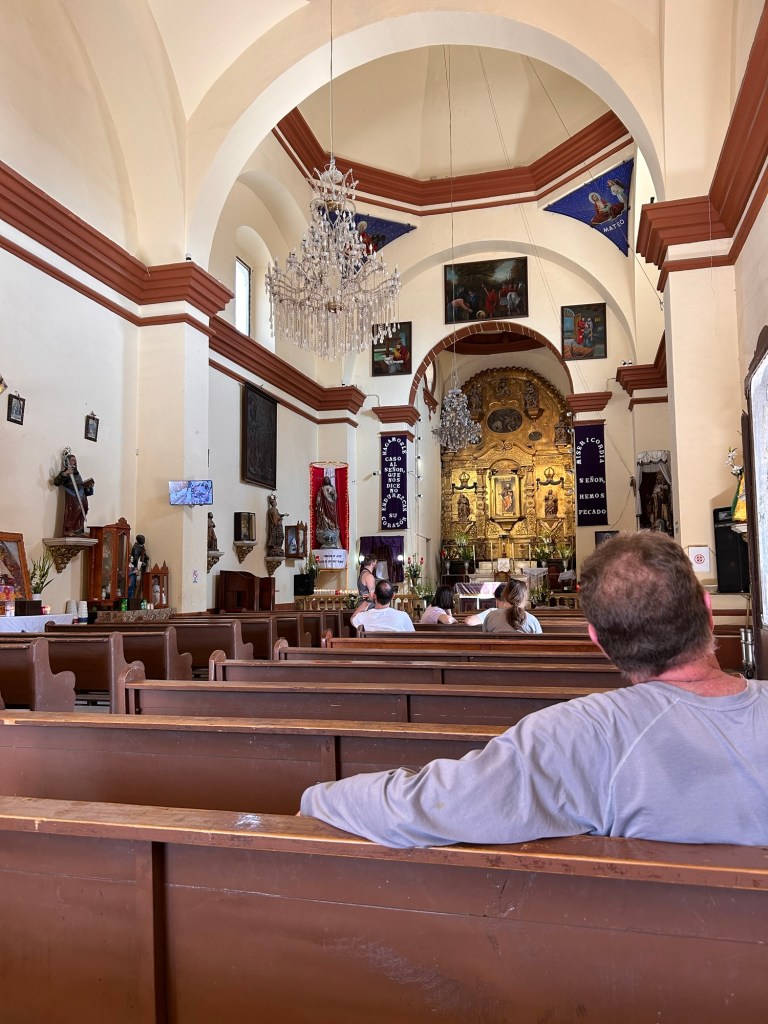
When the Spaniards arrived they destroyed much of the palatial compound then built their church atop the temple/ palace using the finely hewn stones to build the church. Any concurring hoard would, right? The costs of colonization blatantly apparent on many fronts here in Mexico as in many countries suffering western expansionism and aggression.
Last stop was a tour of a mezcal maker along the highway.
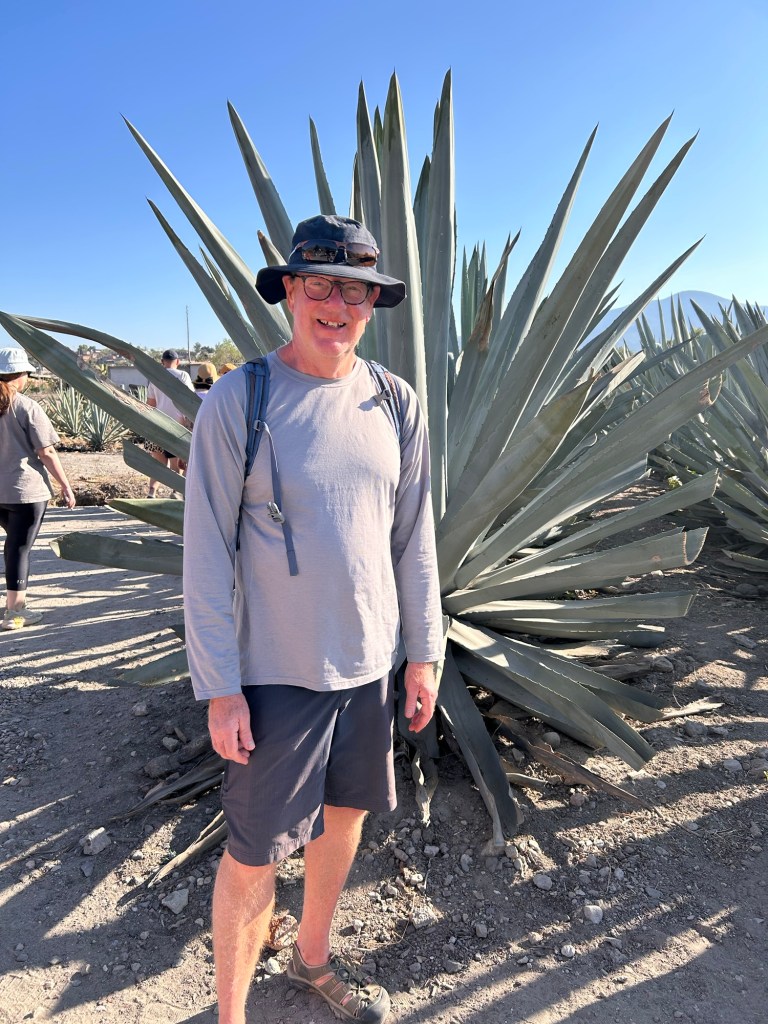
We had a good tour of the agave production behind the distillery with emphasis given to the different types of agave and their characteristics.
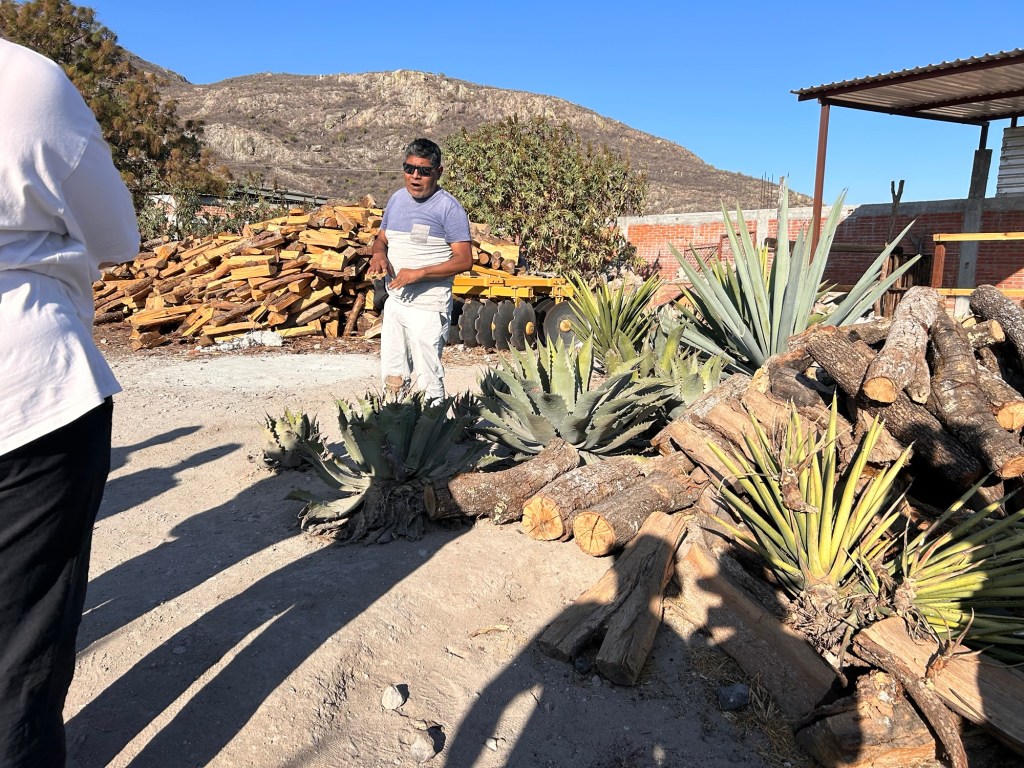
Next the roasting pit and the sugar extraction. This differed from the above ground “beehive” agave roasters used in tequila production. Tequila making squeezed the juice out of the roasted piñas where mezcal ground it down to a paste and added water to ferment.
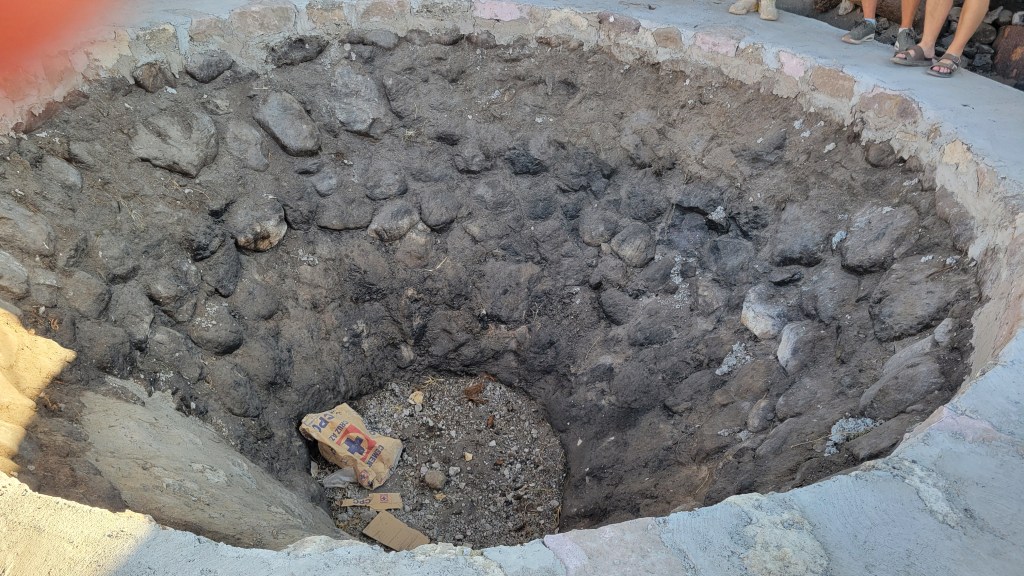
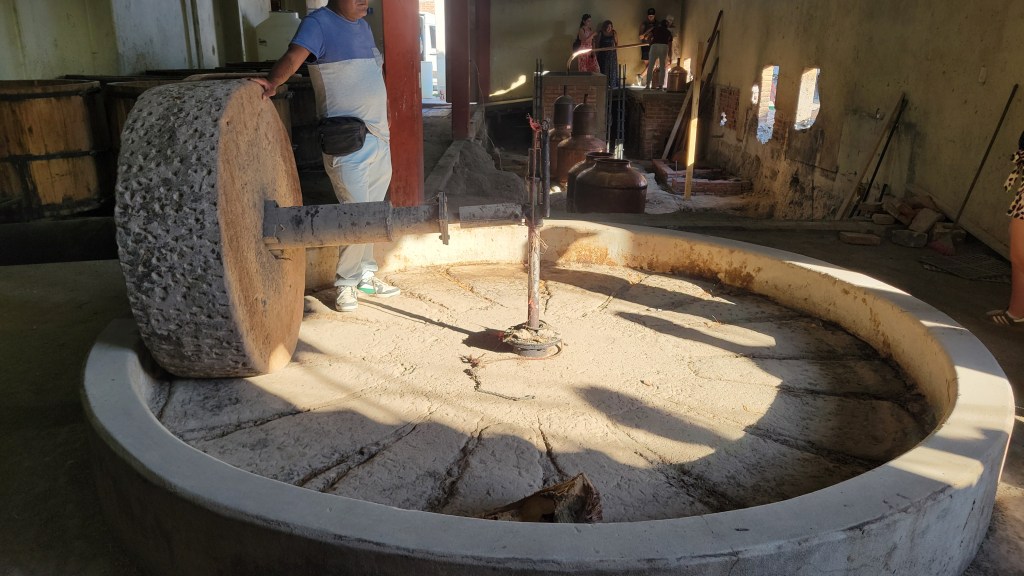
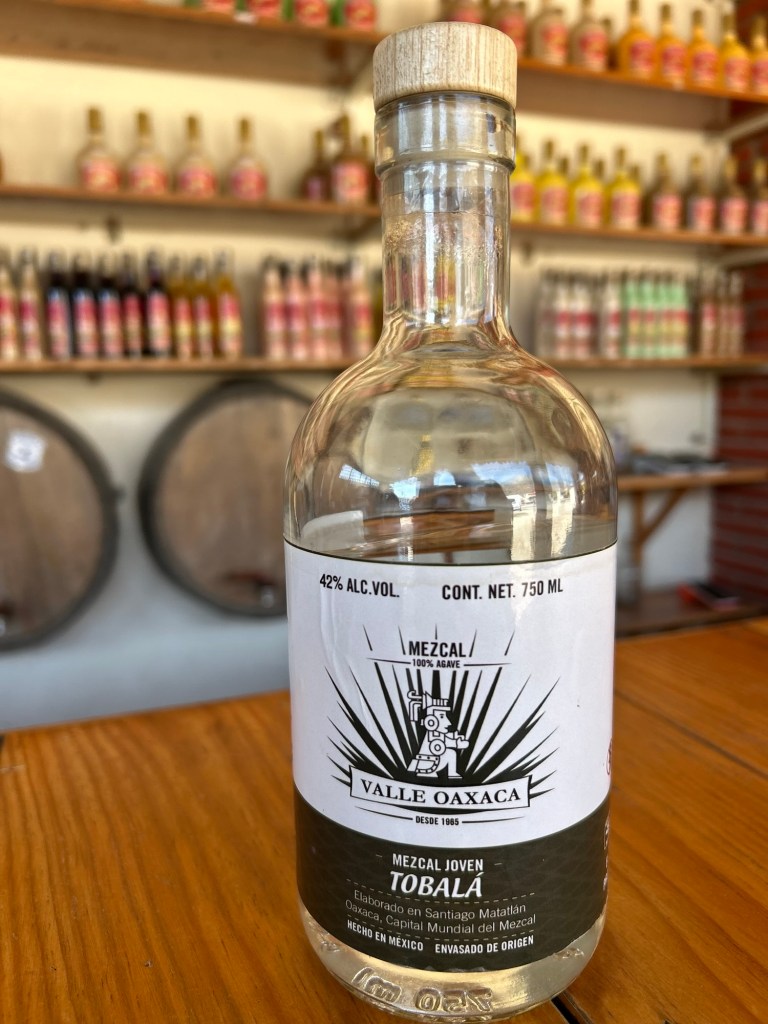
We ended up asking the mezcal maker, and he was possibly the owner, more specific questions about the sacred drink. As there were some gaps in the presentation Al wanted to delve into specifics of the fermentation process that were a bit more scientific and he was inspired by the insightful questioning. Soon we had his undivided attention. After some lengthy explanations requiring our tour guide and a couple of other bilingual attendees he brought out his own “not for sale” stuff from the back. Delicious. We bought a bottle for a kings ransom (at least in our budgetary considerations) Everything is for sale, right. When we got in the bus to leave the tour guide quietly dropped a second gratis bottle of the prized stuff in our lap and said the proprietor wanted him to bring more inquisitive minded people like us more often. We made impression I guess. The youngsters in the tour bus with their passion fruit and leche flavoured purchases looked at us askance but we were quiet in our smugness not wanting to draw attention to our treasure.
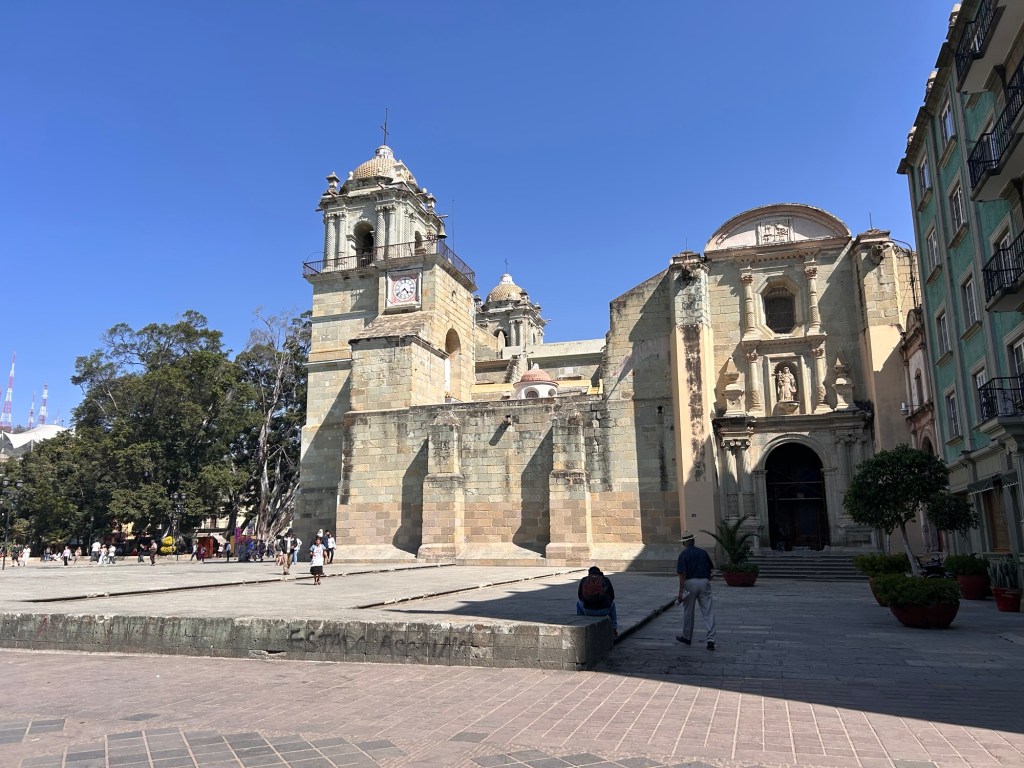
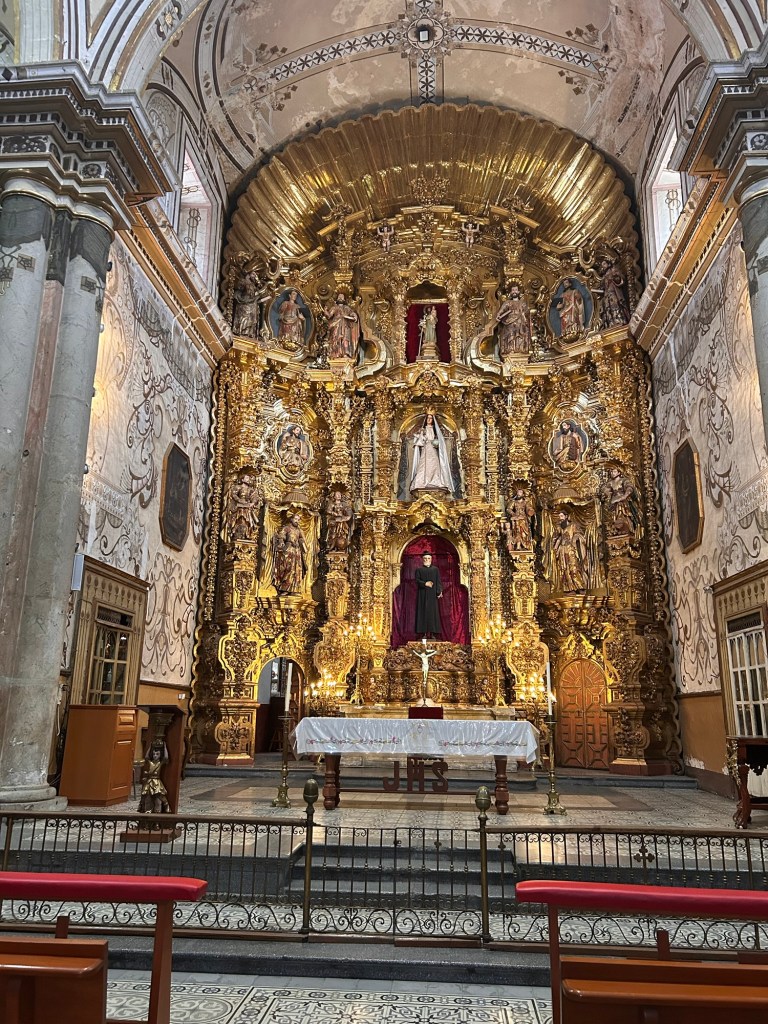
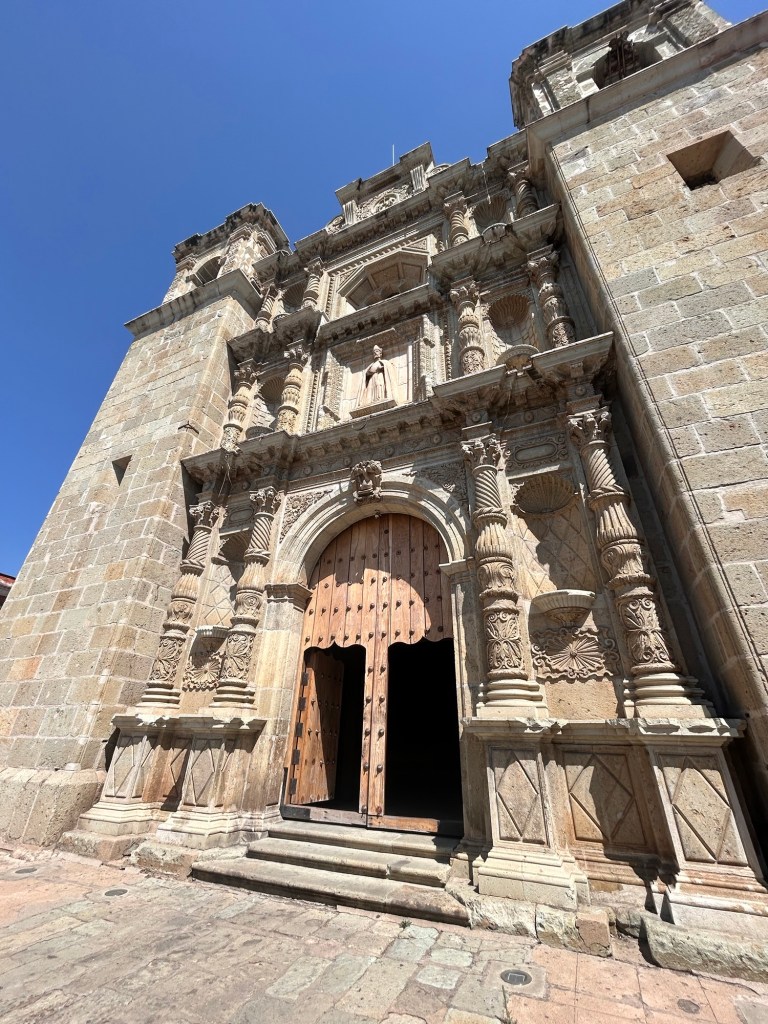
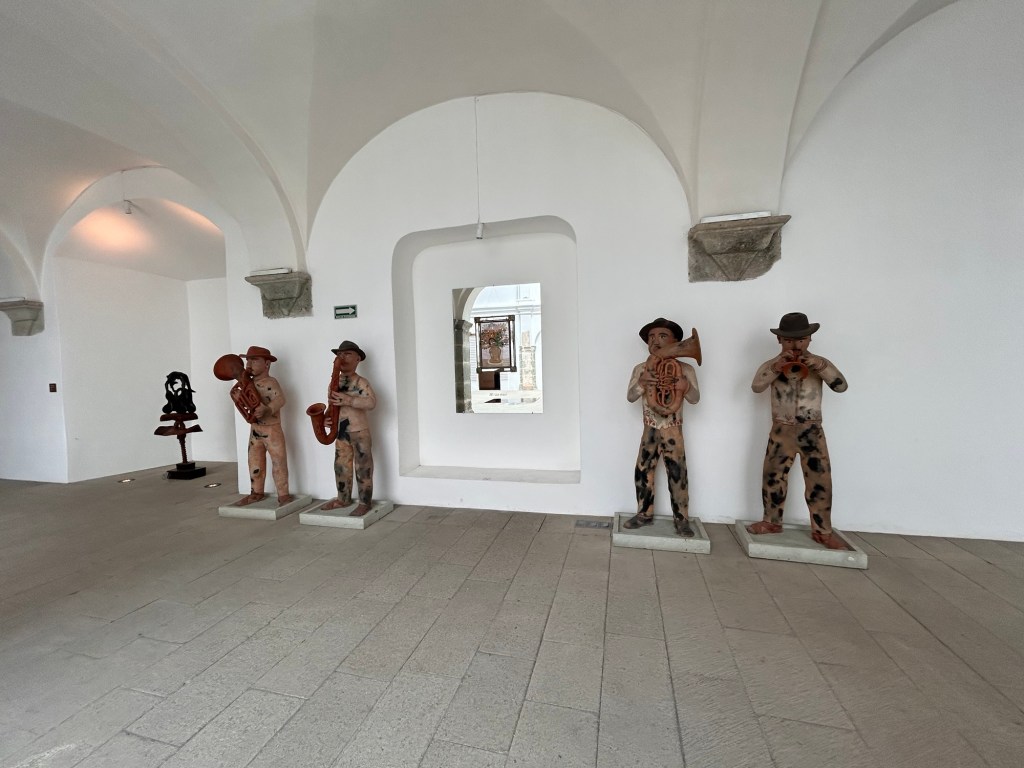
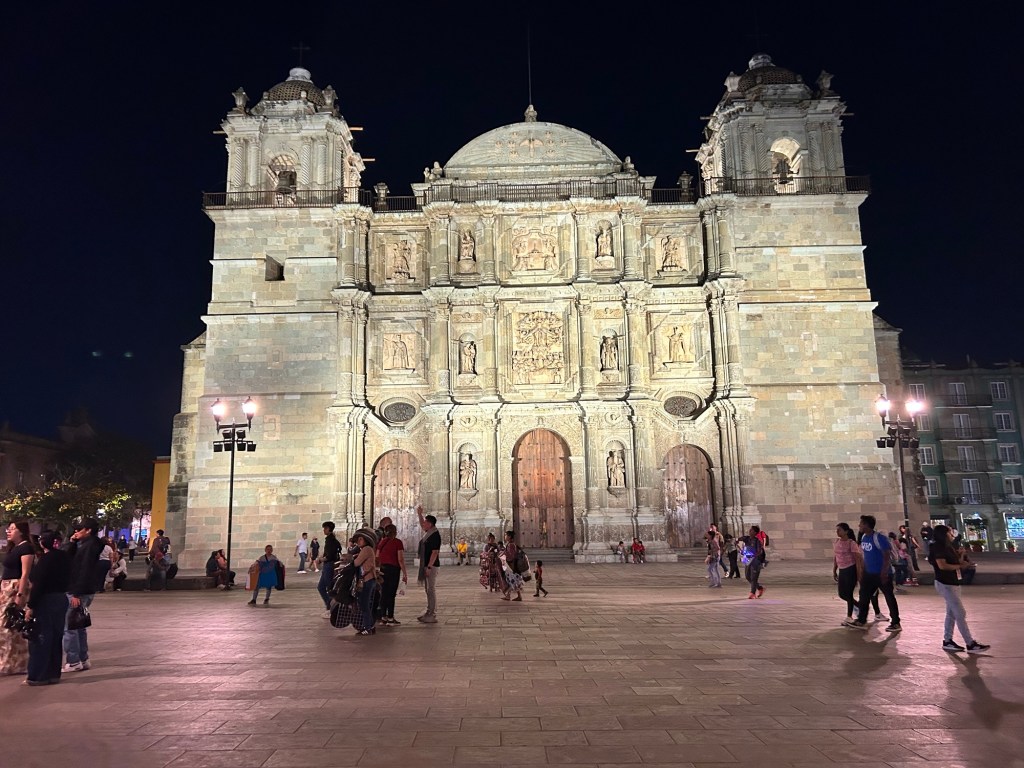
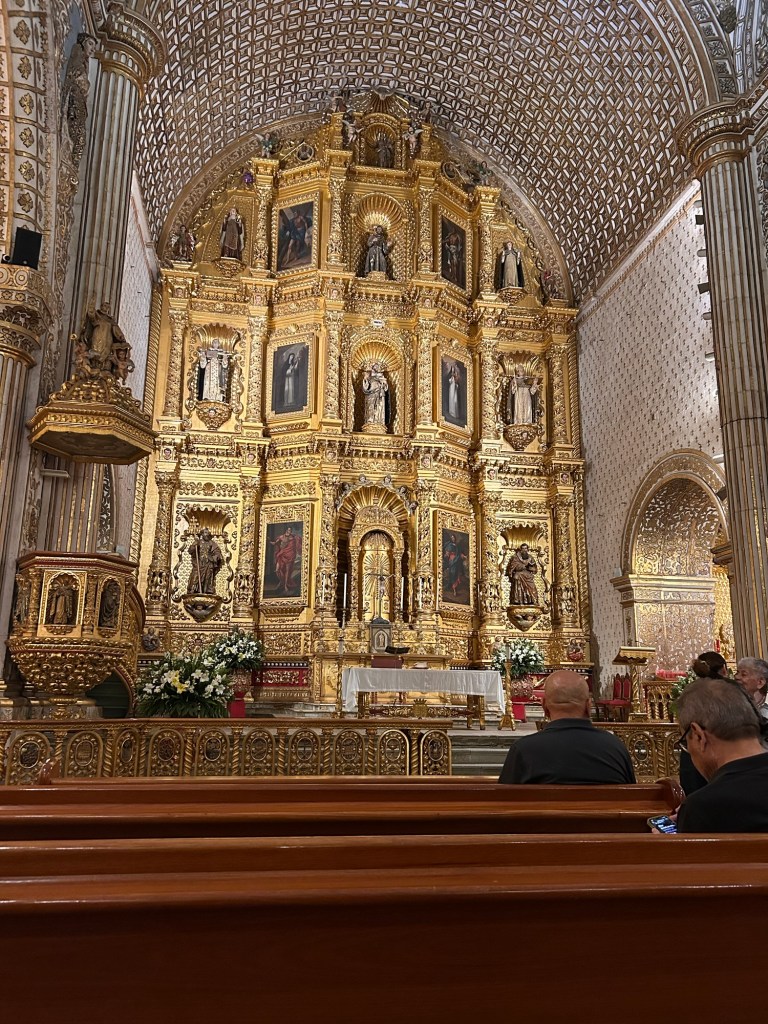
We used our GPSmyCity app to find walking tours of must see locations. Oaxaca has an abundance of Cathedrals, Zocalo, Art galleries, street food and Michelin recommended restaurants.
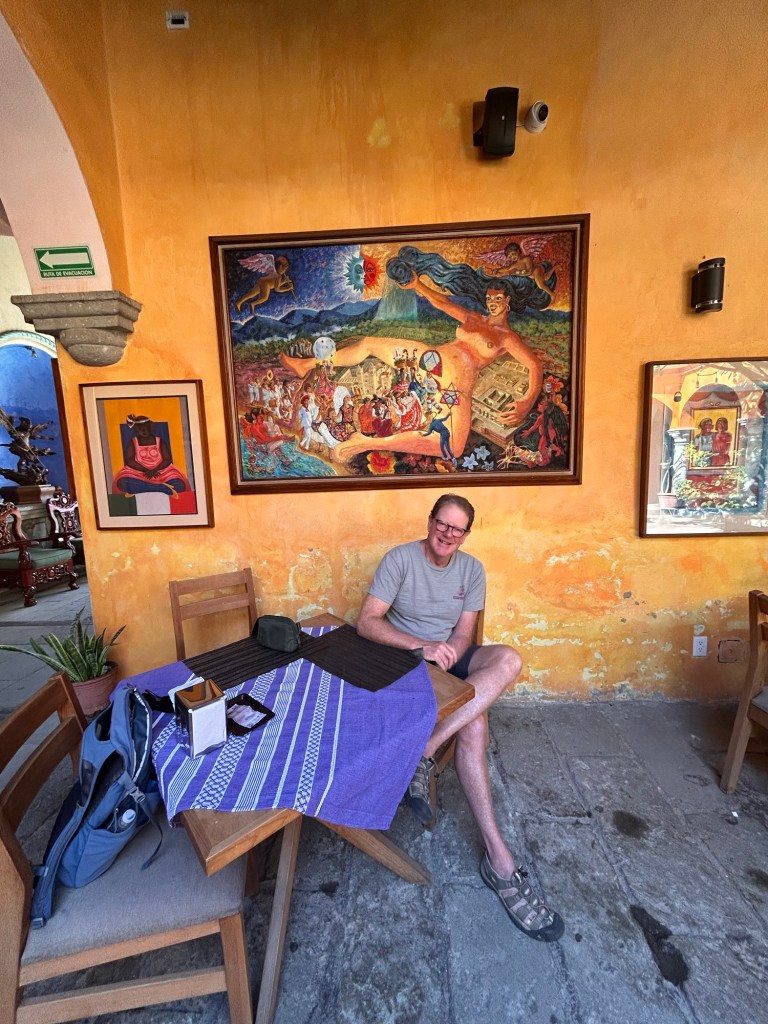
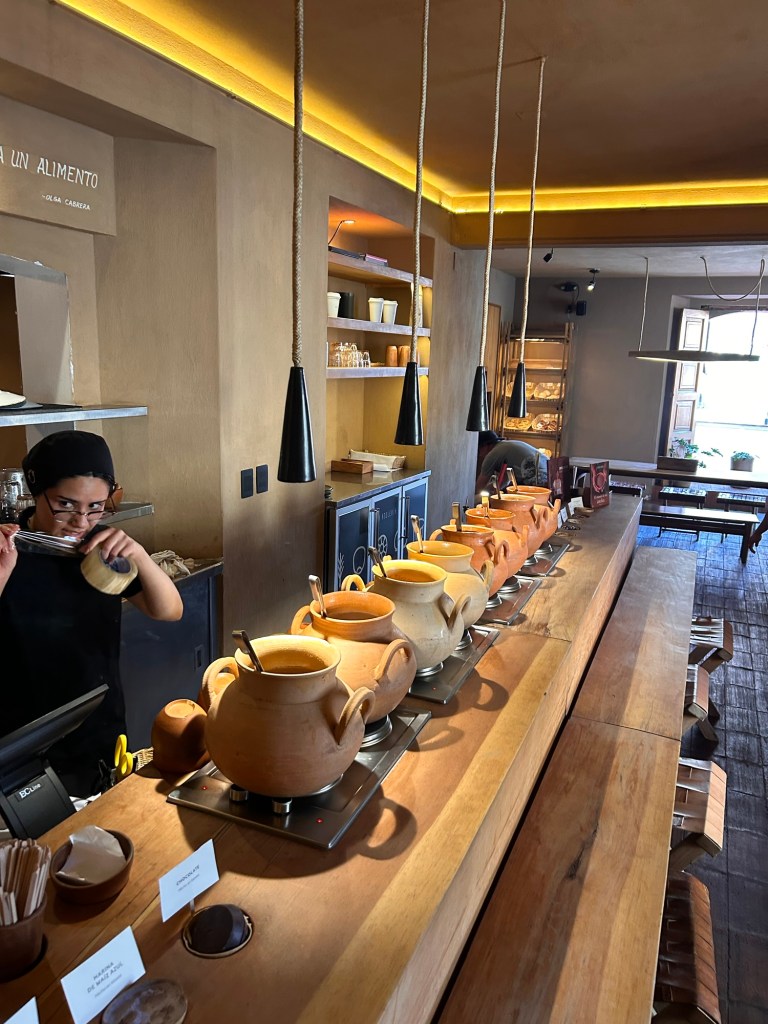
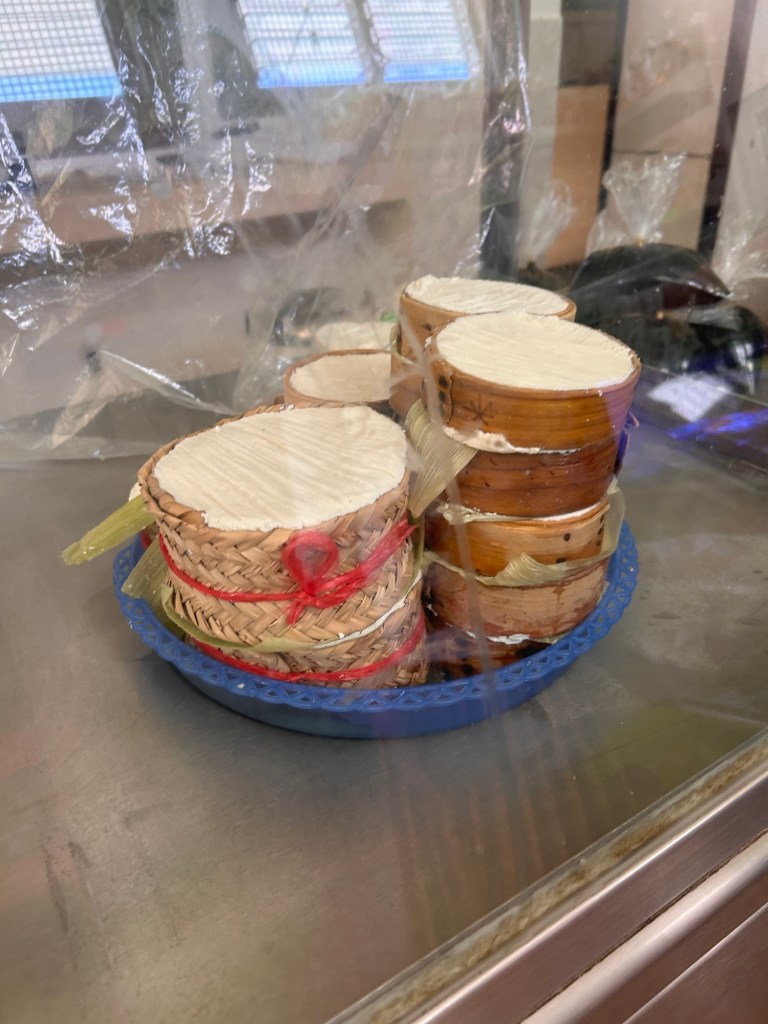
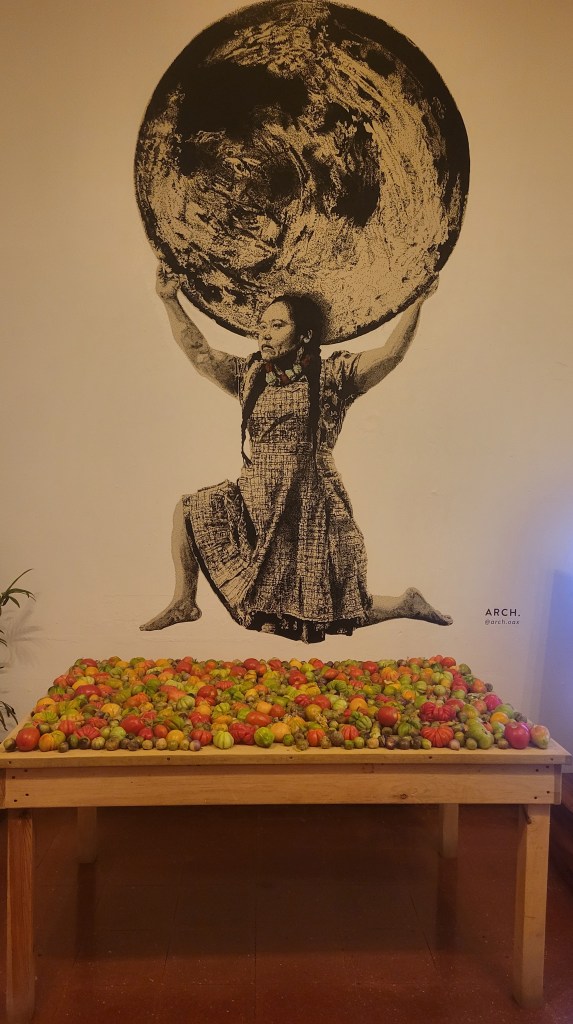
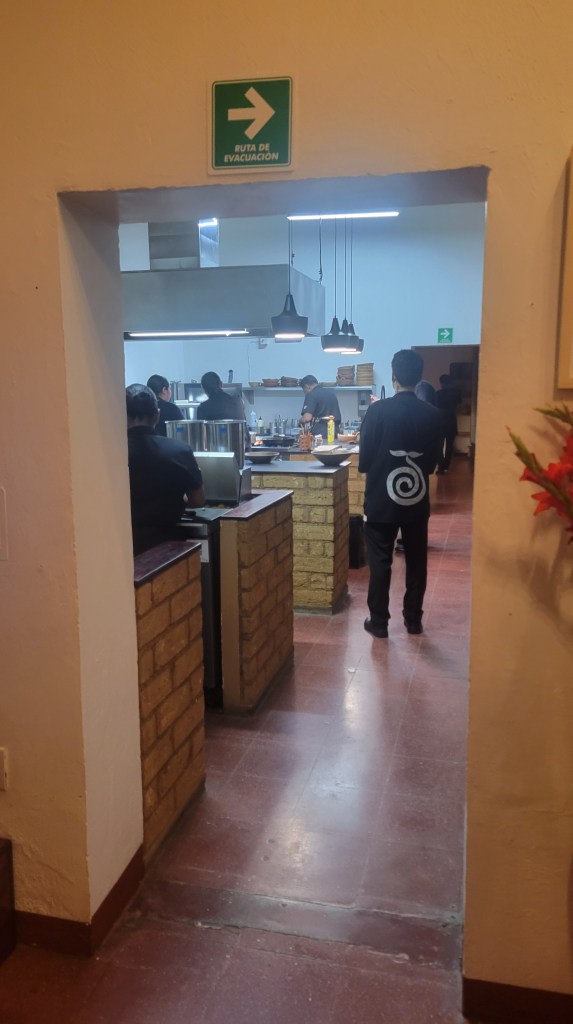
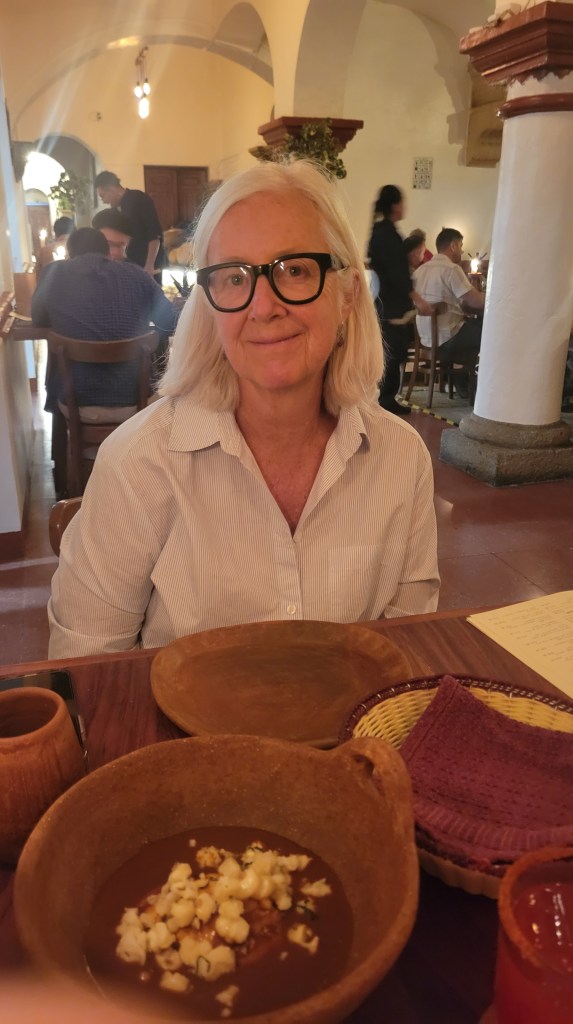
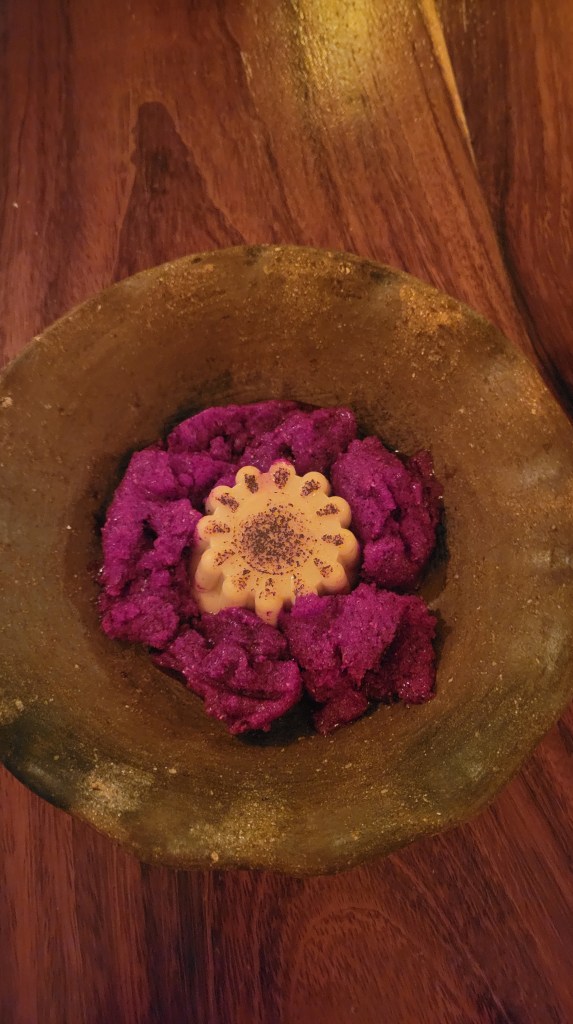
We used our AtlasObscura app to find the less touristy but interesting stuff. It led us to Levadura de Olla restaurant that was sold out online. So we dropped in and they had a table. The chef is from the state of Oaxaca and focuses her menu on ingredients, flavours and presentations honoring the history of the dishes.
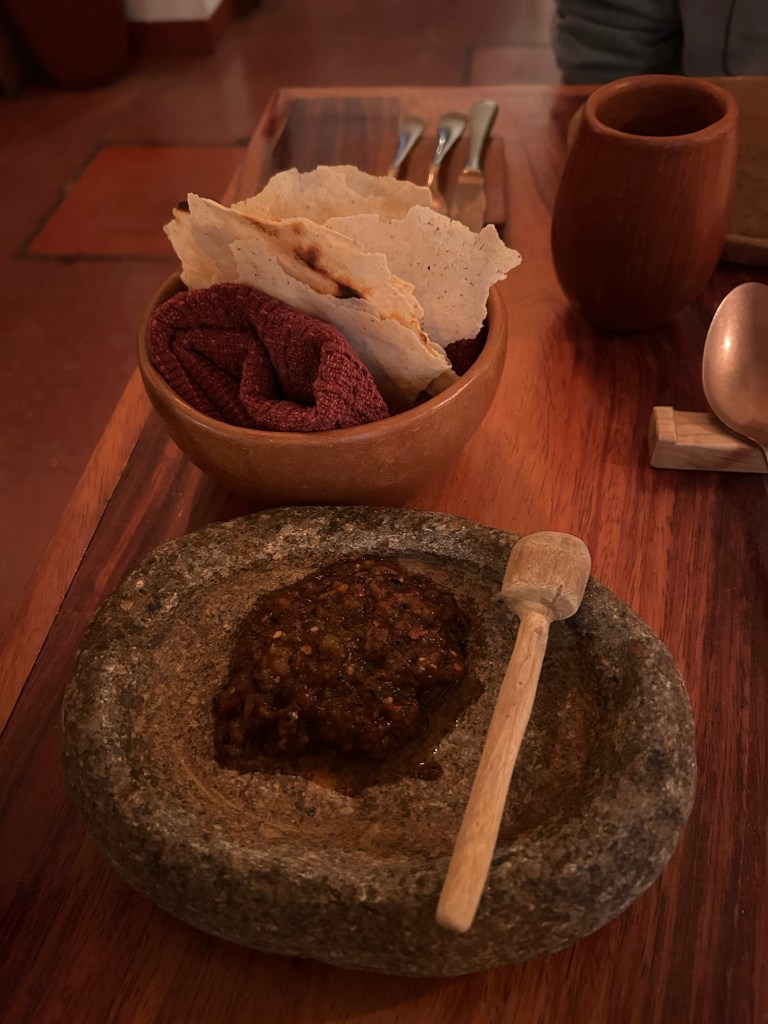
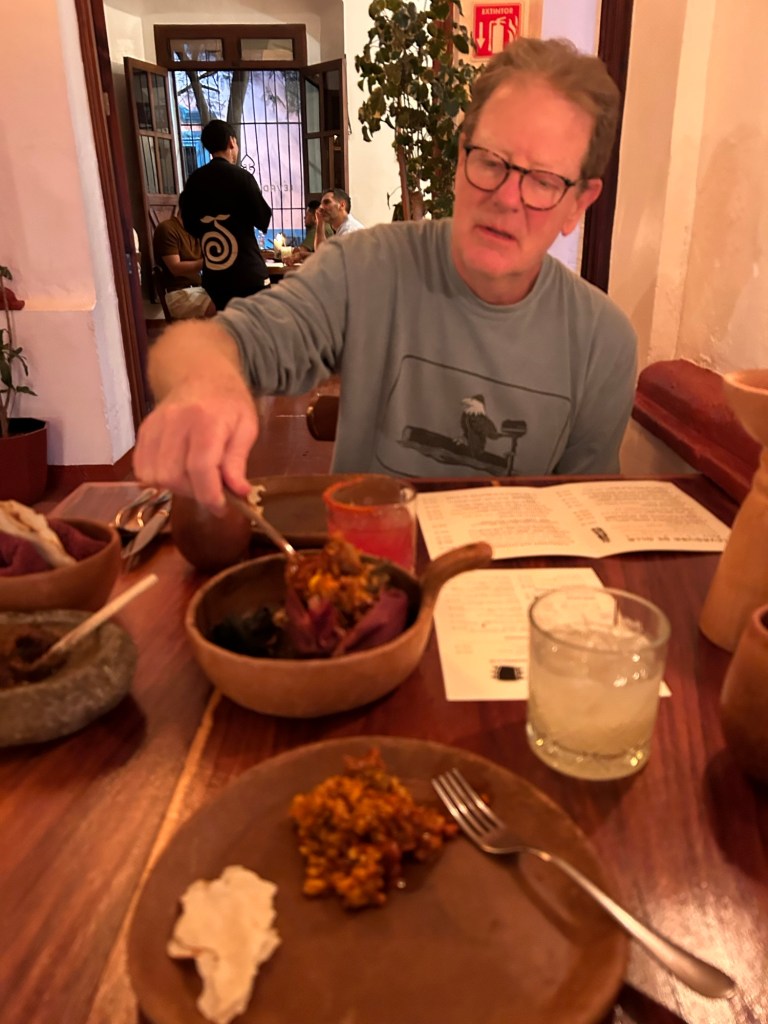
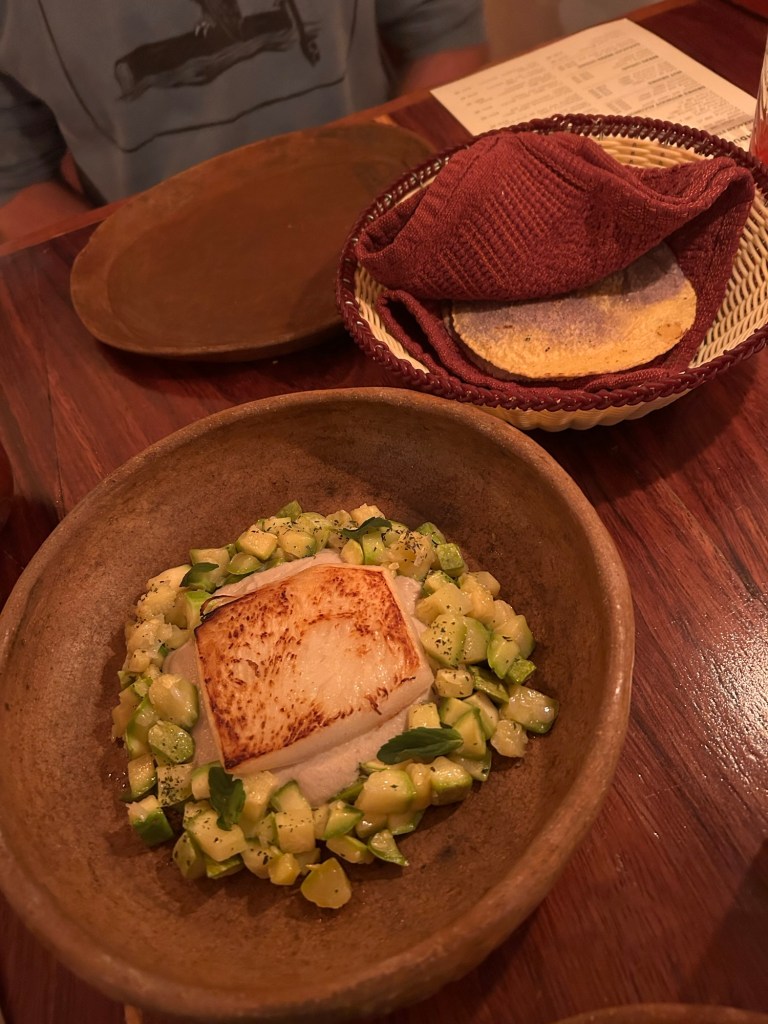
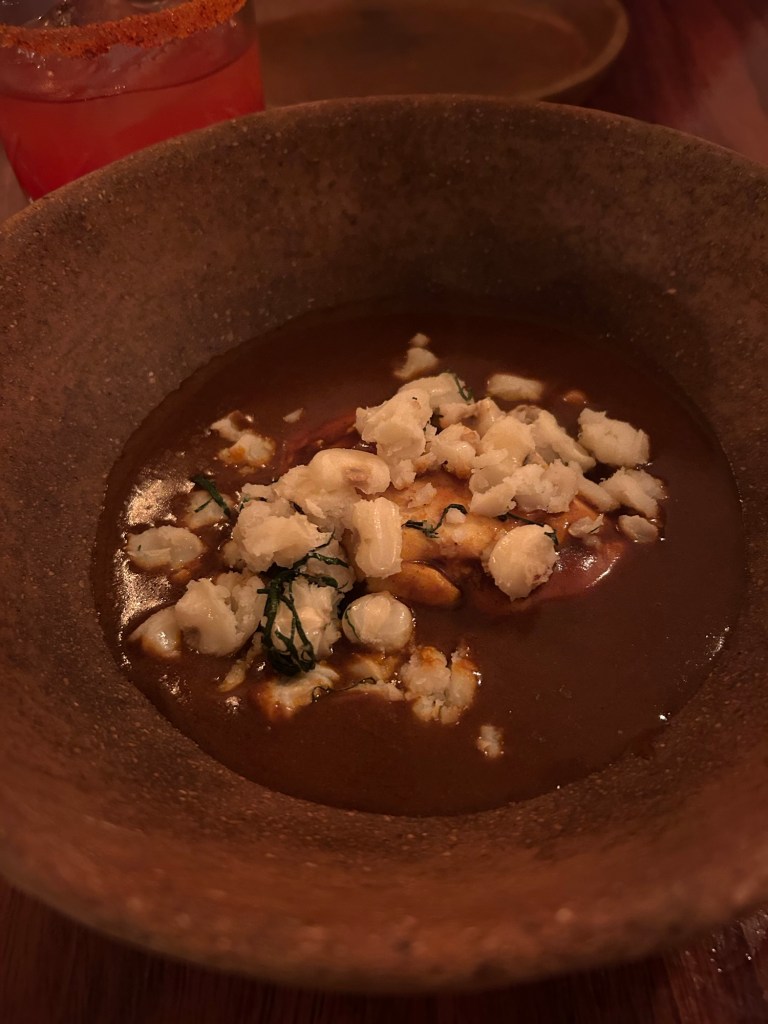
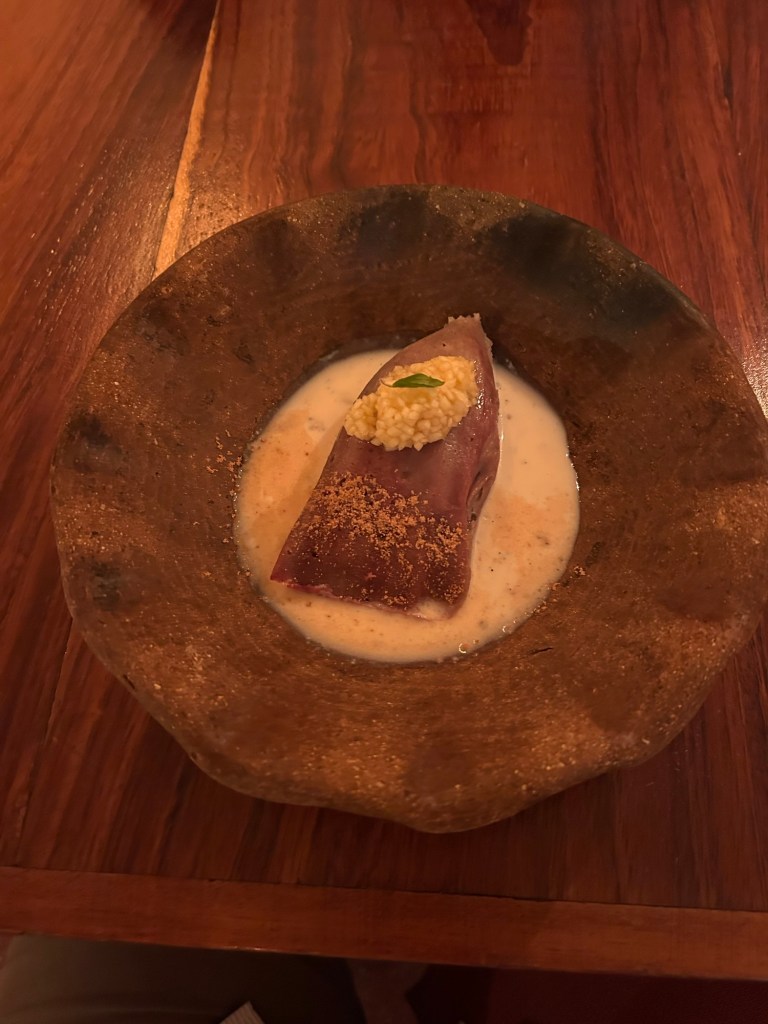
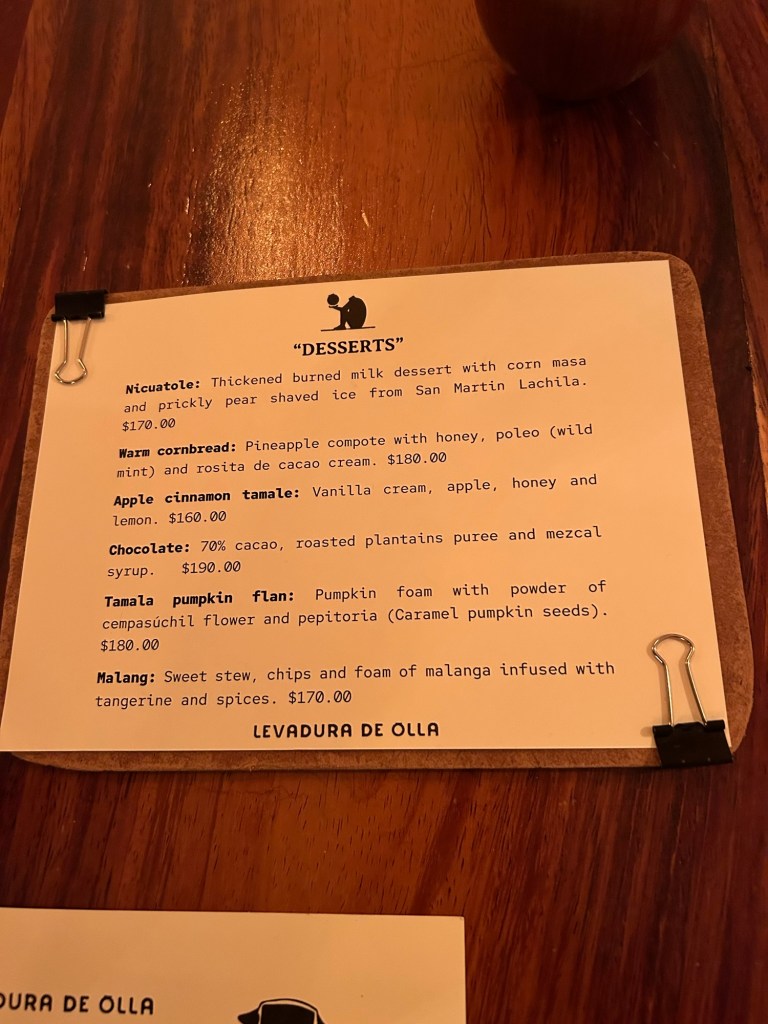
With her first Michelin star we felt pretty lucky we could experience her interpretations of the cultural foods. The two of us shared 3 dishes, 2 desserts and drinks for $180CDN.
It was recommended that we take a tour shuttle bus return to Monte Alban rather than figuring out local transit. The cartels had just lost their top don and a day of serious disruption across much of Mexico made us wary of not heeding this advice. While Oaxaca wasn’t targeted, all of the places we had been to before this were on notice or sheltering in place. That kind of puts into perspective the reality that surrounds us and that worries our families back home. Most touristos we’re forced to drink their margaritas beside their pools for a couple days while staffers kept them comfortable whilst being prevented from returning to their families on the edge of their towns because transit busses were burning in gangsta protests against the crack down.
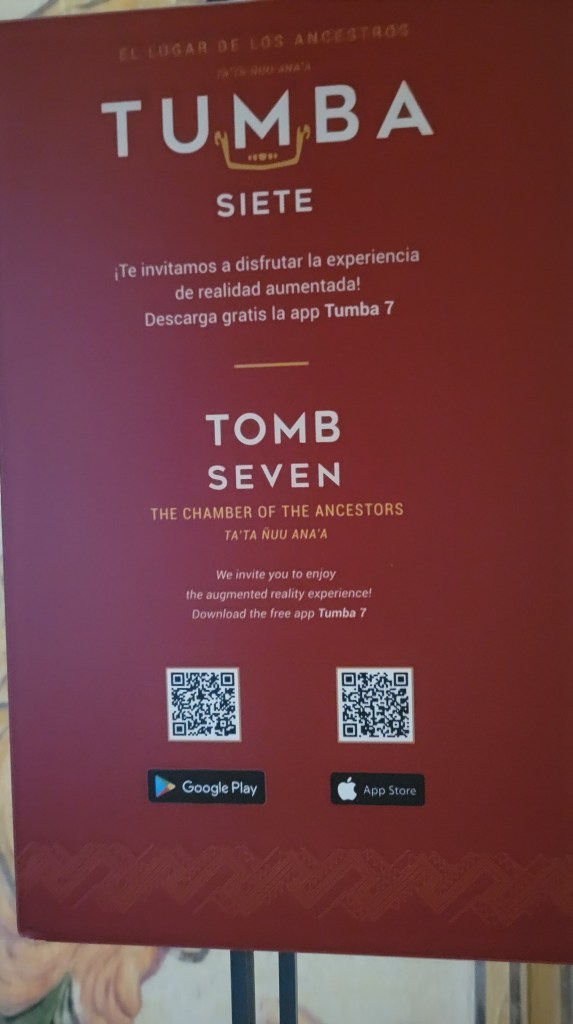
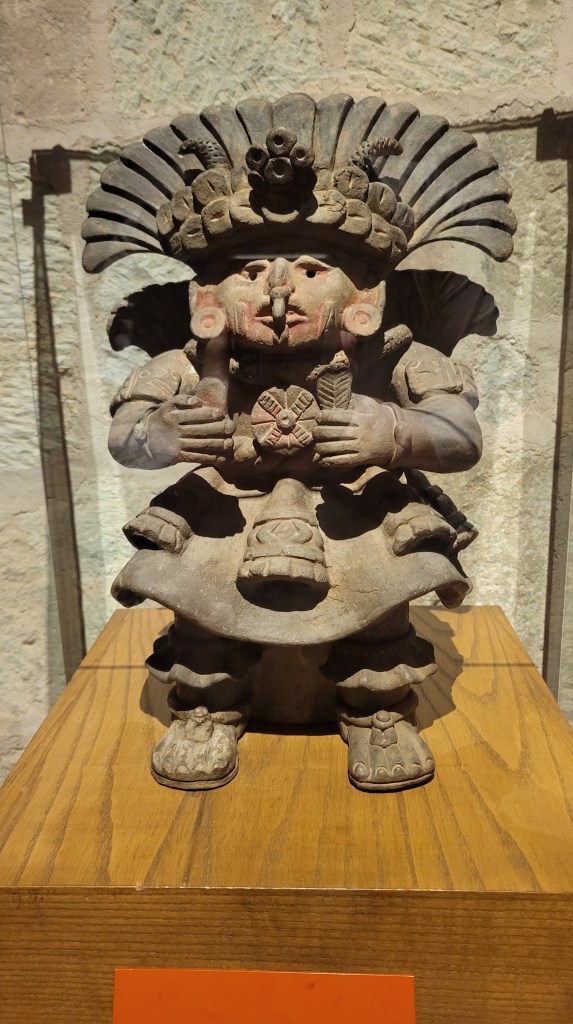
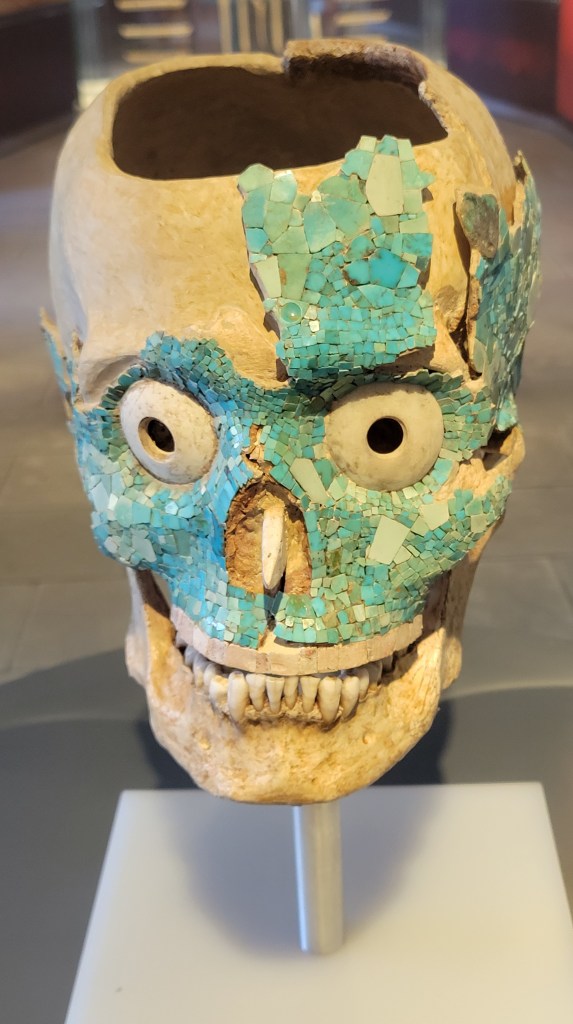
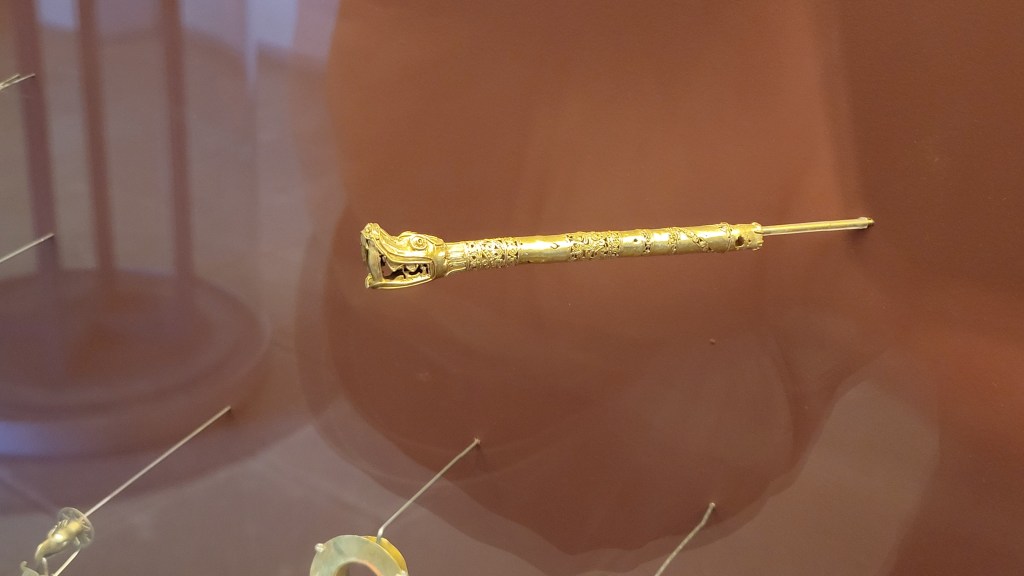
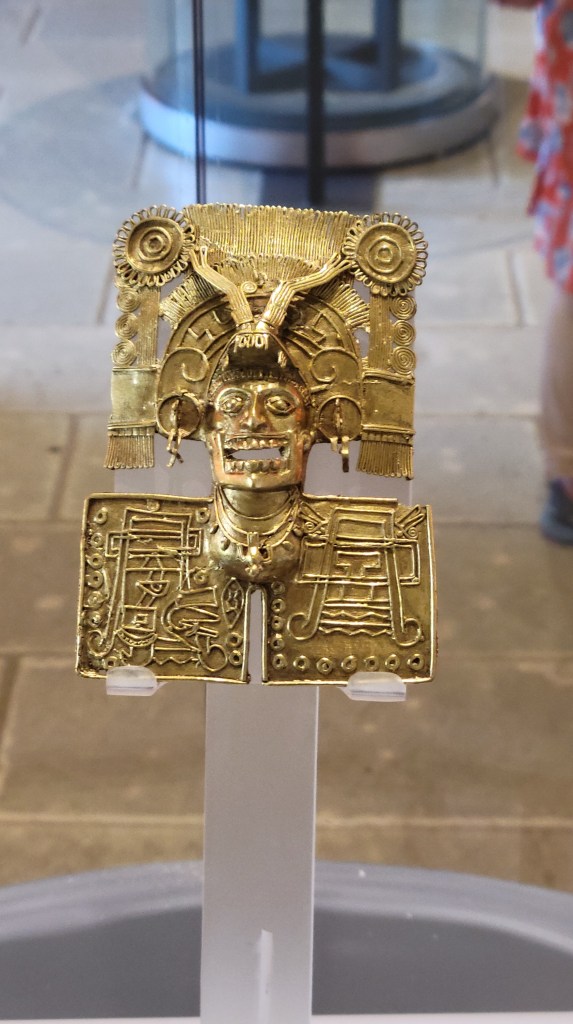
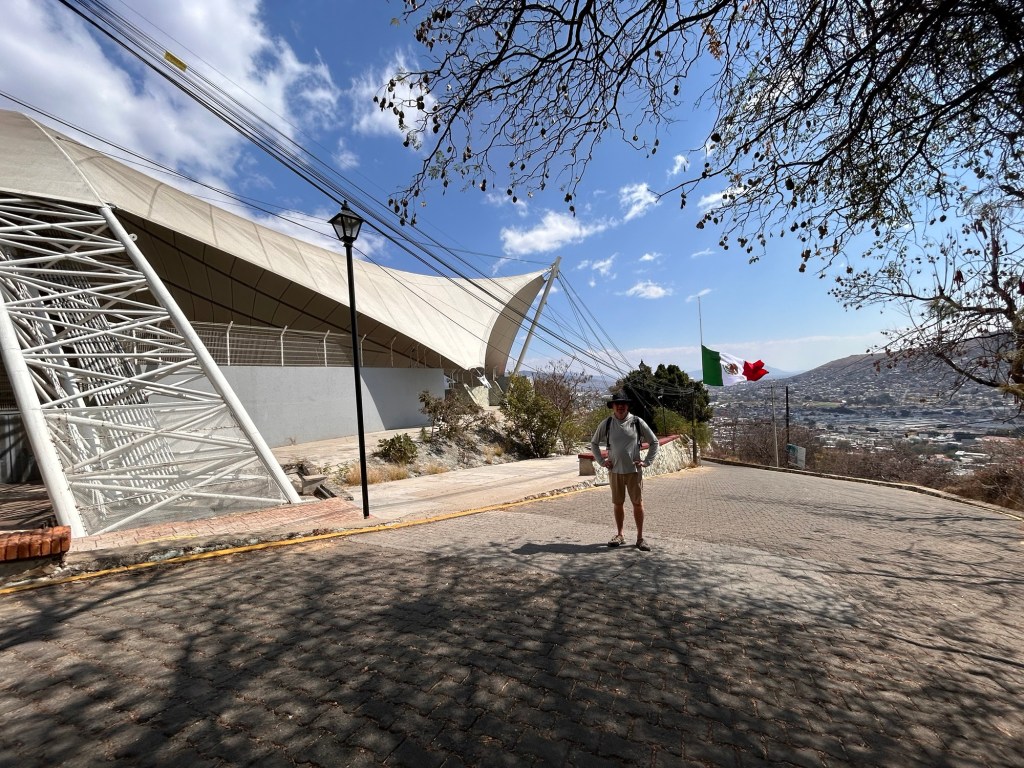
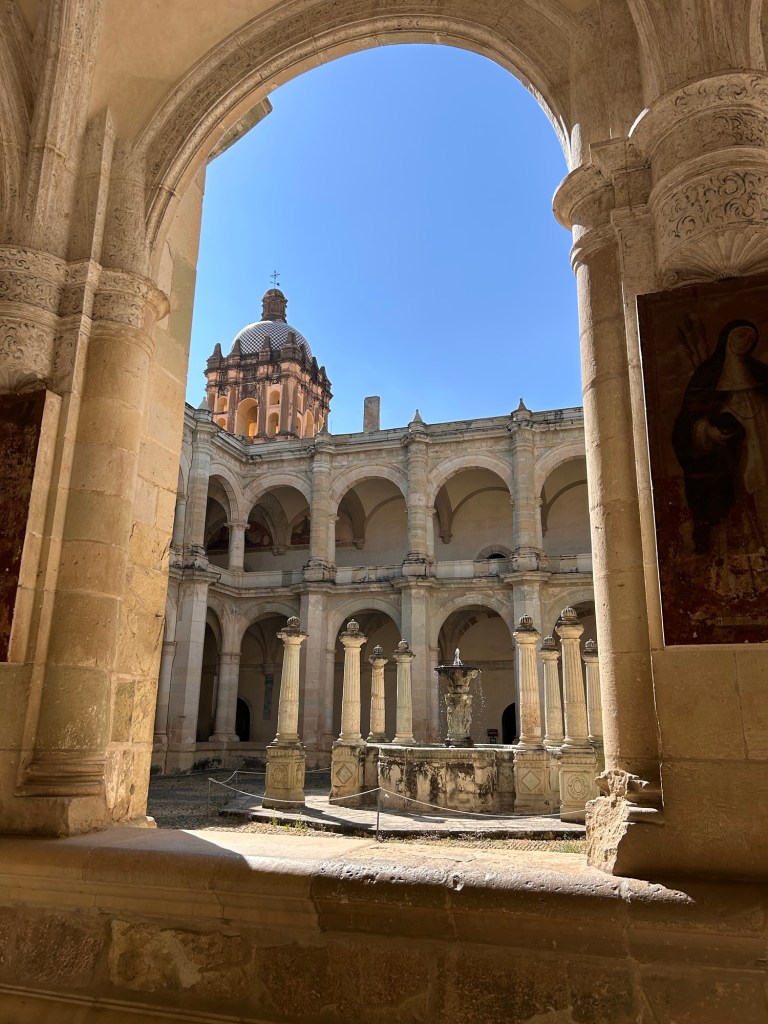
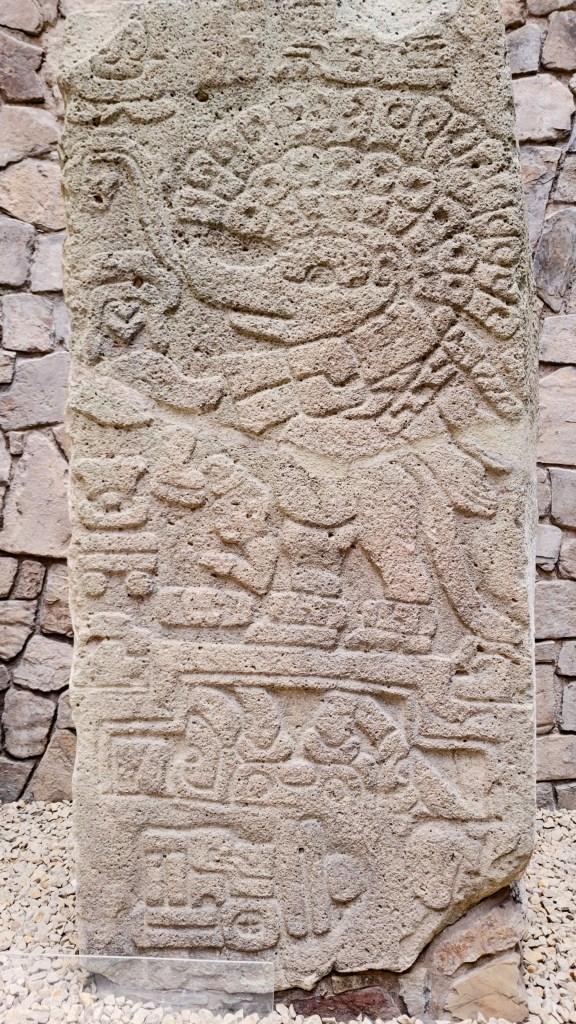
We decided to go to the museum that explains and archives the archaeological findings from the 2500 year old city of over 20,000 people, visible from Oaxaca city, at Monte Alban. Tomb 7 held significant discoveries from 1939 that made me feel like we were at a cross road of Aztec artworks that mirrored the Khmer palaces, Egyptian pyramids, and Roman or Greek pillared amphitheaters.
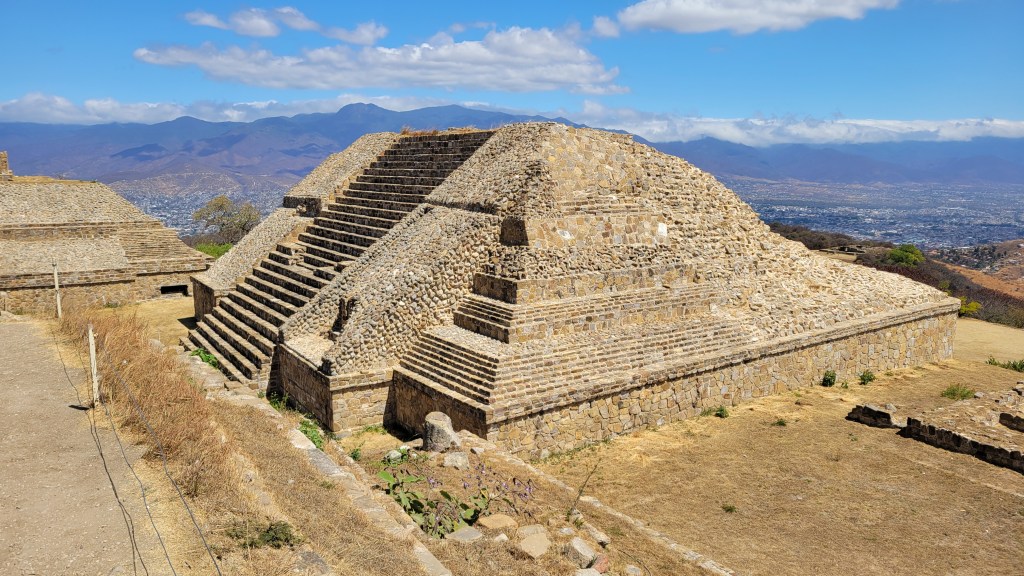
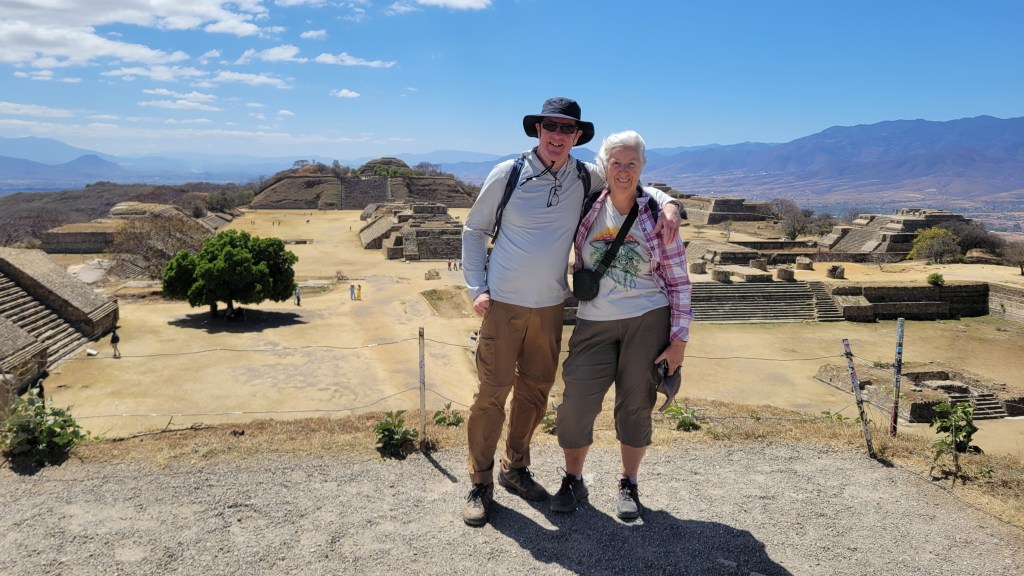
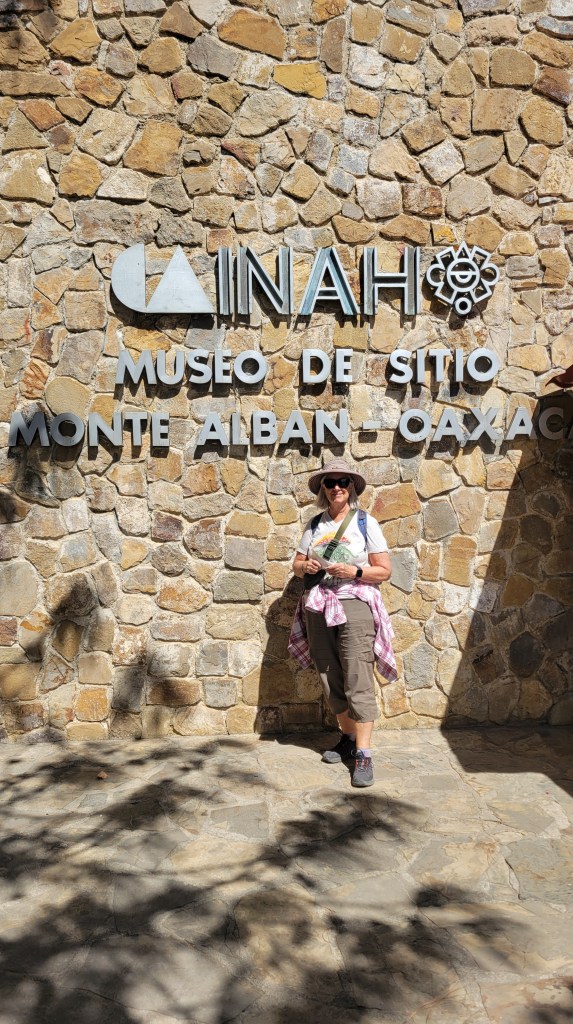
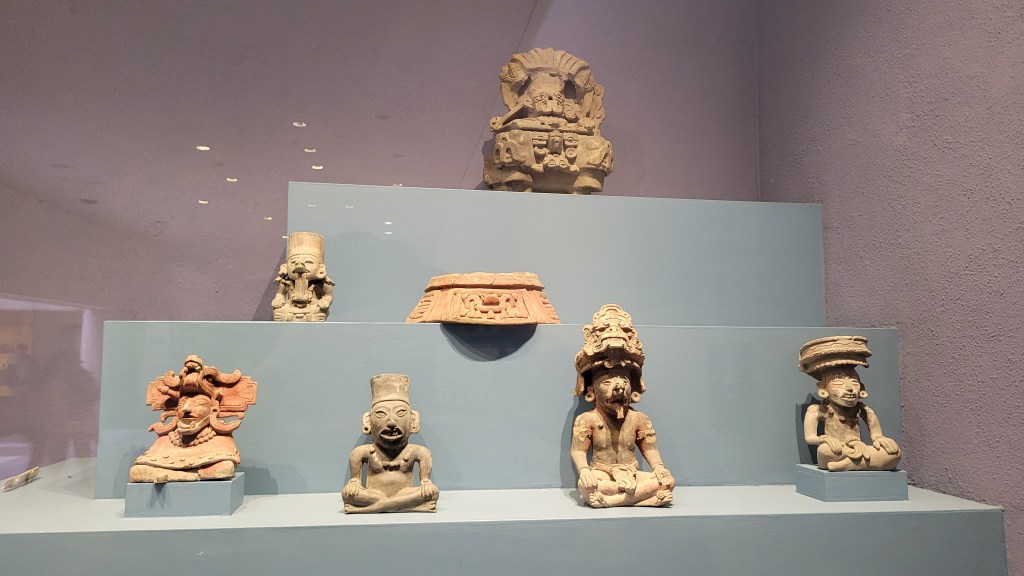
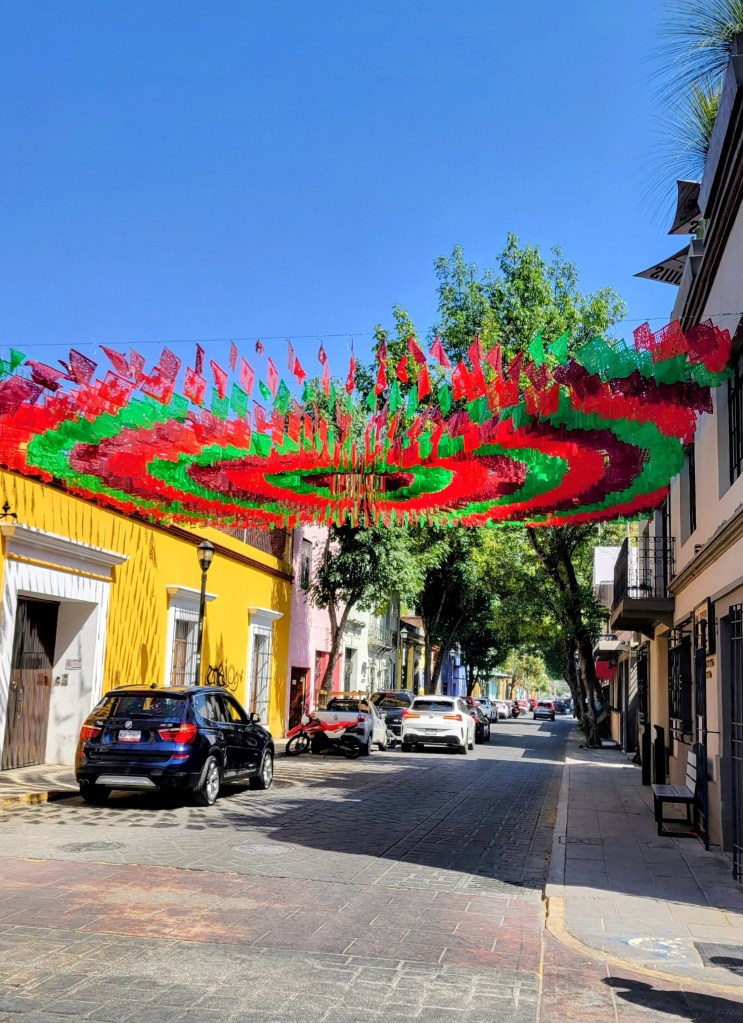
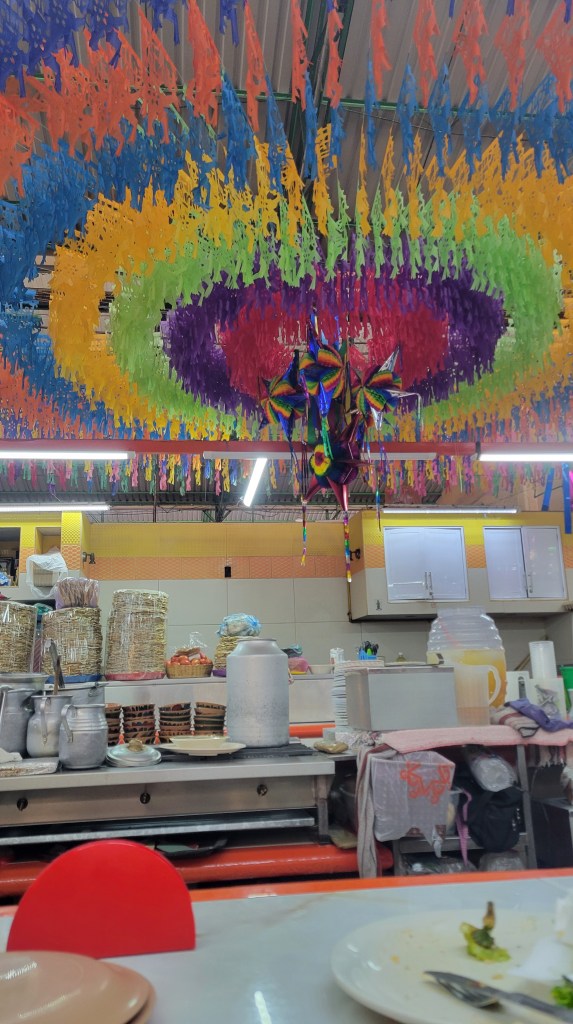
Oaxaca was a slice. Eating tacos on the streets, chili rellenos in the central market, moles rooftop looking out at the illuminated churches, and huevos in a central courtyard surrounded by fountains and folk-art requires us to return again. We feel like we have just touched the surface.
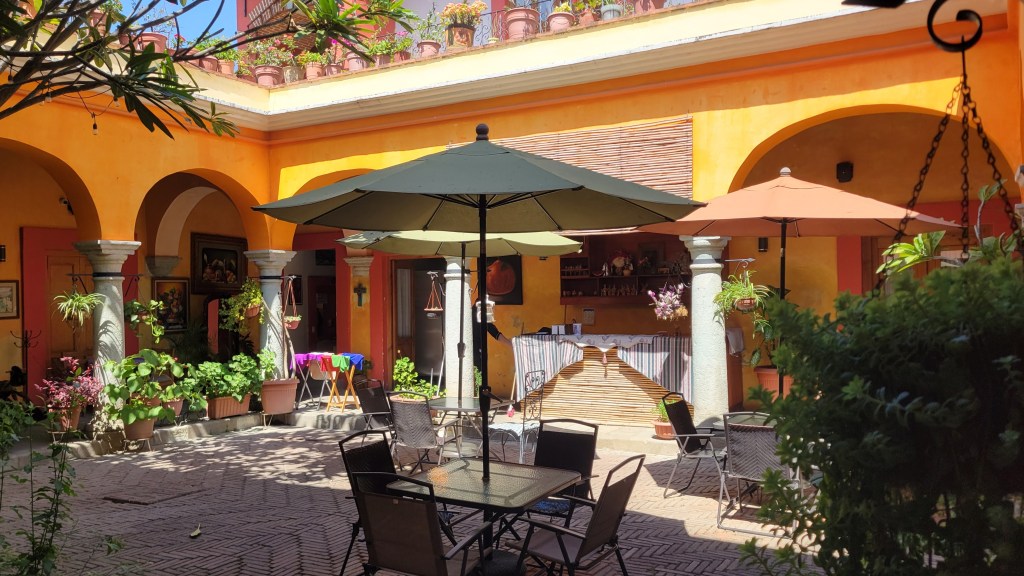
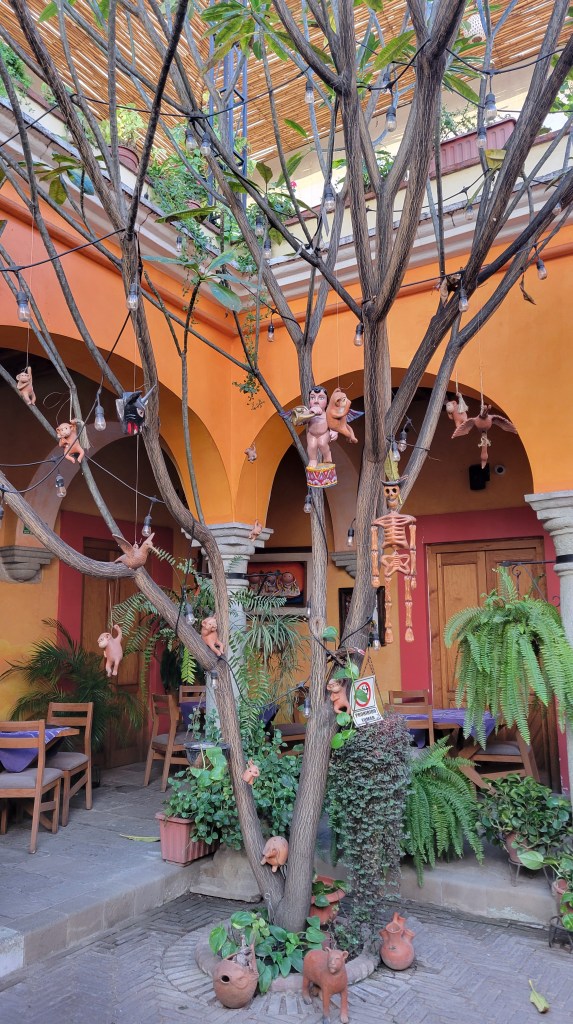
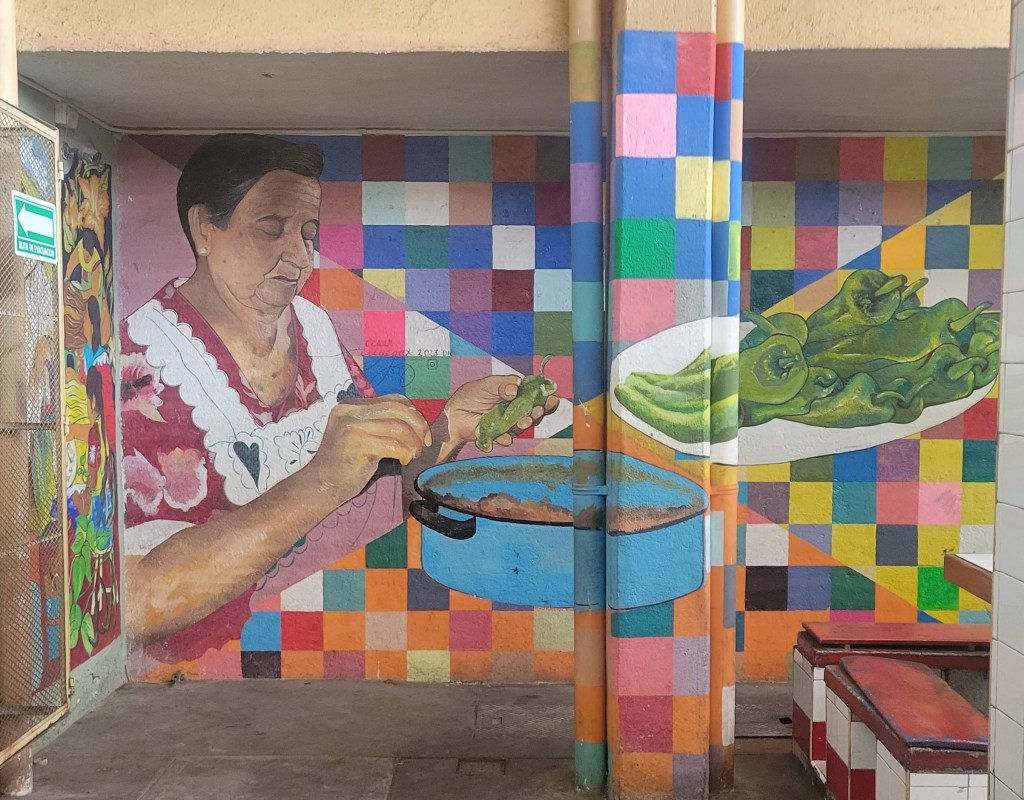
We are off to Puebla and Mexico City next…
 The Grape Escape
Fabulous stuff! Oaxaca and Mexico City are my two all-time favourite places in Mexico, and boy, do all your photos and commentary bring it back so vividly.
You two are so food and drink-centric and that has added a lot to your travels and interactions with the locals. Your meal at Levadura de Olla looks indescribably wonderful. Great photo of you Deb – you look transported.
Can’t wait to hear all about Mexico City.
LikeLike
Well, you know you have been a big inspiration!!!
LikeLike